Garage Door Maintenance for Pittsburgh's Older Housing Stock
Garage door maintenance built for Pittsburgh's pre-1960 housing stock and cold winters. Spring tension checks, hardware inspection, and honest advice on repair vs. replace.
Most of the garage doors we look at across this service area sit on houses built well before 1960 - the median build year here lands around 1955, with stock going back to 1938 and up through more recent builds. That matters for maintenance because doors installed on those older openings often carry torsion springs, hinges, and track brackets sized for hardware standards that changed decades ago. A spring that looks fine on a newer door can be the wrong wind count or diameter for a 1955 opening, and nobody stocks the exact original part anymore.
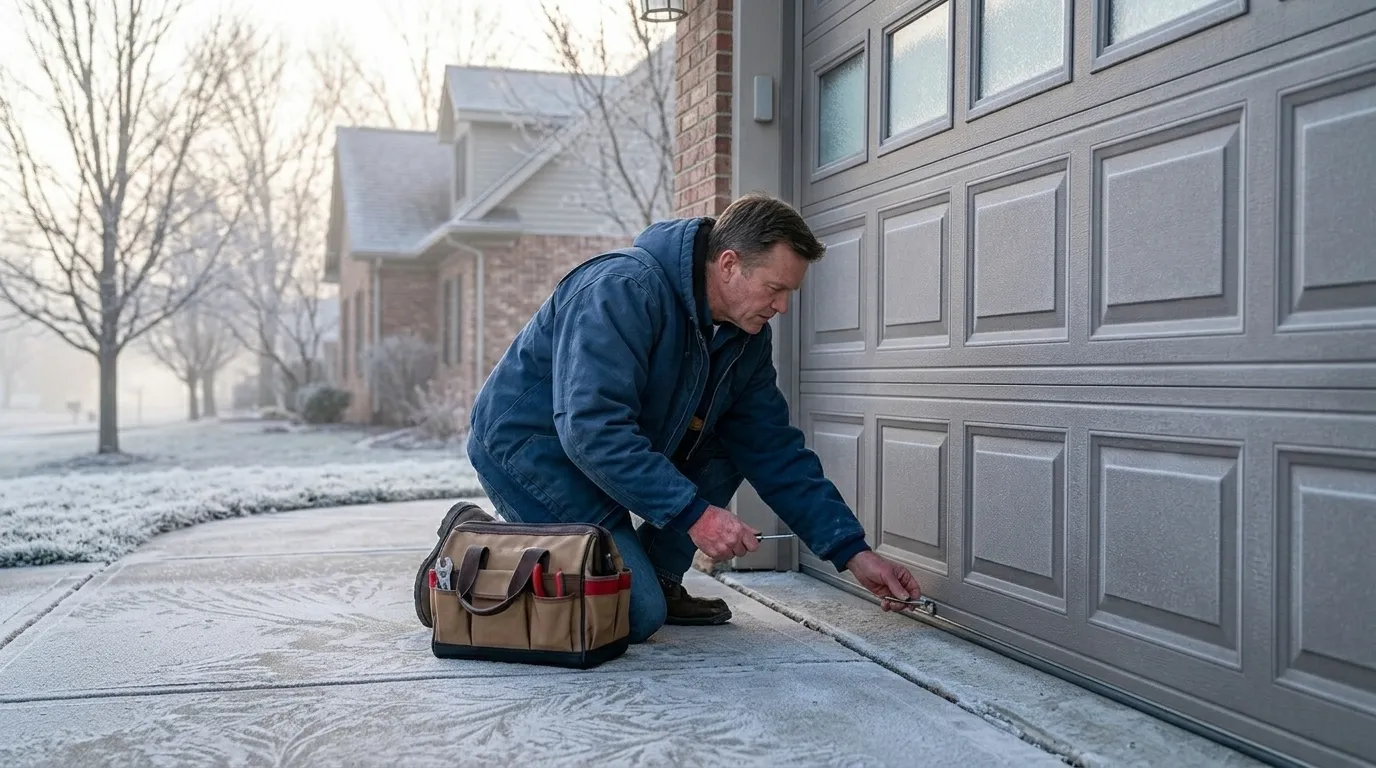
Add the climate. This region sits in a COLD-severe band, which means real freeze-thaw cycles every winter - steel contracts, lubricant thickens, and cables that had slack in August pull tight in January. On a door that's already 15 or 20 years past its last real service, that seasonal swing is often what turns a stiff roller into a snapped cable or a spring that lets go without warning.
We see this pattern across the whole service area - 108 named neighborhoods and boroughs, almost all sharing that same pre-1960 housing base. It's not a fluke tied to one street. It's the hardware age plus the winters, repeating house after house.
What the Repair Takes
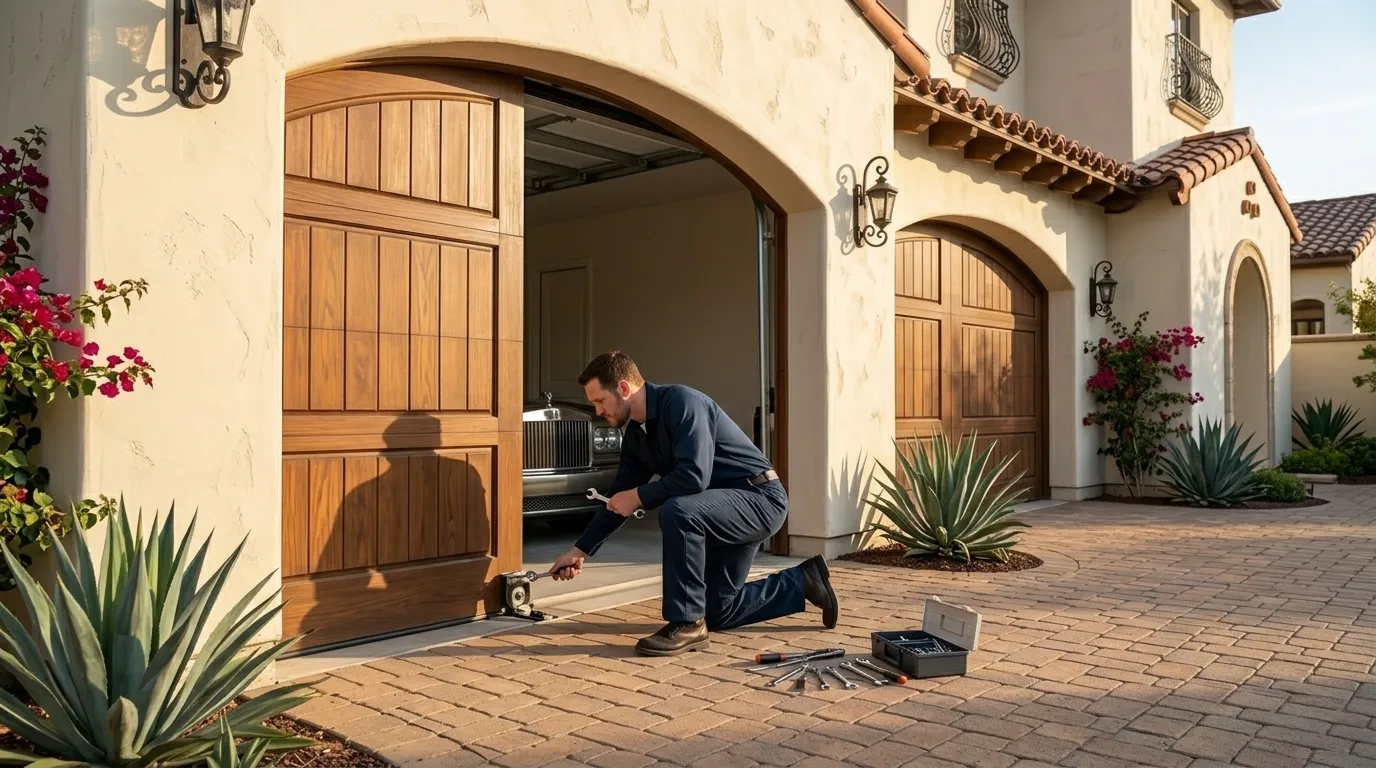
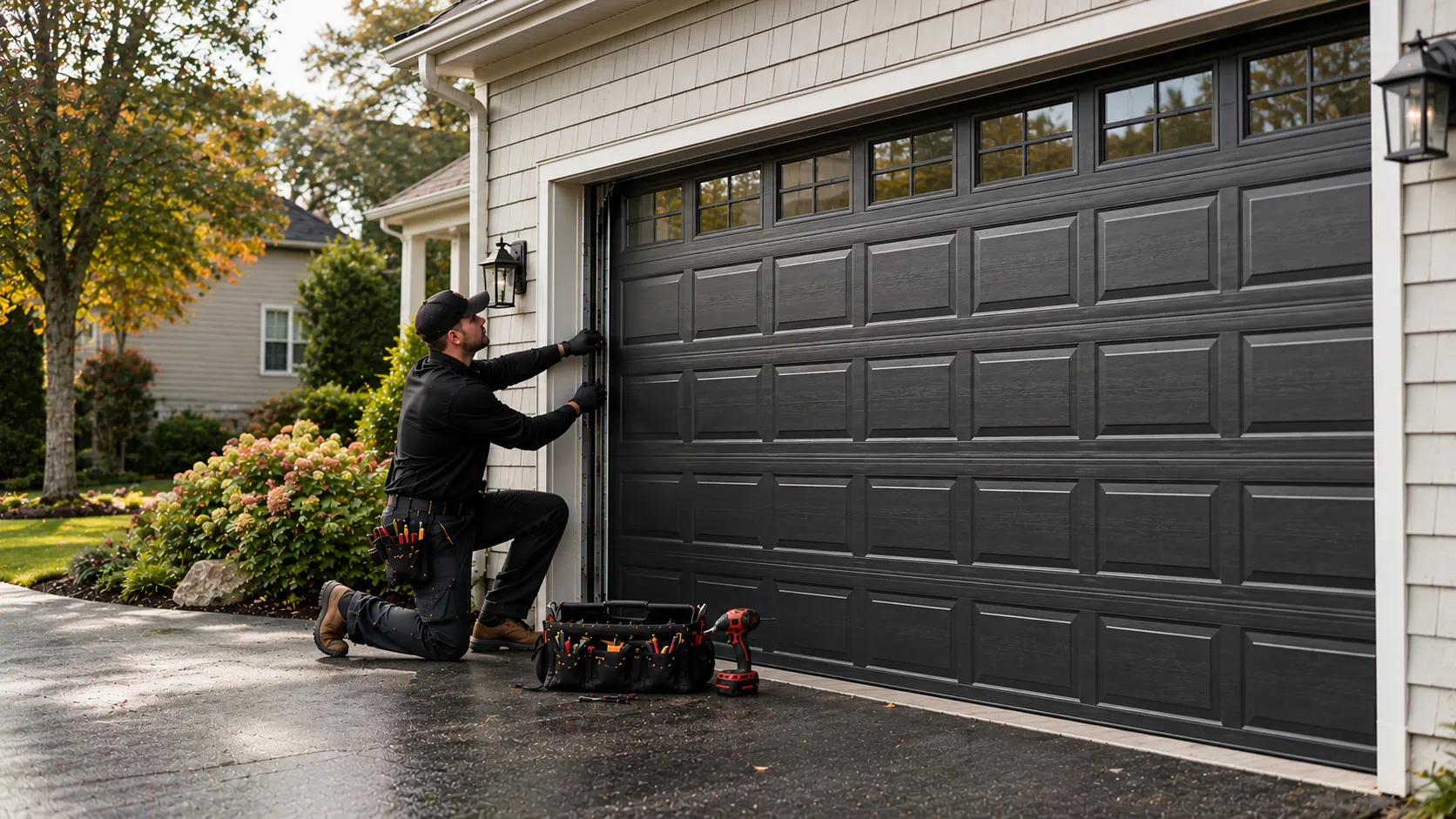
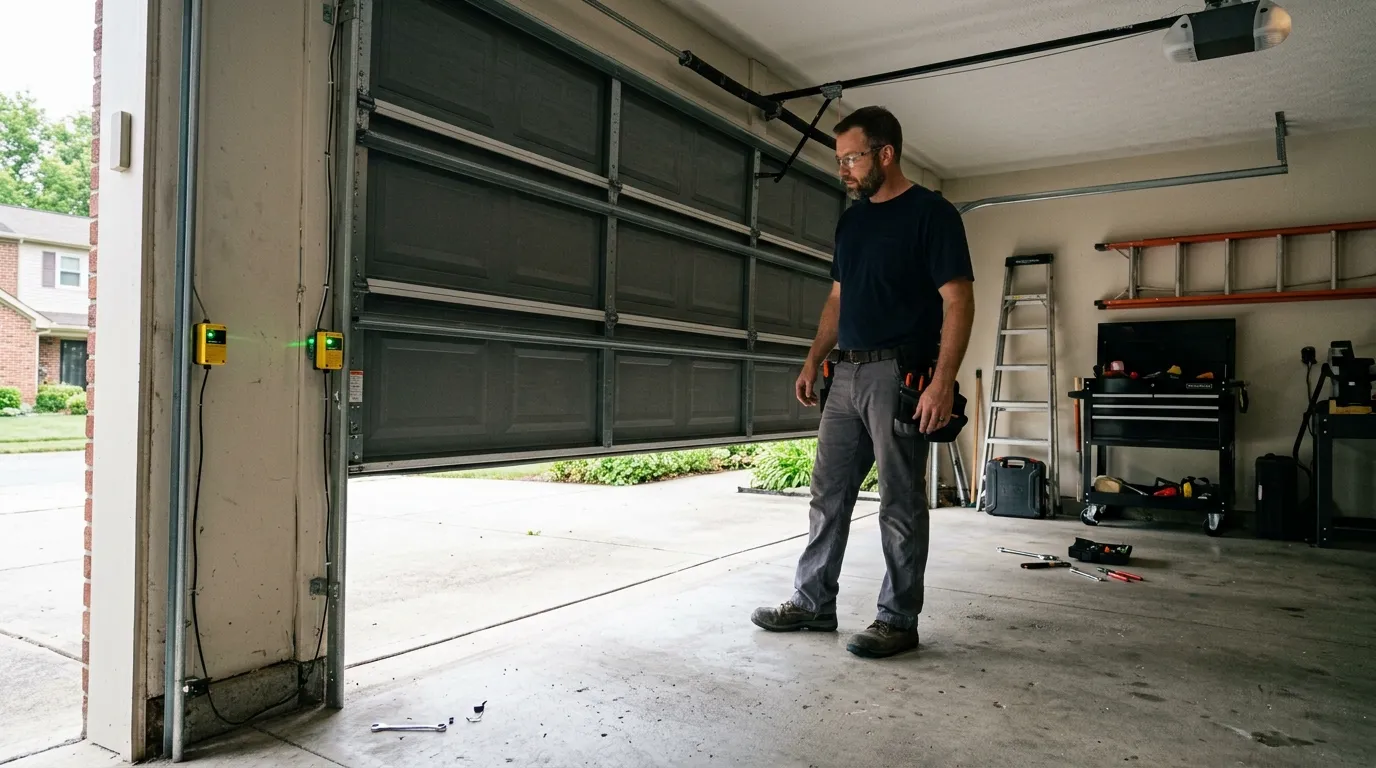
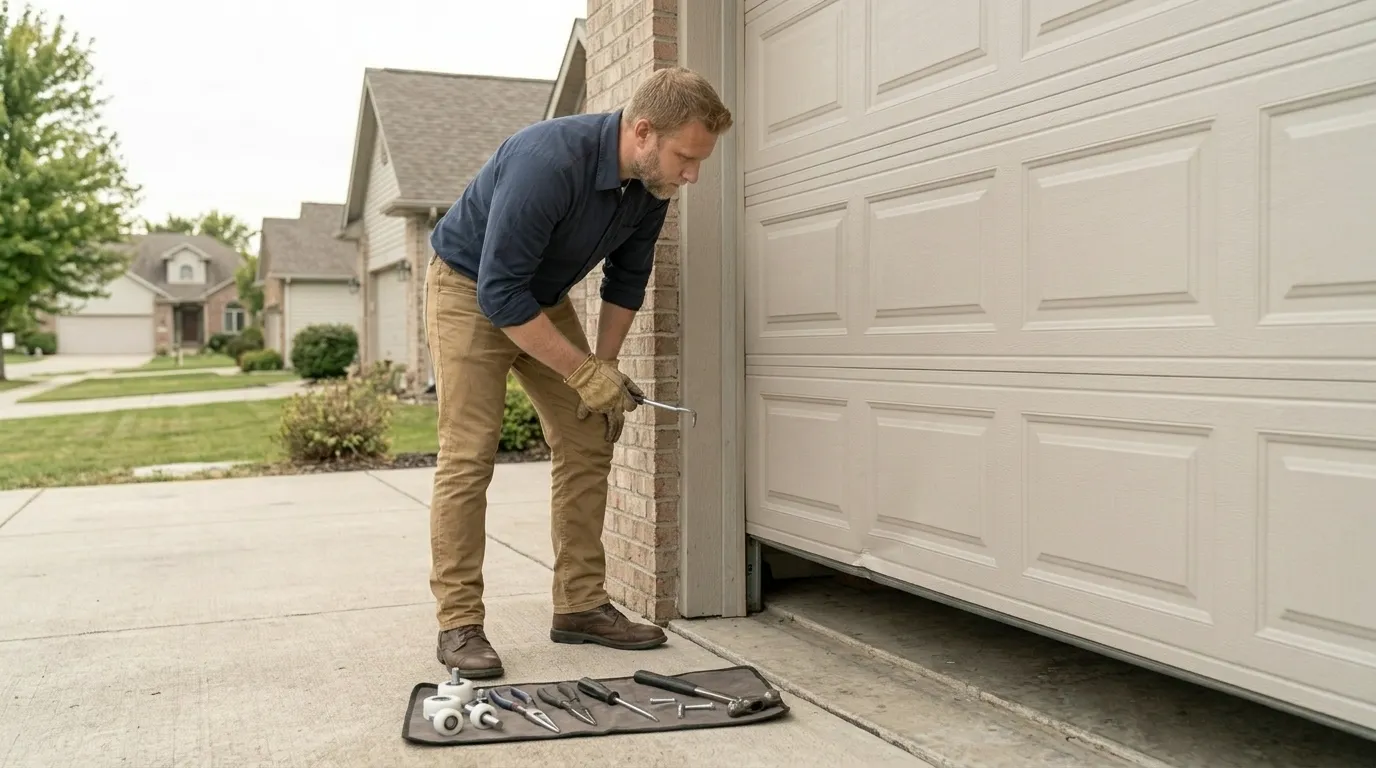
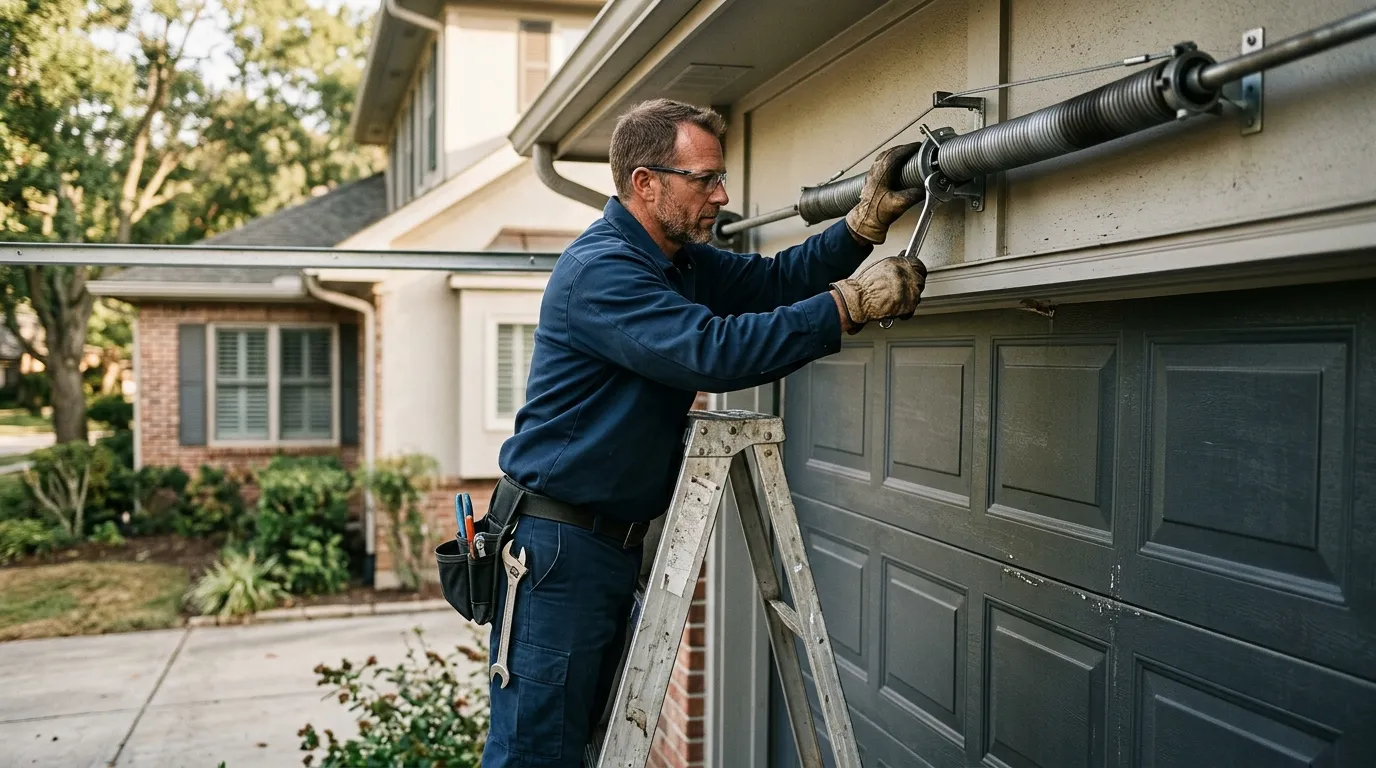
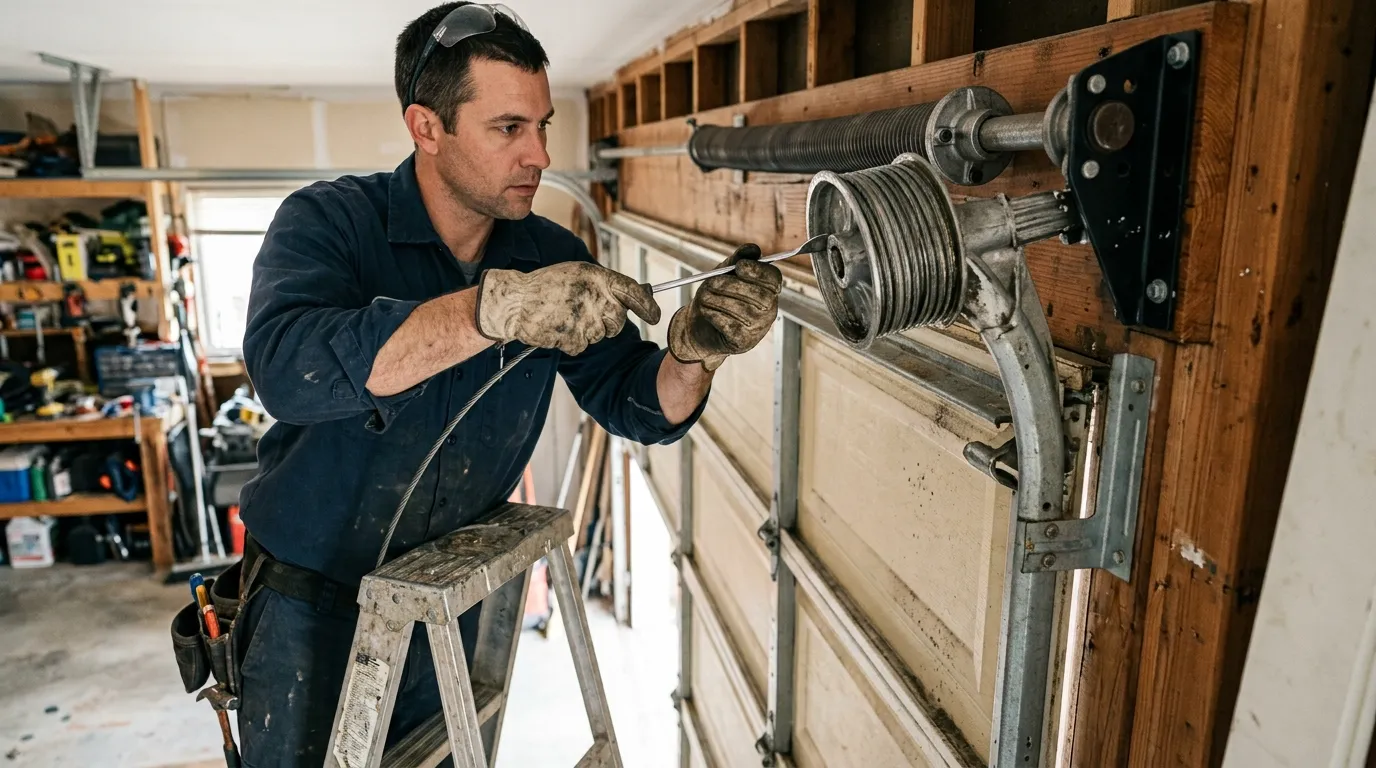
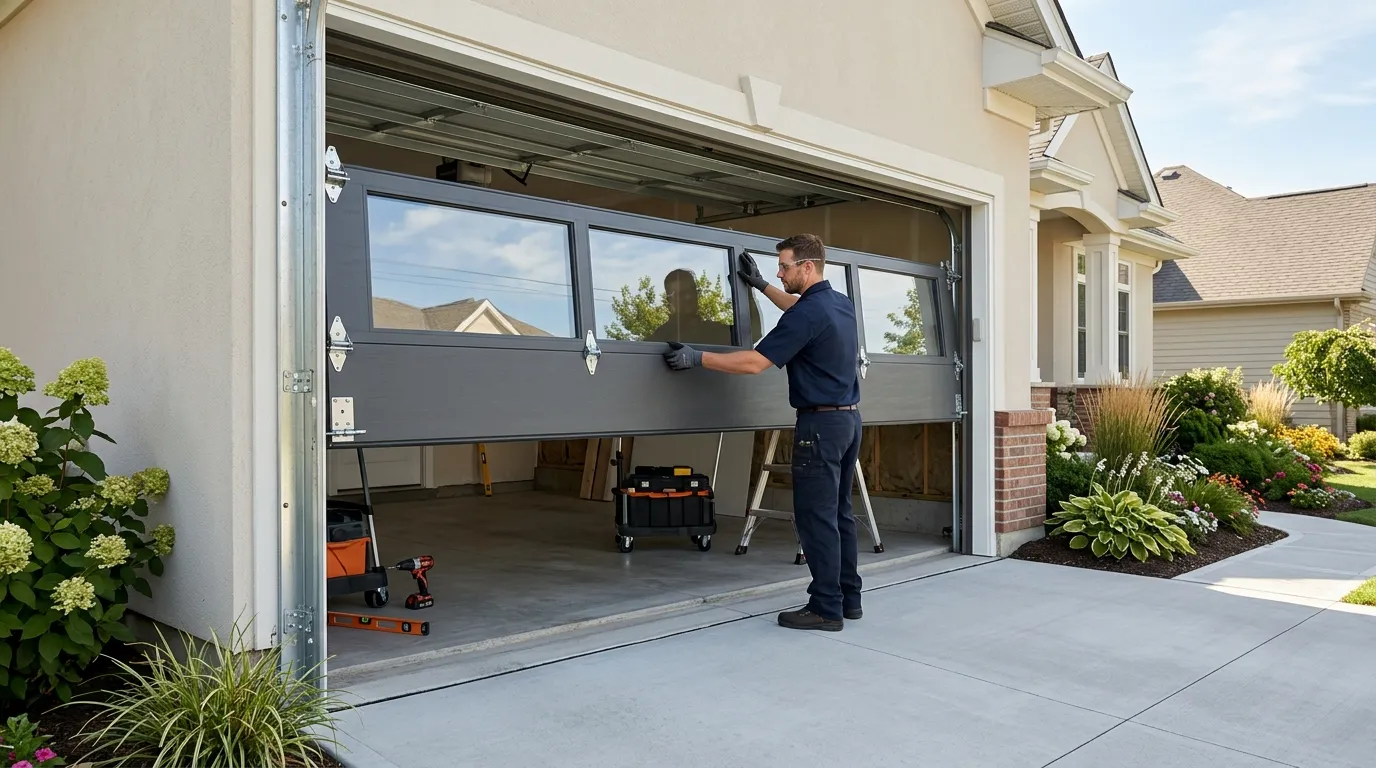
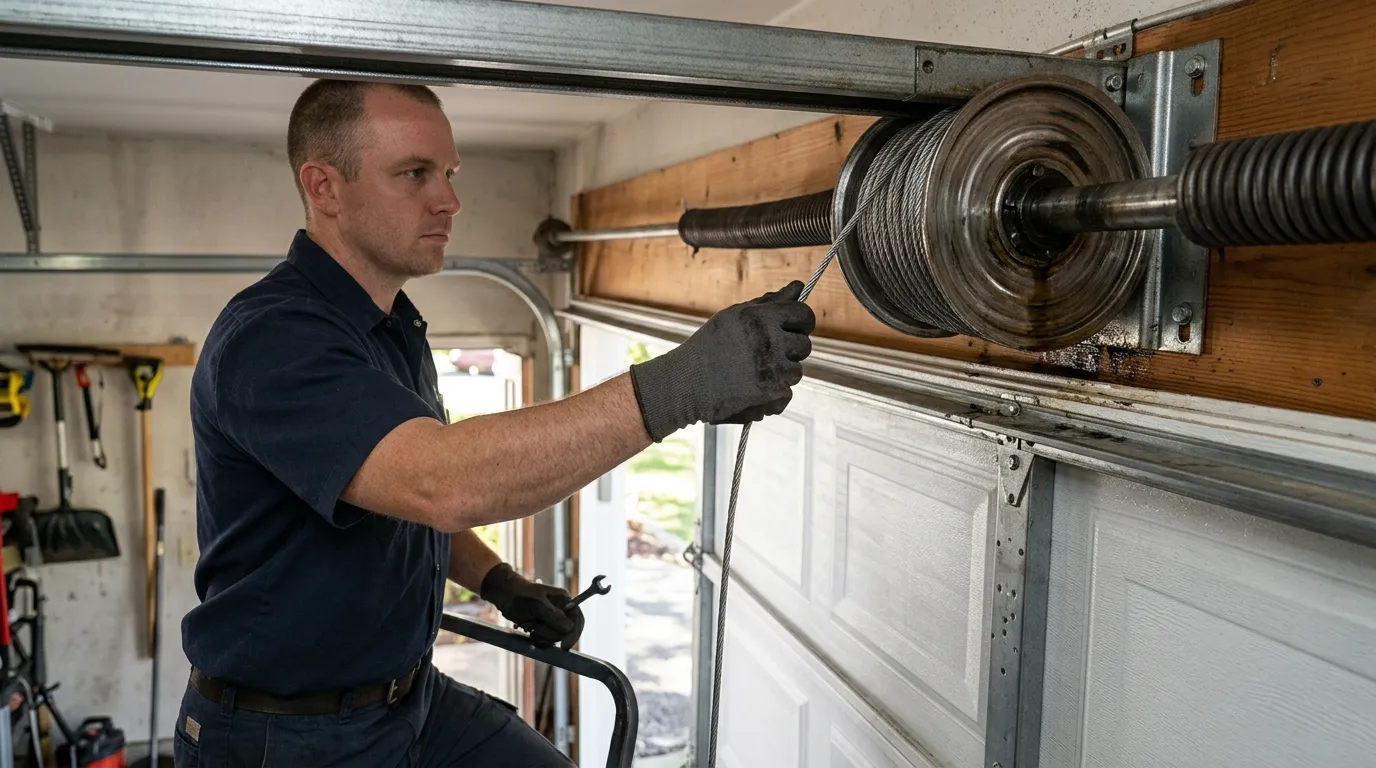
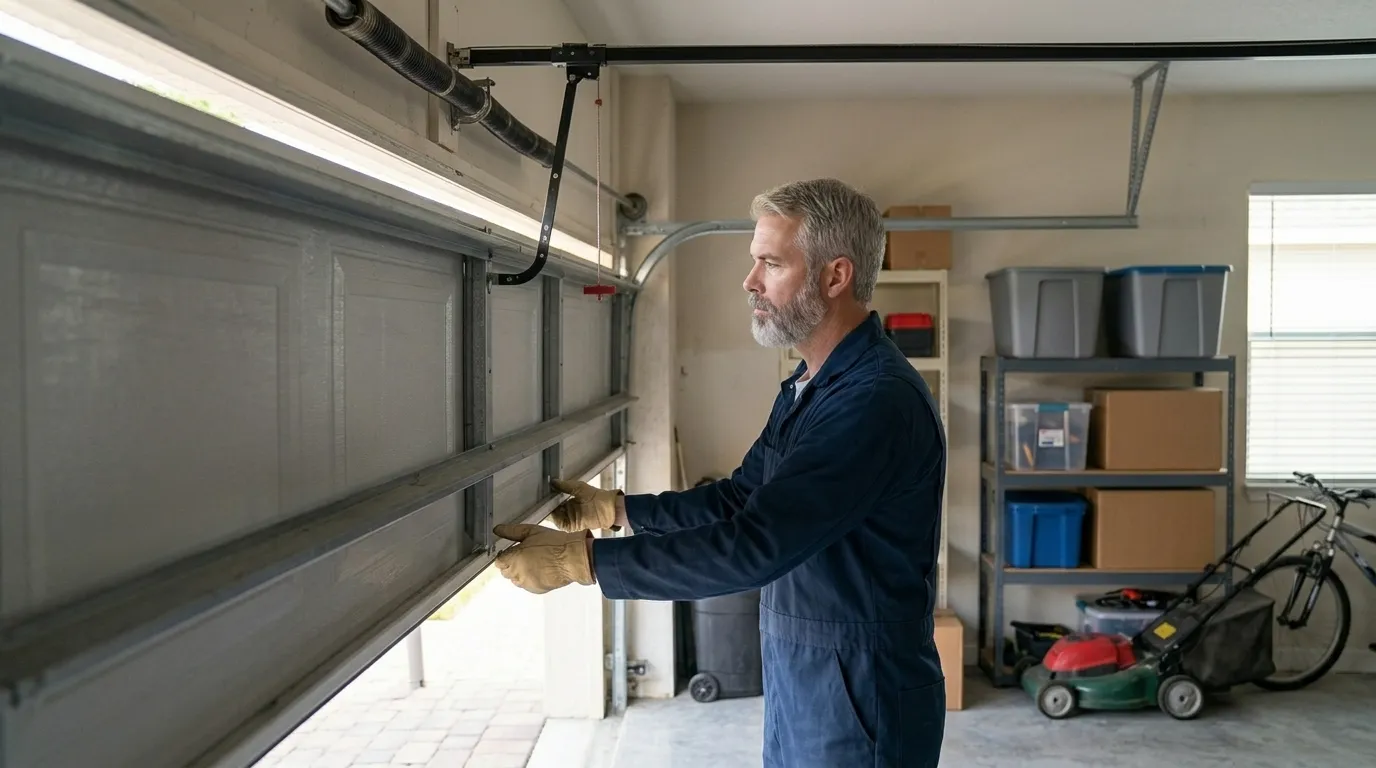
A real maintenance visit isn't a five-minute once-over. We check spring tension and balance first, since an out-of-balance door puts extra load on the opener motor every single cycle. We inspect cables and rollers for fraying or flat spots, check track alignment (older openings shift slightly as houses settle), and lubricate hinges and hardware rated for cold-weather use, not the thin stuff that gums up at 20 degrees.
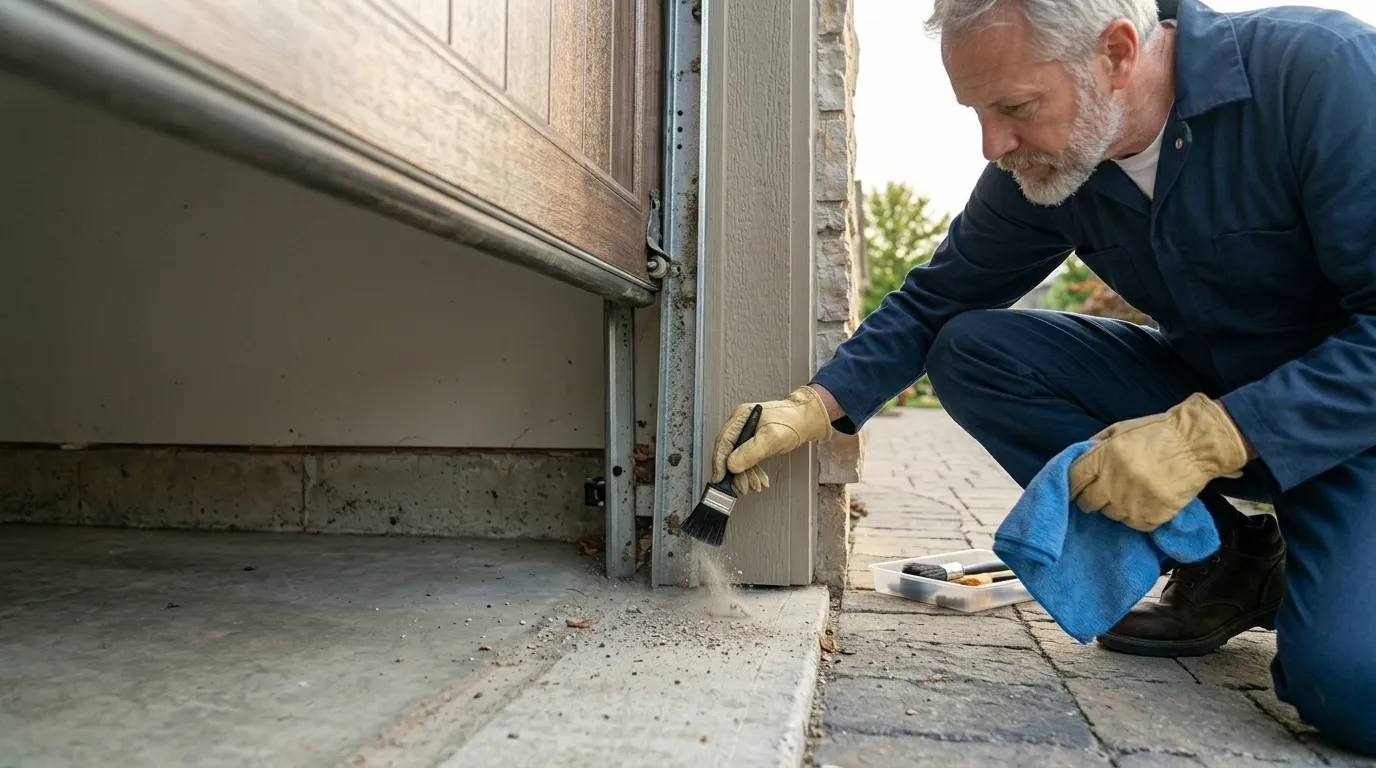
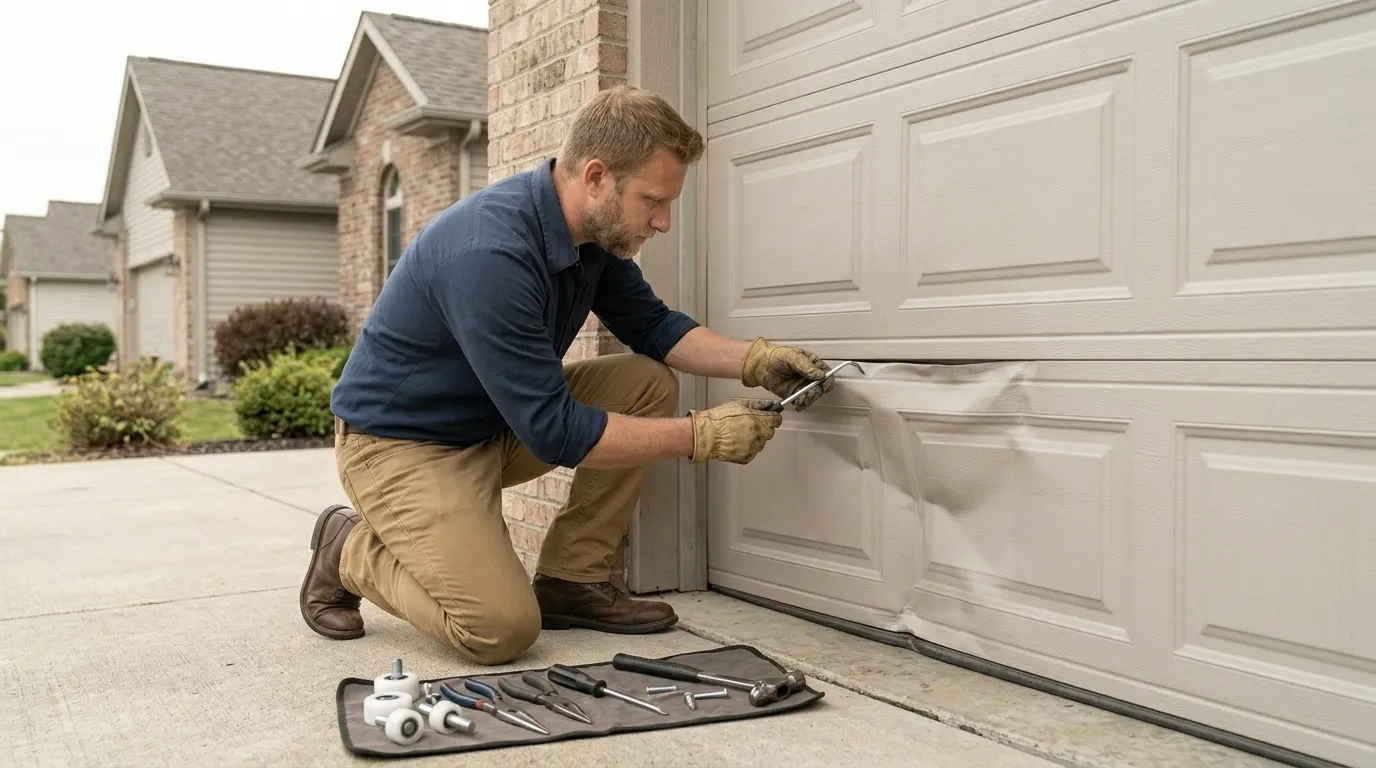
We also test the auto-reverse and force settings on the opener, tighten hardware that's worked loose from years of expansion and contraction, and look at the bottom seal - on a door this old, the seal is usually the first thing to fail and the easiest to miss.
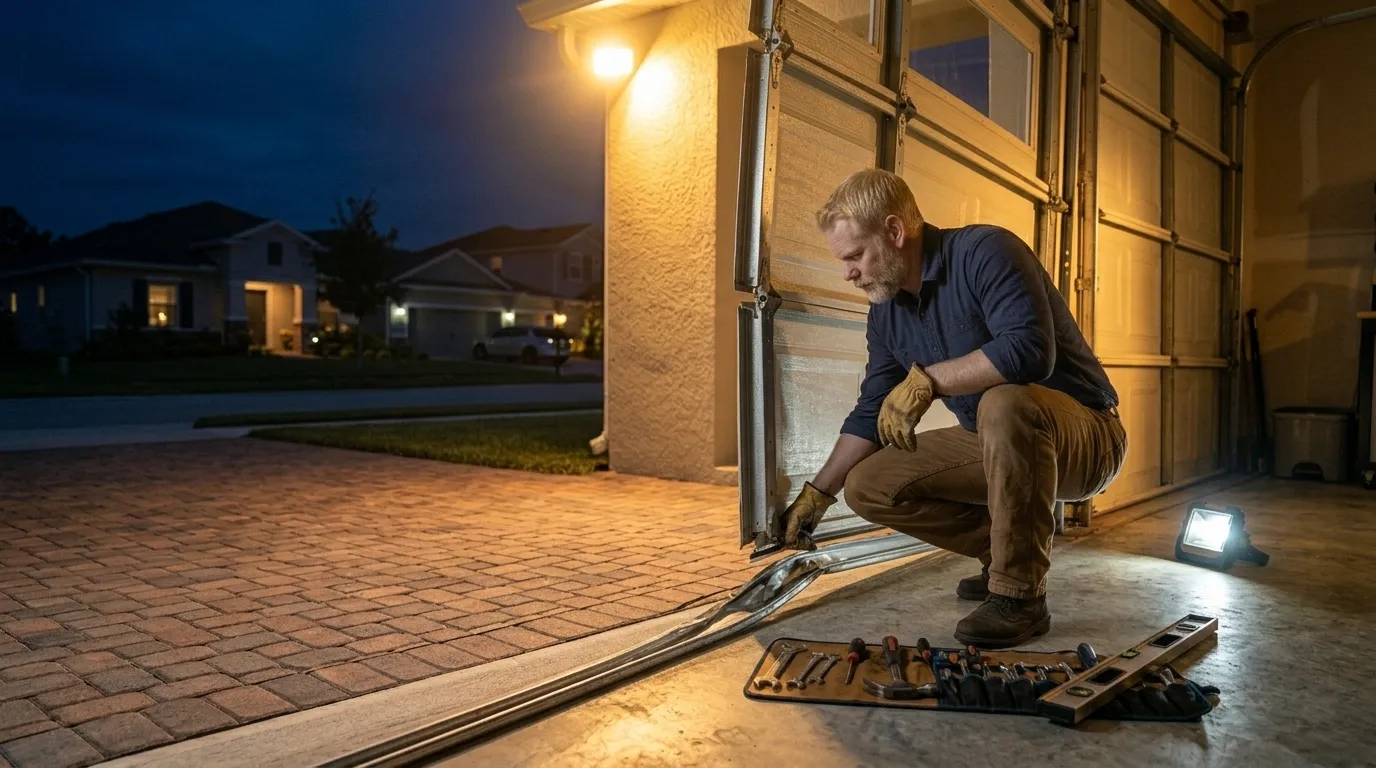
Here's the honest limitation: maintenance extends the life of hardware that's fundamentally sound. It doesn't fix a torsion spring that's already fatigued, and it won't save a track that's bent from an impact. If we find that during a visit, we'll tell you straight rather than keep tightening bolts on a door that needs a real repair. Maintenance is preventive work, not a substitute for replacement parts when they're actually due.
What You Are Seeing
The signs are usually small before they're expensive. A door that used to glide now hesitates a few inches off the floor - that's often spring tension drifting, especially after a hard winter. Grinding or popping sounds during the cycle usually mean a roller has gone flat or a hinge has worked loose, common on doors that have never had the hardware retorqued since installation.
If the door slams the last foot instead of settling, or if it feels heavier to lift by hand than it did last year, that's tension loss talking. On older torsion setups common to this area's 1938-2014 housing stock, that loss tends to show up gradually, then all at once when a cable finally gives.
Watch for cold-weather symptoms too: an opener that struggles on the first cycle of a freezing morning, or a door that sits slightly crooked in the track after a deep freeze. Those aren't opener problems most of the time - they're hardware and lubrication problems that a maintenance visit catches before they turn into a stuck door on the coldest day of the year.
The Cost of This Job
We don't have a flat number to quote you here, because maintenance cost depends on what the door needs - a straightforward inspection and lube job costs a lot less than a visit where we're also replacing a frayed cable or a bad roller. What we can tell you is how owners in this area tend to decide: with median household income here at $72,020 across 279,154 households, most owners we talk to want the door serviced regularly rather than gambling on a spring letting go and taking the opener or a car bumper with it.
Of the households across the service area, 155,574 are owner-occupied houses - the kind with a garage door that's their responsibility, not a landlord's. For that group, a maintenance visit is usually the cheaper path compared to an emergency call after a spring snaps on a Sunday.
If your door needs more than maintenance - a cracked panel, a spring that's clearly shot, an opener on its last legs - we'll say so plainly instead of running up a service ticket for work that won't hold.
How it works
From “it’s stuck” to “it’s fixed”
01
Tell us what’s wrong
Describe the symptom - won’t open, loud bang, opener runs but the door won’t move.
02
On-site diagnosis
A technician tests the door under power and by hand and finds what actually failed.
03
Clear, up-front plan
You get the fix that’s needed and what drives the cost - before any work starts.
04
Repaired & tested
The repair is done, the door is set true and tested, and the work area left clean.
Serving Pittsburgh, PA - tell us what your door’s doing and we’ll take it from there.
How often should a garage door get serviced in Pittsburgh's climate?
Once a year is a reasonable baseline given the COLD-severe swing this region sees - hardware that's fine in summer can bind or snap after a hard freeze-thaw winter. If your door is on the older end of the area's 1938-2014 housing stock, a fall check before the cold sets in catches most tension and lubrication issues before they become breakdowns.
Will maintenance fix a spring that's already making noise?
Not if the spring is actually fatigued. Maintenance catches loose hardware, dry hinges, and minor tension drift, but a spring that's grinding or visibly stretched needs replacement, not lubrication. We'll check it during the visit and tell you which one you're dealing with.
My house is older - does that change what maintenance should cover?
Yes. Houses across this service area built around the 1955 median often have torsion hardware and bracket sizing that differs from newer installs. A maintenance visit on one of these should include a real balance and hardware check, not just a surface lube, since the parts age differently than anything installed in the last decade.
Ready to get your garage door sorted?
Tell us what it’s doing and where you are in Pittsburgh - we’ll take it from there.