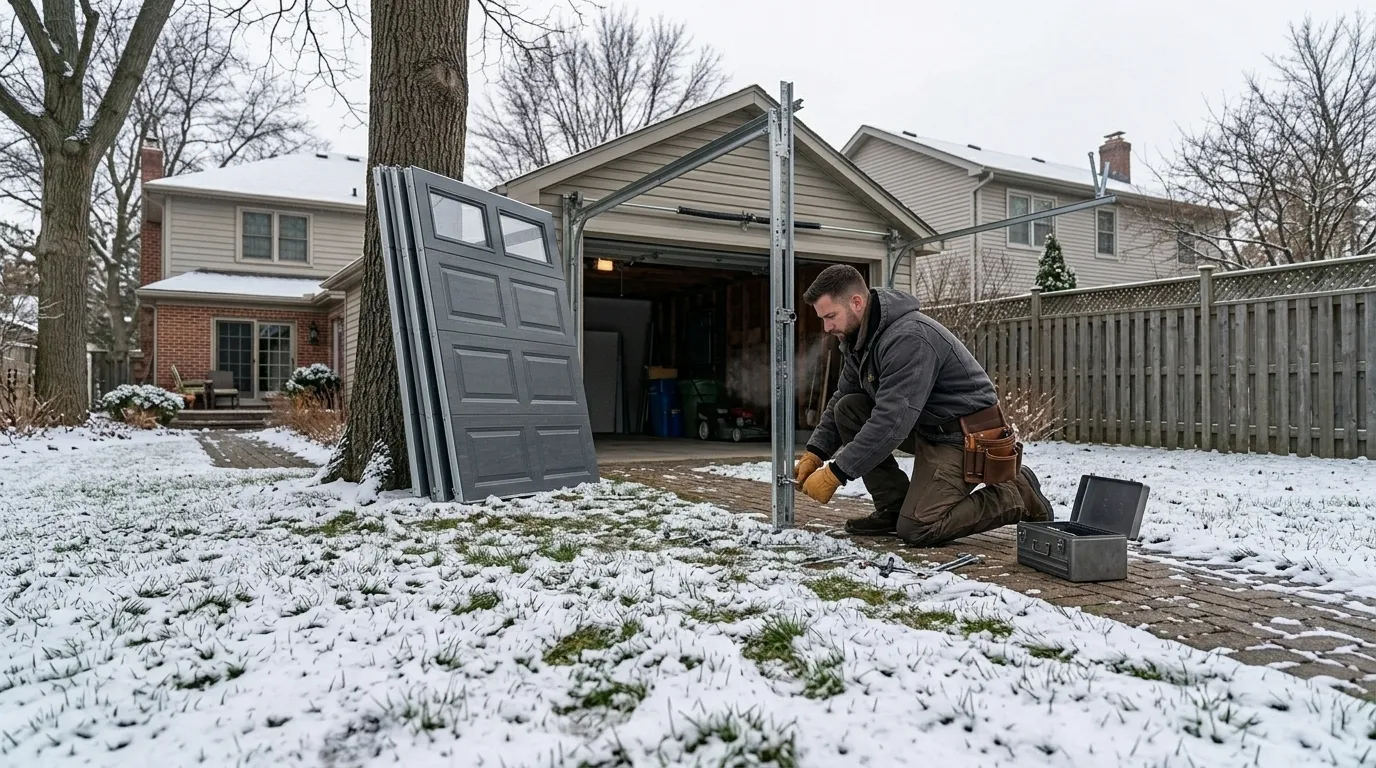
A door doesn't jump its track for no reason, and around Pittsburgh the reason is usually the house. Most of the stock across this service area went up between 1938 and 2014, with the median build year sitting at 1955, and across the 108 named areas we cover, the majority of homes are pre-1960. That matters because tracks from that era were hung on wood jambs that have shifted with the foundation over sixty-plus years, and the horizontal angle of the track is rarely still true. Add a cold-severe climate band and you get freeze-thaw cycles that heave concrete slabs a fraction of an inch every winter. That fraction is enough to throw a track out of plumb, especially on the older steel doors that were never designed with today's roller tolerances. A door that's slightly out of alignment doesn't announce itself right away. It rides rough for a season, then one cold morning a roller finally jumps the rail. On a newer build in a flatter part of the region, you might go years without this. On a lot of the streets in this service area, it's one of the most common calls we get. This isn't a defect in any one house - it's what happens when 1950s hardware meets Pittsburgh winters for seven decades running.
What the Repair Takes
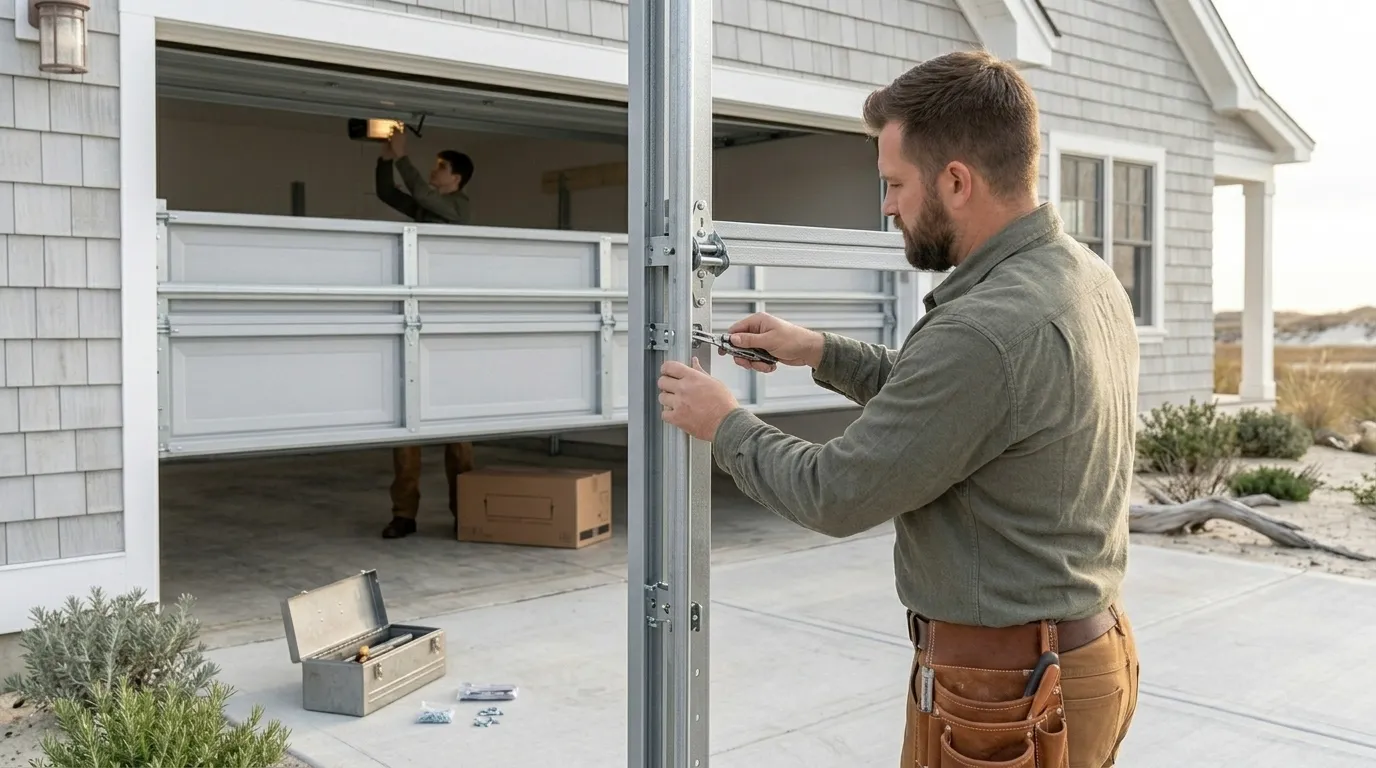
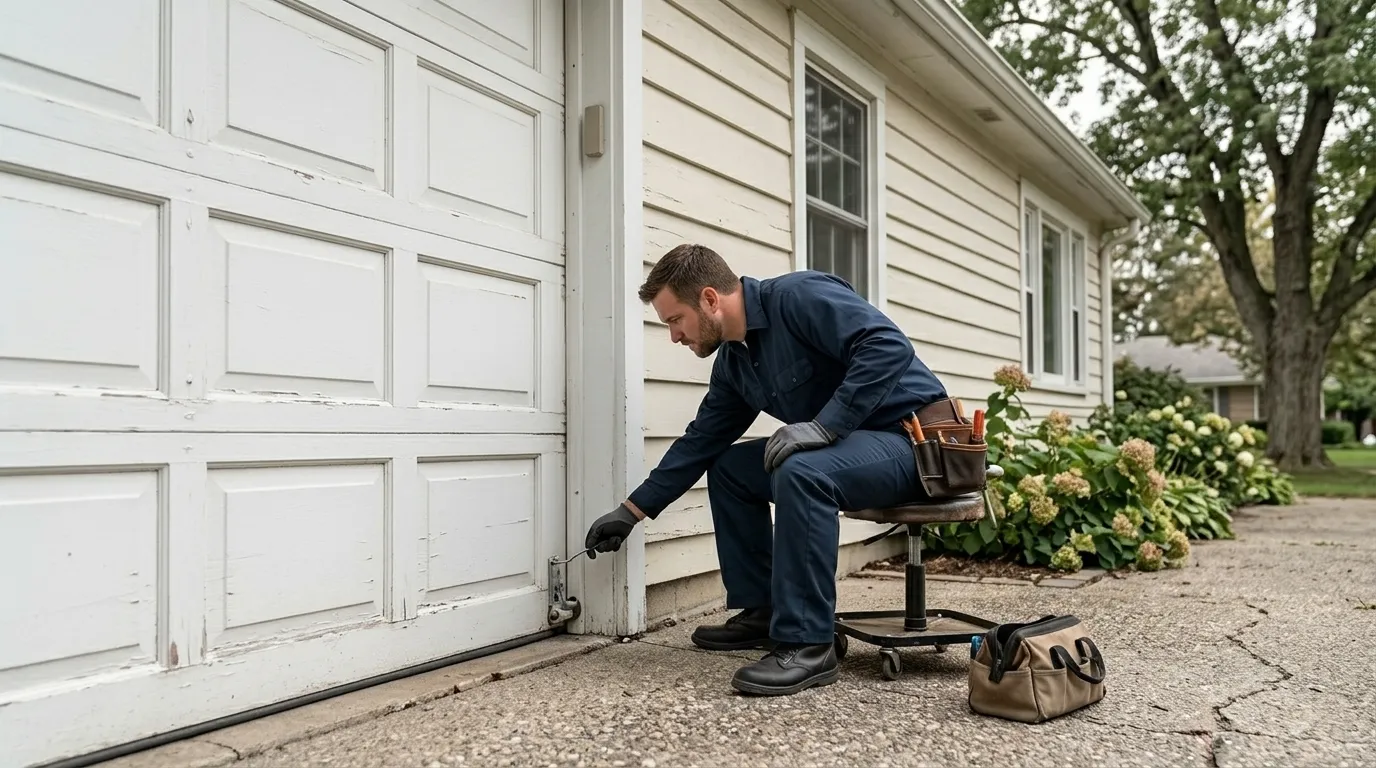
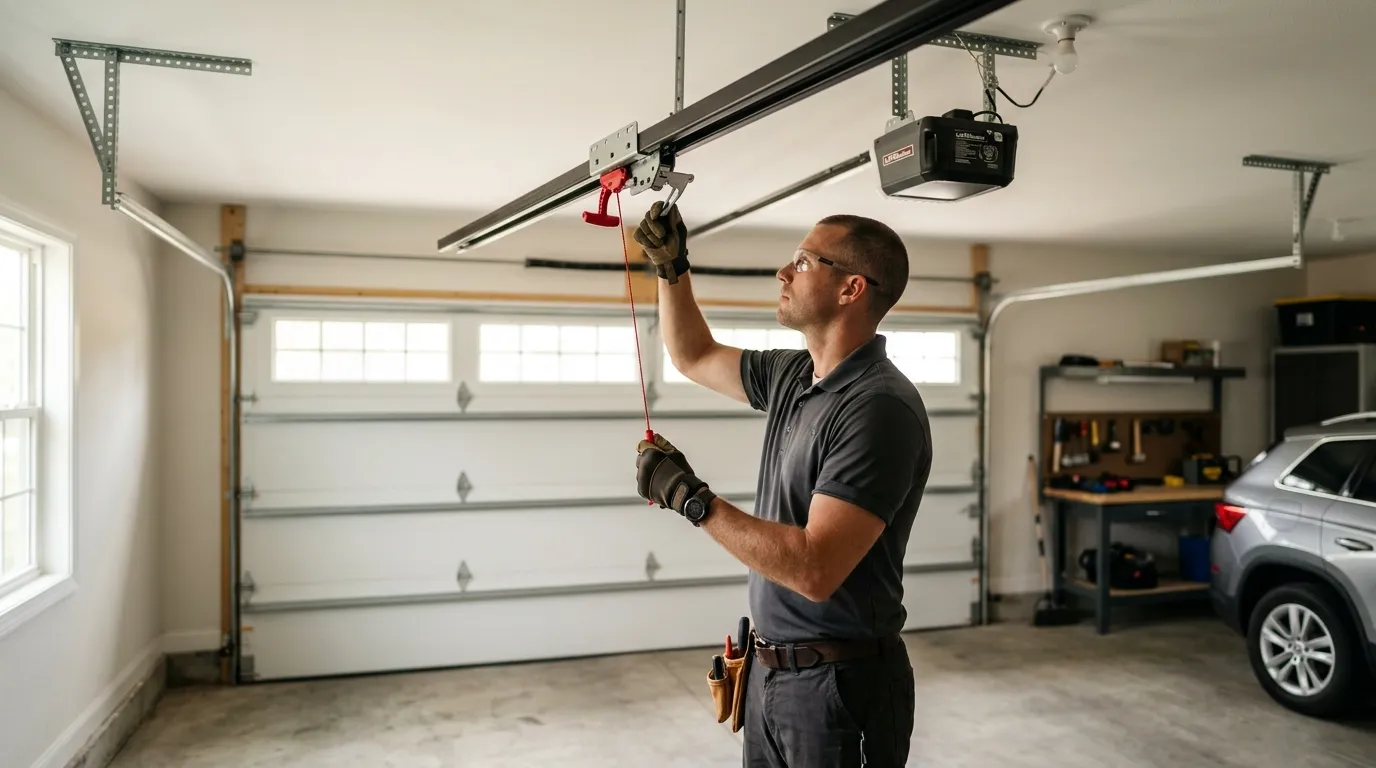
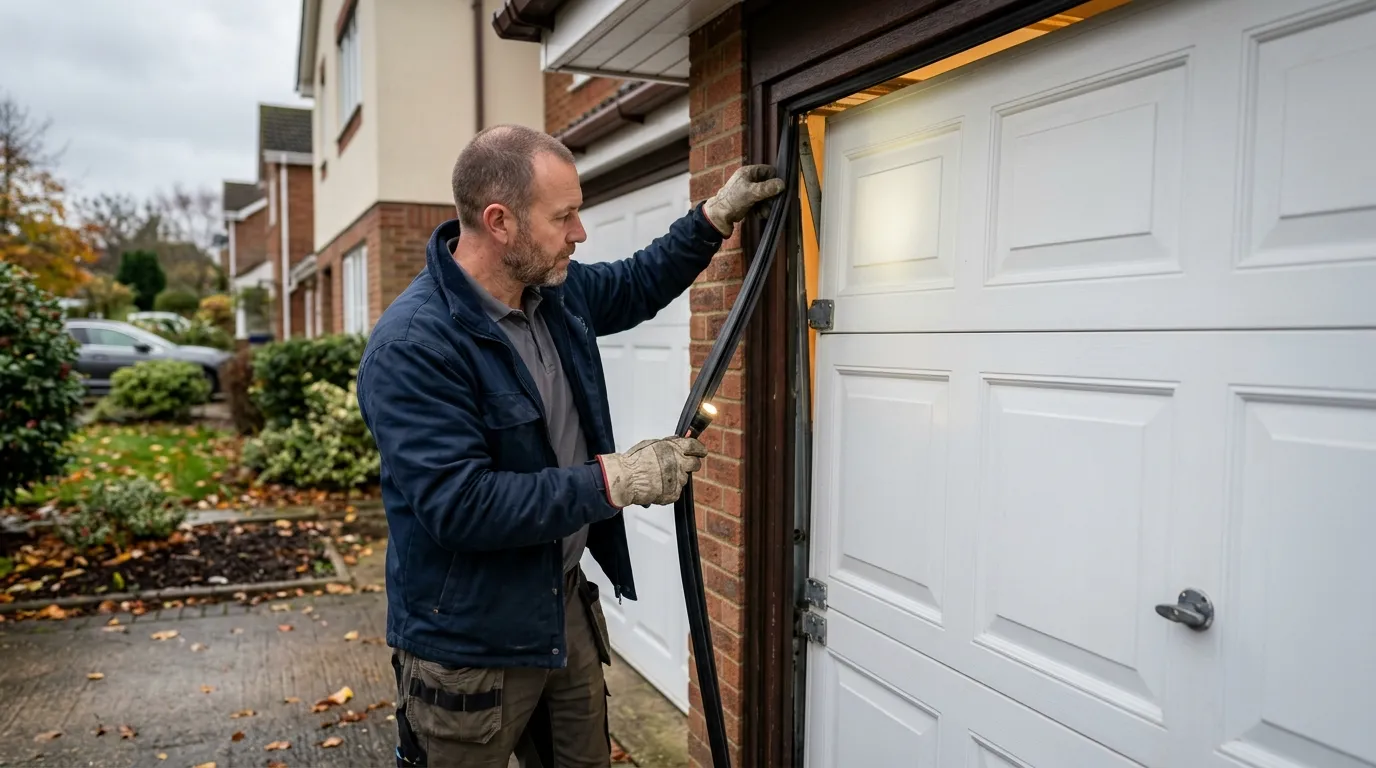
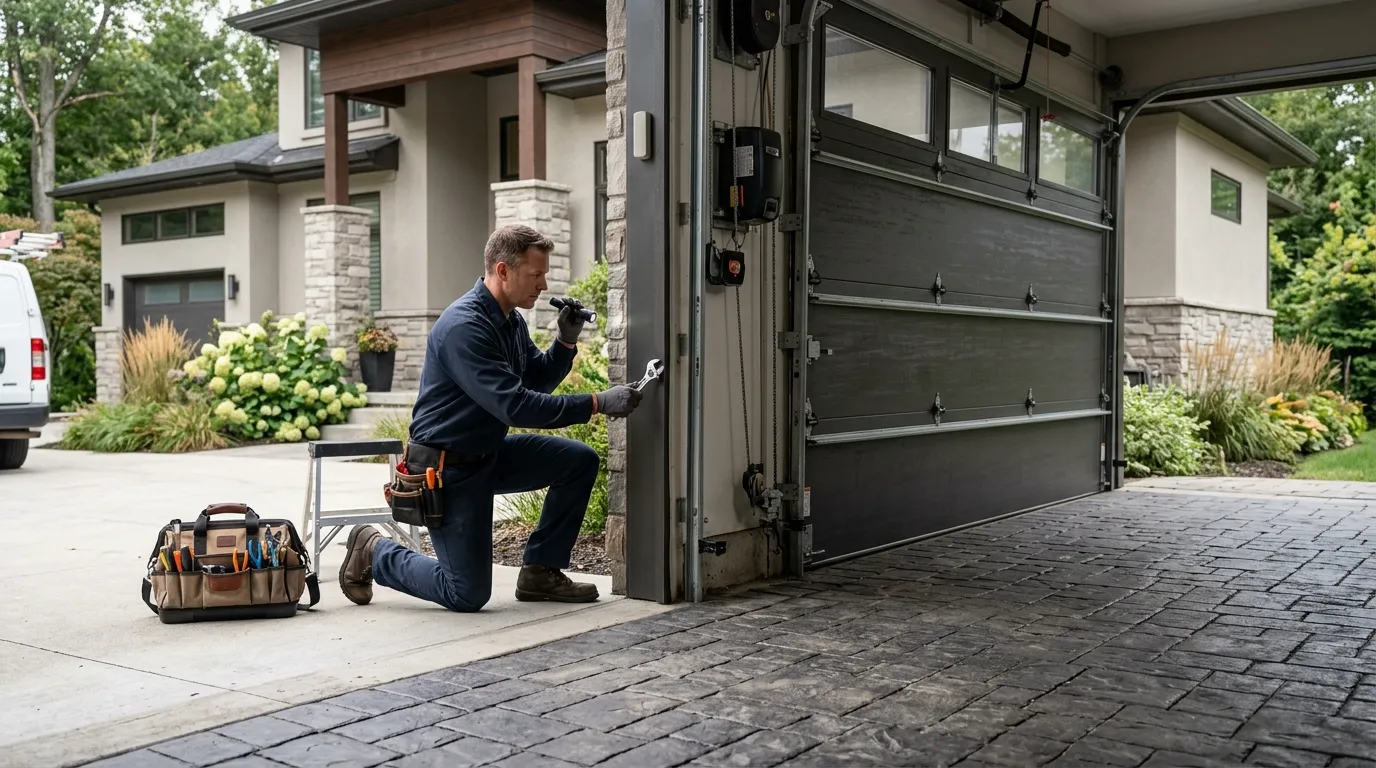
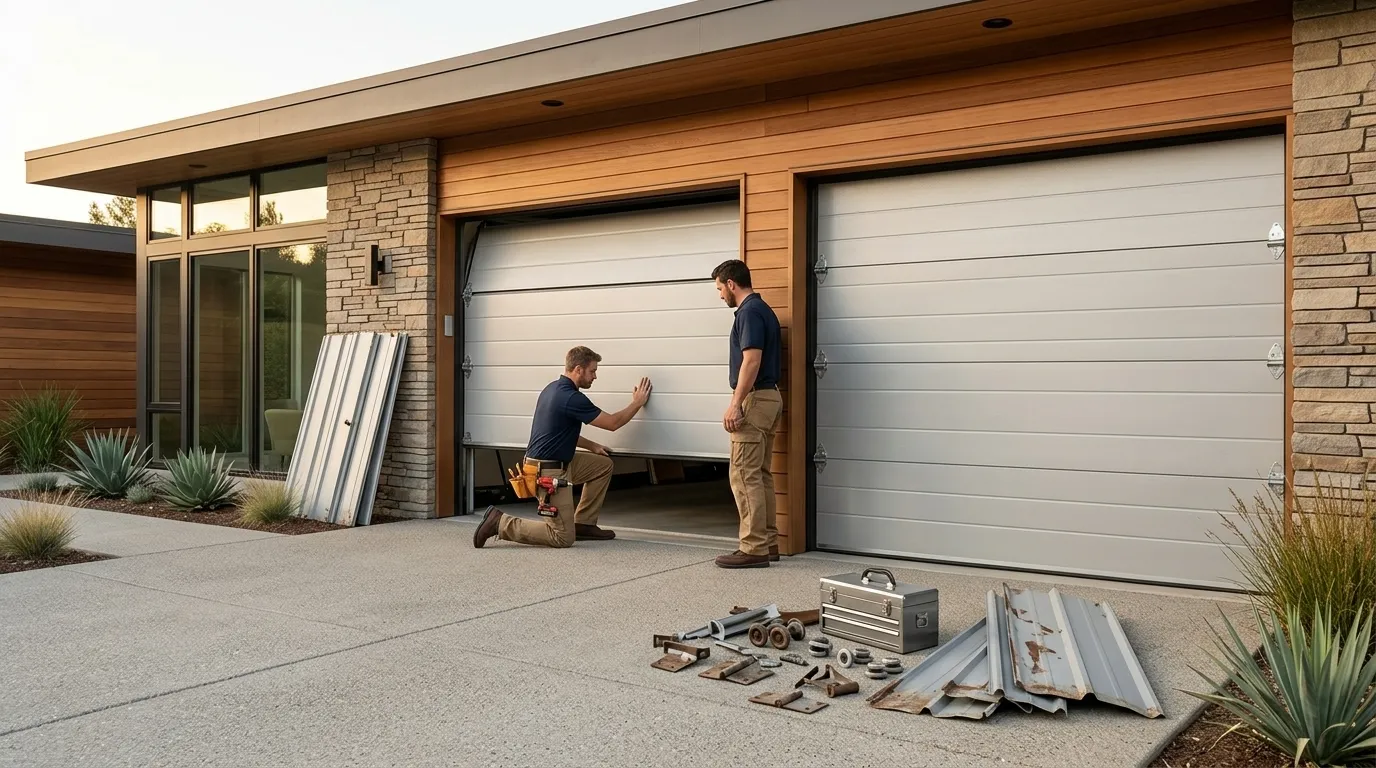
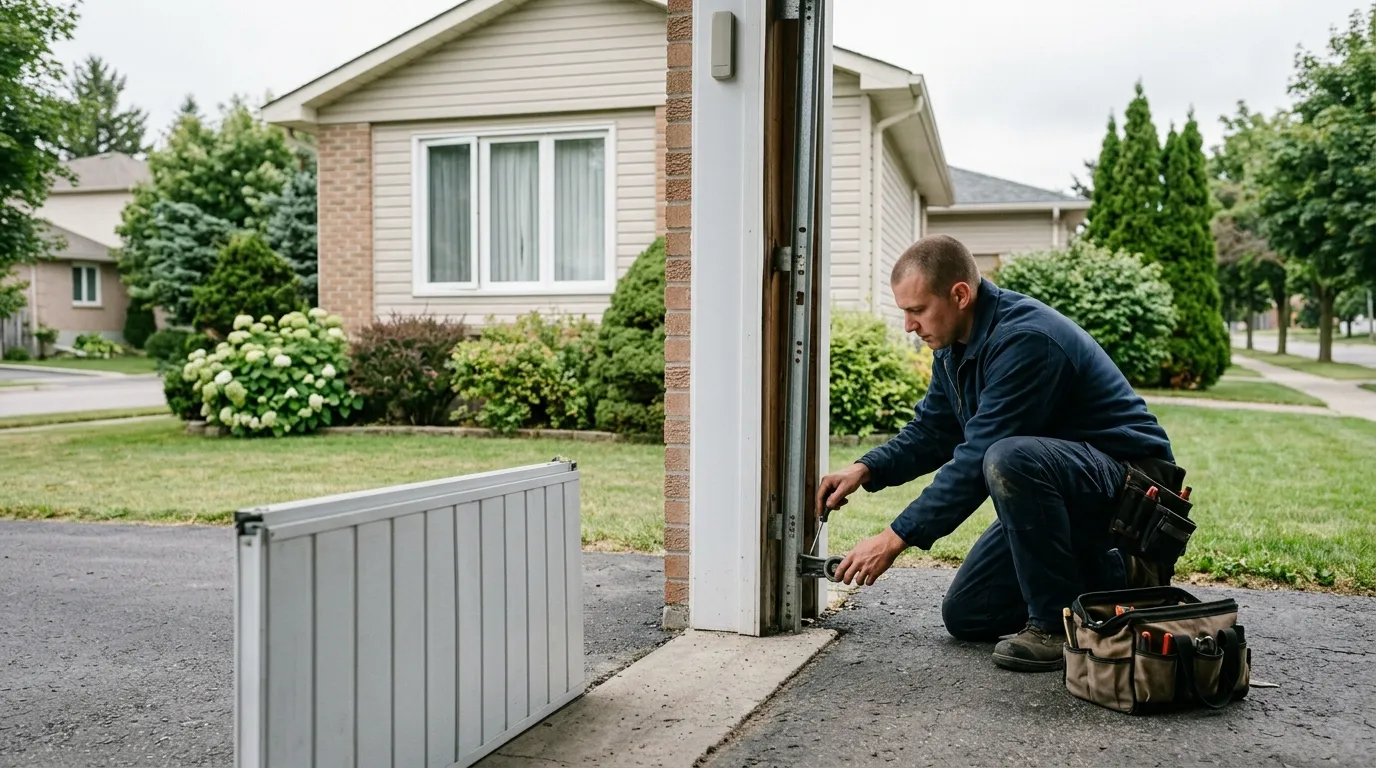
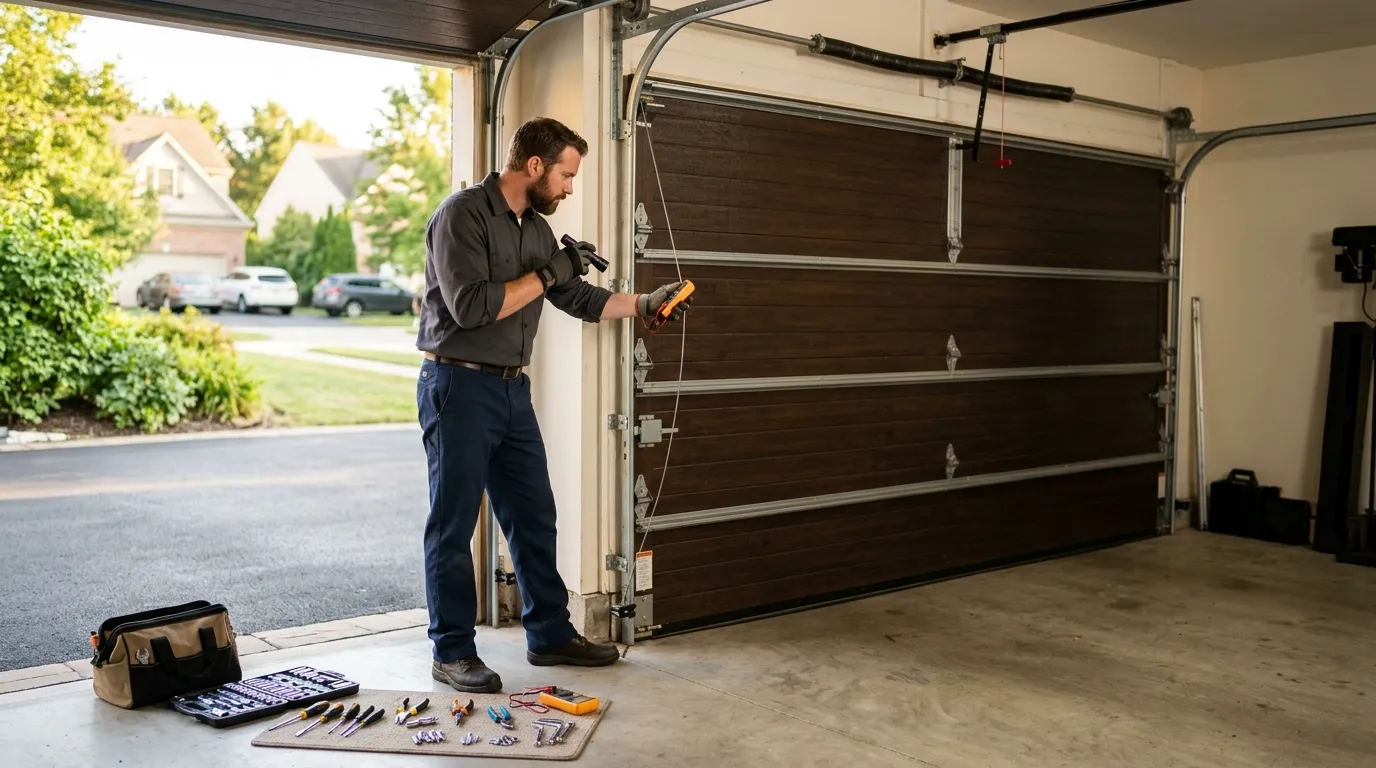
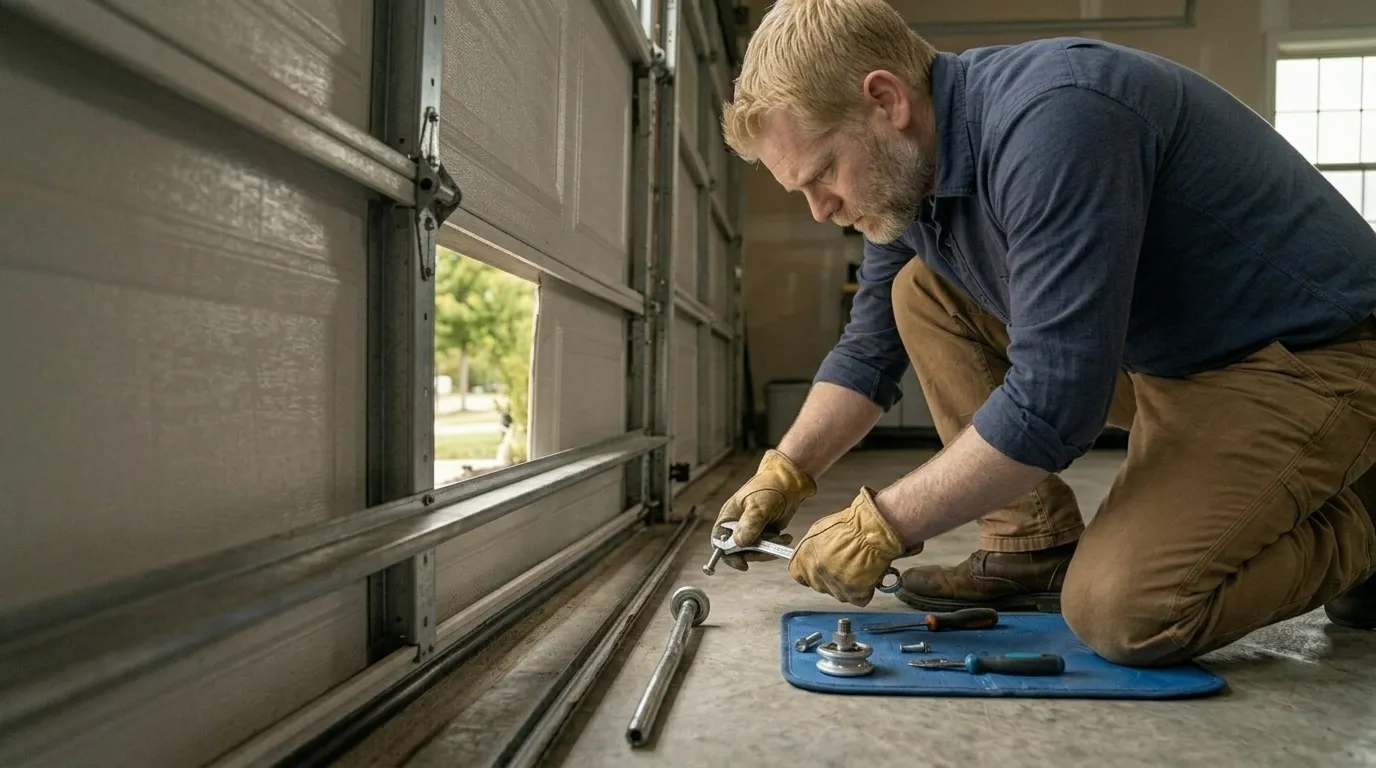
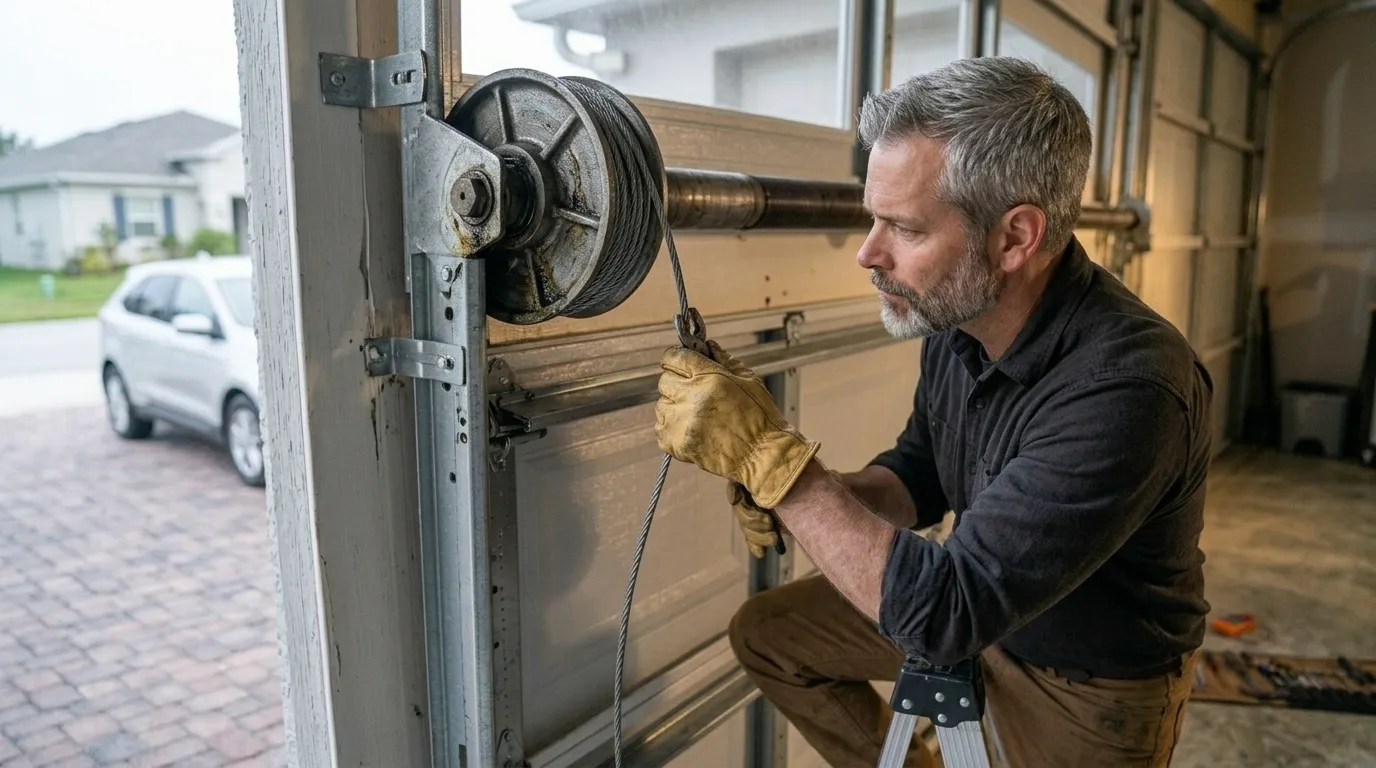
First we find out if the door came off the track because of the track, or because of something upstream of it - a broken cable, a bent roller, a hinge that's pulled loose from a panel. On the pre-1960 stock common here, brackets are often the original ones, softened by decades of vibration, and re-securing them to old wood framing takes different fasteners than a new-construction jamb would need. If the track itself is bent - which happens when a door gets forced back onto a rail that's already out of true - it usually needs to come off and get either straightened or replaced outright; a bent section doesn't just bend back and hold. We check both vertical tracks and the horizontal run for level, because a door hung crooked will jump again even after you reset the rollers. On doors with the deeper roller channels typical of older steel construction, we also check that the rollers themselves haven't worn oval, which throws the whole alignment off even with a straight track. Once it's back on and running, we cycle it a dozen times under load before calling it done, because a door that looks fine standing still can still bind halfway up.
What You Are Seeing
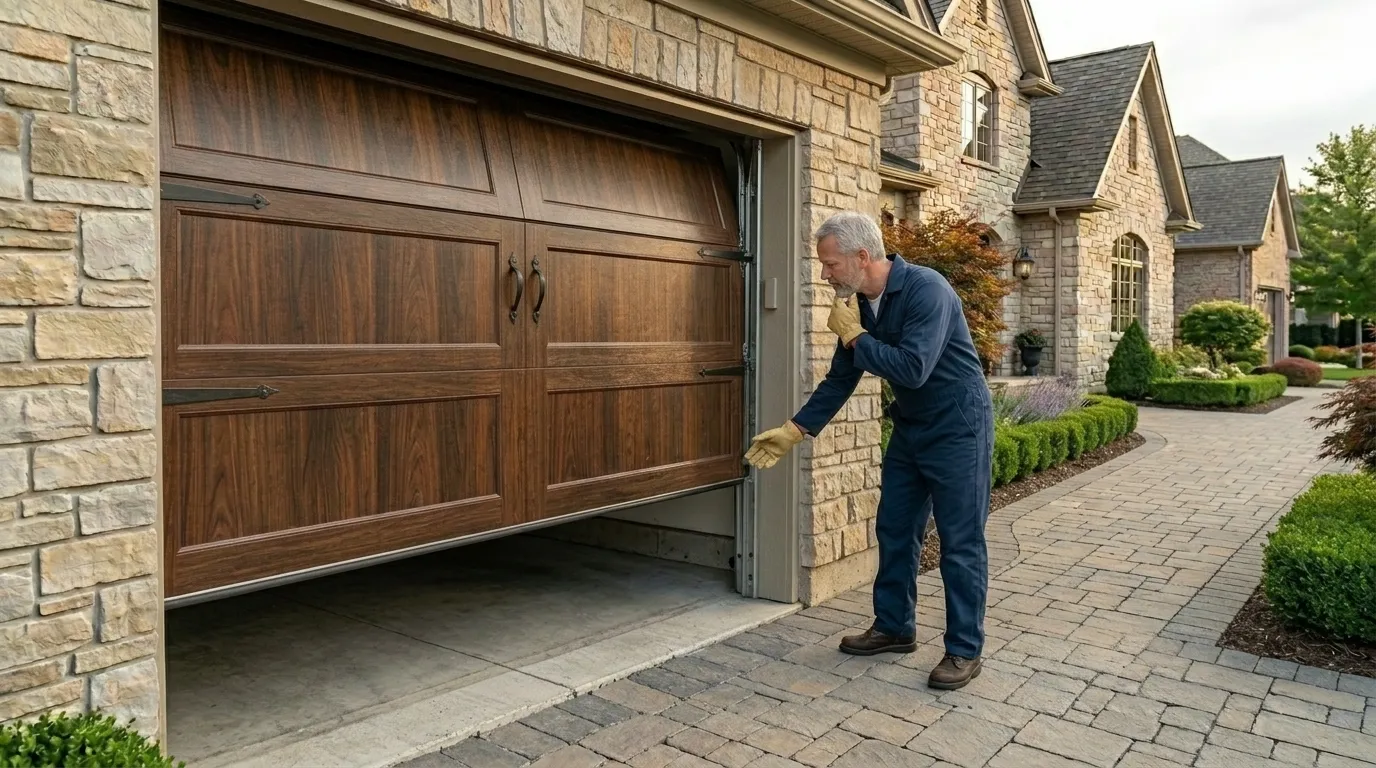
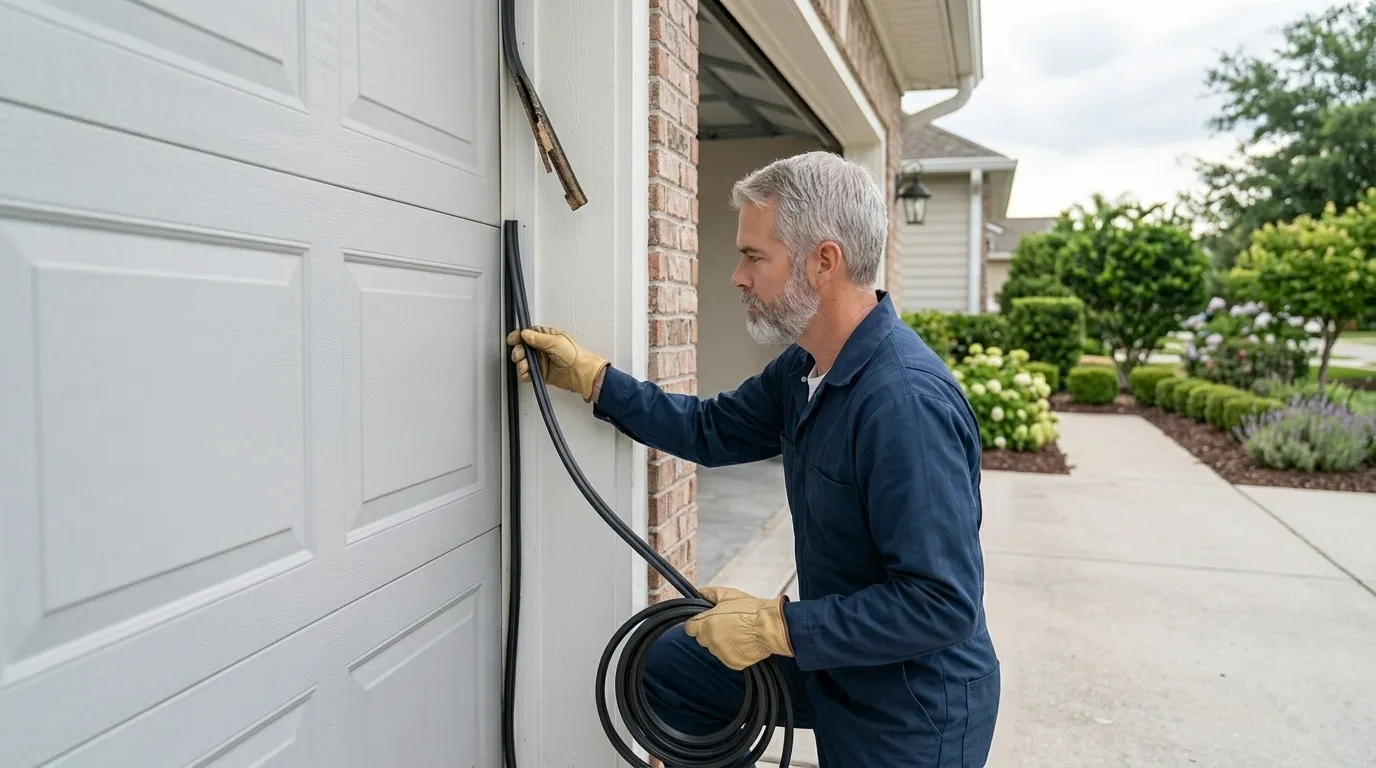
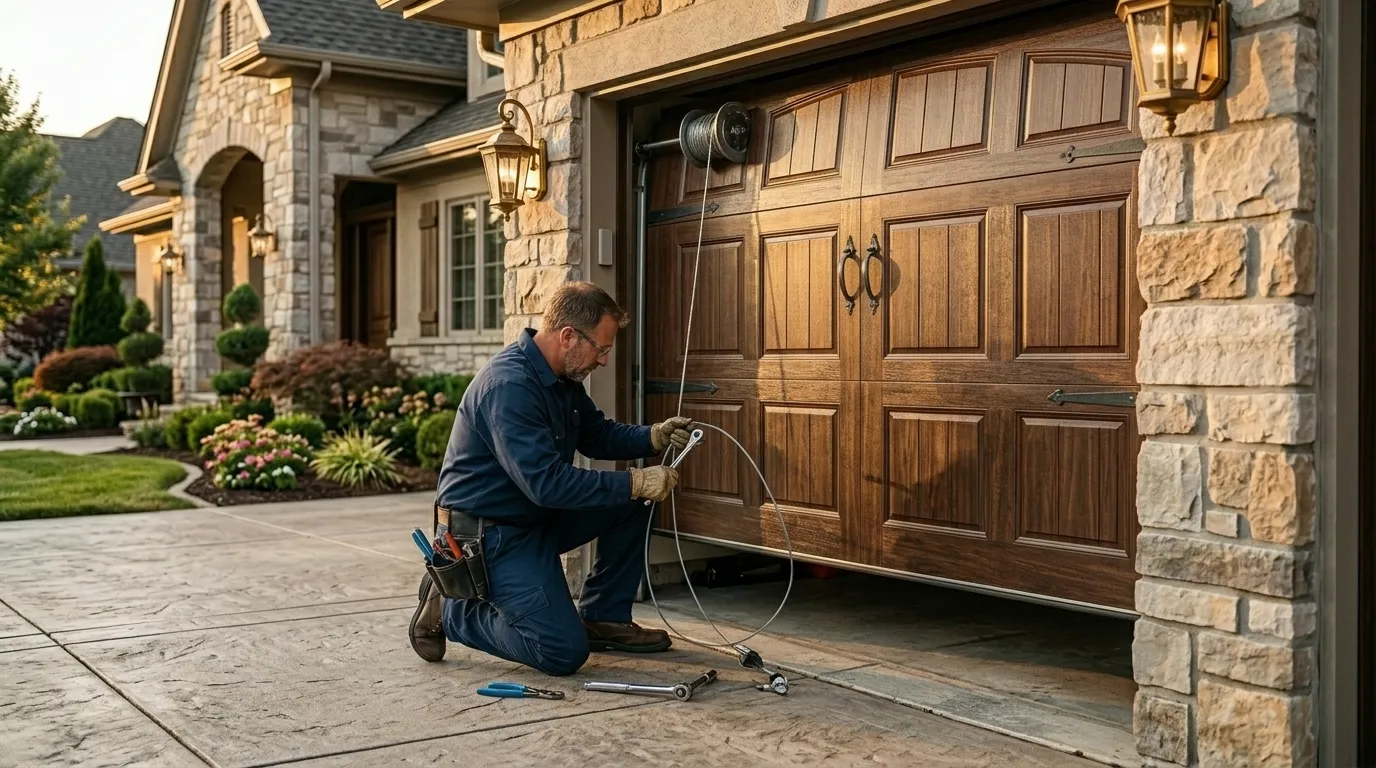
The signs are usually loud before they're visible. A grinding or popping sound partway through the cycle, a door that hesitates or jerks instead of gliding, a visible gap where the roller has slipped out of the channel on one side. Sometimes the door still opens and closes but sits crooked in the frame, catching the weatherstrip on one side - that's a door still on the track but riding out of true, which is often the last warning before it comes off completely. On older homes in this service area, we also see cables that have started to fray right where they cross a roller bracket that's shifted position; that's a symptom of the same underlying movement, not a separate problem. If you hear metal-on-metal contact anywhere along the vertical rail, stop running the door. Forcing it through another cycle usually turns a track repair into a track-and-panel repair, and sometimes a spring repair too, since a jammed door puts extra load on whatever's still holding it up.
The Cost of This Job
We don't have a flat number to post here, because the range on this repair is wide - a simple roller reseat is a different job than replacing a bent track section or repairing a bracket torn loose from old jamb framing, and we won't quote sight unseen. What we can tell you is what drives the cost: whether the track needs straightening or full replacement, whether rollers and hinges need to come with it, and whether the bracket mounting itself needs to be redone. With median household income across the service area at $72,020 and roughly 155,574 owner-occupied houses among 279,154 households, a lot of the calls we get are homeowners trying to decide whether a repair is worth it versus letting a shop-worn door limp along. Our honest answer: if the panel and opener are otherwise sound, a track repair is almost always the cheaper path. If the door has been forced off the rail more than once, the accumulated damage - to cables, rollers, and the panel itself - can tip the math toward replacement instead.
How it works
From “it’s stuck” to “it’s fixed”
01
Tell us what’s wrong
Describe the symptom - won’t open, loud bang, opener runs but the door won’t move.
02
On-site diagnosis
A technician tests the door under power and by hand and finds what actually failed.
03
Clear, up-front plan
You get the fix that’s needed and what drives the cost - before any work starts.
04
Repaired & tested
The repair is done, the door is set true and tested, and the work area left clean.
Serving Pittsburgh, PA - tell us what your door’s doing and we’ll take it from there.
Why does my garage door keep coming off the track every winter?
In this service area it's almost always the combination of a cold-severe climate and older housing stock. Freeze-thaw cycles shift the slab slightly each winter, which nudges a track that was already installed decades ago on now-settled framing. That small shift is enough for a roller to jump the rail on a cold morning.
Can I push the door back onto the track myself?
We'd rather you didn't. Forcing a door back onto a track that's out of true almost always bends the rail further or damages a roller, turning a same-visit fix into a bigger repair. Leave it where it is and get it looked at before running it again.
Is a door that's off track always a track problem?
No. On the pre-1960 homes common here, it's often a bracket that's pulled loose from old jamb wood, or a roller worn oval from decades of use. We check the whole run - track, brackets, rollers, hinges - before deciding what actually needs replacing.
How fast does this get worse if I ignore it?
Faster than most people expect. A door running crooked puts extra strain on cables and the opener, and a cable that frays where it crosses a shifted bracket can snap. What starts as a track repair can become a track-and-cable, or even a spring repair, if the door keeps running while it's misaligned.
Ready to get your garage door sorted?
Tell us what it’s doing and where you are in Pittsburgh - we’ll take it from there.