
Where We Go From Our Pittsburgh Shop
See the towns near Pittsburgh we travel to for garage door repair and install, and how each area's housing age shapes the springs, tracks, and openers we see.
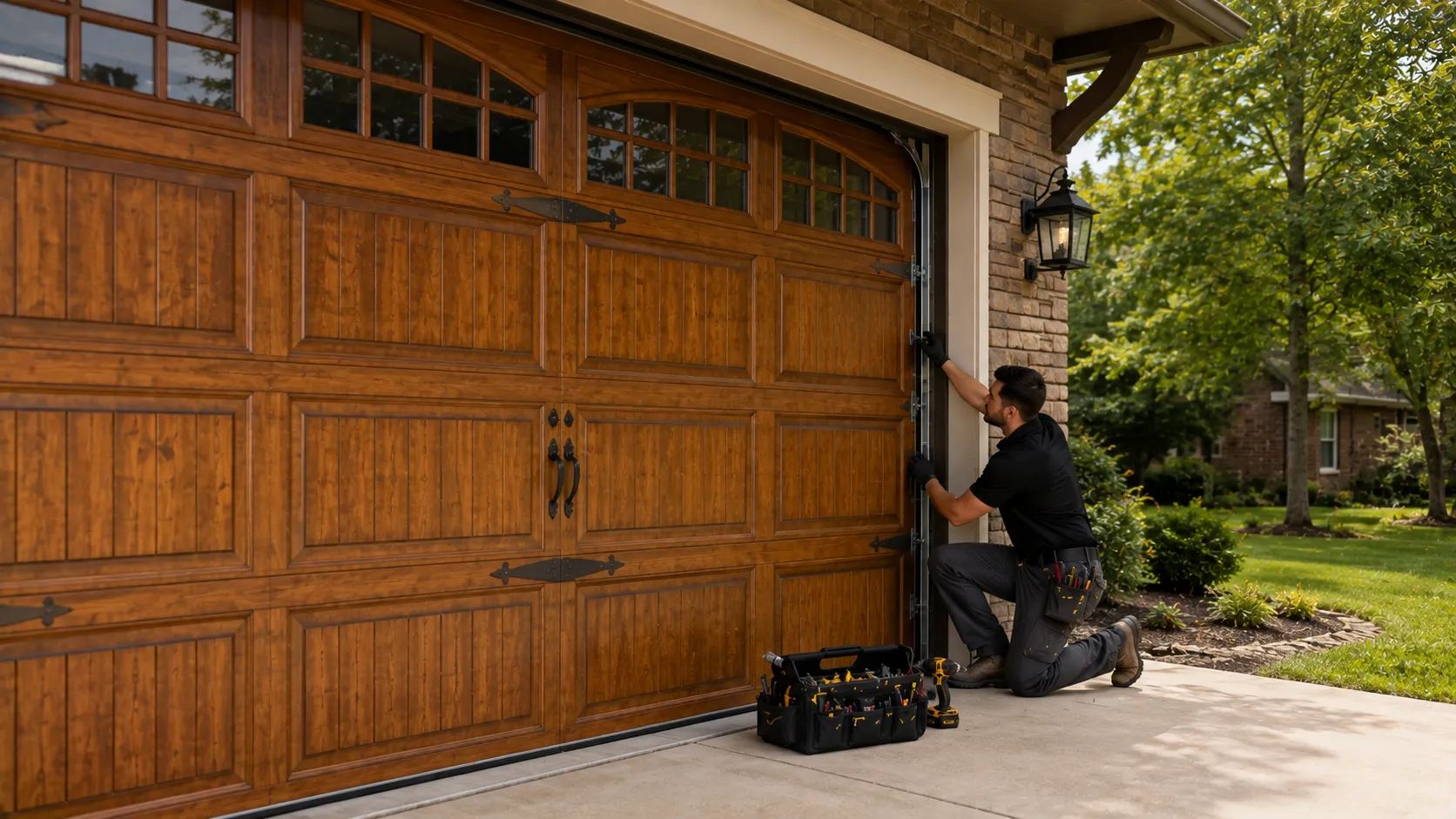
Pittsburgh-area neighborhoods & nearby communities we cover
Nearby communities
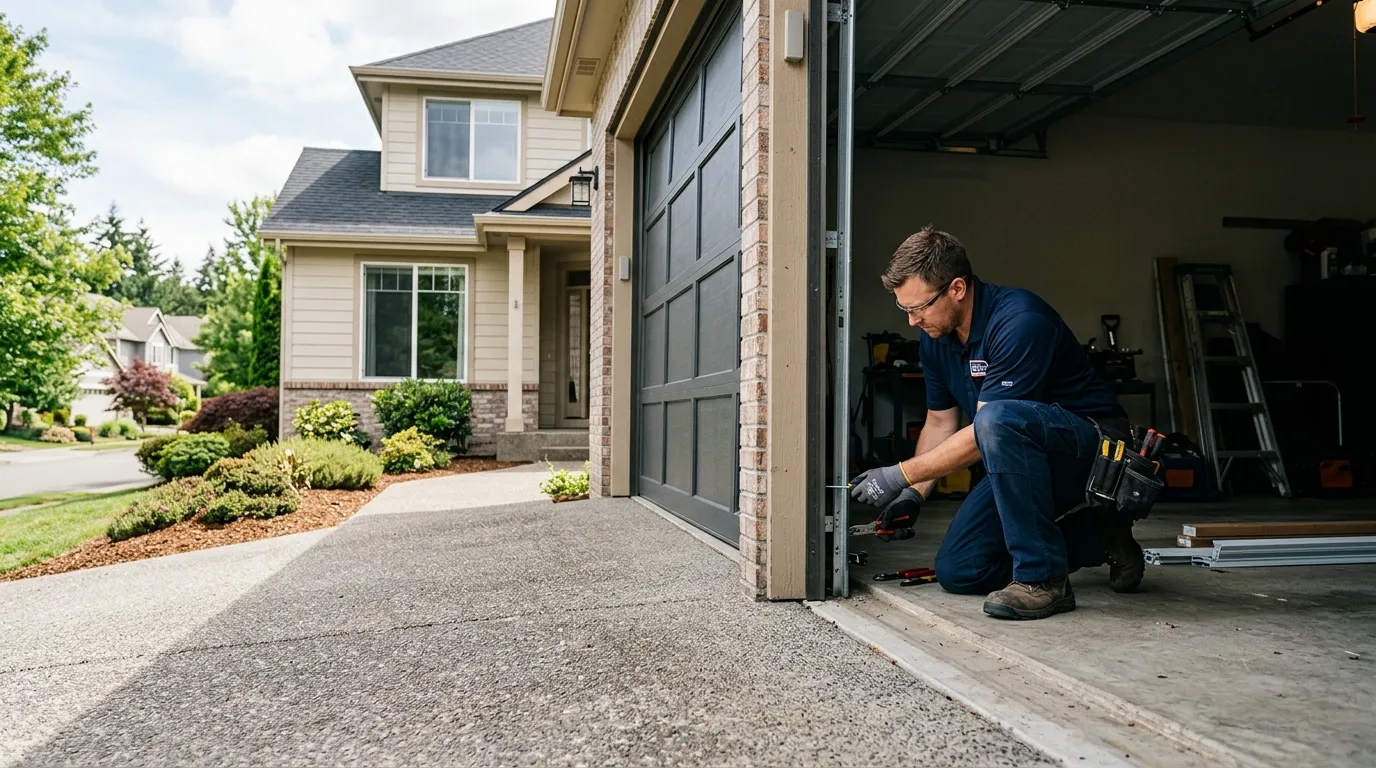
The Housing Stock Here
Pittsburgh and the towns around it aren't uniform, even though people lump them together. Housing here went up mostly between 1938 and 2014, with the typical build landing around 1955, and across the 108 named areas we cover, most of the stock predates 1960. That matters more than people think. A door installed in a 1948 build in is a different animal than one in a house finished in the 2000s out toward.
Older stock - closer in, places like the - tends to carry original single-panel or early sectional doors on side-mounted torsion hardware, the kind where the spring, drum, and cable sizes aren't what a big-box replacement kit assumes. Newer builds further out carry extension springs or torsion setups matched to lighter aluminum or steel sectional doors, with openers that are more likely stock parts.
We don't claim a shop or a crew stationed in any of these towns. We work out of Pittsburgh and drive to the job, whether that's four miles to nine. What we bring depends on knowing which decade built the door in front of us, not just the town name on the work order.
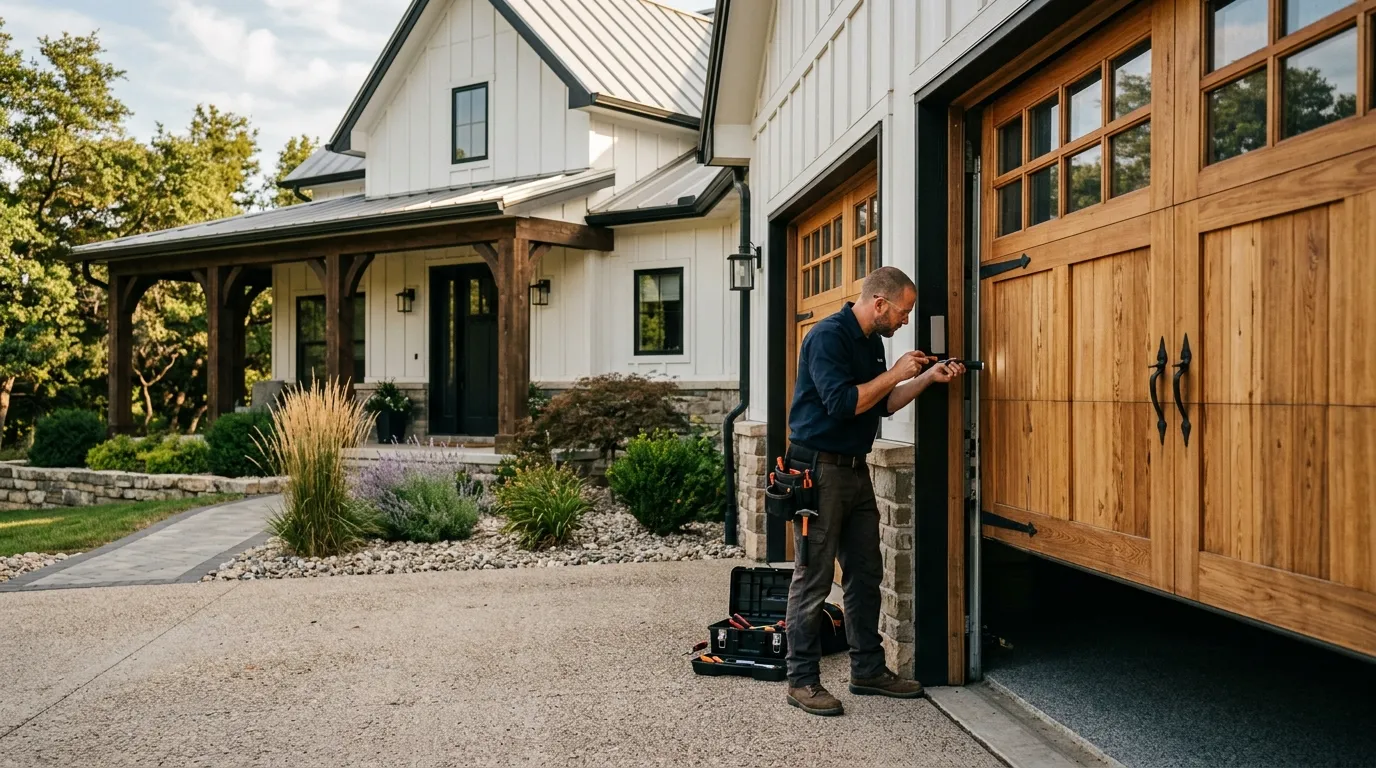
How a Call Goes
You call, you tell us the town and what the door's doing - won't open, spring snapped, opener grinding. We ask the age of the house if you know it, because in this climate band, classified COLD severe, a torsion spring on an older door works harder every winter than the same spring would somewhere milder. Cold steel is stiffer steel; springs and cables see more stress on freezing mornings, and that's true whether the house is in Whitehall.
We give you a window, we drive out from Pittsburgh, and we look at the door before quoting anything. If it's a straightforward broken spring, that's usually a same-visit fix. If the opener or track is original to a 1940s or 1950s build, parts sometimes have to be ordered, and we'll tell you that up front rather than promise a fix we can't source that day.
One honest limit: we don't stock every obsolete torsion spring size for every pre-1960 door variant on the truck at all times. On the oldest doors - the kind common in the closer-in areas - that can mean a short wait on a part instead of a same-day close. We'd rather tell you that than leave with the job half done.
What to expect
Frequently asked
Straight answers about garage door repair in Pittsburgh. Still unsure? Ask us directly.
Do you work on garages built before 1960?
Yes, and it's most of what we see. The median house in this service area was built around 1955, so a lot of our calls are older torsion or extension spring setups on hardware that predates the openers people have installed since. We carry parts sized for that era, not just current stock.
How far out do you go from the city?
Our regular range runs out to about 8 to 9 miles, covering areas like with closer and more frequent visits to neighborhoods like and the.
Why does my spring keep breaking in winter?
Cold steel loses some flexibility, and a spring nearing the end of its cycle life is more likely to snap on a hard freeze than a mild day. This area sits in a severe cold climate band, and we see winter spring failures rise every year with the temperature drop.
Will you tell me if repair isn't worth it?
Yes. If a door is old enough that parts are hard to source, or the repair cost is approaching what replacement would run, we say so on site before doing anything. We'd rather lose a repair job than talk you into fixing something not worth fixing.
Ready to get your garage door sorted?
Tell us what it’s doing and where you are in Pittsburgh - we’ll take it from there.