Why This Fails Locally
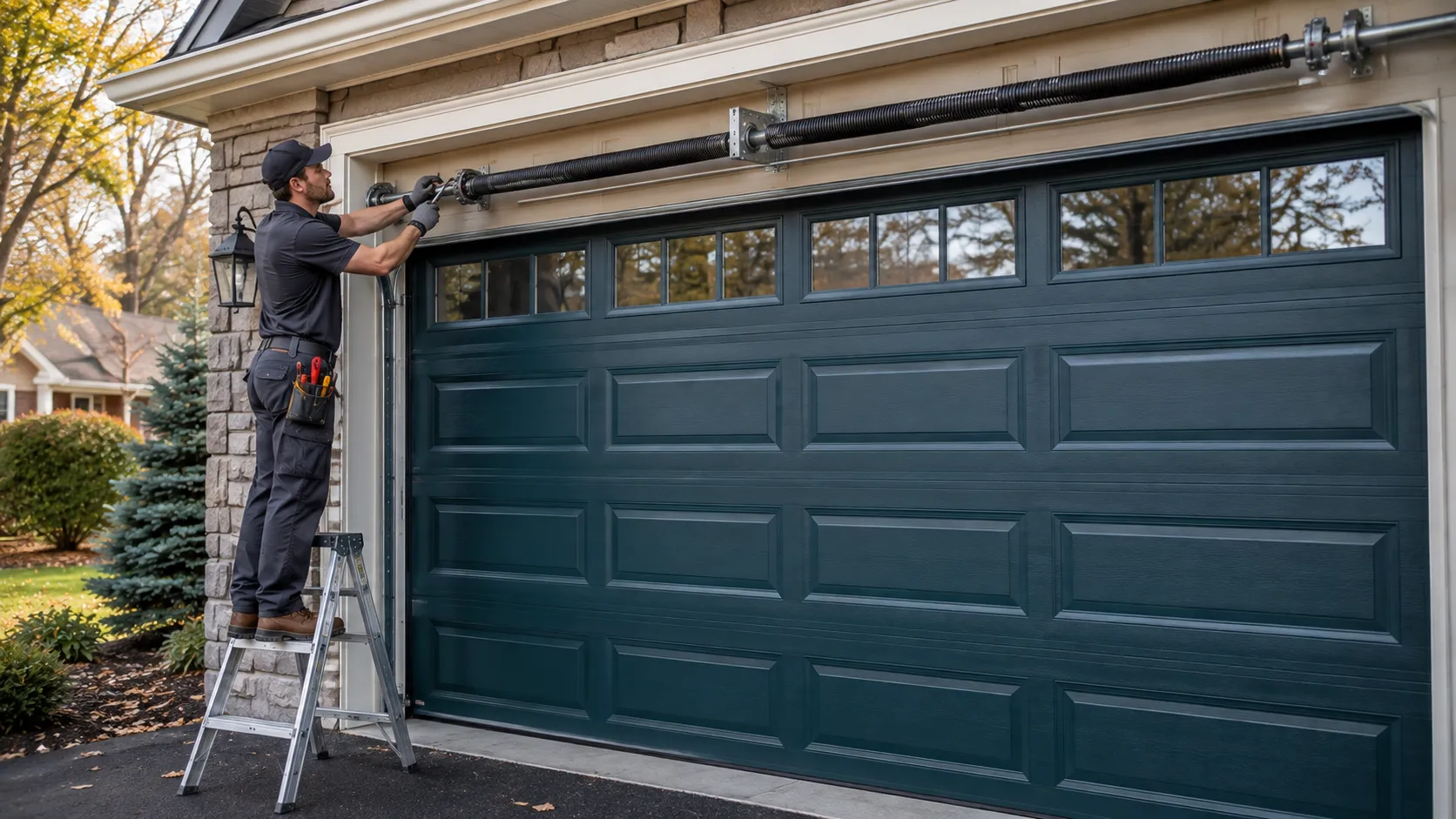
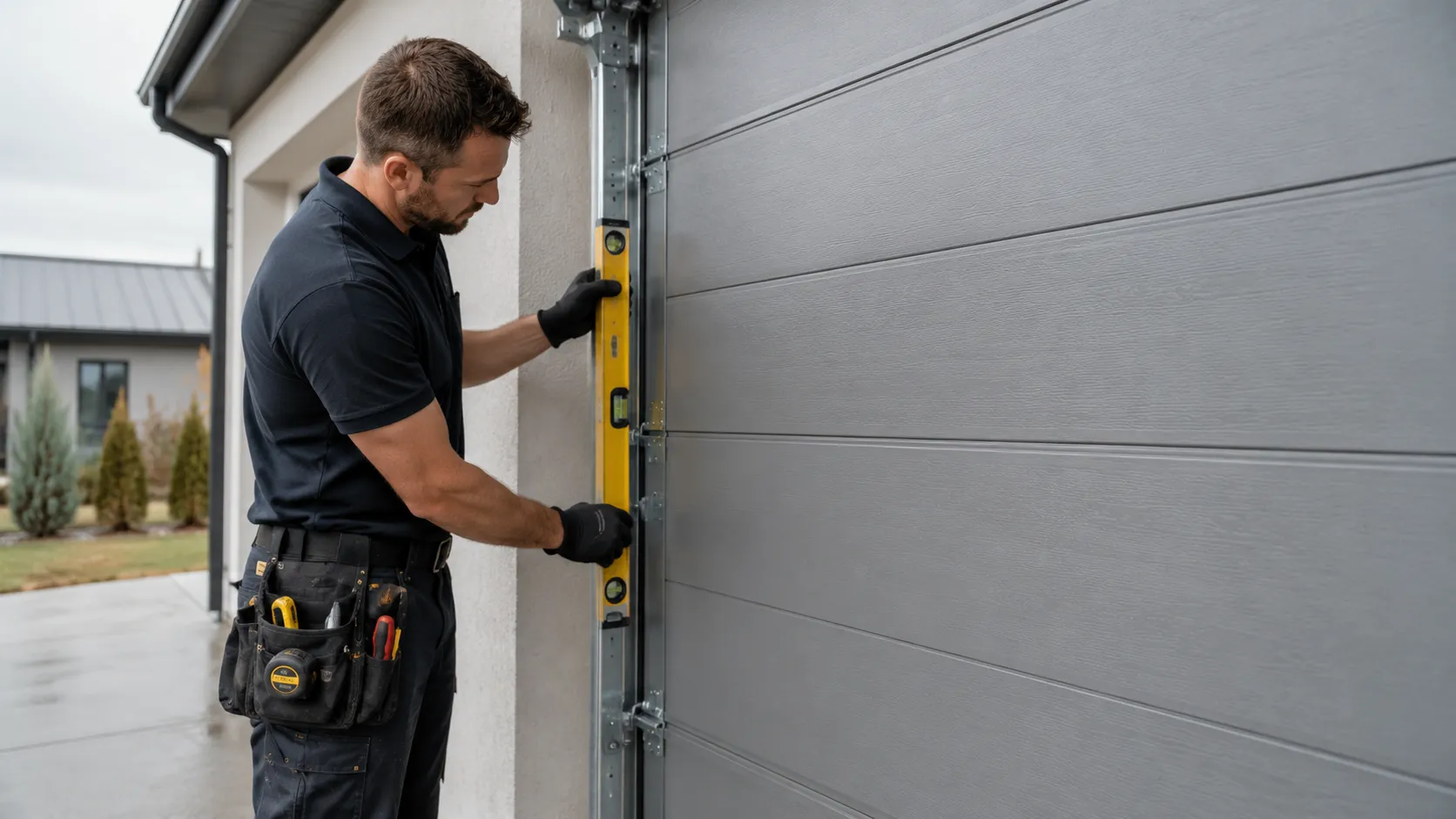
Whitehall sits about six miles out from Pittsburgh, and its housing stock skews to that same mid-century build era as much of the wider service area - homes going up mostly between 1938 and 2014, with a median around 1955 across the region and Whitehall itself centered closer to 1958. That means original one-piece and early sectional doors on side-mounted track that was never designed for today's heavier insulated panels. Add in a cold, severe winter climate, and you get ground movement under slab garage floors and door jambs that shift slightly year to year. That slow shift walks the track brackets out of true alignment a few degrees at a time, and eventually a roller rides up over the lip instead of staying inside the channel.
It's not dramatic - nobody hears a bang. The door just starts running a little crooked, then one day a roller catches wrong and jumps the rail. On newer track systems this happens less because the rail gauge is heavier and the brackets are set to modern code tolerances. On the track that came with a 1958 build, it's closer to routine.
What You Are Seeing
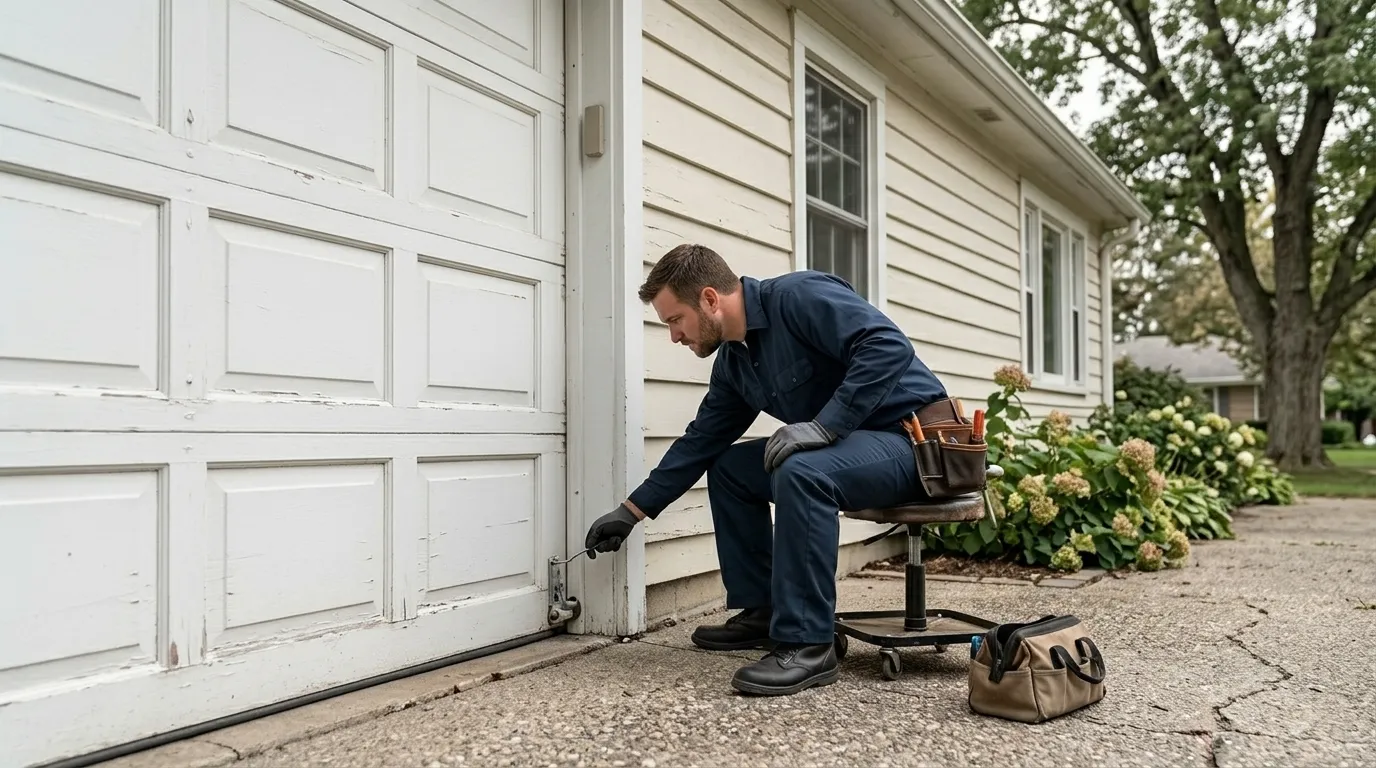
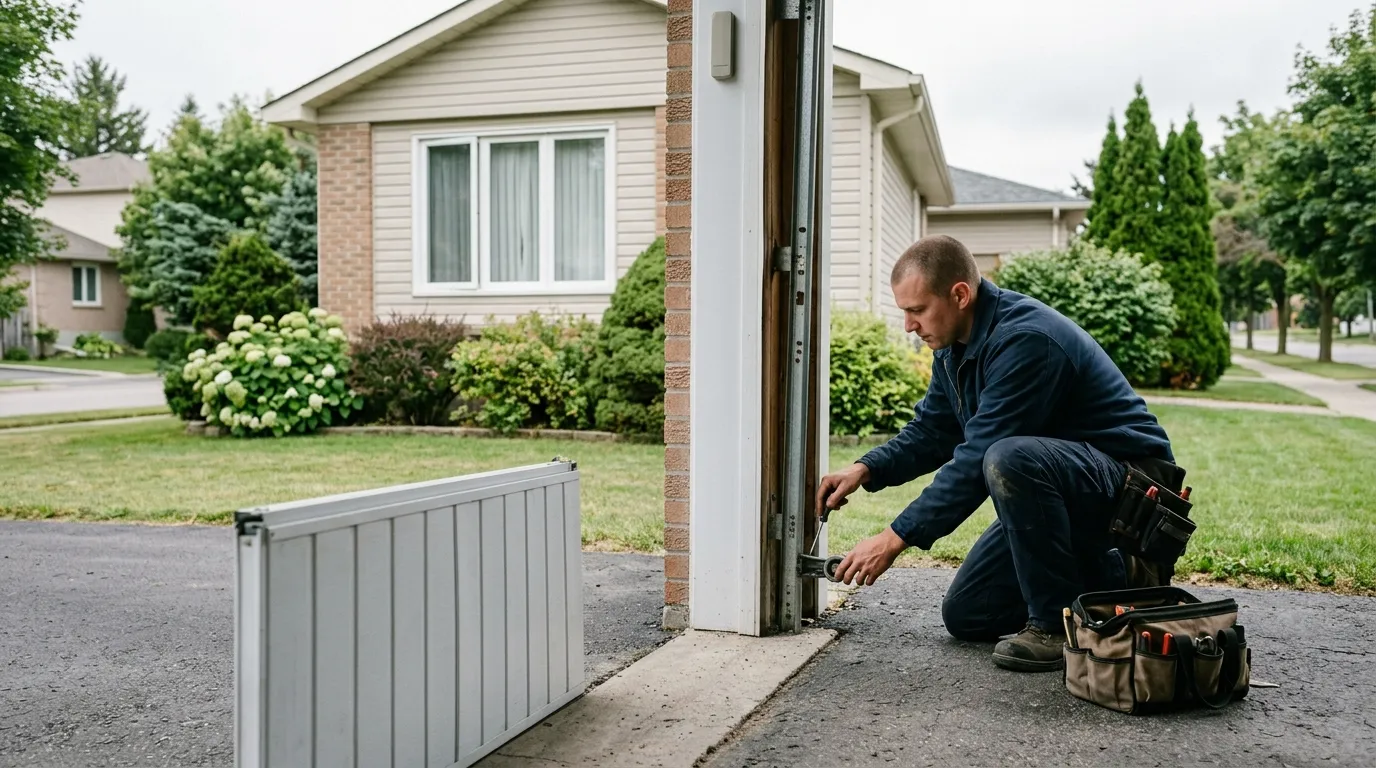
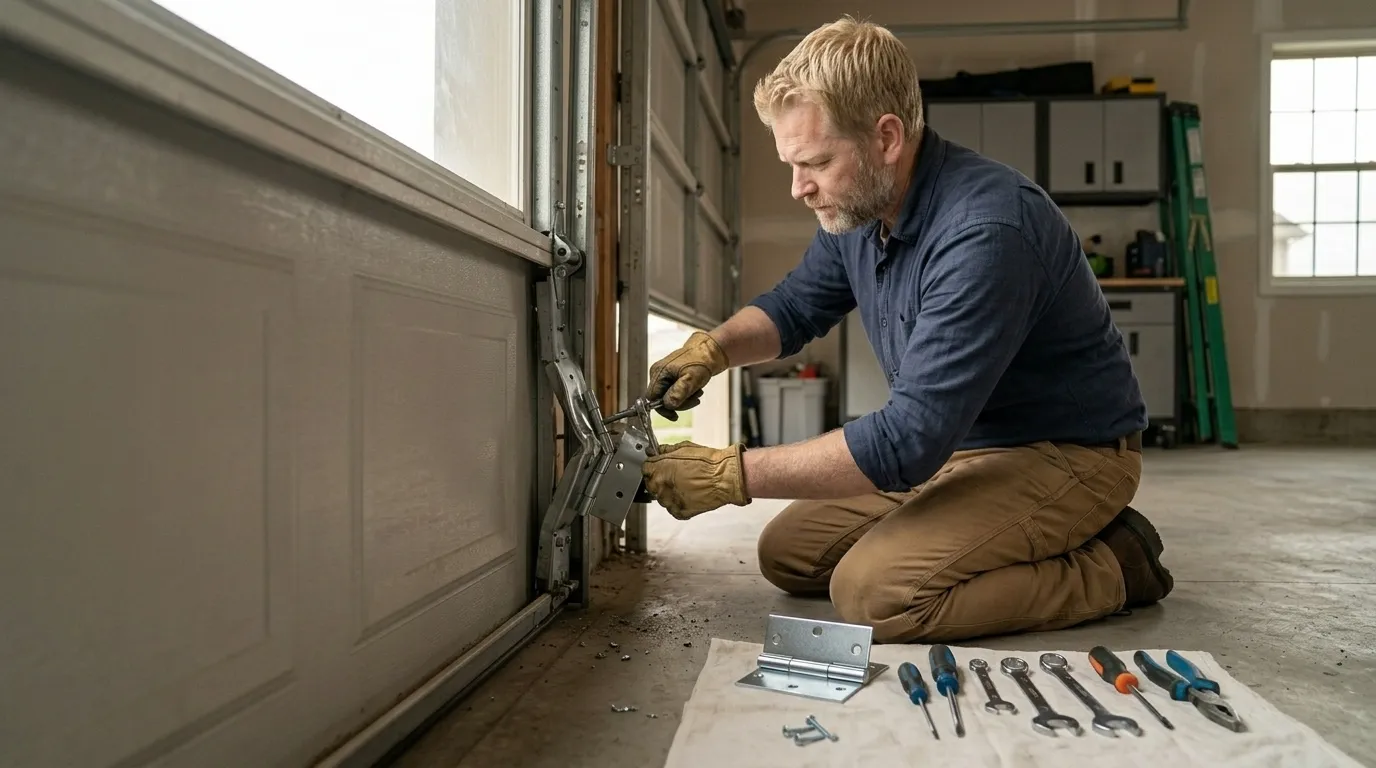
The most common sign is a door that hangs slightly crooked when it's about halfway down, dragging on one side. Sometimes you'll hear a scraping or grinding sound right before it sticks. Other times a roller has already jumped the track entirely and the door stops moving, stuck at an angle with a visible gap between the roller and the rail on one side.
A cable that's slipped off its drum looks different - the door may drop suddenly a few inches, or one side sags lower than the other while the opener still hums like it's trying to work. If you see a panel that's dented or scraped along one edge, that's usually the result of the door having run off-track for a while before anyone noticed, catching against the frame or the bracket each time it cycled.
One honest limitation here: if the track is bent badly enough that it's holding a permanent kink, straightening it back to true is unreliable. Past a certain point, replacing that section of track costs less in labor than fighting a rail that keeps drifting back out of alignment.
How Long It Takes
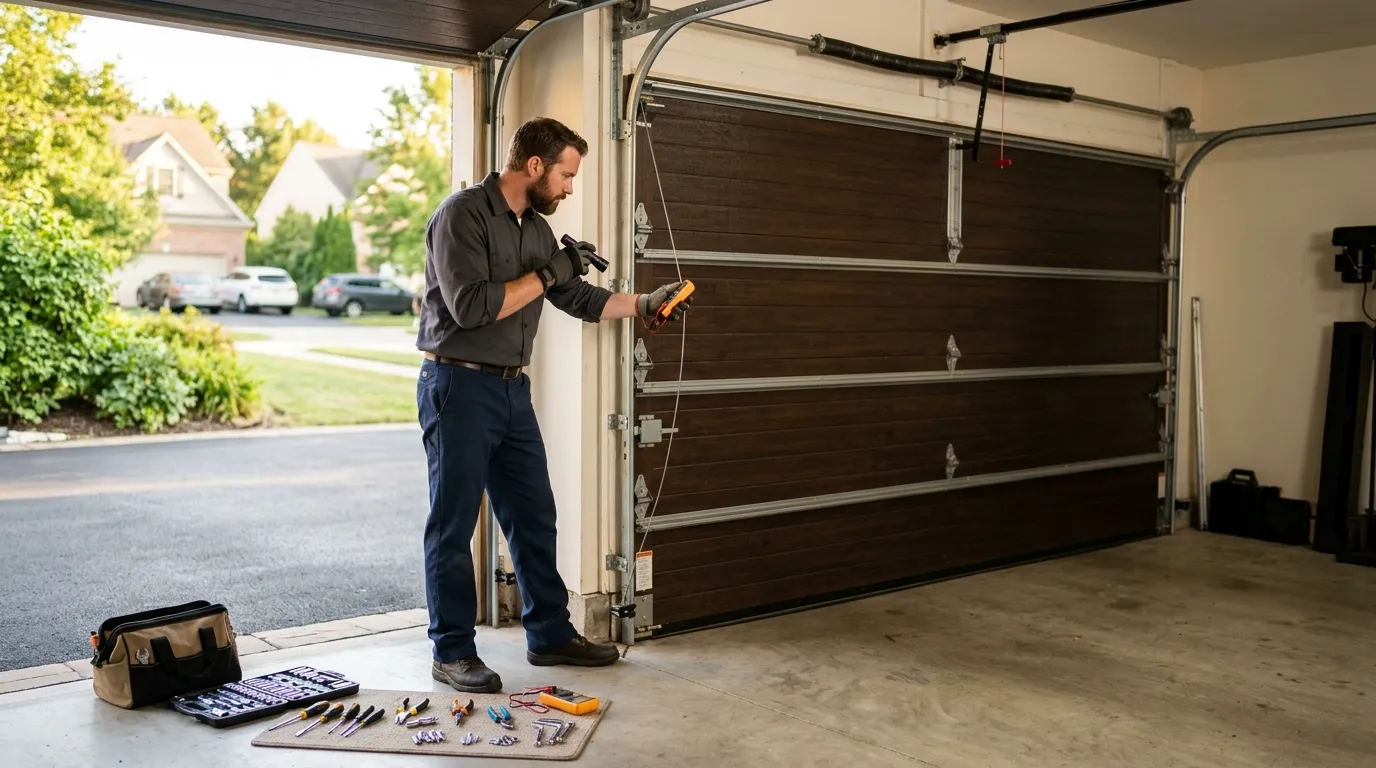
Every off-track call is a little different depending on what's actually wrong once the door is up on the stand and the tension is off. A door that's simply slipped a roller with the track otherwise straight is a faster job than one where a cable's off the drum and a bracket's pulled loose from the jamb. Older houses in this part of the county sometimes have track mounted to wood framing that's shifted slightly with the building's age, which can add time if a bracket needs re-anchoring rather than just re-tightening.
We won't quote a fixed number of hours before seeing the door in person, because the honest answer depends on how far the misalignment has gone and whether the rollers or track need full replacement rather than adjustment. What we can say is that the diagnosis itself - figuring out whether you're looking at a roller, a cable, or a bent rail - happens fast, usually within the first few minutes on site.
Booking a Visit
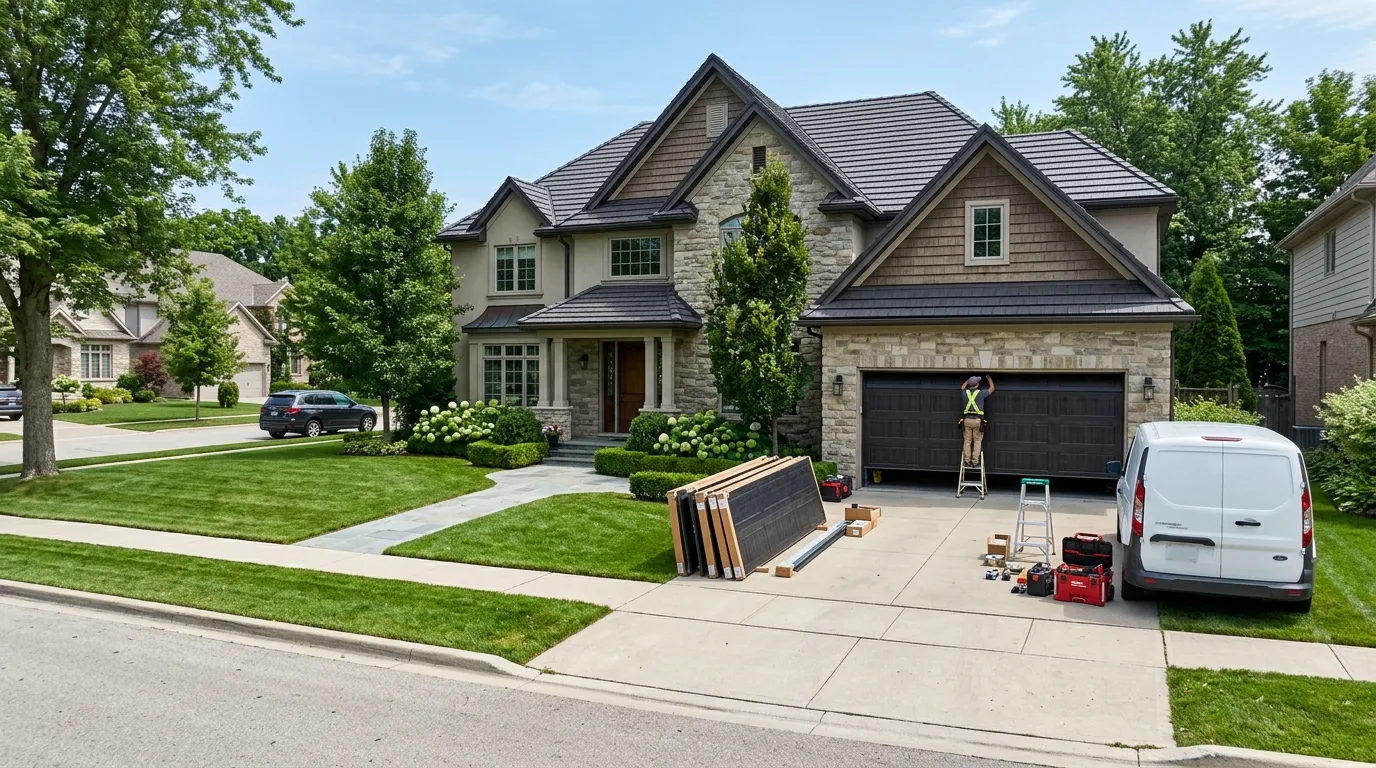
Whitehall is about six miles from Pittsburgh, so a visit here runs on the same truck and the same crew that handles off-track calls inside the city - there's no separate branch or depot in Whitehall itself, just a short drive out. Whitehall's median household income runs closer to $85,000, above the wider service area's $72,020, but that doesn't change what an off-track door needs: someone who can see the rail, the rollers, and the spring in person before touching any of it.
If you're not sure whether what you're seeing counts as off-track or something else entirely, our Whitehall garage doors page covers the other issues we see on this side of the county. For the broader rundown on how off-track repair works across the Pittsburgh service area, see garage door off track Pittsburgh, PA.