Stocked Parts
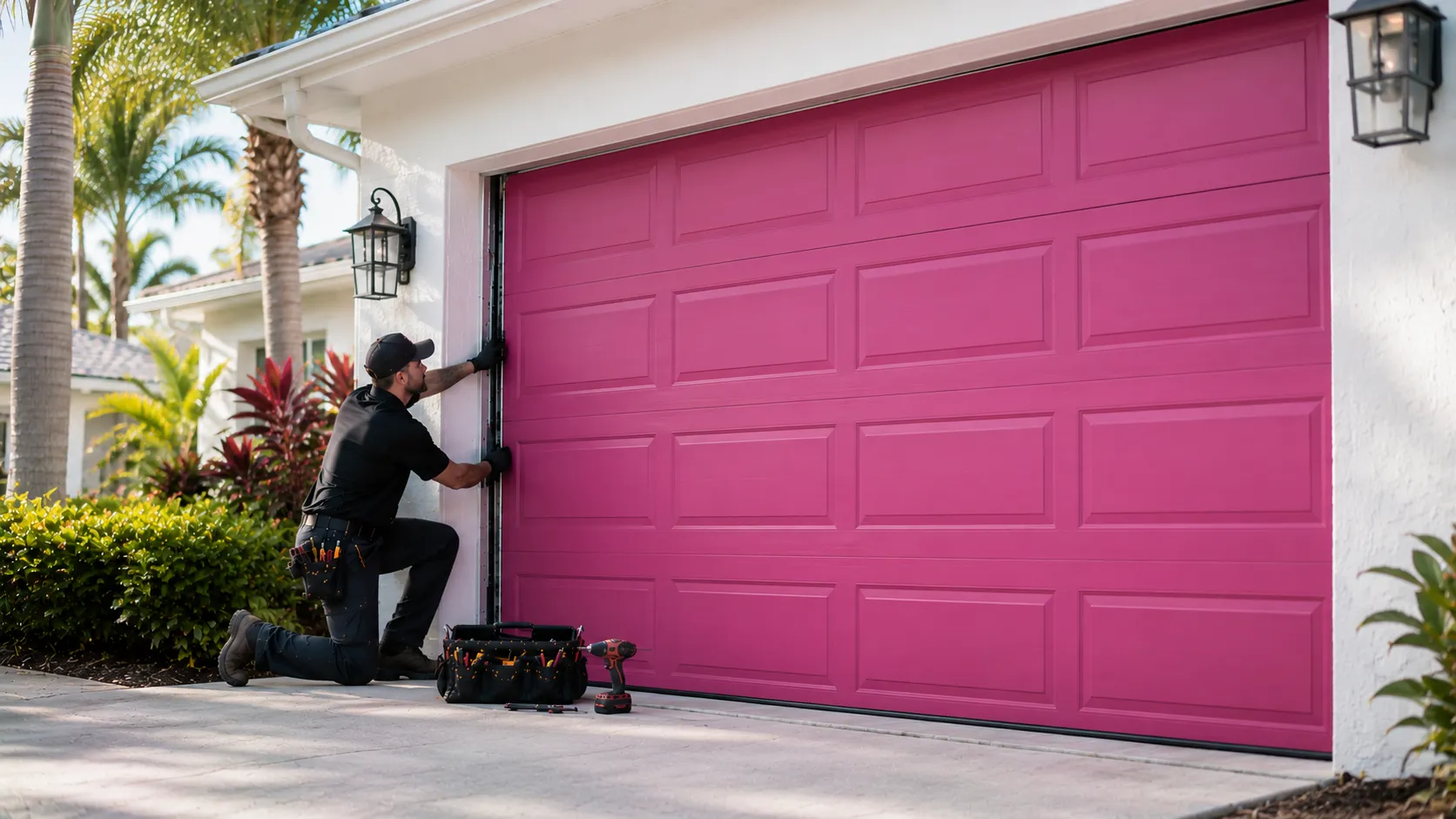
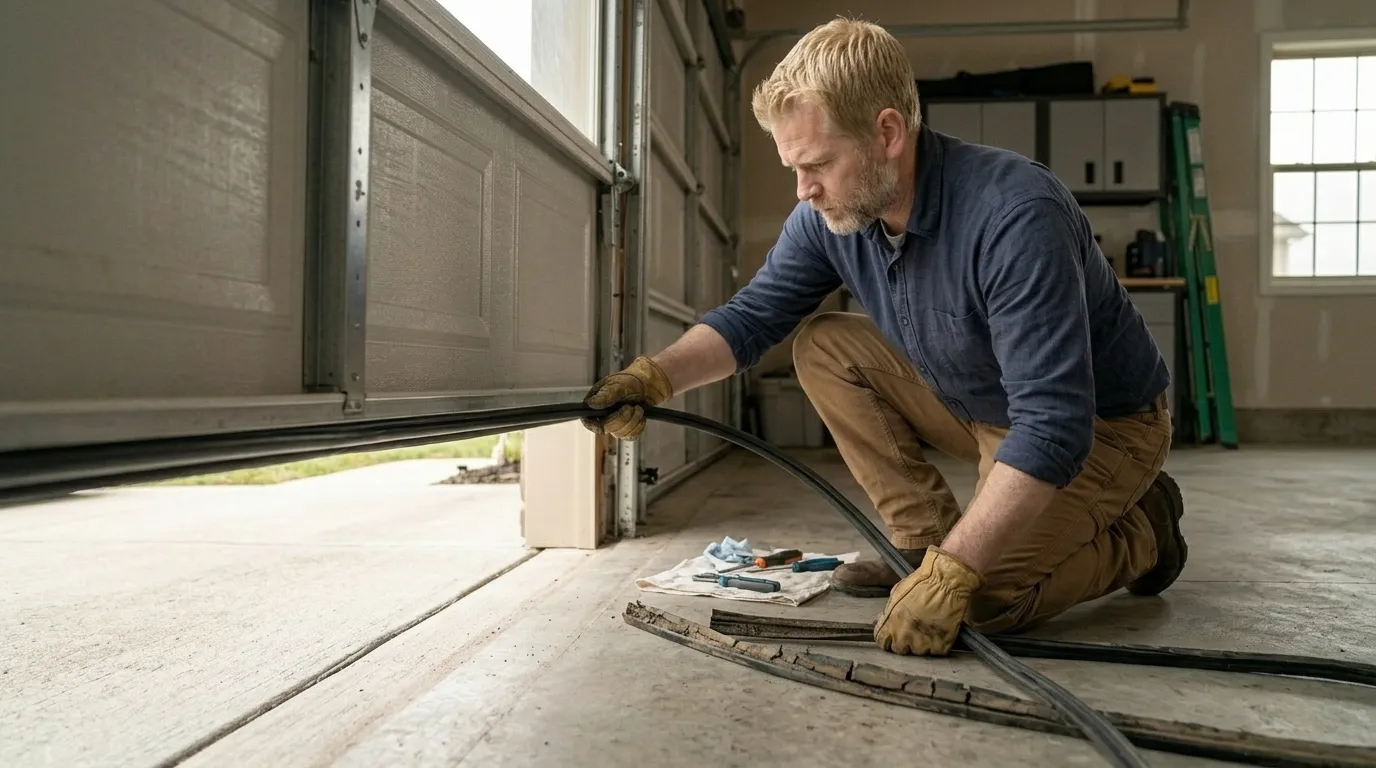
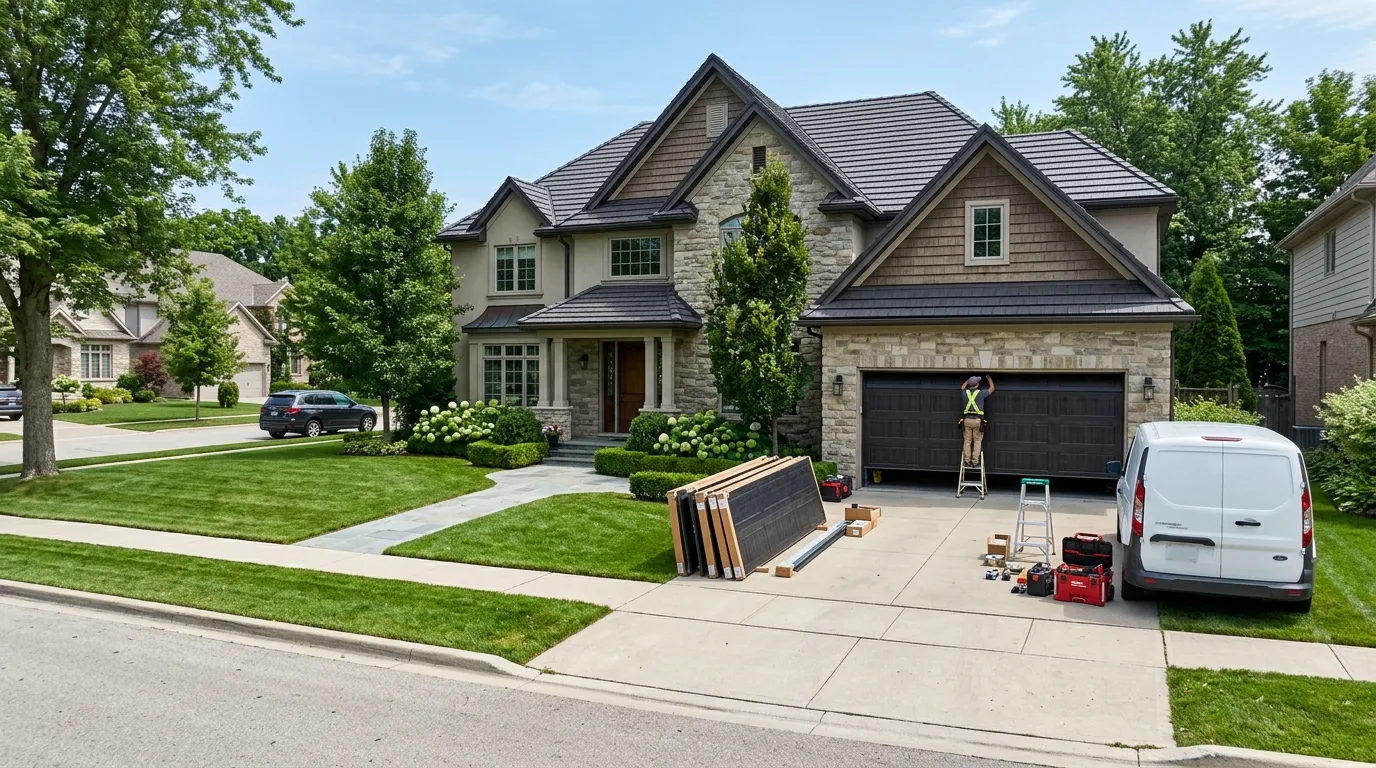
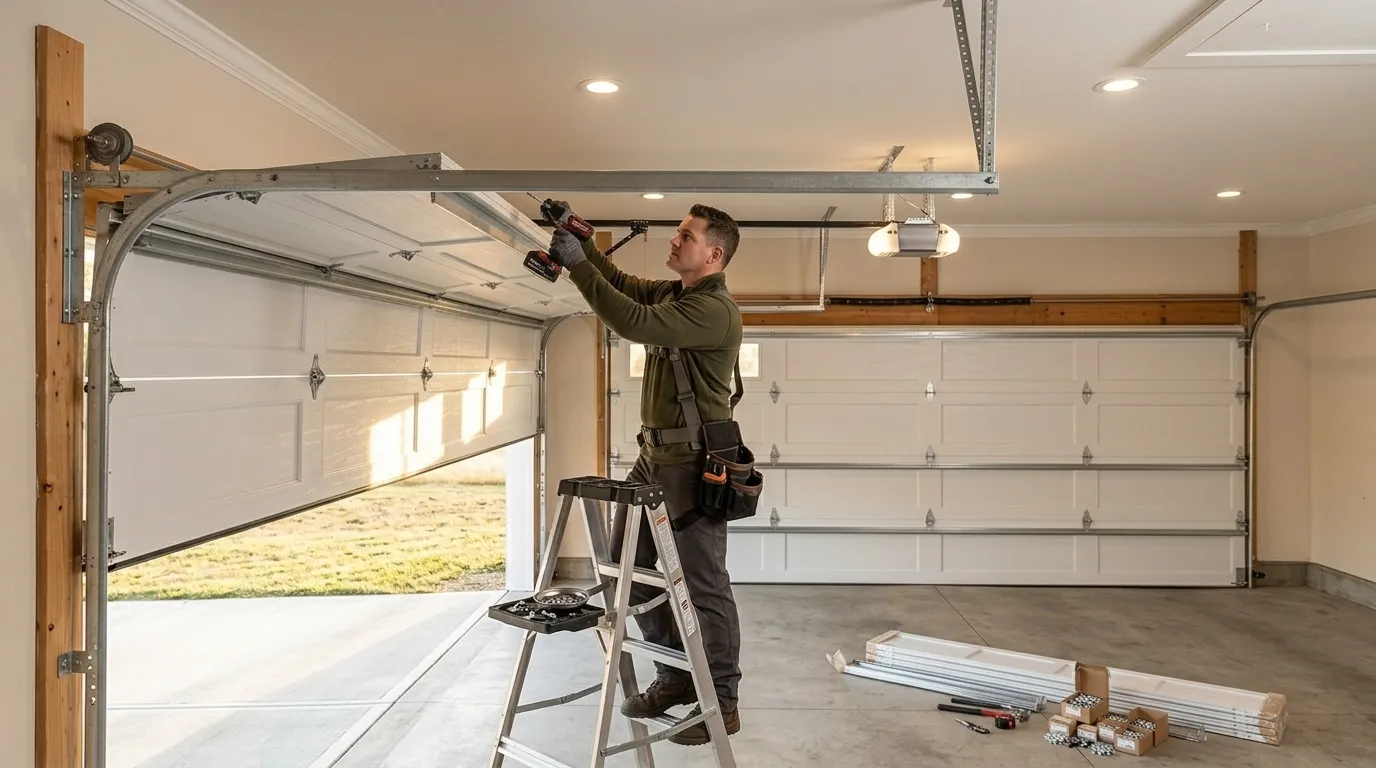
The truck carries springs sized to the range of openings common on pre-1960 doors - narrower tracks, older drum sizes, the torsion bar lengths that show up on single and double bays from that era. We stock standard rollers, lift cables, and the hinges that fail first on steel sectional doors once the galvanizing wears through.
What we don't carry on the truck is anything discontinued. If a Bellevue door still has its original panel profile from 1938 or close to it, and that panel has cracked or rusted through, we're not pulling a matching replacement off a shelf - nobody stocks it. In that case the honest answer is usually a new panel set or a full door, not a patch, and we'll say so on the visit rather than promise a part we can't get. Openers are more straightforward: most units installed in the last twenty years use common drive systems, and we carry the belts, gears, and circuit boards that cover the failures we see most.
We check the spring size and drum ratio against the door's actual weight before we quote, not against a standard chart, because doors from this housing stock rarely match the standard.
Booking a Visit
A call to Bellevue starts the same way any call six miles out does: we ask what the door is doing, get a sense of the door's age from what you describe, and schedule the trip out from Pittsburgh into that day's route. We don't hold a depot in Bellevue and won't claim a response window we can't back - the drive is part of the job, not an afterthought.
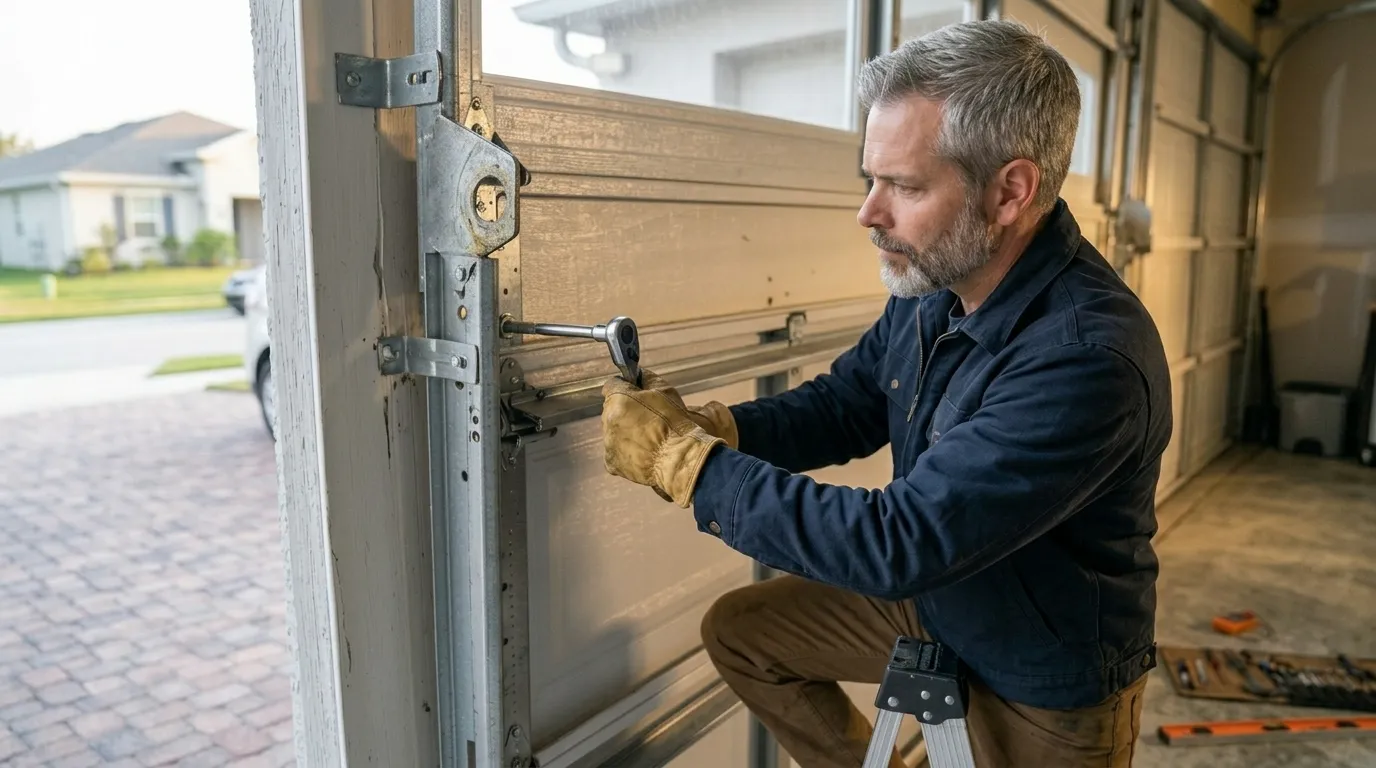
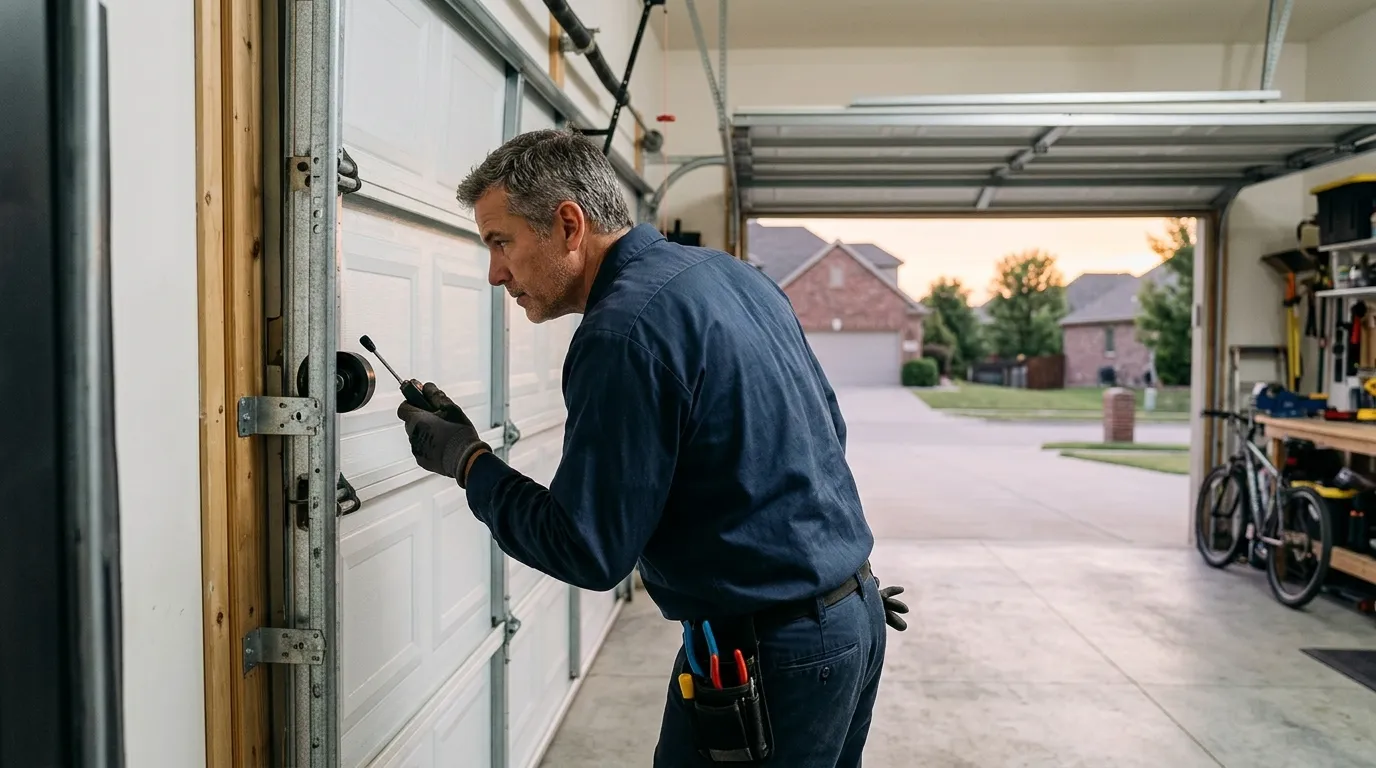
On site, the first check is the spring and cable, since that's where most calls in this neighborhood originate. If the door is original to a 1938-era house, we look at the track alignment and mounting hardware before touching anything electrical, because older doors move differently under load than anything built in the last thirty years. We'll walk through what's failing, what it costs to fix versus replace, and leave the decision with you - we're not selling a new door on a repair call unless the numbers say repair doesn't make sense.
Bring us the make and rough age of the opener if you know it. It saves time on the visit and it's often the difference between a same-visit fix and a return trip for a part.
What You Are Seeing
A door that slams the last foot of its travel, rather than lowering evenly, has a spring that's lost tension - common on a house old enough to have gone through decades of temperature swings without a spring replacement. A door that won't budge at all, with the opener motor straining, is often the same problem: the spring, not the motor, is doing the failing.
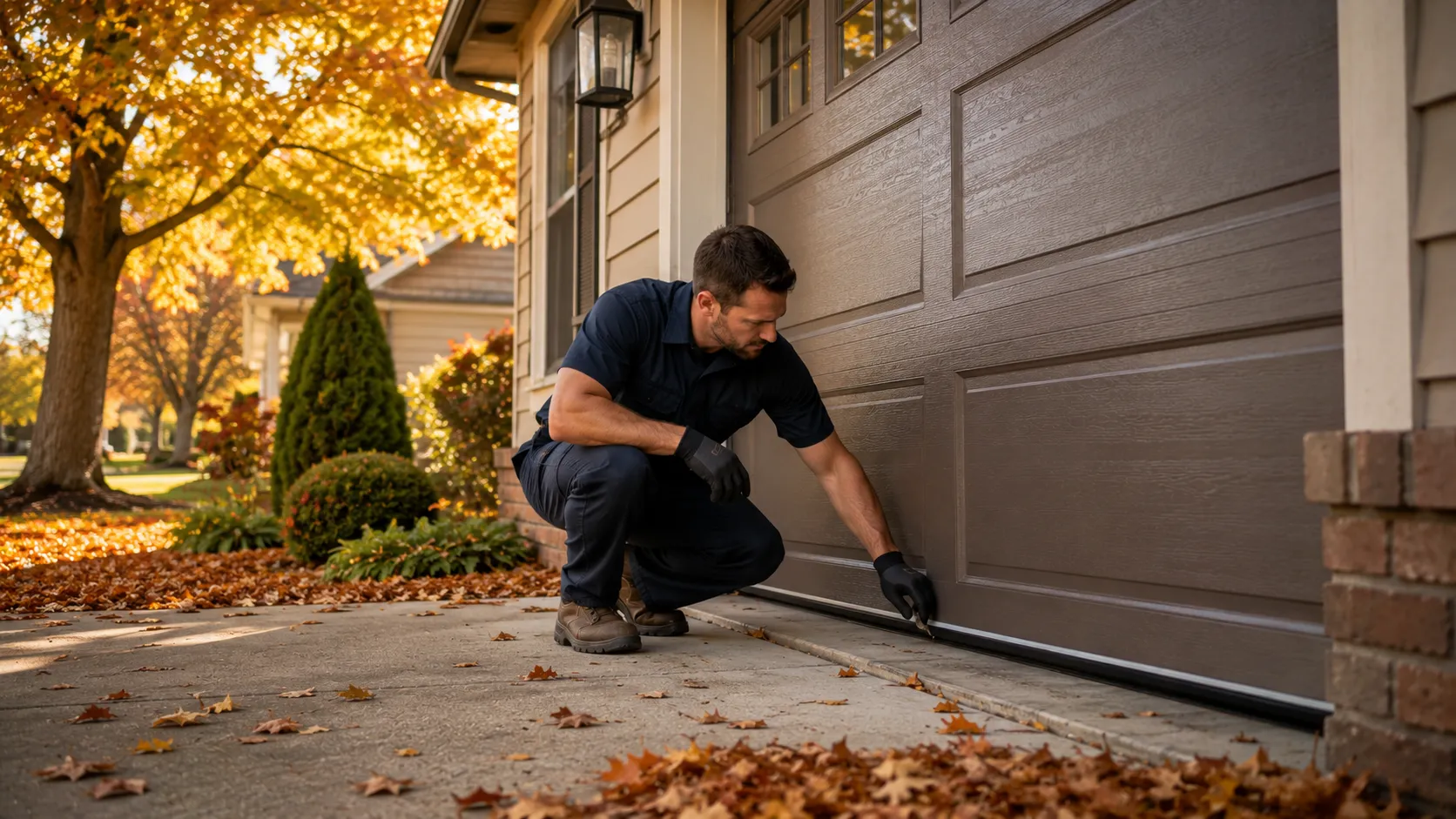
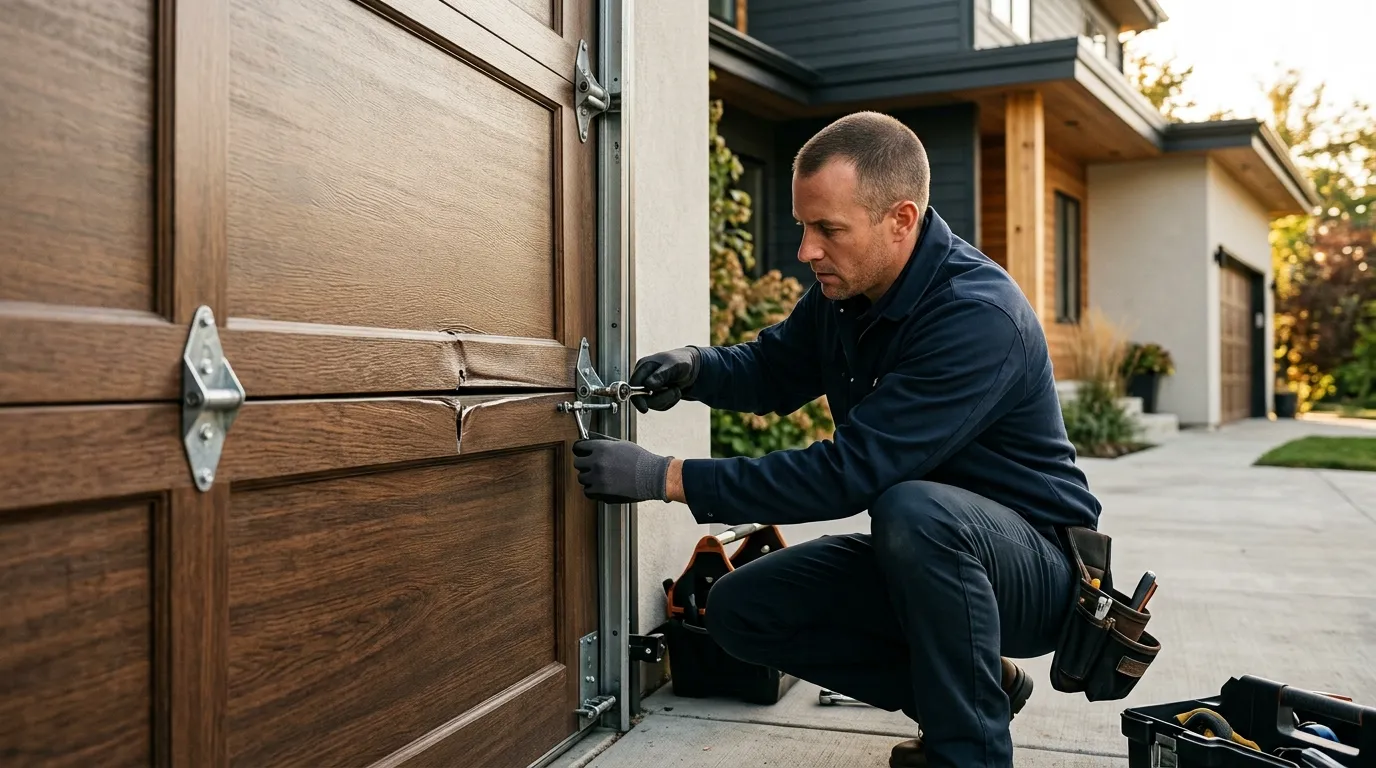
On older sectional doors from this housing era, watch for rust along the bottom panel seam and hinges that have started to separate from the steel - both speed up in a cold-severe climate where moisture freezes and expands in the seams over winter. If the door runs unevenly, catching on one side, check the track mounting before assuming it's the opener; original mounting hardware from a 1938-built garage was never engineered for the openers retrofitted onto it decades later.
A door that opens fine but reverses partway on its own is usually a sensor or limit-switch issue on a newer opener, not a structural problem - that's a smaller fix than the spring and track issues that show up more on this street's older stock.