Serving Pittsburgh, PA & nearby
(412) 674-9419
Pittsburgh, PA

Garage Door Repair for Brentwood's 1950s Housing Stock

Brentwood homes mostly date to 1951, meaning older torsion setups and tight jamb clearances. We travel from Pittsburgh for repairs suited to this housing stock.

Garage Door Repair for Brentwood's 1950s Housing Stock
Pittsburgh, PA
8 services
7 service areas
Diagnosis first, then the fix

Why This Fails Locally

Most houses in Brentwood went up around 1951, and that year matters more than people think. Doors from that era were built for narrower, single-car openings, hung on torsion springs sized for lighter wood-panel doors, not the heavier steel or insulated doors homeowners have swapped in since. When someone replaces an old door but keeps the original track and header hardware because it 'still works,' the spring is now undersized for the new load. That mismatch is the single most common failure we see coming out of a neighborhood built in this window - not a defect, just hardware that was never rated for what's hanging on it now. Add the cold-climate stress this region sees, and steel brackets original to a 1951 build have had seven decades of freeze-thaw cycling on their lag screws. The jamb itself has usually shifted a little too, which throws the door out of square even when the spring and cables look fine. None of this shows up as an obvious symptom until the door won't open one cold morning. It's a slow mismatch between old bones and newer hardware, and it's specific to a housing stock this age, not a general wear-and-tear story.

What the Repair Takes

On a house from this era, the first thing we check isn't the spring - it's whether the track and header were ever upgraded to match a heavier door. If the answer is no, replacing a broken spring with an identical one just resets the clock on the same failure. We measure the actual door weight and re-spec the torsion spring to match it, which sometimes means a different wire size than what's coming off the drum. Rollers on doors this old are usually the original nylon or steel type, worn oval instead of round, and they get swapped as part of the same visit since they're already exposed. Cable drums on a 1951-era door are often the narrower profile that newer cable doesn't seat well on, so we check that pairing rather than assuming a universal fit. None of this is exotic work. It's paying attention to what decade the hardware actually came from instead of treating every torsion system the same.

Where This Job Goes Sideways

The place this goes wrong is when a spring gets replaced to match the old rating instead of the door that's actually hanging there. We've been called back to houses where a previous repair used a stock spring sized for the original lightweight door, and it snapped again within a year because the homeowner had since put in a heavier insulated model. Another spot we see trouble: jamb brackets on houses from this build year are often still the original lag bolts into wood that's dried and shrunk over decades. Torque a new spring against that hardware without checking it first, and you can pull the bracket loose rather than fix anything. We also see cable fraying tied to drums that don't match the cable gauge - a mismatch that's common on doors this age because parts got swapped piecemeal over the years by different people.

How Long It Takes

A straightforward torsion spring replacement on a residential door usually runs under two hours once we're on site. Where houses from this era add time is the bracket and hardware check - if the lag bolts into the jamb have loosened with age, which is common on wood framing from the early 1950s, we're re-anchoring before the new spring goes on, not after. That adds time but it's the difference between a repair that holds and one that comes back. We travel to Brentwood from Pittsburgh, about 5 miles, so factor that into when we can get there rather than expecting a same-block response.

The DIY Question

A torsion spring under load can put someone in the hospital, and that's true no matter what year the house was built. What's specific to Brentwood's housing stock is that the hardware underneath - the drums, the brackets, the jamb itself - is more likely to be original 1950s material than in a newer subdivision, and it doesn't always look worn even when it's failed. That's not a job to learn on. Where we'll tell a homeowner to skip calling us: lubricating hinges, tightening loose visible bolts, or clearing a track of debris. Those are fine to do yourself and won't touch the spring system. Anything involving the spring, the cable, or the drum on a door this age is worth having someone look at first, because the failure point often isn't where it looks like it is.
How it works

From “it’s stuck” to “it’s fixed”

01
Tell us what’s wrong - Pittsburgh garage door service

Tell us what’s wrong

Describe the symptom - won’t open, loud bang, opener runs but the door won’t move.

02
On-site diagnosis - Pittsburgh garage door service

On-site diagnosis

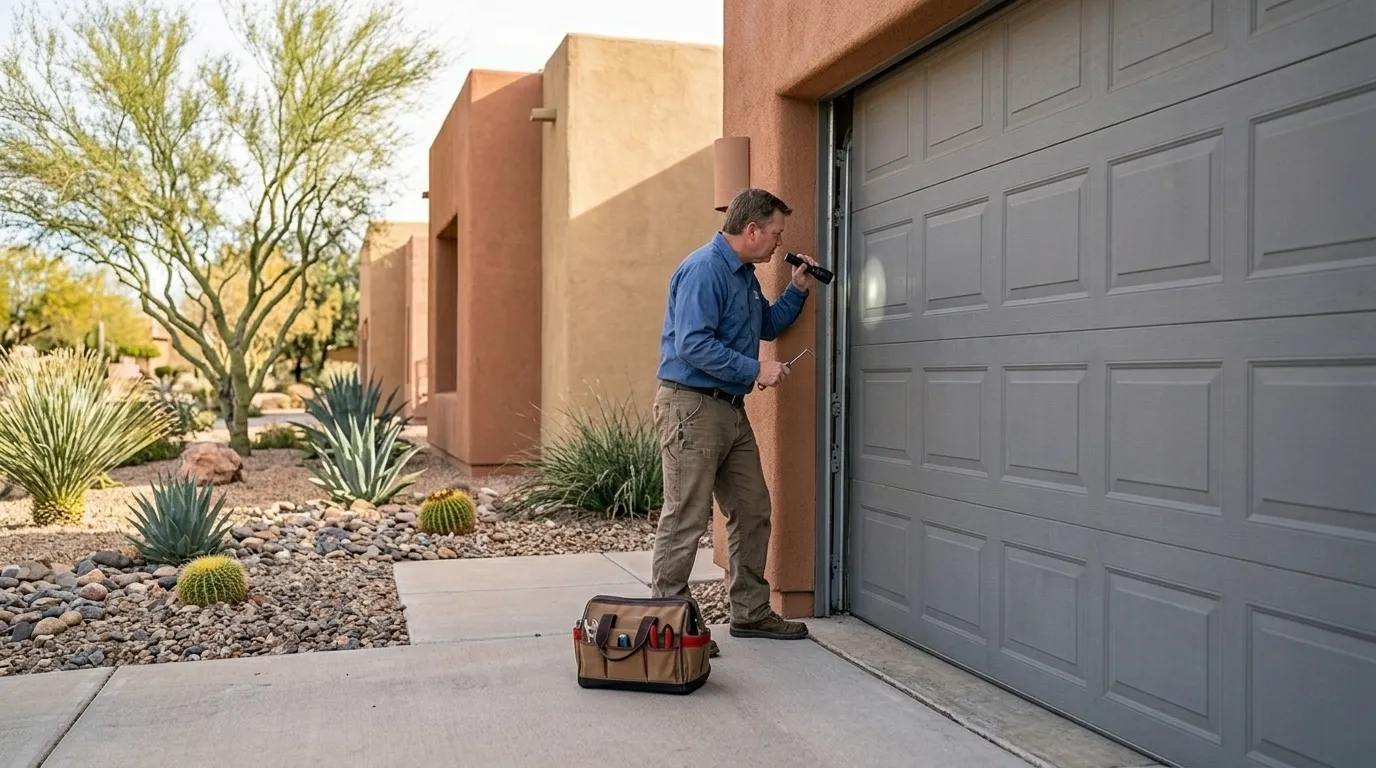
A technician tests the door under power and by hand and finds what actually failed.

03
Clear, up-front plan - Pittsburgh garage door service

Clear, up-front plan

You get the fix that’s needed and what drives the cost - before any work starts.

04
Repaired & tested - Pittsburgh garage door service

Repaired & tested

The repair is done, the door is set true and tested, and the work area left clean.

Serving Pittsburgh, PA - tell us what your door’s doing and we’ll take it from there.

How we work

What to expect

Diagnosis firstEvery visit starts by finding what actually failed - not a pre-written parts list.
The right part for the doorSprings and openers matched to the door’s weight and age, so the fix holds up.
Straight answersWhen a repair makes more sense than a replacement - or the reverse - you hear it plainly.
Clean, careful workTension released safely, hardware set true, the door tested under power before we leave.
304,391Residents in Pittsburgh
8Garage door services
7Neighborhoods & suburbs
PAServing Pittsburgh, PA
Questions

Frequently asked

Straight answers about garage door repair in Pittsburgh. Still unsure? Ask us directly.

Why does my Brentwood garage door spring keep breaking even after I replaced it?

If the replacement spring was sized to match the original door instead of what's currently hanging on the track, it's undersized for the load. This is common on houses built around 1951 where the door itself has been upgraded over the years but the spring spec never was.

Are the brackets on an older Brentwood house strong enough for a new spring?

Not always. Houses from this build era often still have original lag bolts into wood framing that's dried and shrunk over decades. We check bracket condition before installing a new spring rather than assuming the anchoring is sound.

How far out does Pittsburgh Garage Door Pros travel for a repair in Brentwood?

We come from Pittsburgh, about 5 miles away. We don't keep a branch or depot in Brentwood, so scheduling depends on our route from the Pittsburgh side rather than a local same-block response.

Can I replace a broken cable myself on an older door?

Not recommended. On doors from this era the cable drum profile is often narrower than what current cable is sized for, and a mismatch under tension is dangerous. Simple upkeep like lubricating hinges is fine to do yourself; cable and drum work isn't.

Ready to get your garage door sorted?

Tell us what it’s doing and where you are in Pittsburgh - we’ll take it from there.

Request a QuoteCall