Serving Pittsburgh, PA & nearby
(412) 674-9419
Pittsburgh, PA

Roller Replacement for Brentwood's Mid-Century Garage Doors

Brentwood's mid-century garage doors run narrow steel track built for the original roller size. We replace worn rollers on 1950s-era doors, working from Pittsburgh, 5 miles out.

Roller Replacement for Brentwood's Mid-Century Garage Doors
Pittsburgh, PA
8 services
7 service areas
Diagnosis first, then the fix

Why This Fails Locally

Brentwood's housing mostly went up around 1951, and that number matters more than it sounds like it should. Doors from that era are narrow single or early sectional steel panels, hung on track that was rolled to a tighter radius than what gets installed today. The original hardware used steel rollers on stub shafts, sized for that older track profile, not the nylon rollers on longer stems that most new doors ship with now.

When those steel rollers wear, they don't just get loud. The wheel itself can flatten on one side or the axle can bend slightly, and on the tighter mid-century track that's enough to make the door bind at the same spot on every cycle - usually a foot or two off the floor, where the curve starts. Owners often think it's the opener struggling, when the opener is just fighting a door that's dragging on worn wheels in old track.

Cold makes it worse. The service area sits in a severe cold climate band, and steel contracts in winter. A roller that was marginal in October can seize or crack in January. If your door is grinding, catching, or sounding like a shopping cart on one section of travel, the roller is the first thing to check, not the opener.

What the Repair Takes

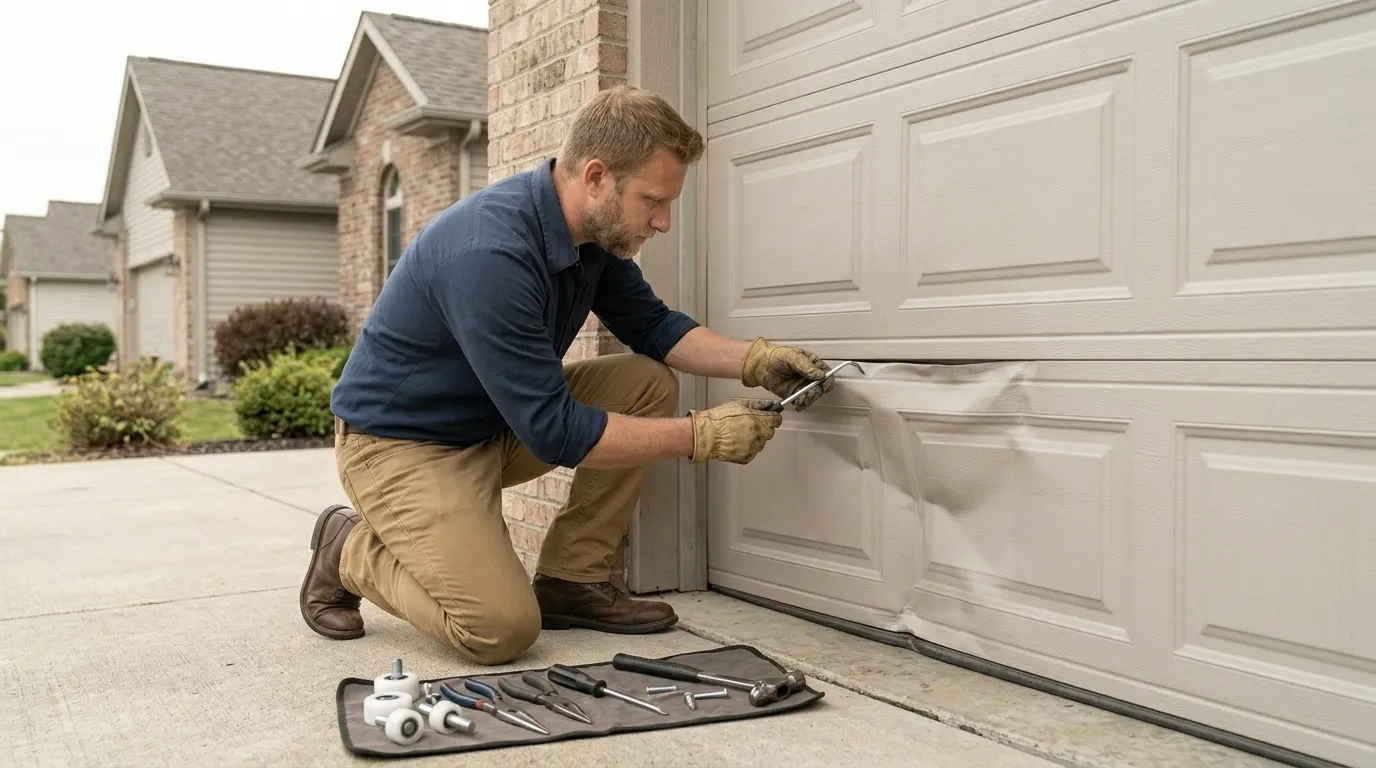
A straight roller swap on a door this age means pulling the old steel rollers off their brackets, checking the track for wear grooves where the bad wheel has been rubbing, and setting new rollers to match the original track width - not a modern default width, since the track itself wasn't replaced. Nylon rollers with sealed bearings hold up better in the cold-to-warm swings this area gets and run quieter than the original steel ones, which is usually what owners are hoping for anyway.

We also check the brackets that hold each roller axle. On a door built around 1951, those brackets have had seven decades to loosen, rust at the mounting screws, or get bent from someone forcing a stuck door in the past. A new roller in a loose or bent bracket will wear out again fast, so the bracket gets checked and reset or replaced as part of the job, not after a callback.

We don't force original steel rollers back into service once they're worn - that's a delay, not a fix, and it usually means we're back out within a season.

Where This Job Goes Sideways

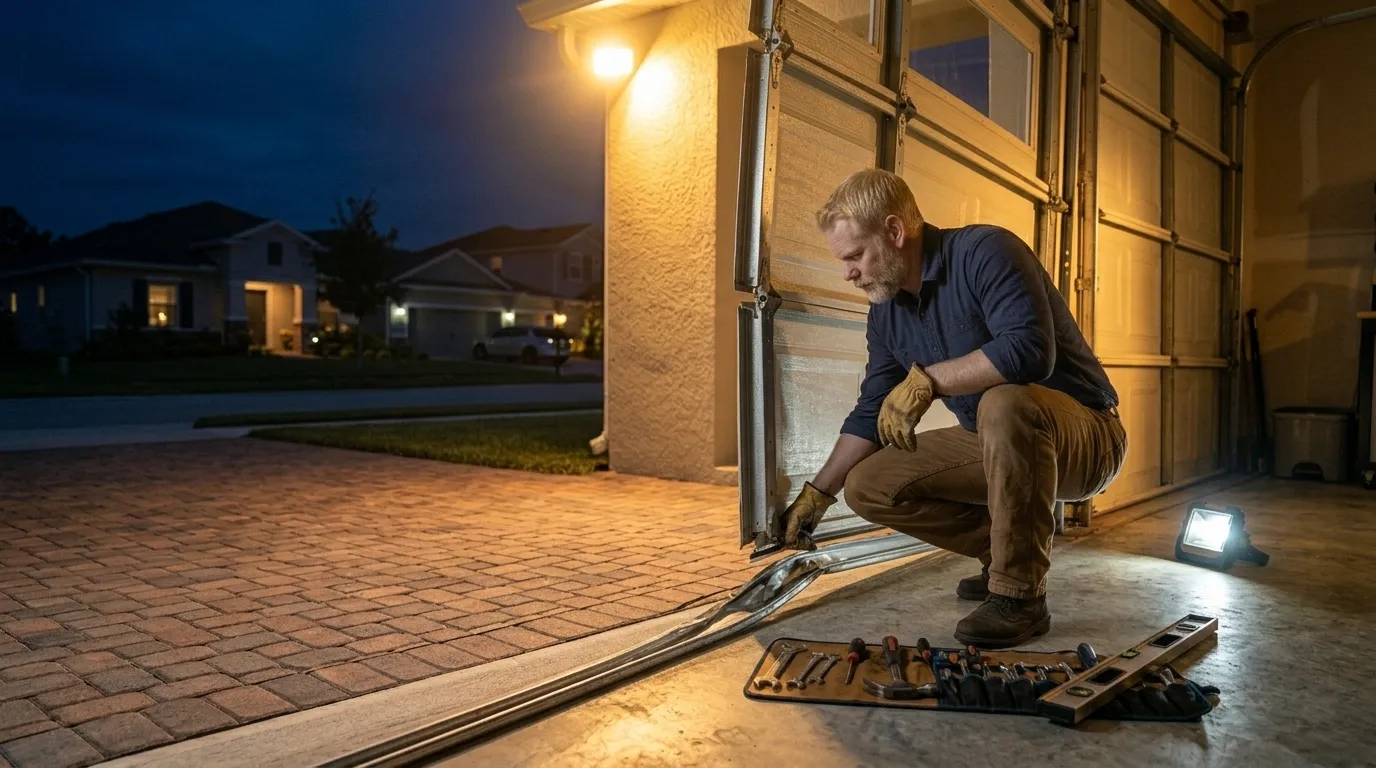
The complication on doors this age isn't usually the roller - it's the track underneath it. If the track has been reshaped by decades of a dragging roller, or if a past owner bent it trying to free a jammed door, new rollers alone won't quiet the door down. The track has to be checked for straightness section by section, and on a narrow 1951-era track, a bend that looks minor can still catch a roller wheel every single cycle.

The other spot this goes sideways is the bottom bracket, where the roller meets the cable and spring system. On an older double door especially, that bracket carries real tension, and it's not something to work on with the door under load. If the bracket itself is cracked or the hole is elongated from age, that's a bracket replacement, not just a roller swap, and it changes the scope of the job before we can finish it.

How Long It Takes

A standard roller replacement, once we're on site, is a same-visit job - both sides of a double door, checked and rolling smooth before we leave. What changes the timeline is what we find once the door's open: a bent section of track, a cracked bottom bracket, or brackets so rusted the screws won't hold a new one. Any of those add time to the same visit rather than requiring a second trip, but it does mean the quote you get over the phone is for the roller itself, not for whatever the track is doing underneath it.

We travel to Brentwood from Pittsburgh, about 5 miles out, so scheduling is built around routing, not a local branch. That's worth knowing going in - it doesn't change the repair, but it does mean we're not the crew that can swing by in twenty minutes for a five-minute look.

The DIY Question

Swapping a roller on a door with no spring tension on it - one that's already down and staying down - is within reach for a lot of owners with the right pliers and a little patience. The rollers near the bottom of the door, away from the spring and cable system, are the lowest-risk ones to touch yourself.

Where we'd stop you is the rollers at the top of the door, right next to the bottom bracket and the lift cable, especially on a door with old torsion hardware from the same era as the house. That cable is under load even with the door down, and a slip there can take a finger with it. If your door is a single steel panel from the 1950s rather than a modern sectional, the whole hardware setup is old enough that we'd rather look at it before you start pulling brackets loose. If you're not sure which rollers are safe to reach, that's a fair reason to have us take the first look.
How it works

From “it’s stuck” to “it’s fixed”

01
Tell us what’s wrong - Pittsburgh garage door service

Tell us what’s wrong

Describe the symptom - won’t open, loud bang, opener runs but the door won’t move.

02
On-site diagnosis - Pittsburgh garage door service

On-site diagnosis

A technician tests the door under power and by hand and finds what actually failed.

03
Clear, up-front plan - Pittsburgh garage door service

Clear, up-front plan

You get the fix that’s needed and what drives the cost - before any work starts.

04
Repaired & tested - Pittsburgh garage door service

Repaired & tested

The repair is done, the door is set true and tested, and the work area left clean.

Serving Pittsburgh, PA - tell us what your door’s doing and we’ll take it from there.

How we work

What to expect

Diagnosis firstEvery visit starts by finding what actually failed - not a pre-written parts list.
The right part for the doorSprings and openers matched to the door’s weight and age, so the fix holds up.
Straight answersWhen a repair makes more sense than a replacement - or the reverse - you hear it plainly.
Clean, careful workTension released safely, hardware set true, the door tested under power before we leave.
304,391Residents in Pittsburgh
8Garage door services
7Neighborhoods & suburbs
PAServing Pittsburgh, PA
Questions

Frequently asked

Straight answers about garage door repair in Pittsburgh. Still unsure? Ask us directly.

Why do my rollers wear out faster than my neighbor's newer garage?

If your house dates to around 1951 like most of Brentwood, your door is likely running on narrower original track with steel rollers, which wear faster than the nylon rollers used on newer doors. Cold winters add to it - steel contracts and can seize or crack a marginal roller sooner than it would in a milder climate.

Can you match rollers to my old track without replacing the whole track?

Usually, yes. We set the new roller size to match the track width that's already installed rather than assuming a modern default. If the track itself has been bent or worn from years of a dragging roller, that's a separate repair we'd flag before finishing the roller swap.

Do you have a shop in Brentwood?

No, we work out of Pittsburgh and travel to Brentwood, about 5 miles away, for jobs like this. There's no local branch here, so scheduling is built around the day's route rather than a walk-in counter.

Is it safe to replace rollers myself?

The rollers near the bottom of the door, with no spring tension nearby, are reasonable for an owner to swap. The rollers near the top bracket and lift cable carry real tension, especially on older torsion hardware, and that's where we'd rather take the first look before you start.

Ready to get your garage door sorted?

Tell us what it’s doing and where you are in Pittsburgh - we’ll take it from there.

Request a QuoteCall