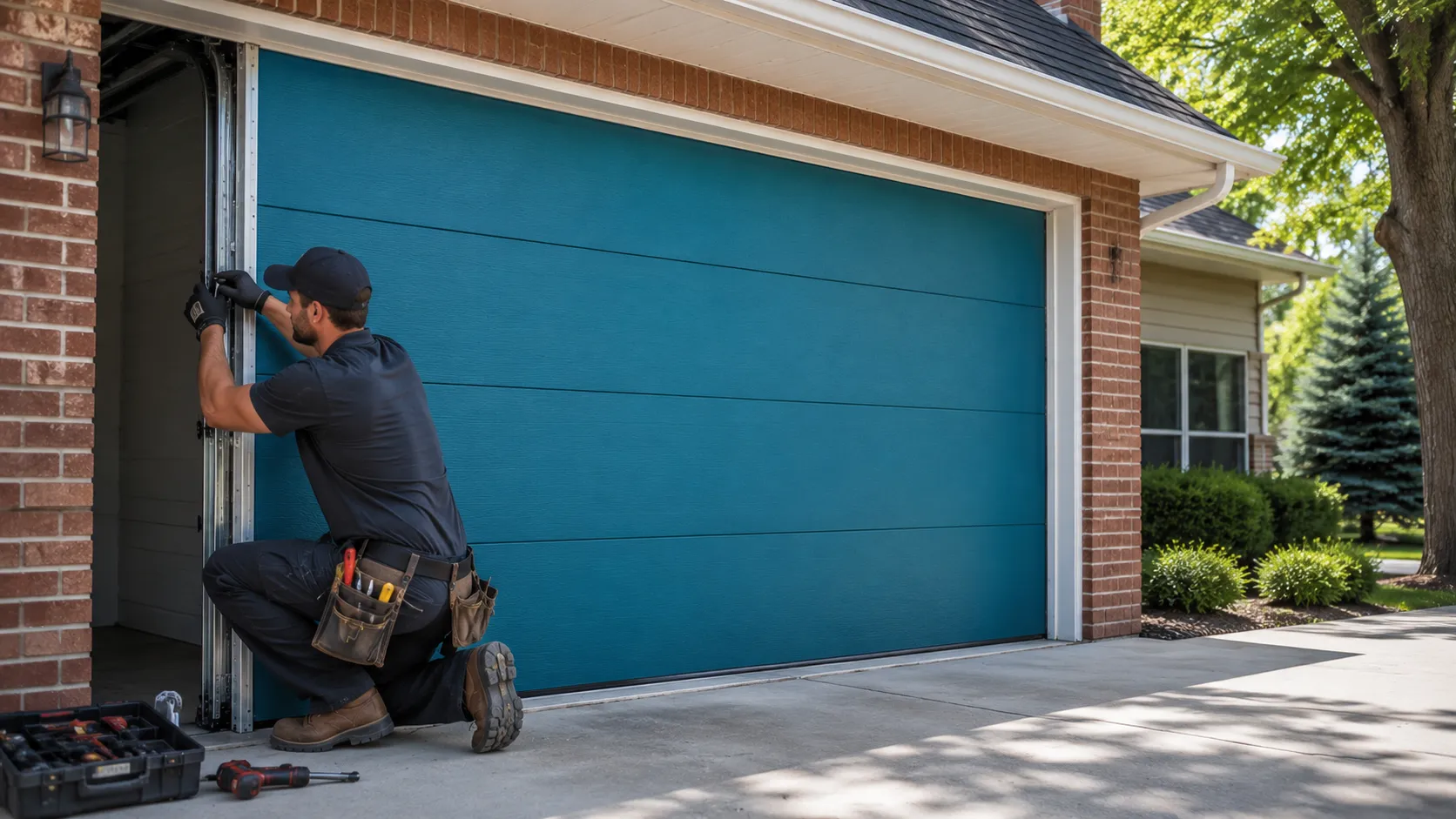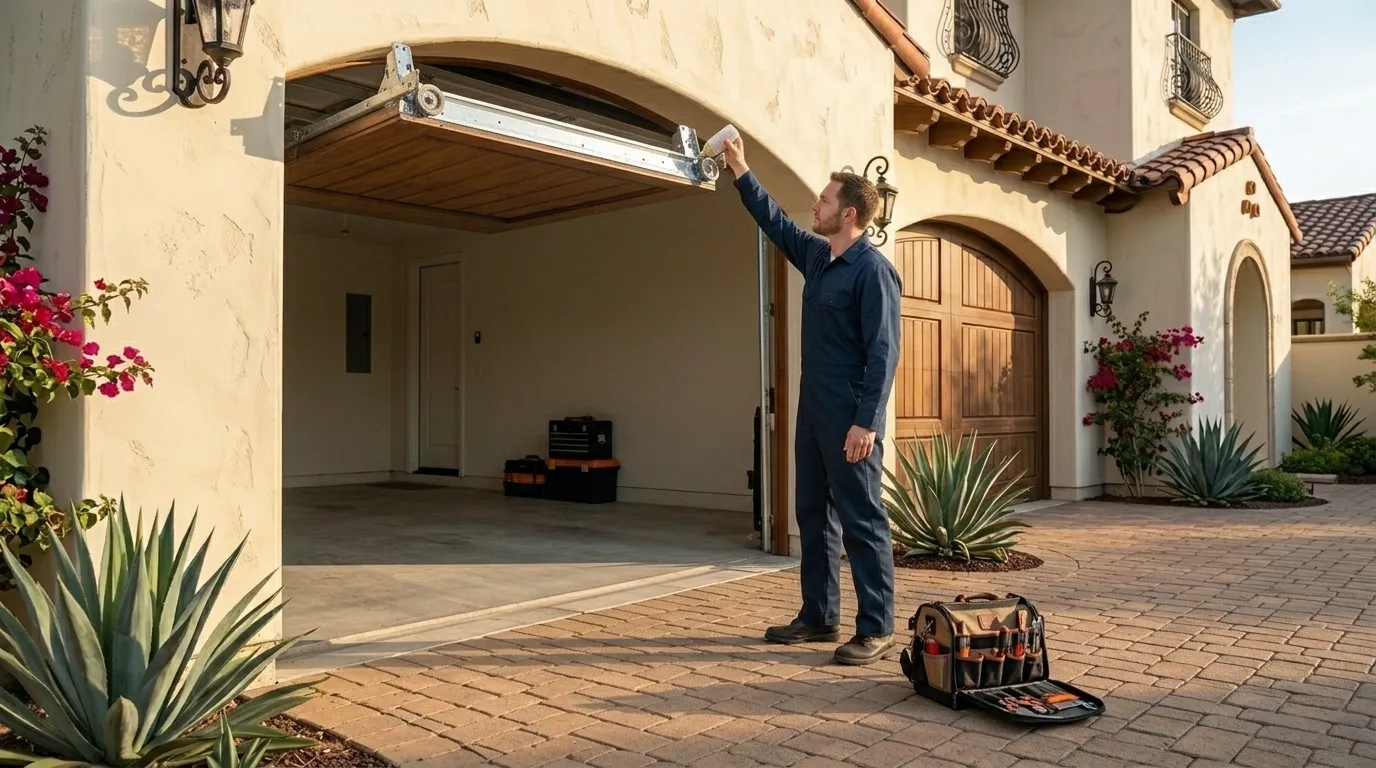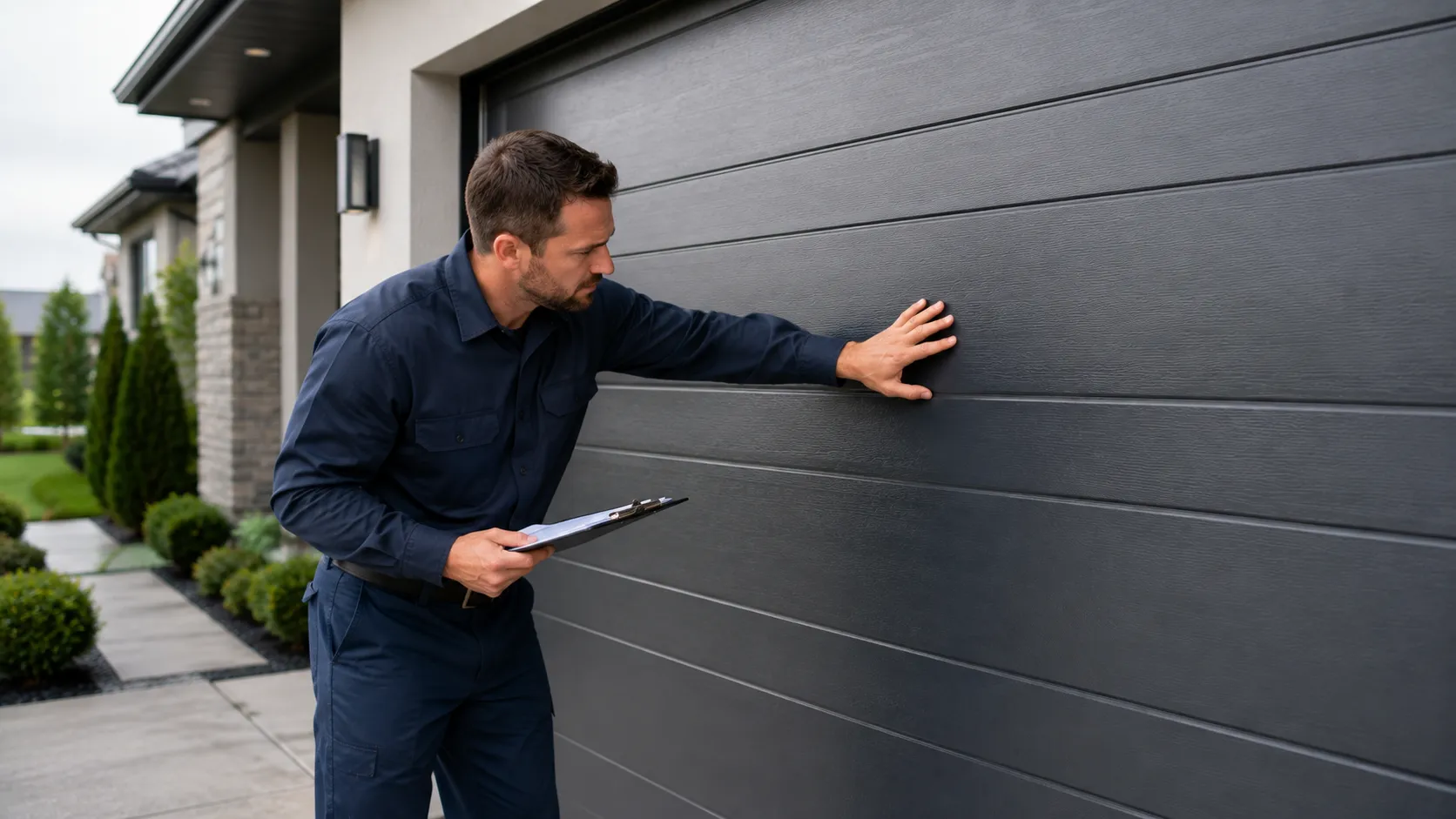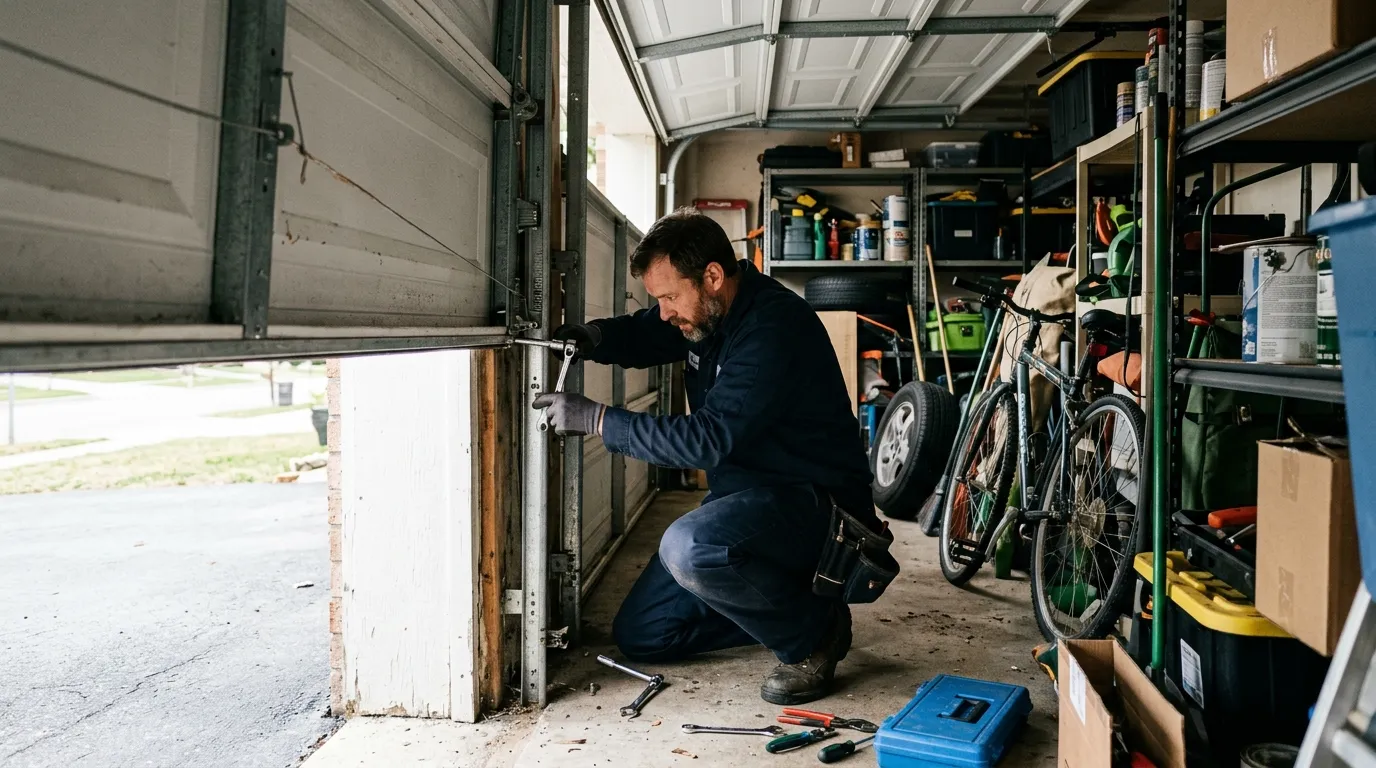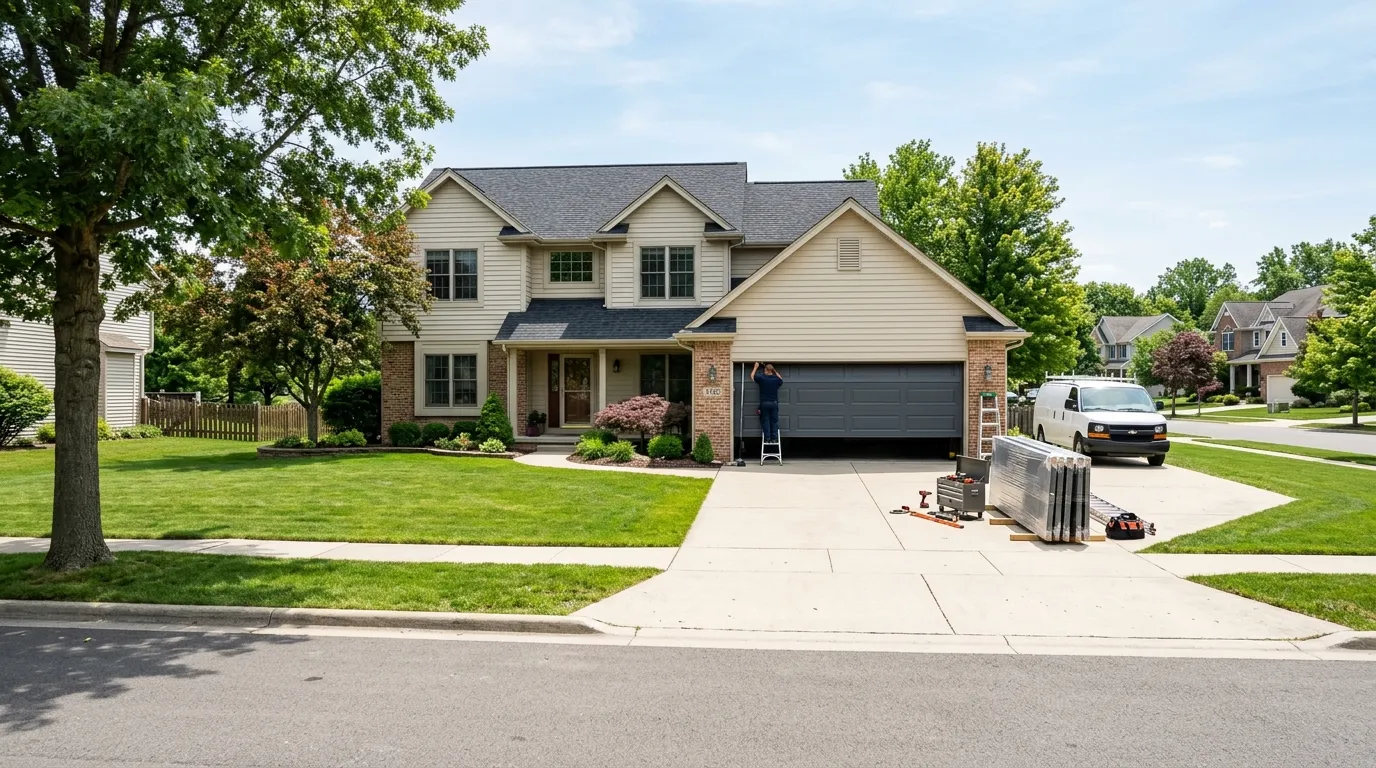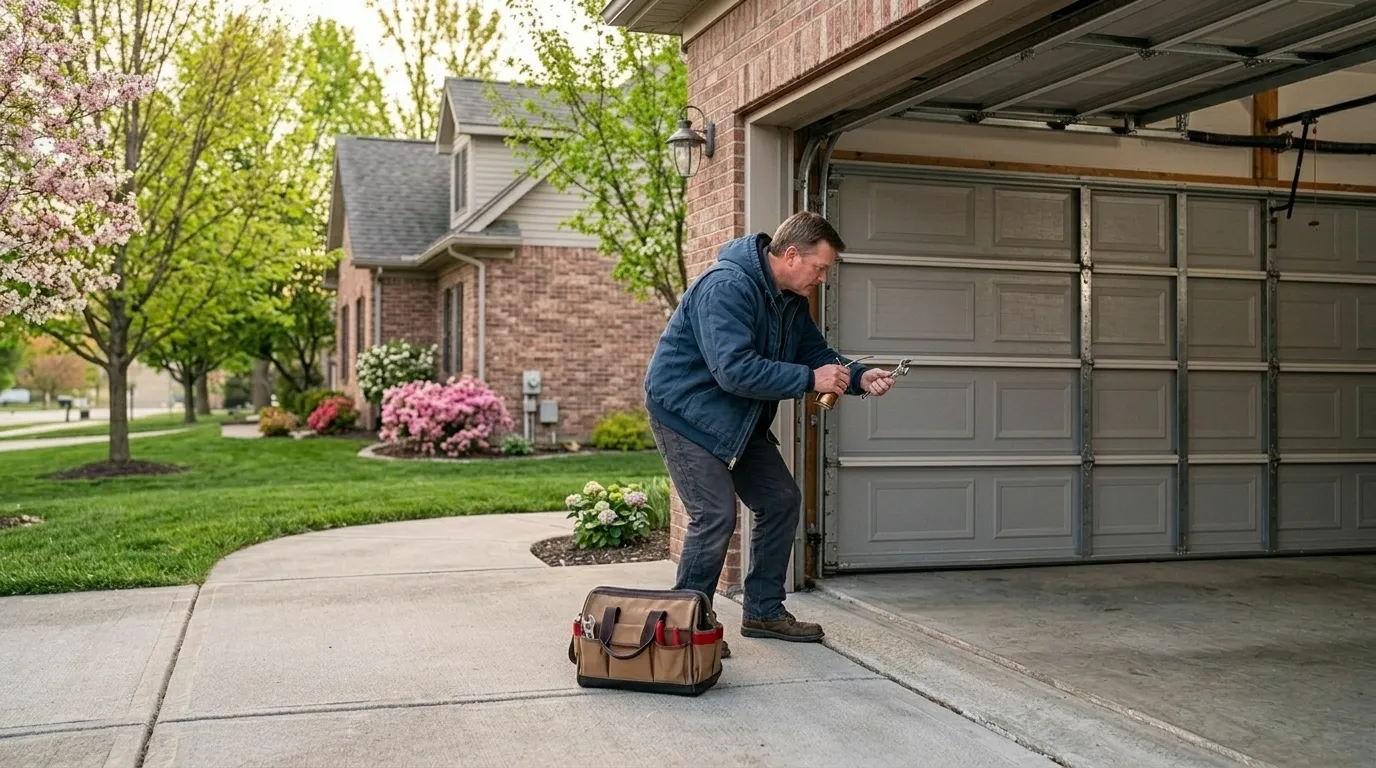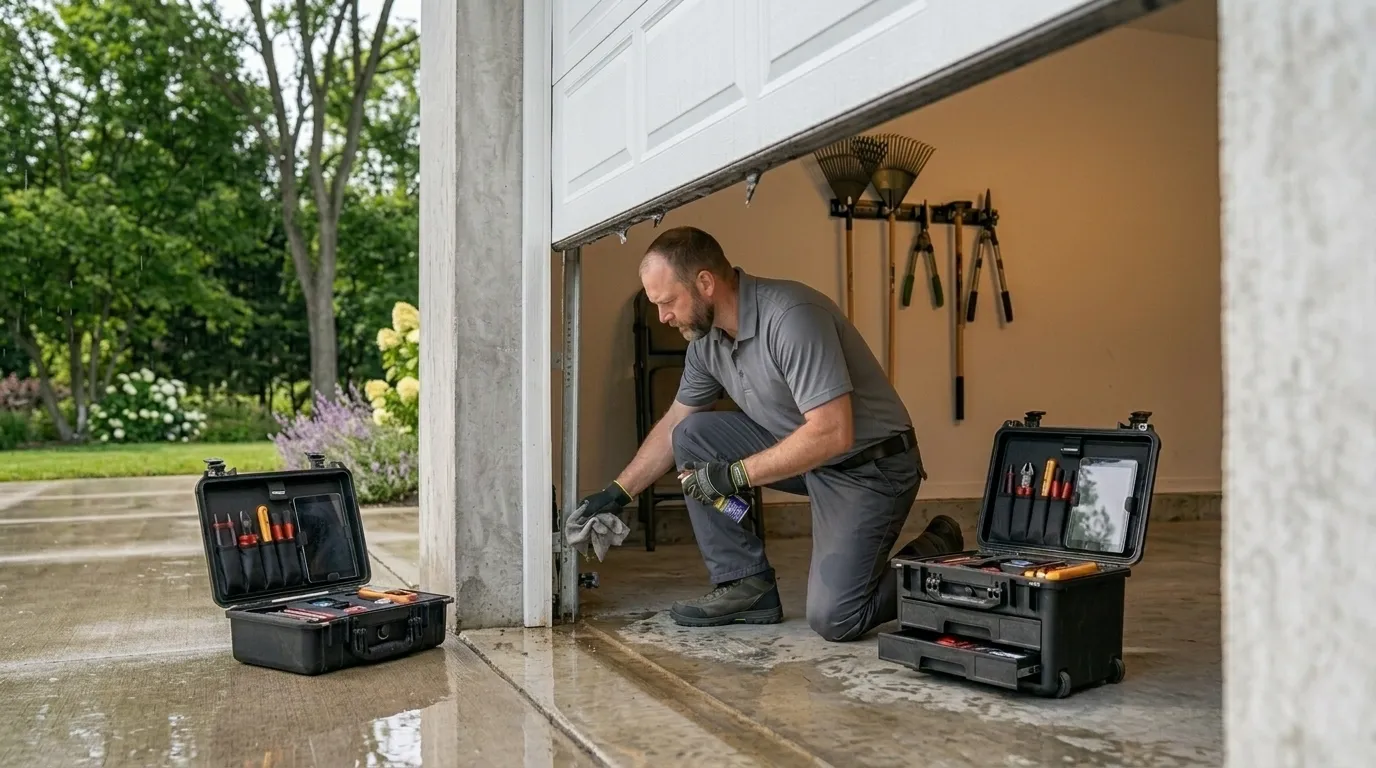
What You Are Seeing
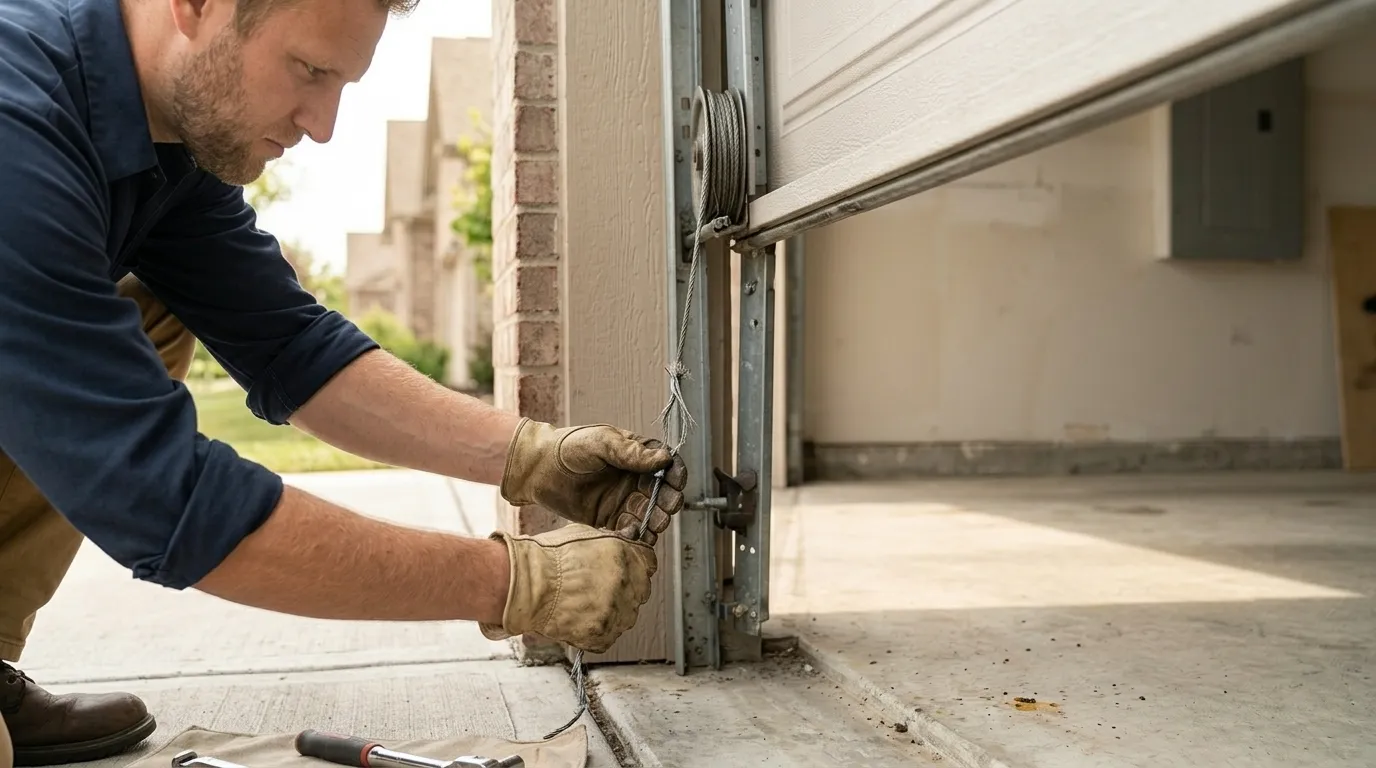
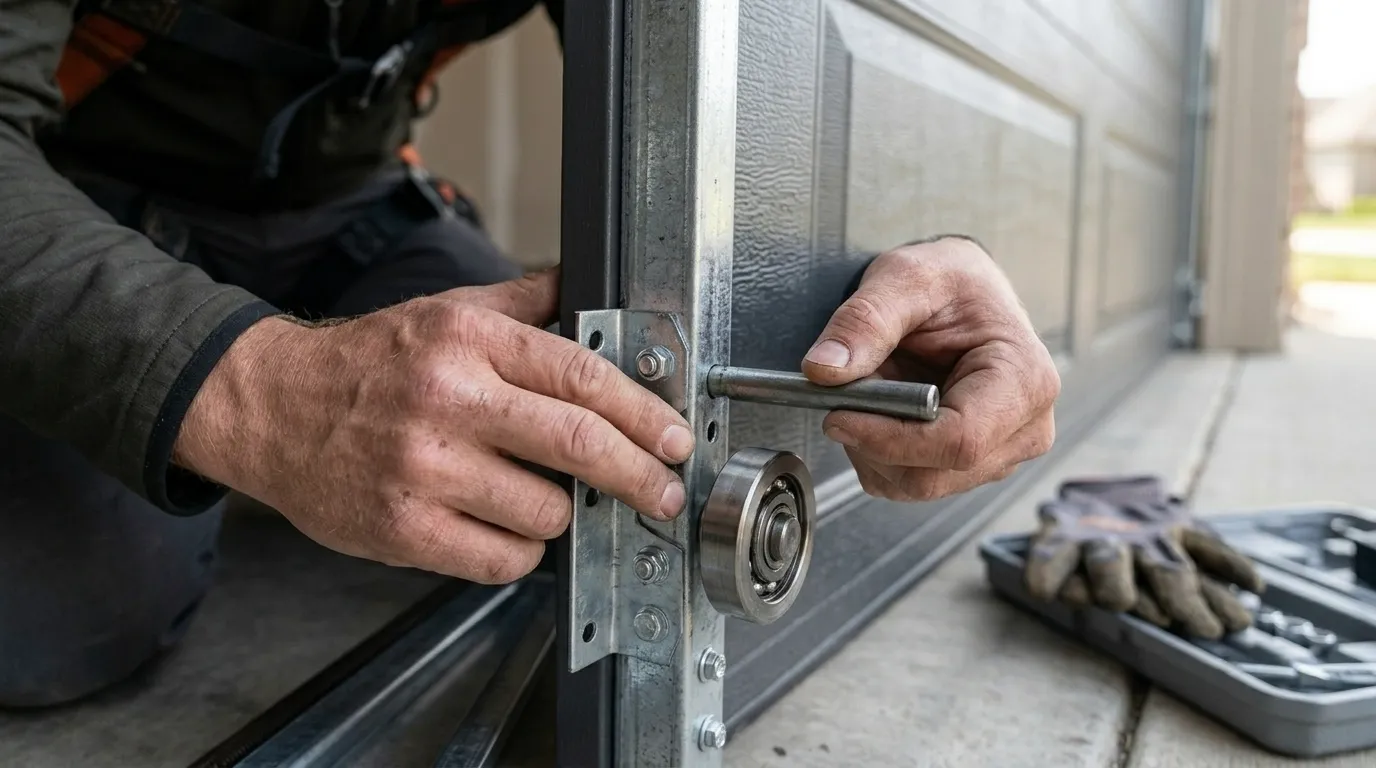
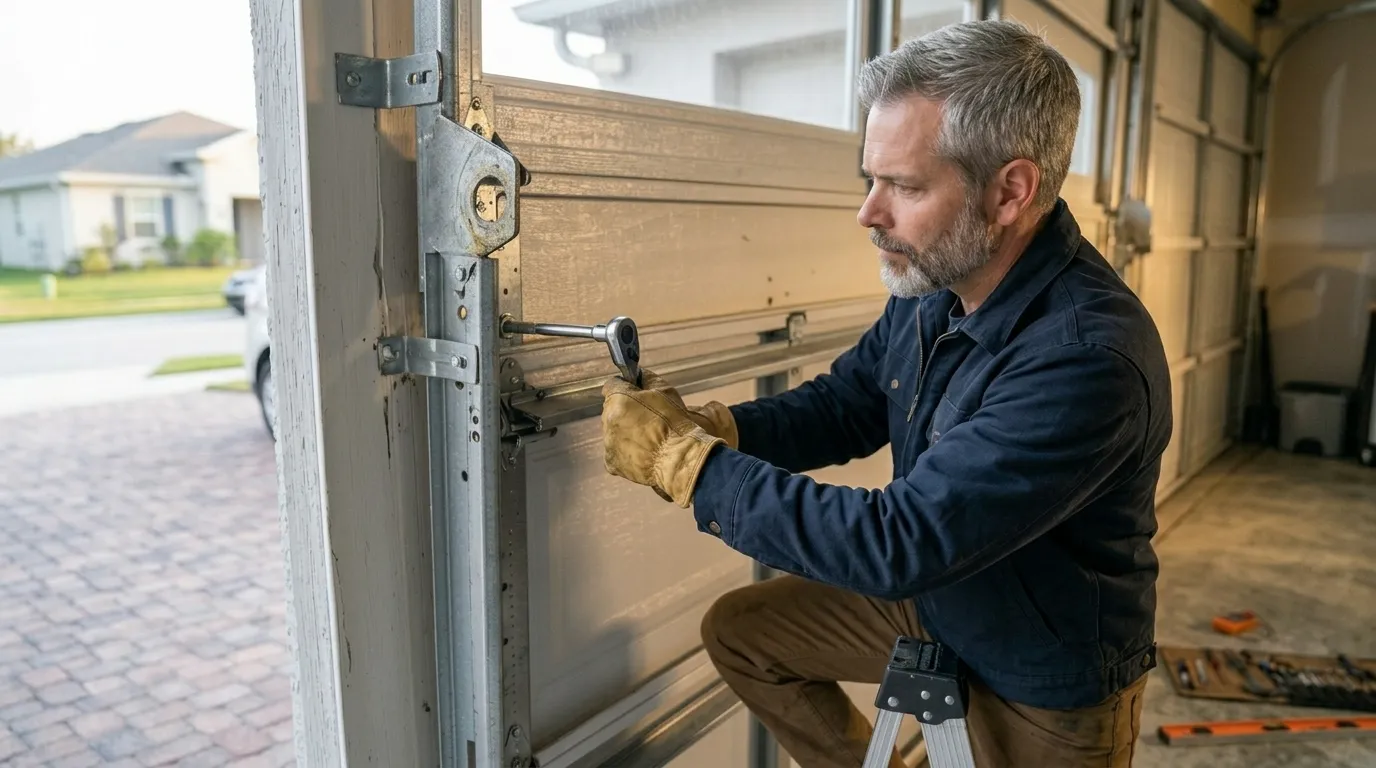
On a building from this era, the failure pattern usually starts with the torsion spring losing tension unevenly - one side sagging while the other holds, which cocks the door in the track and chews up the rollers on one rail faster than the other. You'll notice it as a door that starts level and ends crooked, or a header that grinds partway through the cycle. On steel commercial doors from the early 1960s, the panel skin is usually thin gauge and dented rather than rusted through, since the region's cold-severe climate does more damage through repeated freeze-thaw cycling on hardware than through corrosion on the panel itself. If the opener is original or a first-generation replacement, the chain drive is often worn enough that it's skipping teeth under load, which reads to an owner as "the door is slow" when it's actually the drive losing grip.
Why This Fails Locally
The cold-severe climate designation for this part of Pennsylvania means hardware built for commercial doors here has to survive repeated freeze-thaw stress on springs, hinges, and track bolts every winter, not just one hard freeze a year. On a building built around 1962, that's now roughly six decades of seasonal cycling on the original torsion hardware if nobody's replaced it. Compare that to housing stock nearer the city core, much of it median-1955 and often carrying even older hardware - the failure shows up earlier there, but the mechanism is the same: metal fatigue accelerated by cold. In Green Tree specifically, the slightly newer building stock buys a little more time before the spring gives out, but it doesn't buy immunity. When it does fail, it tends to fail all at once rather than with a long slow warning.
How Long It Takes
A straightforward torsion spring replacement or roller/track service on a commercial door runs a standard shop visit - most jobs like this are diagnosed and closed out same-visit once we're on site. What extends it is exactly what's described above: if the header bracket needs reinforcement or the opener's drive gear is stripped rather than just worn, that's additional time to source the part and finish the job correctly. Given the building stock here dates to the early 1960s rather than earlier, we more often find the door itself sound and the hardware worn, which keeps most visits on the shorter end. We don't carry every commercial opener gear on the truck for every make, so a same-day close depends on what's actually failed.
Stocked Parts
We keep torsion springs sized for standard commercial steel doors on the truck, along with rollers, cables, and standard jamb hardware suited to the freeze-thaw wear this climate band produces. What we don't carry as standard stock is specialty header bracket kits for oversized commercial doors or proprietary opener drive assemblies tied to specific manufacturers - those get ordered once we've confirmed the exact part on site. Given the building era common to Green Tree, most jobs we run here are torsion spring and roller work rather than full header rebuilds, so the truck stock covers the majority of calls without a second trip.