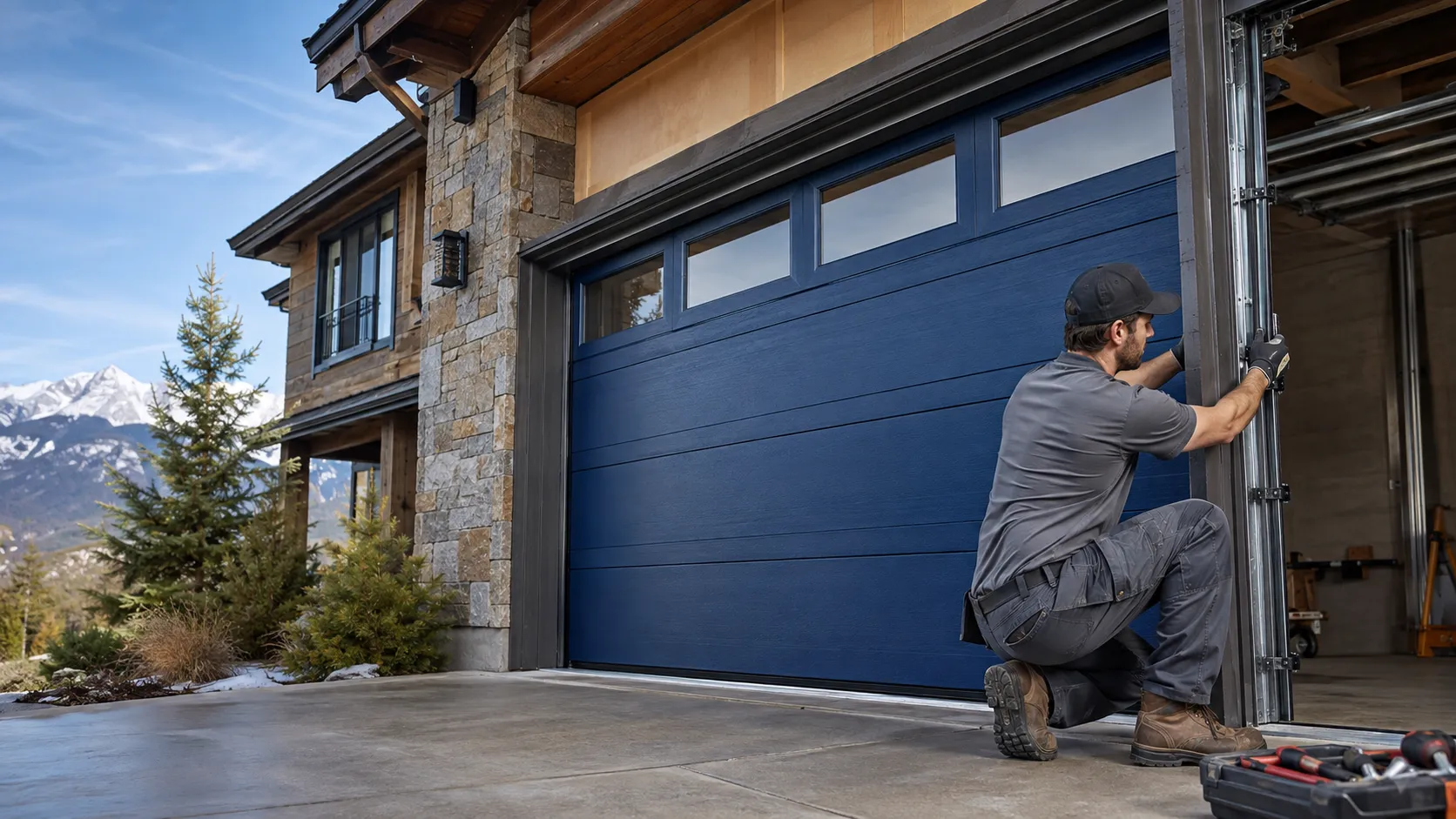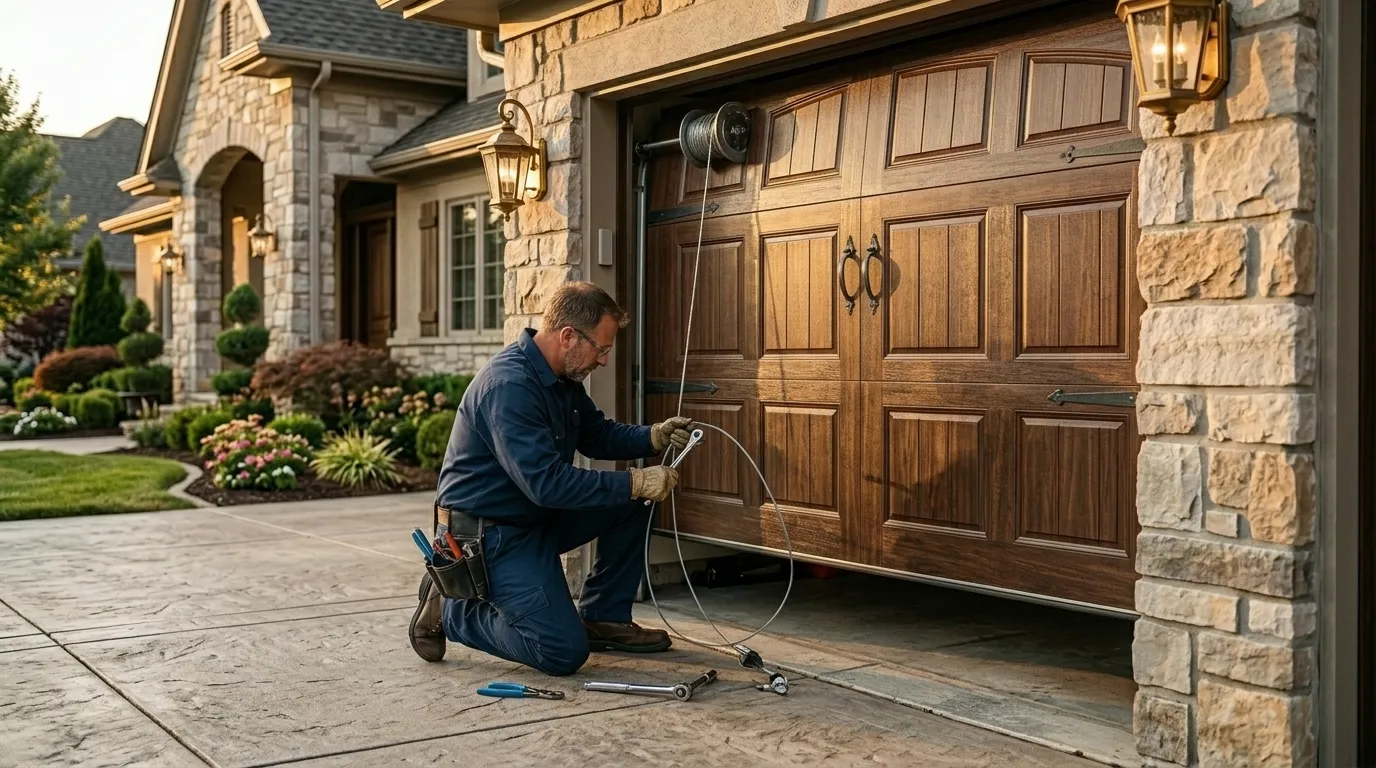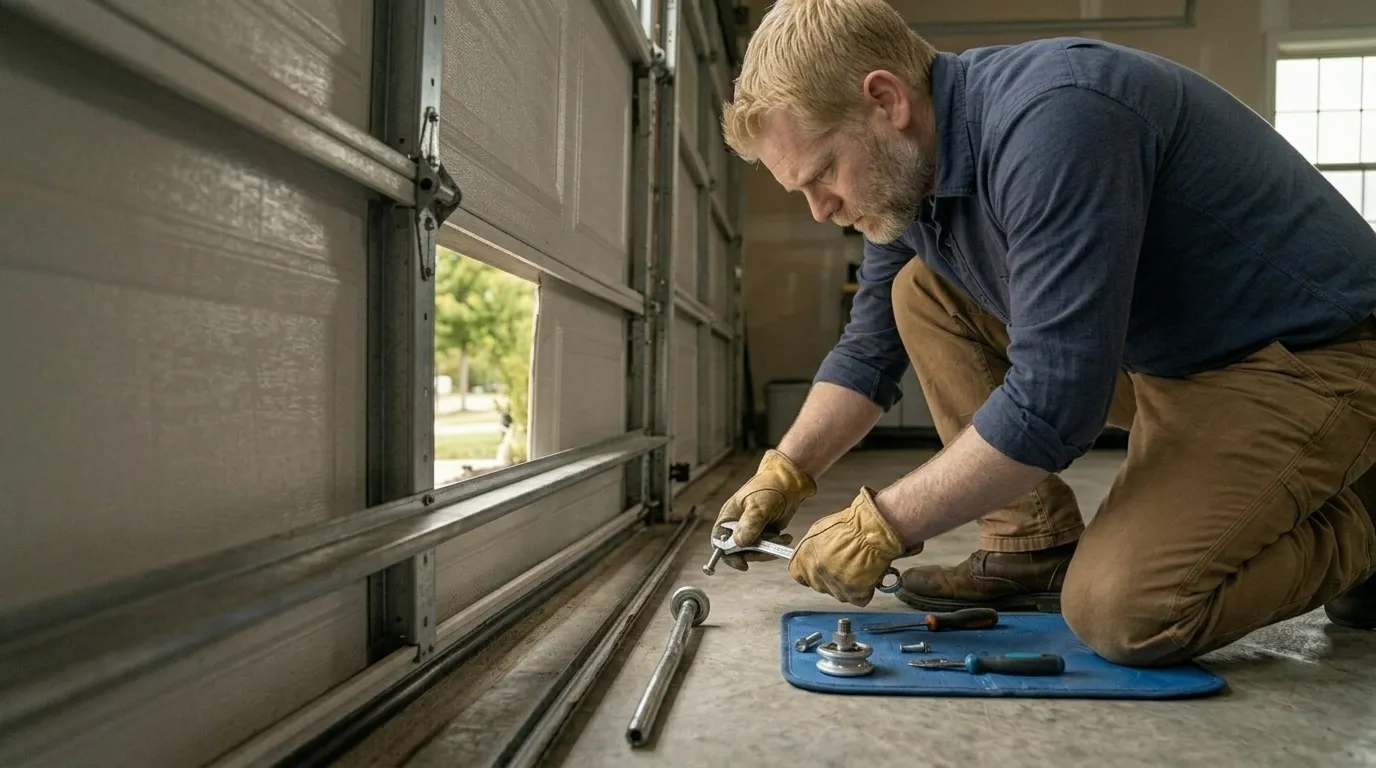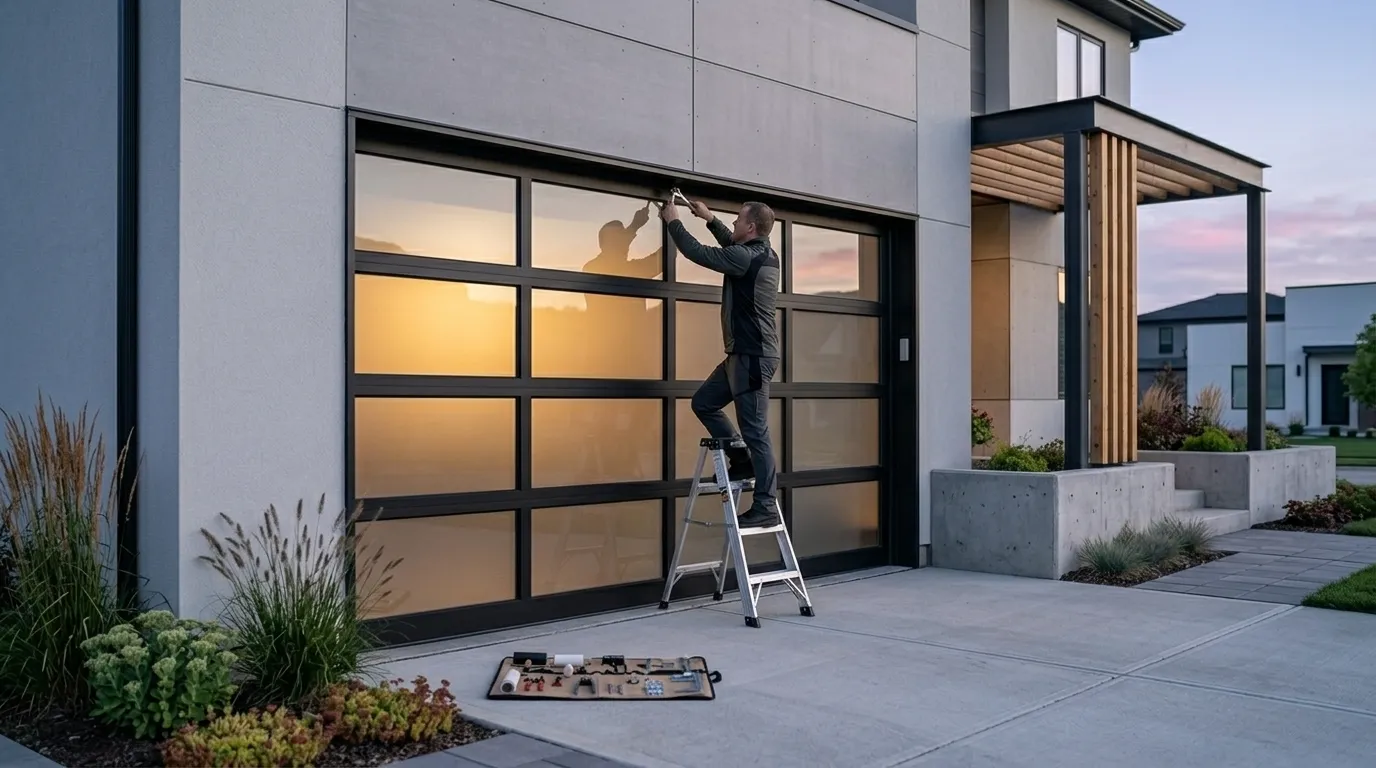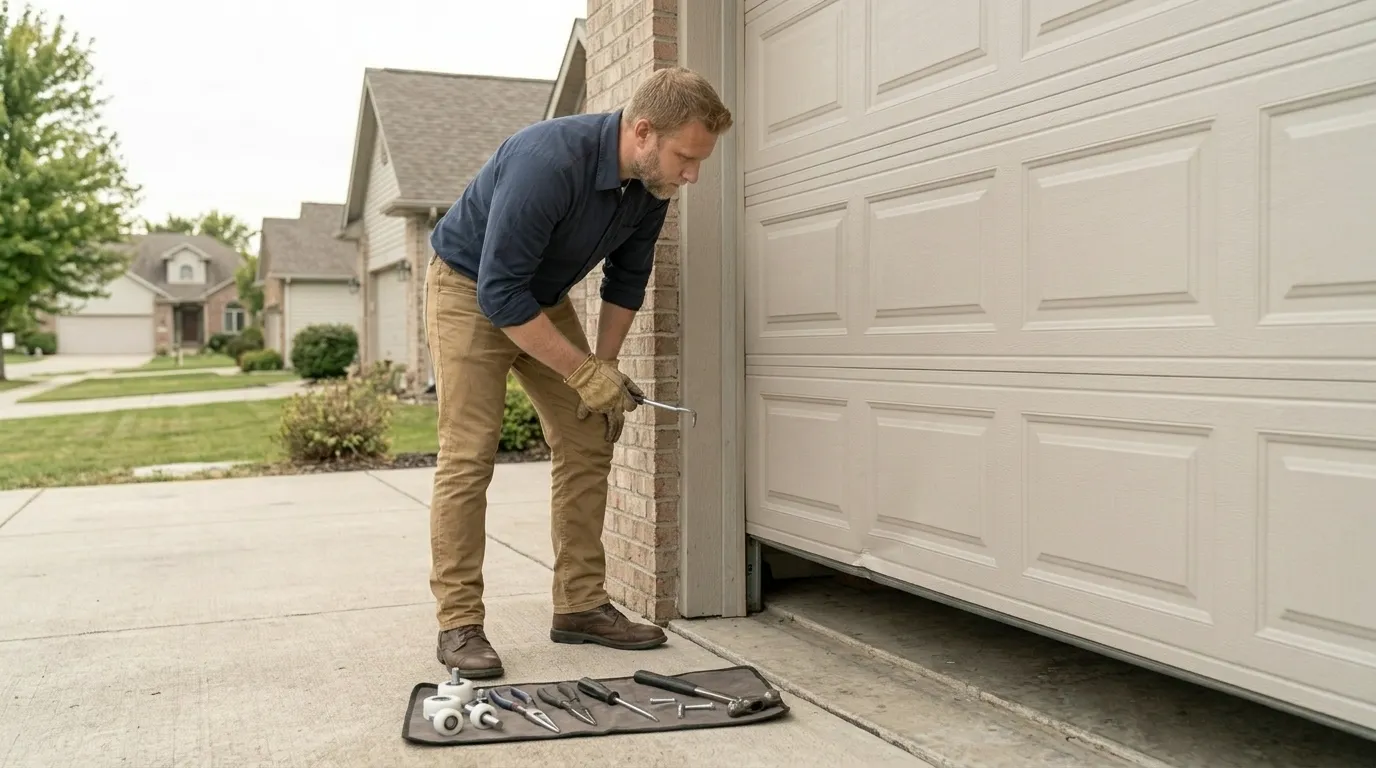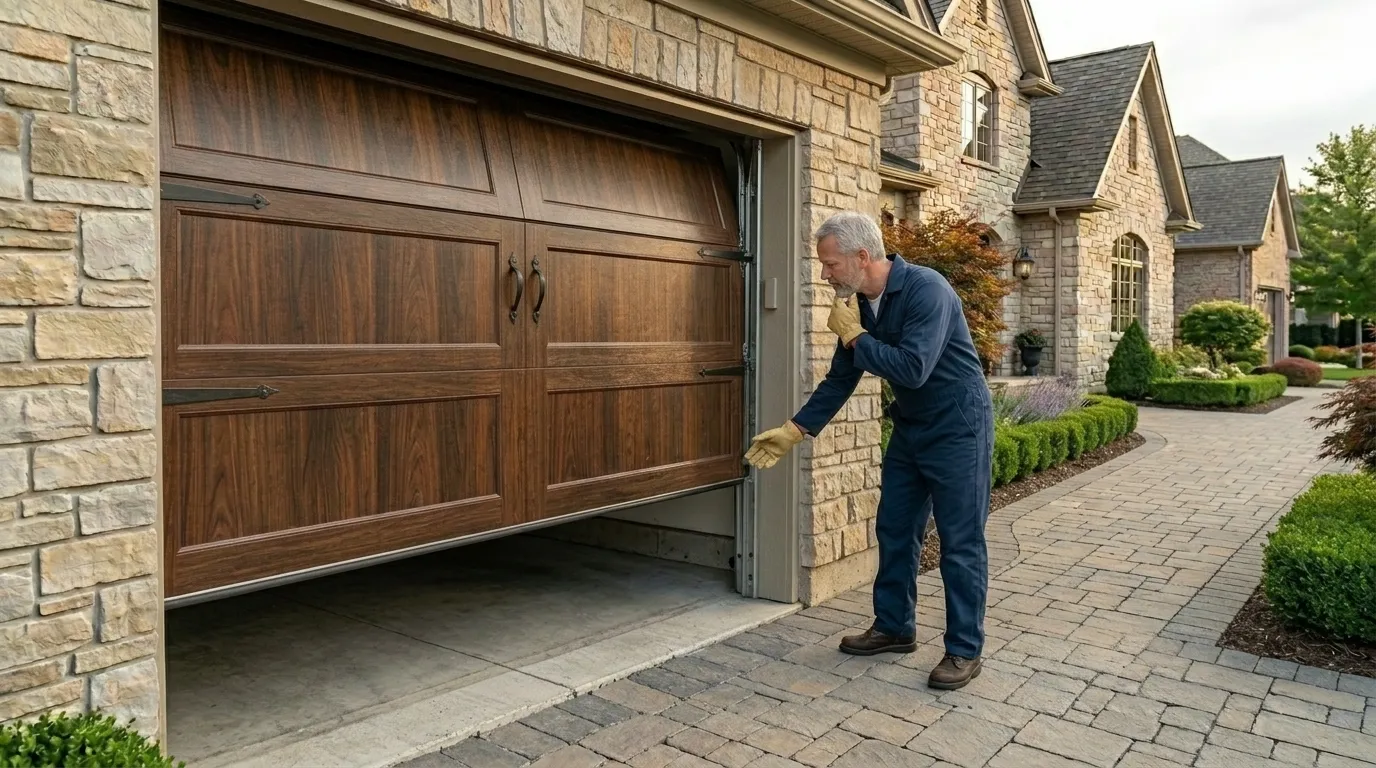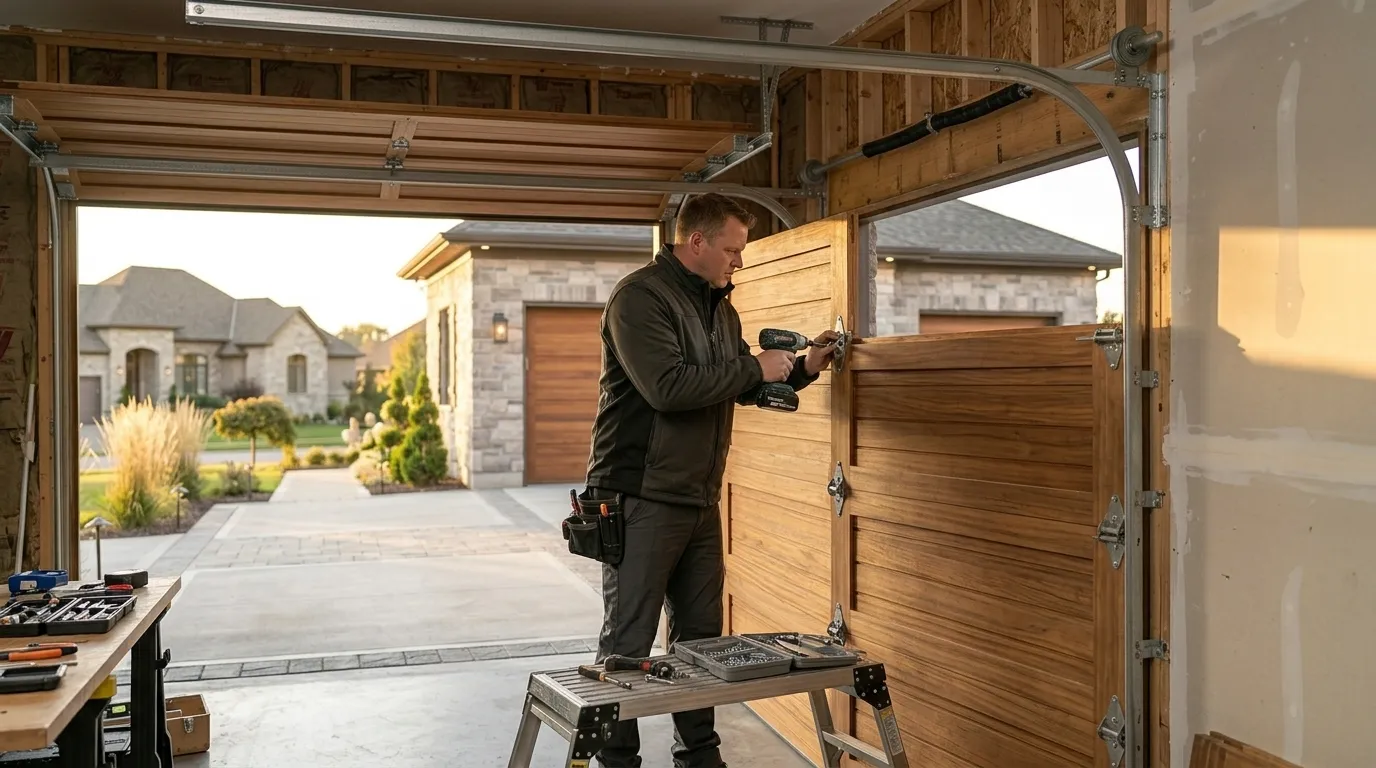
What You Are Seeing
Green Tree's housing mostly dates to around 1962, which puts a good share of the garages here right in the postwar-to-early-60s build wave that runs across this whole part of the service area. Doors and openers installed or replaced on houses from that era tend to run steel sectional panels on torsion hardware sized for lighter, older-style doors - not the beefier insulated panels going up on new construction now.
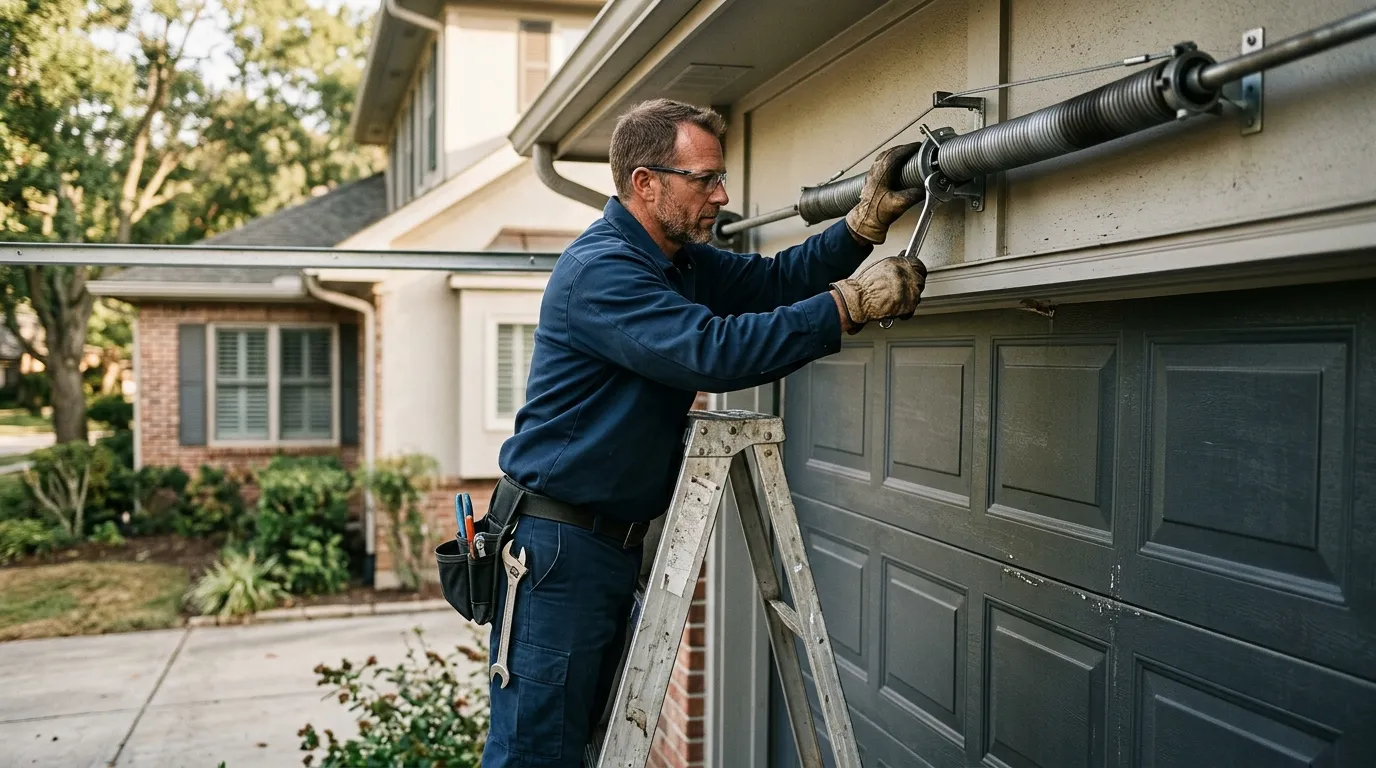
What that means when something breaks: a snapped torsion spring on one of these older setups often takes an unbalanced door with it, so the door slams down hard or won't lift past a foot off the slab. You'll also see openers straining and clicking off mid-cycle because the door's heavier than the motor was ever meant to lift once a spring's gone soft.
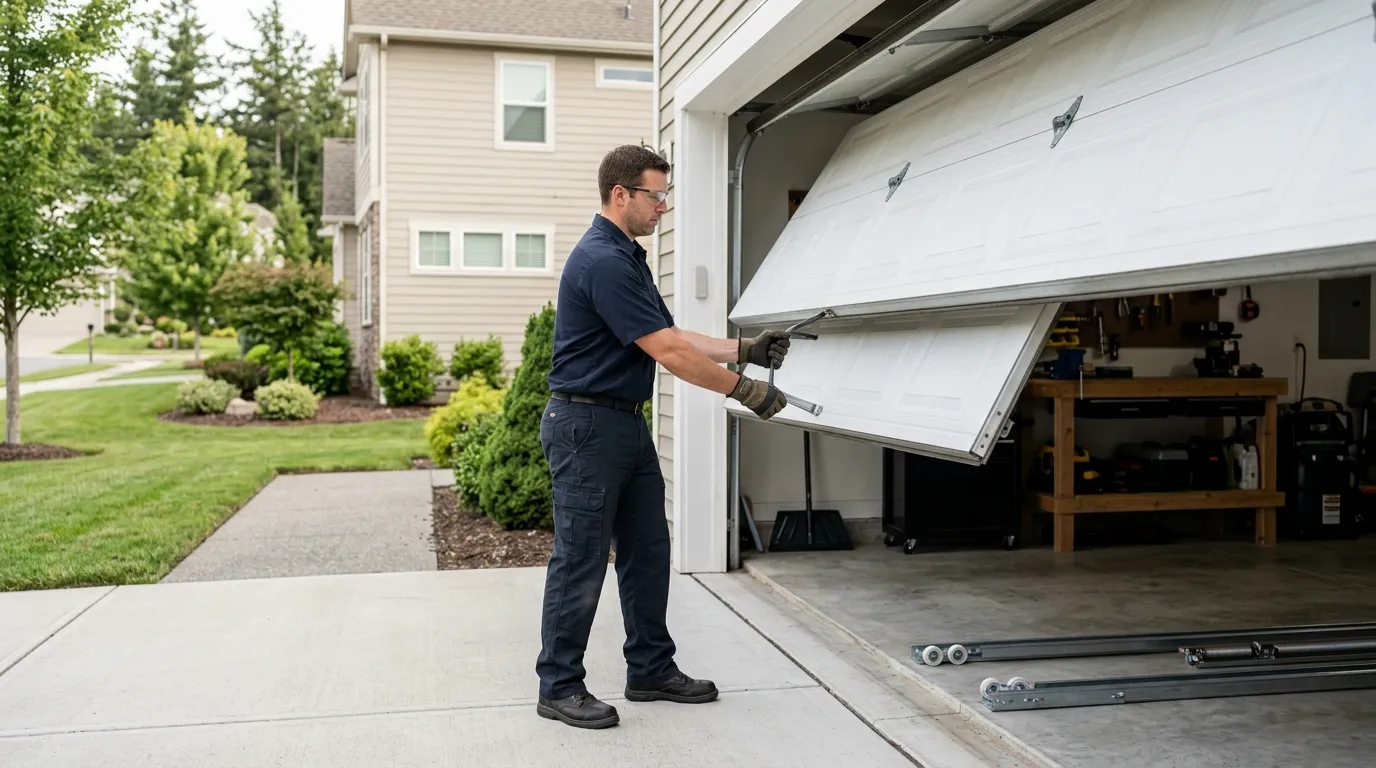
Off-track doors are common too - rollers on 60-year-old track wear a groove that eventually lets the door jump the rail on a cold morning. If your door is crooked in the opening, or one side drops faster than the other, that's a spring or cable problem, not an opener problem, no matter what the remote seems to say.
Why This Fails Locally
Pittsburgh's climate band is cold and severe, and that matters more on garages built in the early 1960s than on newer stock. Steel contracts in cold, and a torsion spring that's already fatigued from six decades of cycles loses tension faster once temperatures drop - that's why so many spring failures on older Green Tree garages show up in the coldest stretch of the year rather than in July.
Green Tree's median household income of $87,828 runs well above the $72,020 figure for the wider service area, and that shows up in the calls: more owners here choose to replace an aging opener or door outright rather than patch it repeatedly, because the math works out sooner on a higher-income budget. That's not a judgment, just a pattern worth knowing before you decide which way to go.
The honest limitation: cold doesn't cause a spring to fail on its own. It accelerates a failure that was already coming from age and cycle count. If your spring is original to a 1962 build, cold is just the thing that finally finishes the job.
How Long It Takes
A straightforward spring replacement or cable swap on standard hardware usually runs a single visit, start to finish, once the truck is on site - the four-mile drive from Pittsburgh doesn't change that math one way or the other. What does change it is whether the hardware on your door is the standard size still sold today or something specific to the original 1962 install.
When a drum, shaft size, or bracket doesn't match current stock, the job splits into two visits: one to confirm exactly what's needed, a second once the part's in hand. That's more common on garages that haven't had any hardware touched since the original build, which describes a fair number of houses in this age bracket.
Opener work is usually faster than spring work regardless of the house's age, since most openers installed in the last fifteen or twenty years use parts that are current no matter when the door itself went in. The door's age matters more than the opener's.
Stocked Parts
For the hardware that shows up most often on Green Tree's older housing stock, the truck carries standard torsion springs in the common sizes, extension springs, lift cables, rollers, and the basic bracket and drum hardware that fits most sectional doors installed from the 1960s through today. That covers the large majority of spring and cable calls in one visit.
What isn't on the truck: a spring or drum built to a nonstandard size from an opening that's been widened or custom-framed, which happens often enough on houses this age that it's worth mentioning rather than promising a same-visit fix that might not hold up. In that case the part gets ordered and the second visit is scheduled once it's in.
Opener parts - logic boards, belts, standard gear kits - are stocked for the common brands sold over the last couple of decades, regardless of when the door itself was installed. It's the door hardware, not the opener hardware, where a house's age changes what's already on the truck.