Serving Pittsburgh, PA & nearby
(412) 674-9419
Pittsburgh, PA

Garage Door Maintenance for Green Tree Homes

Green Tree's houses date to 1962, newer than most of the service area. Here's what that means for spring tension, opener wear, and tune-up timing.

Garage Door Maintenance for Green Tree Homes
Pittsburgh, PA
8 services
7 service areas
Diagnosis first, then the fix

The DIY Question

The spring on a Green Tree door usually isn't the problem people think it is. Most calls we get from this side of the county start with a homeowner who lubed the track, tightened a hinge, and still has a door that groans or drifts open a few inches on its own. That's not a lube problem. It's tension.

Green Tree's housing stock centers on 1962 - a good seven years newer than the 1955 median across the wider service area we cover from Pittsburgh. That gap matters more than it sounds like it should. Doors and openers installed through the early '60s building wave came with steel that's held up fine structurally, but the spring and cable hardware from that era wasn't built with the safety margins current code expects. Tightening a bolt doesn't fix a spring that's lost 15% of its wind tension over sixty years.

You can safely do the small stuff yourself: clear the track of debris, check the weatherstrip, watch how the door tracks on its rollers. What you shouldn't touch is anything under spring load. That's not a difficulty issue, it's a broken-bones issue if a torsion spring lets go while you're adjusting it.

What You Are Seeing

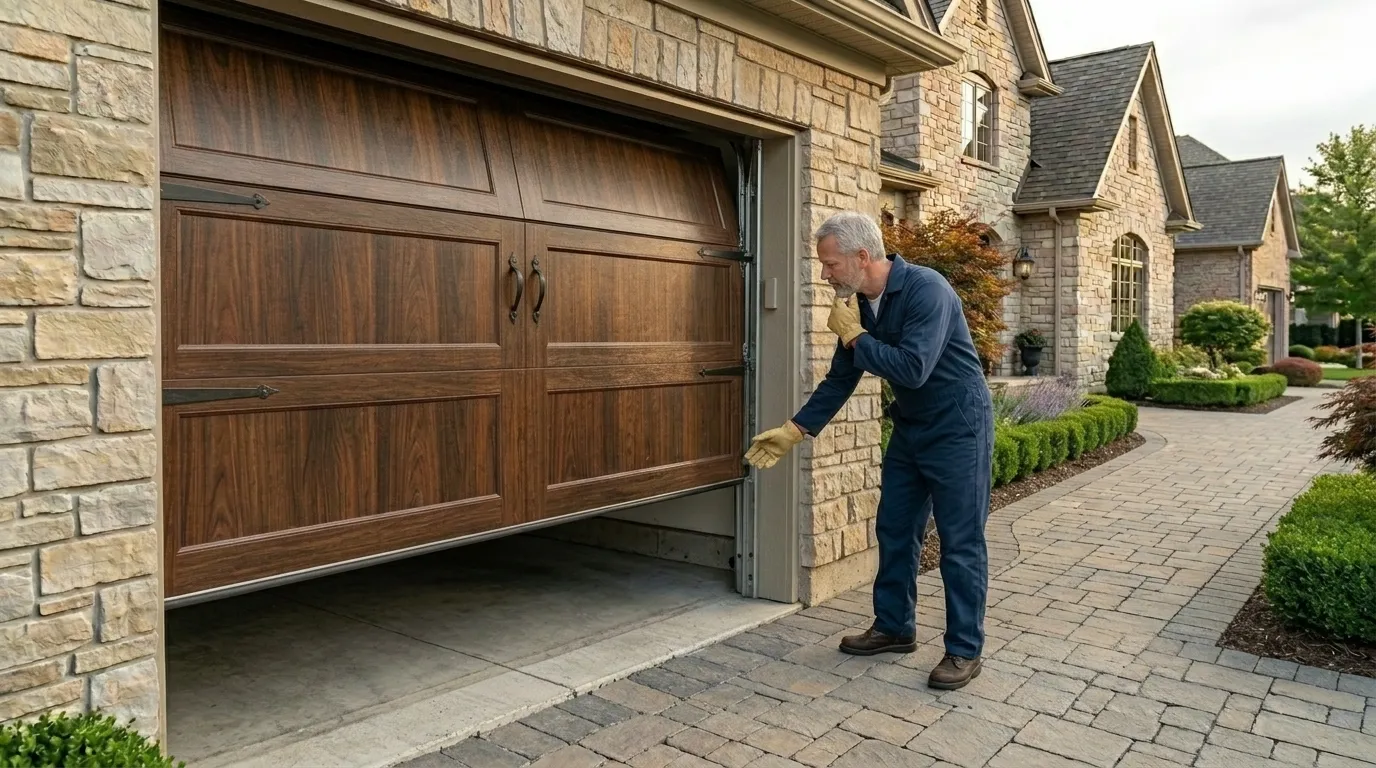
On a lot of Green Tree doors, the tell is a slow start - the opener strains for the first foot of travel, then the door moves normally. That's a spring giving up tension gradually rather than snapping outright, and it's common on hardware original to a house built in the early '60s.

Another pattern here: a door that closes unevenly, dropping faster on one side. That usually means one cable has stretched or one spring is weaker than its pair, which happens when only one spring gets replaced at some point in a door's life instead of both at once - a shortcut that shows up years later as exactly this symptom.

A third sign, less common but real: rust bloom on the bottom panel section, worse on north-facing garages. Green Tree sits in a cold-climate band with real winter severity, and road salt tracked in on tires sits against the bottom rail all season. It's cosmetic at first. It isn't cosmetic once it eats through the panel seam.

Why This Fails Locally

The climate band here is classified cold and severe, which means real freeze-thaw cycling every winter, not an occasional cold snap. That cycling is hard on garage door hardware in a specific way: steel cables and springs contract in the cold, then a warm afternoon lets moisture back into any exposed rust point, and the cycle repeats for months.

Houses built around Green Tree's 1962 median weren't engineered around that cycling the way current code requires. The track brackets, the end bearing plates, the cable drums - original hardware on a door this age has had sixty winters to work loose a quarter-turn at a time. Nothing dramatic happens in any single winter. The failure shows up as accumulated slack that finally crosses a threshold and the door starts binding or dropping unevenly.

This is why a maintenance visit on a Green Tree door isn't the same checklist as a newer build elsewhere in the region. We're not looking for manufacturing defects. We're looking for six decades of small seasonal give that's finally added up.

Where This Job Goes Sideways

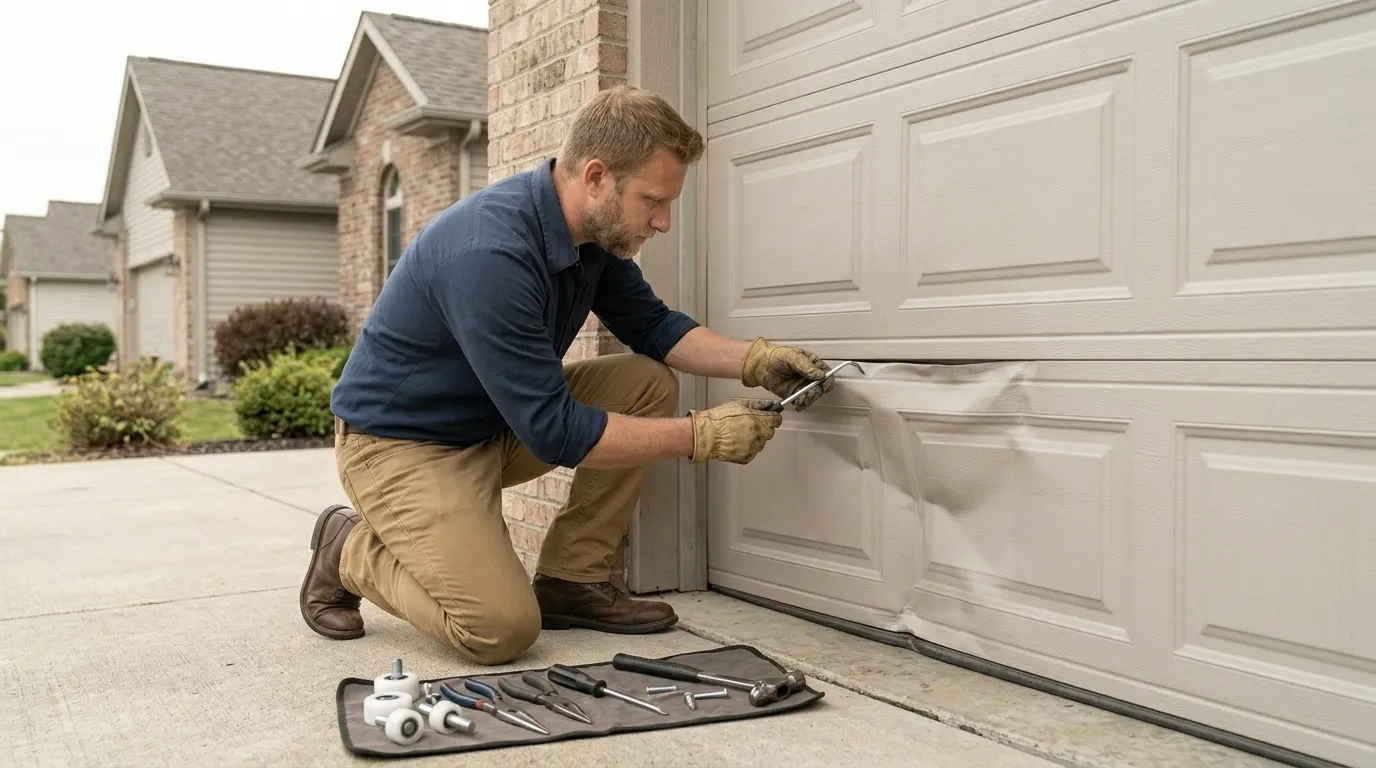
The honest limitation: if a spring has already snapped and the door's been forced down on one side, a maintenance visit turns into a repair visit, and sometimes into a replacement conversation. We won't pad a tune-up into something it isn't, but we also won't pretend a cracked panel or a bent track rail is a lubrication problem.

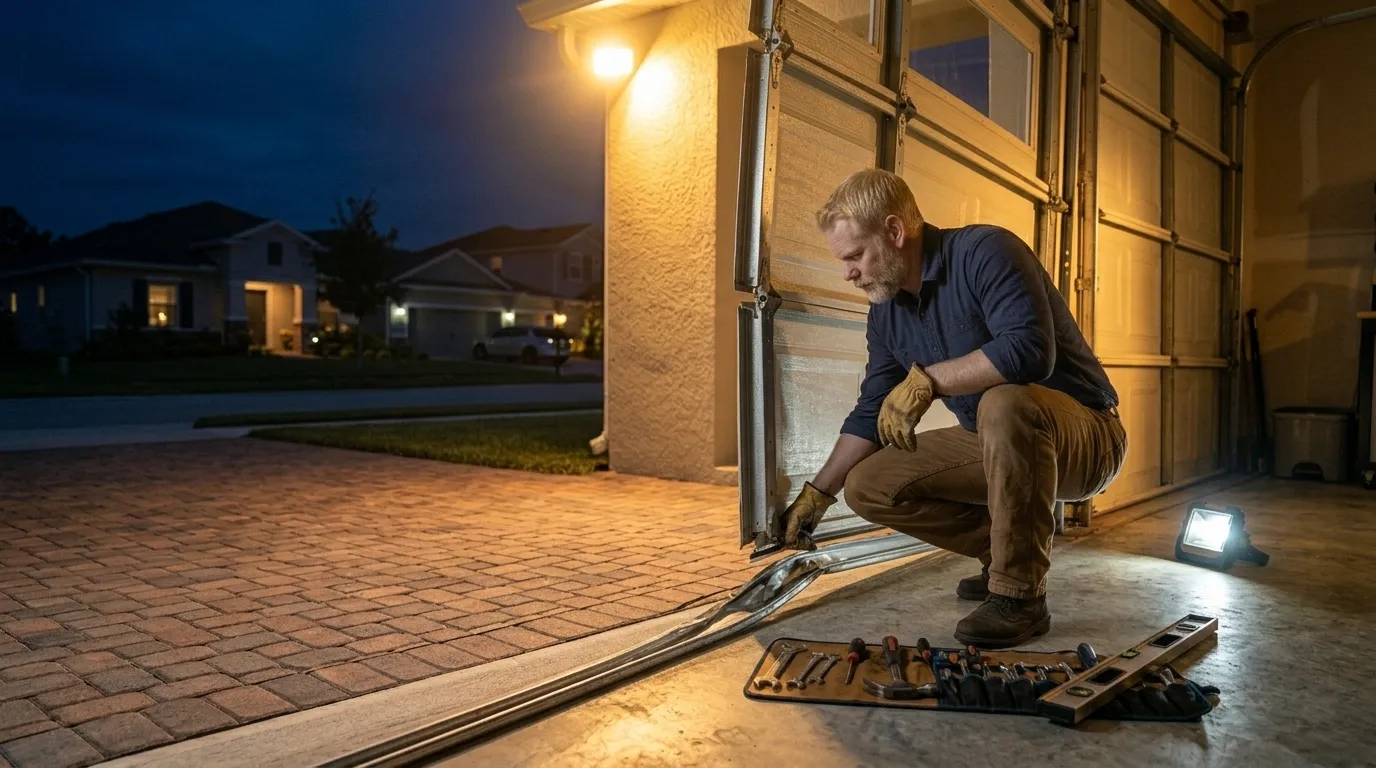
Where it goes sideways most often on older Green Tree doors is the cable drum. If a homeowner has been running the door on a weakening spring for a while, the cable can jump the drum groove. At that point tightening or adjusting won't hold - the drum needs to come off and get reset, which takes longer than a standard visit and isn't something to schedule as an afterthought.

The other sideways moment: openers original to a mid-century door retrofit. If the opener was added decades after the door, the mounting bracket sometimes wasn't rated for the door's actual weight. That's a structural mismatch, not a wear issue, and no amount of maintenance resolves it.

How Long It Takes

A standard maintenance visit - spring tension check, track alignment, hardware torque, roller and hinge inspection, opener force setting - runs the same regardless of which of the towns near Pittsburgh we're in. What changes the timeline is what we find once we're under the door.

On a door with original 1960s-era hardware, expect the visit to run longer than a newer build simply because there's more to check: cable drum wear, bearing plate corrosion, and a spring that may be closer to end of life than its counterpart on the other side. We'd rather spend the extra fifteen minutes on the inspection than sign off on a tension check that misses a cable about to fray.

If we find something that needs parts beyond the visit - a replacement spring, a bearing plate - that's a second trip, not an on-the-spot job, since we're traveling in from Pittsburgh and don't stage every part on the truck.

Stocked Parts

We carry the parts that fail most on doors this age: standard torsion springs in common sizes, extension spring sets, nylon and steel rollers, cables, and end bearing plates. Those cover the bulk of what shows up on a Green Tree tune-up.

What we don't carry on the truck is anything custom - a spring wound to a nonstandard size, a discontinued panel section, or hardware for a door brand that stopped making replacement parts years ago. On a house built around 1962, that's a real possibility on the door itself, less likely on the opener since most of those have been swapped out for newer units already. If we hit something like that, we'll tell you straight rather than order a part that takes weeks to land and call it a quick fix.

For the general service list this company runs across the wider Pittsburgh area, that's covered on our maintenance page for Pittsburgh. For more on what we handle in Green Tree specifically, see the Green Tree garage doors page.
How it works

From “it’s stuck” to “it’s fixed”

01
Tell us what’s wrong - Pittsburgh garage door service

Tell us what’s wrong

Describe the symptom - won’t open, loud bang, opener runs but the door won’t move.

02
On-site diagnosis - Pittsburgh garage door service

On-site diagnosis

A technician tests the door under power and by hand and finds what actually failed.

03
Clear, up-front plan - Pittsburgh garage door service

Clear, up-front plan

You get the fix that’s needed and what drives the cost - before any work starts.

04
Repaired & tested - Pittsburgh garage door service

Repaired & tested

The repair is done, the door is set true and tested, and the work area left clean.

Serving Pittsburgh, PA - tell us what your door’s doing and we’ll take it from there.

How we work

What to expect

Diagnosis firstEvery visit starts by finding what actually failed - not a pre-written parts list.
The right part for the doorSprings and openers matched to the door’s weight and age, so the fix holds up.
Straight answersWhen a repair makes more sense than a replacement - or the reverse - you hear it plainly.
Clean, careful workTension released safely, hardware set true, the door tested under power before we leave.
304,391Residents in Pittsburgh
8Garage door services
7Neighborhoods & suburbs
PAServing Pittsburgh, PA
Questions

Frequently asked

Straight answers about garage door repair in Pittsburgh. Still unsure? Ask us directly.

How often should a Green Tree garage door get serviced?

Given the cold, severe winter cycling this area gets and the age of most doors here, once a year is the baseline. If your door was original to a house built around 1962 and hasn't had a spring replacement in that time, lean toward checking it before winter rather than after.

Is my door's noise a maintenance fix or a repair?

A slow start or a groan on the first foot of travel is usually tension loss - a maintenance-level fix. A bang, a sudden drop on one side, or a cable visibly off its drum means something's already failed and it's a repair visit, not routine service.

Do you stock parts for older doors on the truck?

Standard torsion and extension springs, rollers, cables, and bearing plates, yes. Custom-wound springs or discontinued panel hardware from an older door usually need to be special ordered, which means a second trip rather than a same-visit fix.

Ready to get your garage door sorted?

Tell us what it’s doing and where you are in Pittsburgh - we’ll take it from there.

Request a QuoteCall