What You Are Seeing
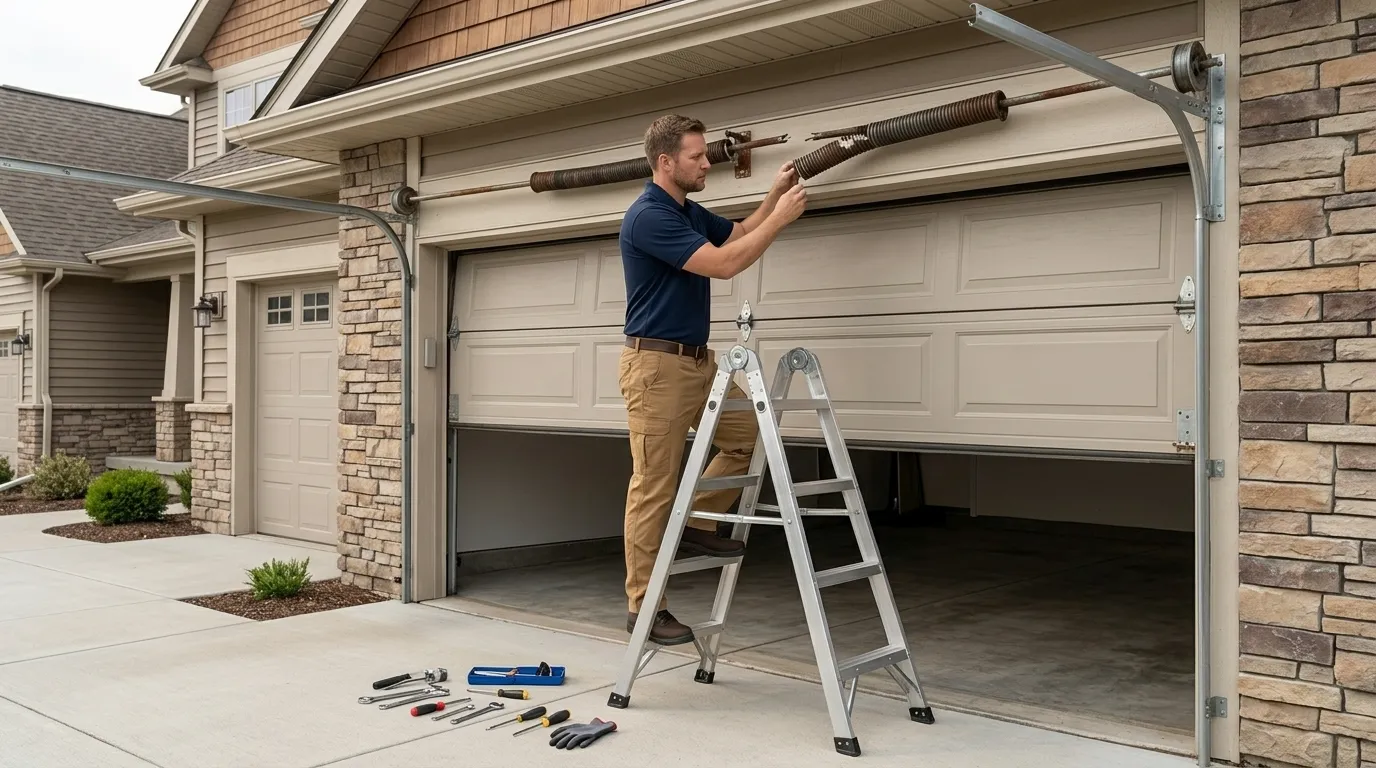
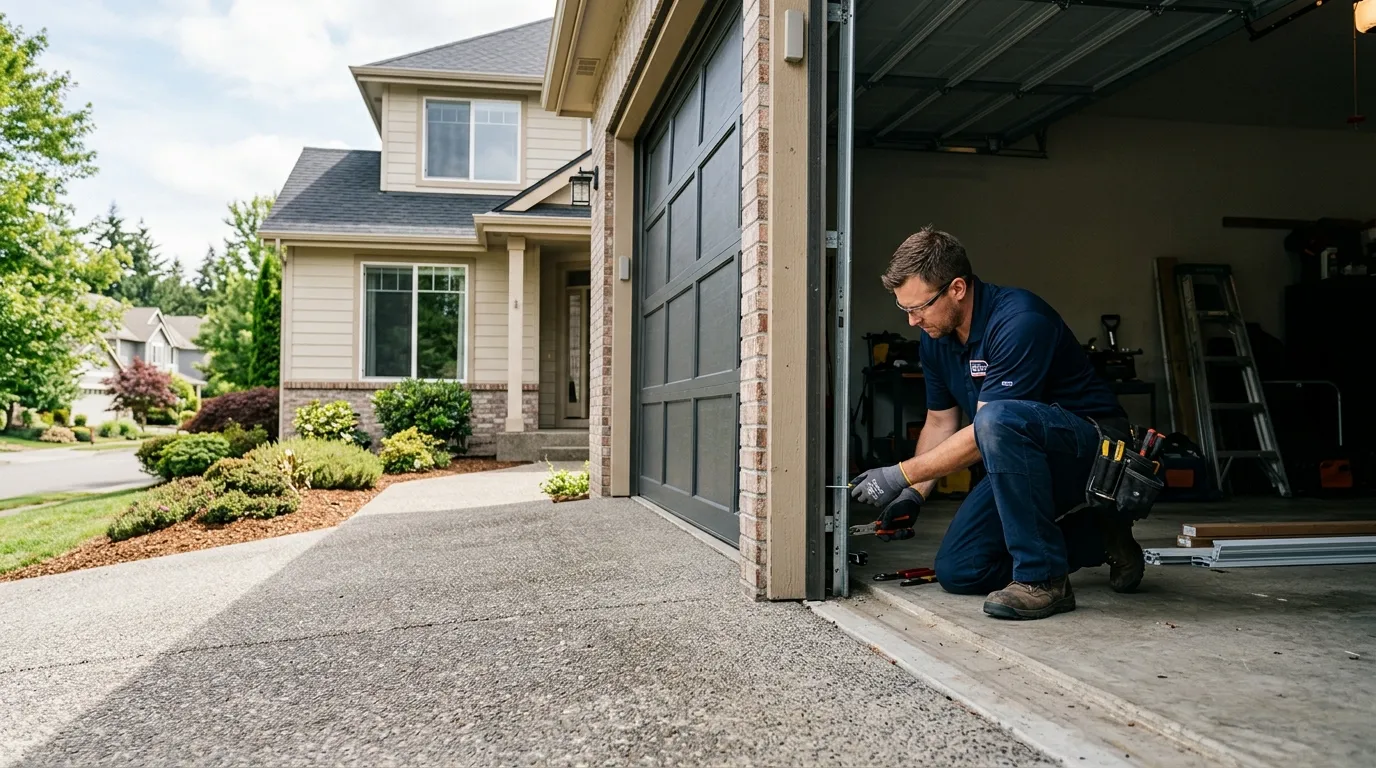
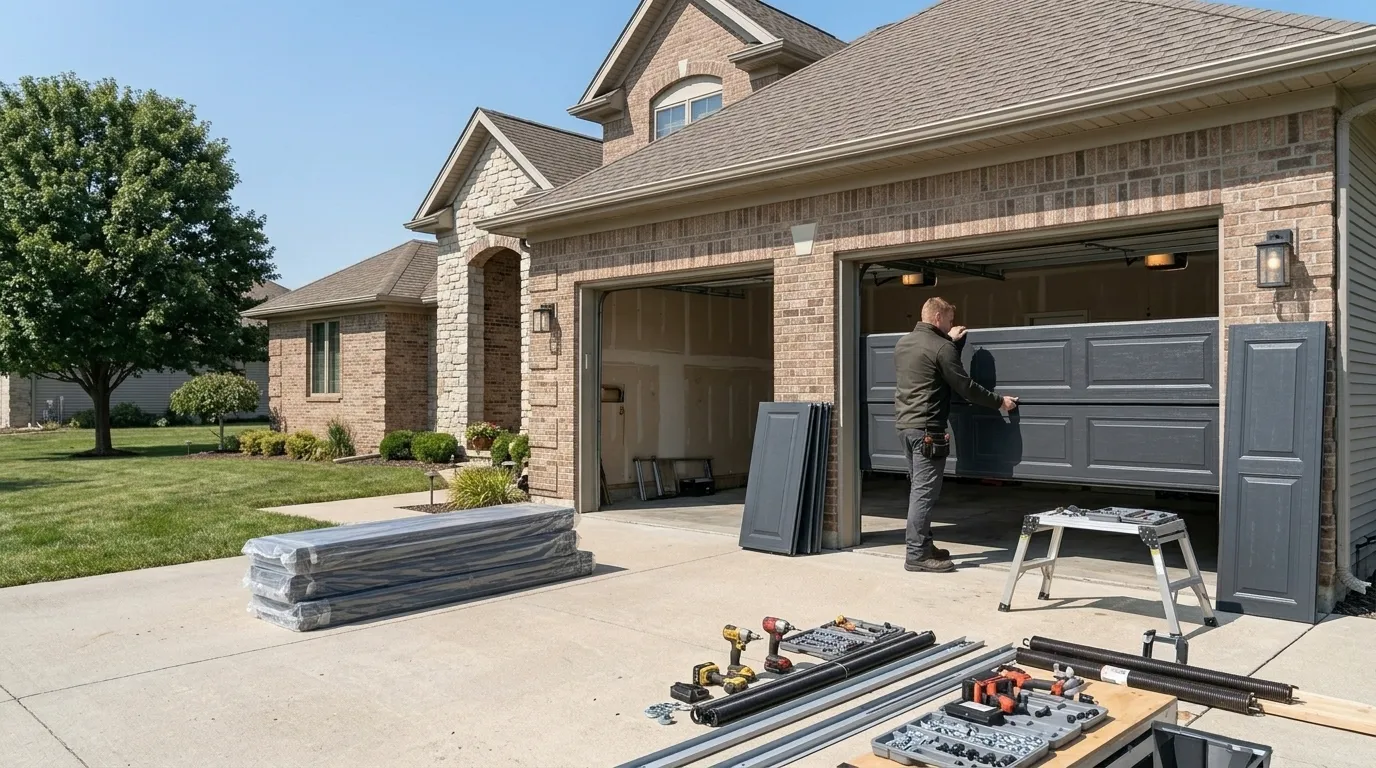
Green Tree's median year built sits around 1962, a bit newer than the broader service area's 1955 median. That puts most homes here just past the earliest wave of postwar construction - still old enough for original steel doors and early extension-spring setups, but often with garages built to slightly wider single-car or early double-car dimensions rather than the narrow one-car bays common in the oldest 1940s stock nearby. What you're seeing day to day: doors original to a 1960s build starting to sag at the bottom panel, openers from a later retrofit (often 1980s-90s chain drives) bolted onto framing that predates them, and torsion springs that have simply outlived their duty cycle. None of this is exotic. It's just old enough to fail and new enough that a lot of owners assume it shouldn't yet.
Why This Fails Locally
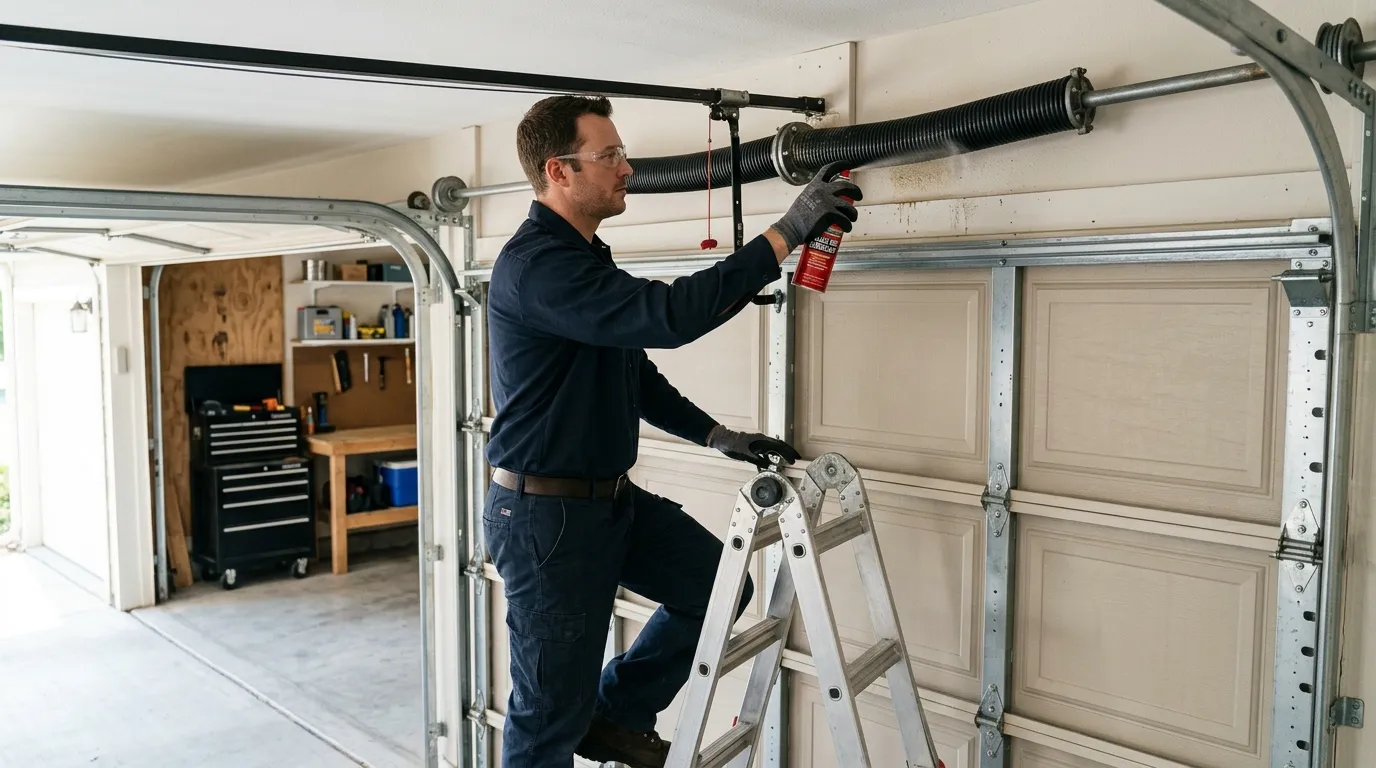
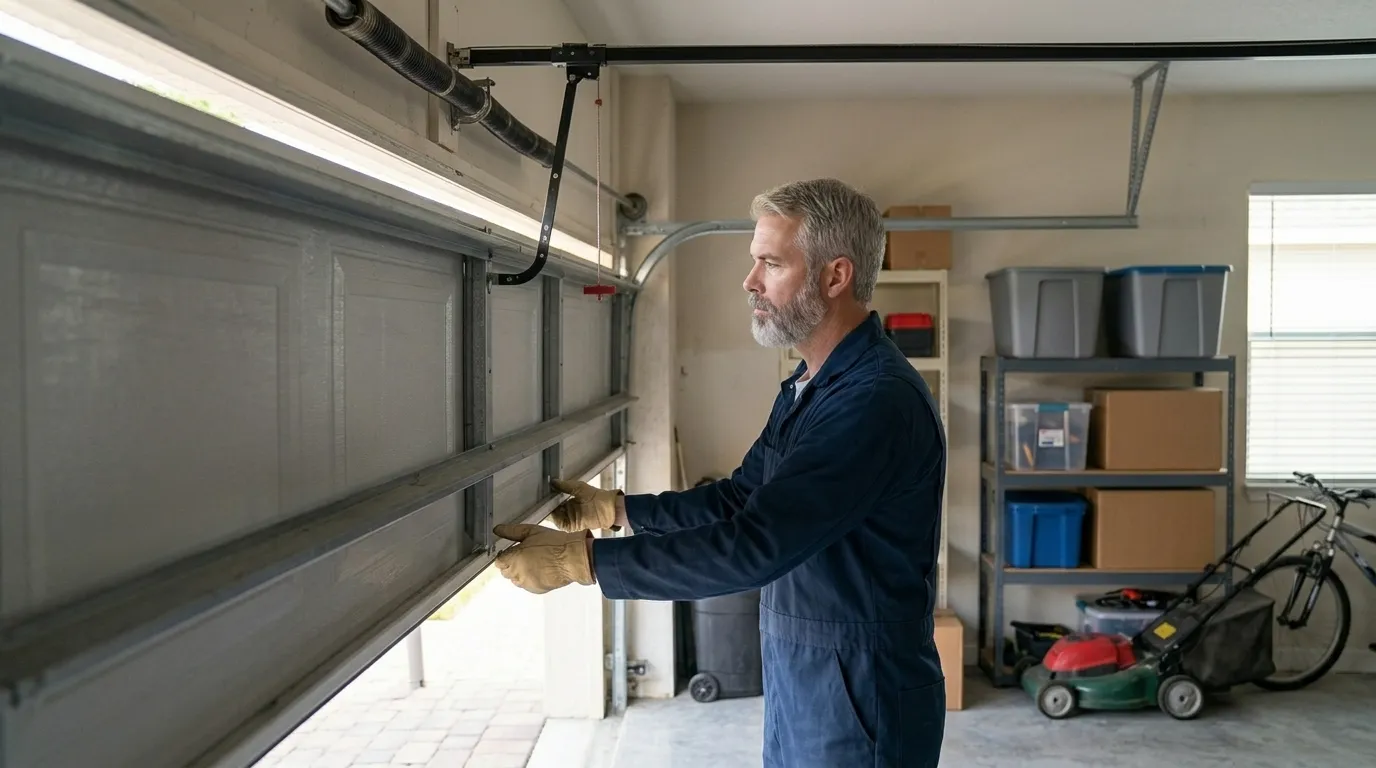
The climate band here is classified cold-severe, and that's the driver behind most of the calls that come out of Green Tree. Steel doors and springs built in the early '60s were engineered for a service life, not for fifty-plus winters of expansion and contraction. Cold makes lubricant stiffen, cables lose flex, and torsion springs lose tension faster than they would in a milder climate. Combine that with a build era that predates modern weatherstripping and insulated panel cores, and you get doors that bind in January and drop out of alignment by March. Median household income in Green Tree runs around $87,828 - noticeably higher than the wider area's $72,020 - which tends to mean owners here replace worn components before total failure rather than run them to breakdown. That's good; it also means the calls we get skew toward preventive fixes and early-stage spring fatigue rather than full collapse.
How Long It Takes
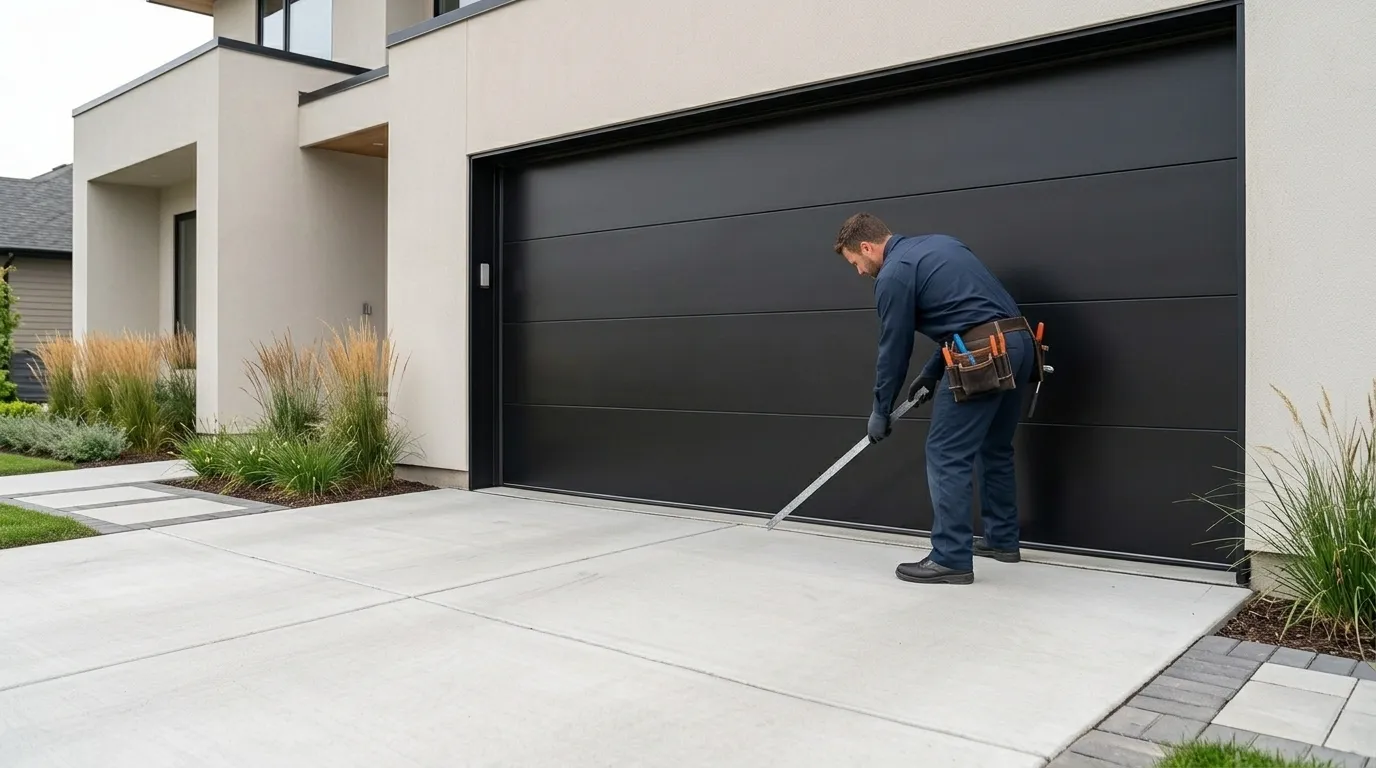
A straightforward spring replacement or opener swap on a Green Tree home usually runs shorter than the mismatched-hardware jobs described above, since most original torsion setups here are common sizes once we're on site and can confirm the drum and cable spec. Track realignment or a full panel section replacement takes longer, especially on the wider door openings more common to the early 1960s builds here versus the narrower prewar bays in older parts of the service area. We travel from Pittsburgh, four miles out, so scheduling depends on the day's route rather than a dedicated local crew - worth knowing if timing matters to you.
Stocked Parts
We carry common torsion springs, standard rollers, cables, and photo-eye sensors on the truck, which covers most of what fails on a 1960s-era Green Tree door. What we don't always carry is a match for older, non-standard track widths or drum sizes from early retrofit jobs - those sometimes need a special order, which adds a day or two. If your door is original to the house and hasn't been touched since a mid-2000s opener swap, tell us that up front; it changes what we bring on the first visit.