Pittsburgh homes built 1938-2014, mostly pre-1960, mean replacement doors have to work with original openings and hard winters. Here's what that means for your job.
Pittsburgh sits in a cold-severe climate band, and that changes what a garage door has to do here versus a house in a milder region. Steel panels take a beating from repeated freeze-thaw cycles, and an uninsulated door lets a lot of heat walk out of an attached garage all winter. Most of the housing stock across the service area went up between 1938 and 2014, with a median build year around 1955, so a large share of these garages were framed for door sizes and track configurations that don't match what's sold new today.
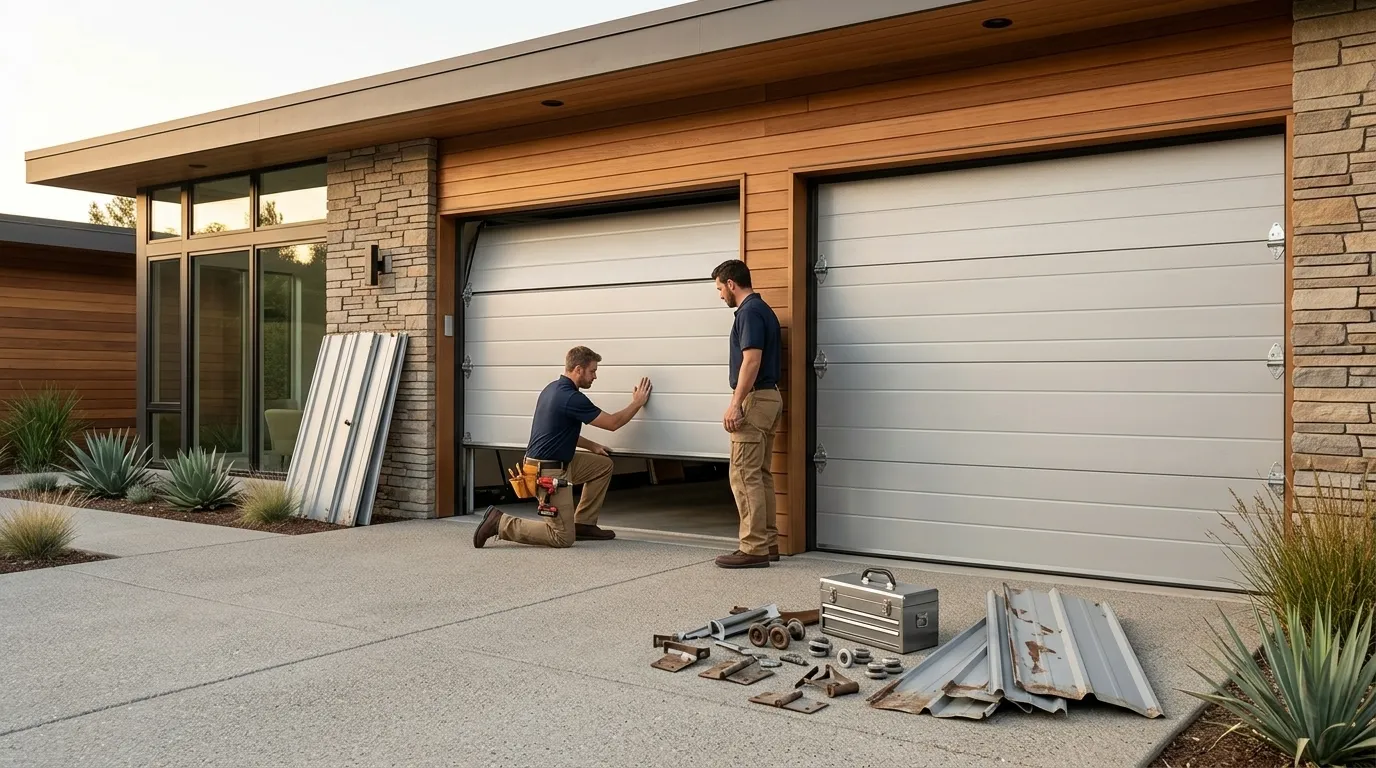
That matters when you're replacing rather than repairing. A house from the 1950s in Hill District or Beechview often has a narrower opening or a low header clearance that limits which track system fits without carpentry work. We measure the opening and the headroom before we ever talk product, because the wrong assumption there costs you twice - once for the door, once for the redo. In the newer pockets built after 1990, openings tend to run standard, and the swap is more straightforward.
The honest limitation: we can't tell you what your specific opening needs until we're standing in front of it. A house two doors down with the same build year can have different framing depending on who did the work.
The Cost of This Job
We don't have a set price to quote you here, and we're not going to make one up. What we can tell you is what drives the number on a house like yours: the opening size, whether the jamb needs rework because of that pre-1960 framing, insulation level for a cold-severe climate, and whether the old track and springs get reused or replaced along with the panel.
Median household income across the area sits around $72,020, and with roughly 155,574 owner-occupied houses in a service area of 279,154 households, we see a wide range of budgets and a wide range of door ages come through - from a straight panel swap on a newer build to a full teardown on a garage that hasn't been touched since the house was built. That range is exactly why we walk the job before we price it. A phone quote on an unseen opening in this housing stock is a guess, and we'd rather not guess with your money.
Doing Nothing For Now
Waiting isn't always the wrong call. If your current door still seals reasonably well and the opener is sound, you can often get more years out of it, especially outside the coldest months. But in a cold-severe climate, a door that's already letting in drafts or has warped from moisture cycling will only get worse through another winter - the freeze-thaw cycle works on wood jambs and steel skins alike, and it doesn't pause because you're not ready to spend money.
Houses built before 1960 make up a large share of this area, and a lot of those original doors are long past their design life even if they're still technically operating. If yours is one of them, the risk isn't a sudden failure on a mild day - it's a spring or cable letting go on a January morning when the cold has made the steel and hardware more brittle. That's a repair call that turns into a replacement conversation anyway, just at a worse time and often at a higher cost. Nothing wrong with waiting if the door's sound. Just don't confuse quiet operation with good condition on a door this old.
The Problem
The core problem in Pittsburgh is a mismatch between old openings and new products. A door manufactured today is built to modern standard sizes and modern insulation codes, but a garage framed when the median house here went up - around 1955 - wasn't built with those standards in mind. That mismatch shows up as trim gaps, tracks that don't clear a low header, or a jamb that's shifted enough over sixty-plus years that a stock door won't seat square.
This isn't unique to one neighborhood. It shows up from Hill District down through Beechview and Carrick, and out toward Green Tree and Baldwin - anywhere the housing stock predates the door sizing conventions in use now. The fix usually isn't complicated, but it does mean the job is a measure-and-fit exercise, not a catalog pick. We won't sell you a door off a size chart without checking the opening first, because on a house this old, the chart is a starting point, not the answer.
How it works
From “it’s stuck” to “it’s fixed”
01
Tell us what’s wrong
Describe the symptom - won’t open, loud bang, opener runs but the door won’t move.
02
On-site diagnosis
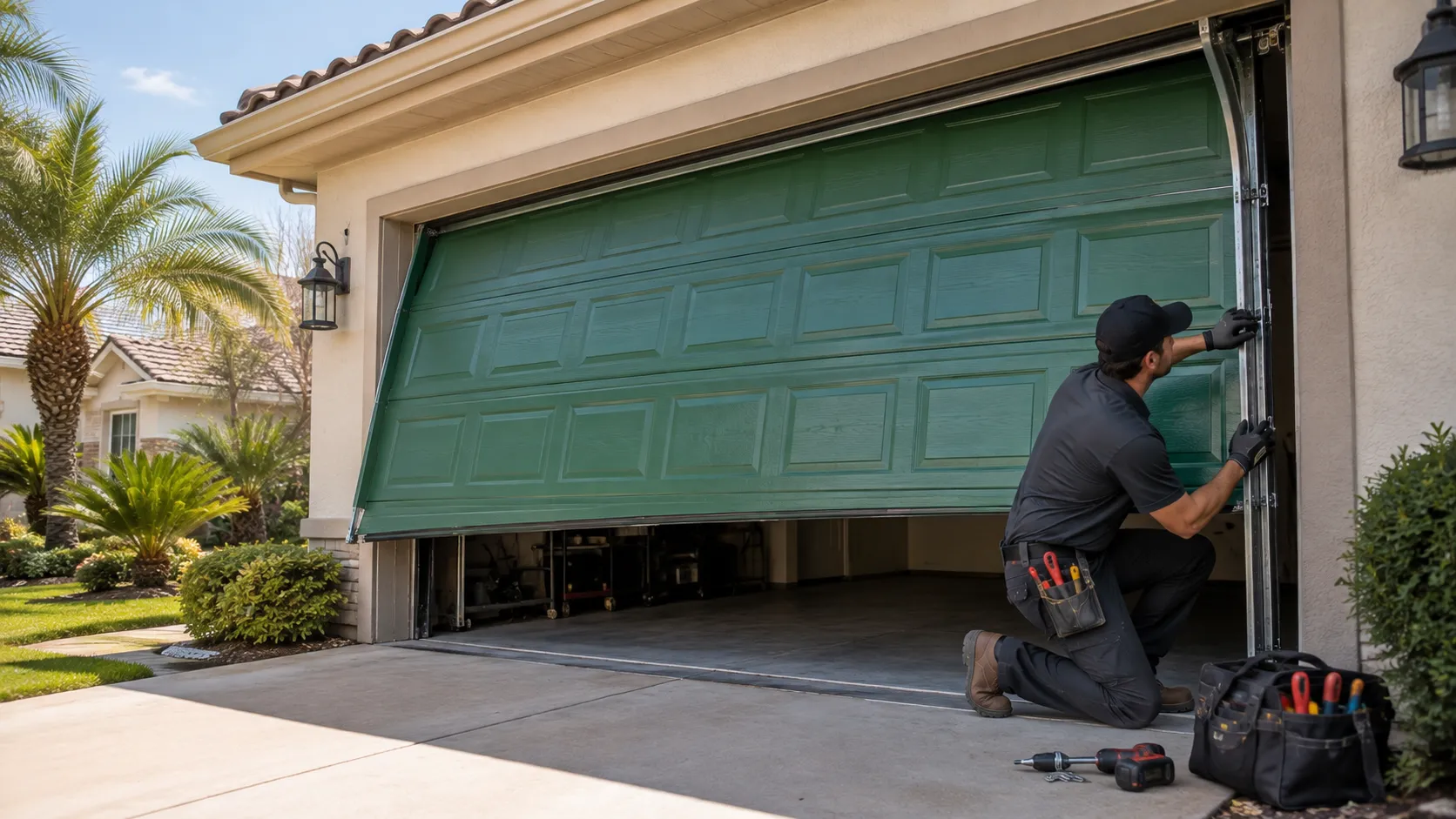
A technician tests the door under power and by hand and finds what actually failed.
03
Clear, up-front plan
You get the fix that’s needed and what drives the cost - before any work starts.
04
Repaired & tested
The repair is done, the door is set true and tested, and the work area left clean.
Serving Pittsburgh, PA - tell us what your door’s doing and we’ll take it from there.
Will a standard-size replacement door fit my garage?
Maybe. A lot of Pittsburgh's housing stock predates current door-sizing standards, since the median build year here is around 1955. Some openings take a stock size with no trouble; others need a header adjustment or a custom width. We measure before we quote so you're not stuck with a door that doesn't seat right.
Does the cold weather here actually affect the door itself?
Yes. Pittsburgh sits in a cold-severe climate band, and repeated freeze-thaw cycles stress steel panels, seals, and hardware over time. An older, uninsulated door also loses more heat through an attached garage during winter, which is worth factoring into a replacement decision, not just the repair.
Is it cheaper to repair my old door than replace it?
It depends on the door's age and what's failing. We don't have a fixed price to give you without seeing the job, but on doors from the pre-1960 stock common in this area, a repair on an already-brittle panel or spring often just delays a replacement that's coming anyway.
How do I know if my garage opening is nonstandard?
You likely won't know without a measurement, especially in houses built before the 1990s. Header height, jamb square, and opening width can all drift from modern standard sizing after decades of settling. We check all three before recommending a specific door.
Ready to get your garage door sorted?
Tell us what it’s doing and where you are in Pittsburgh - we’ll take it from there.