What a Garage Door Service Call Actually Covers in Pittsburgh
See what a garage door service call covers in Pittsburgh's pre-1960 housing stock, from spring checks to track fixes suited to our severe cold winters.
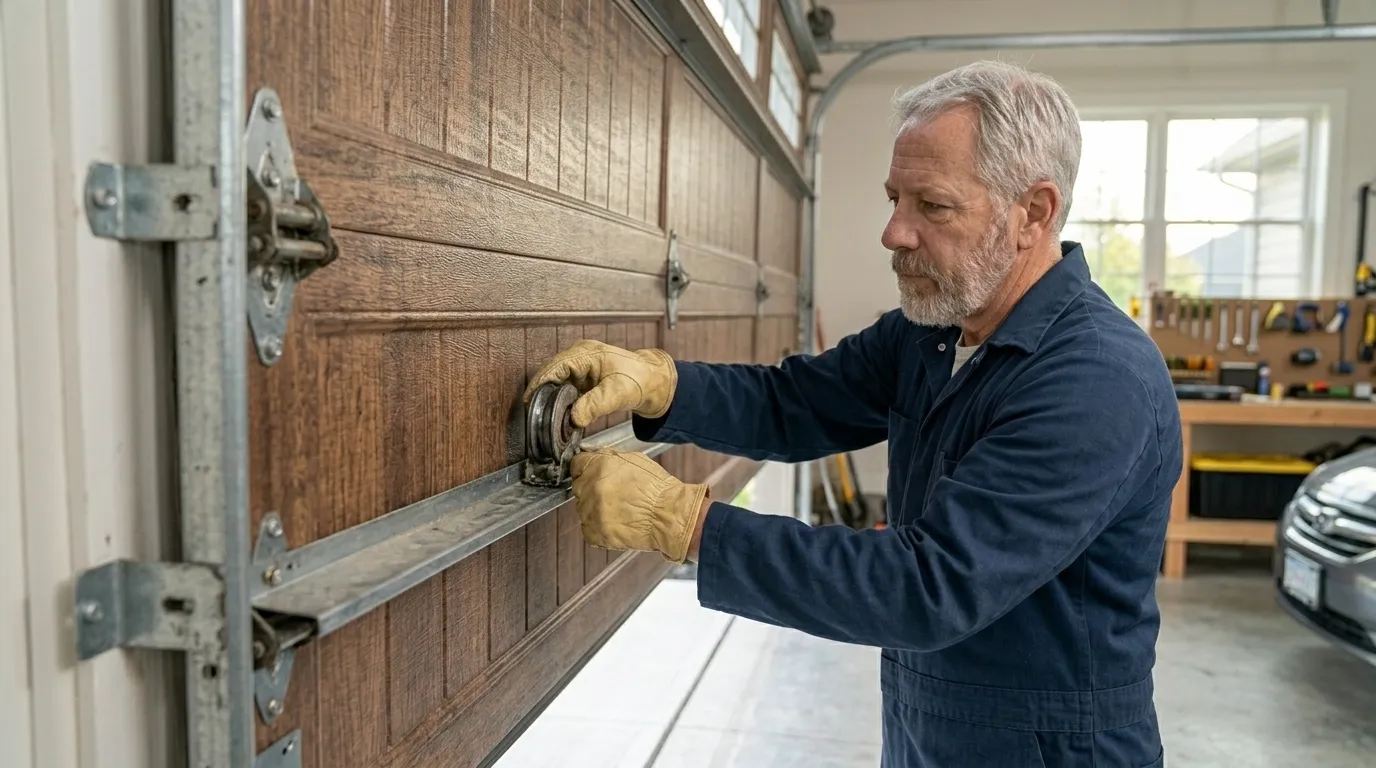
Most of the houses we work on here went up between 1938 and 2014, with the typical build year landing around 1955. That matters more than people think, because a door and its hardware get sized and mounted for the house they went into. A lot of what's on the wall in these older Pittsburgh garages is original or close to it - torsion springs on brackets that haven't been made in decades, tracks bent to fit a stud pattern nobody uses anymore.
Across the 108 named areas we cover, from Squirrel Hill to Bethel Park to the Hill District, the stock is overwhelmingly pre-1960. That means a service call almost never starts with 'replace the part.' It starts with figuring out what's actually there, whether it's still made, and whether the opening itself is square after sixty-plus years of a house settling.
On top of that, Pittsburgh sits in a cold-severe climate band. That changes what fails and when. Steel contracts in deep cold and expands again once a garage warms up through the day, and that cycle works on old fasteners, dried-out roller bearings, and lift cables that were fine in July. A call in February looks different from a call in July, even on the identical door, and any tech who tells you otherwise hasn't spent a winter here.
The Cost of This Job
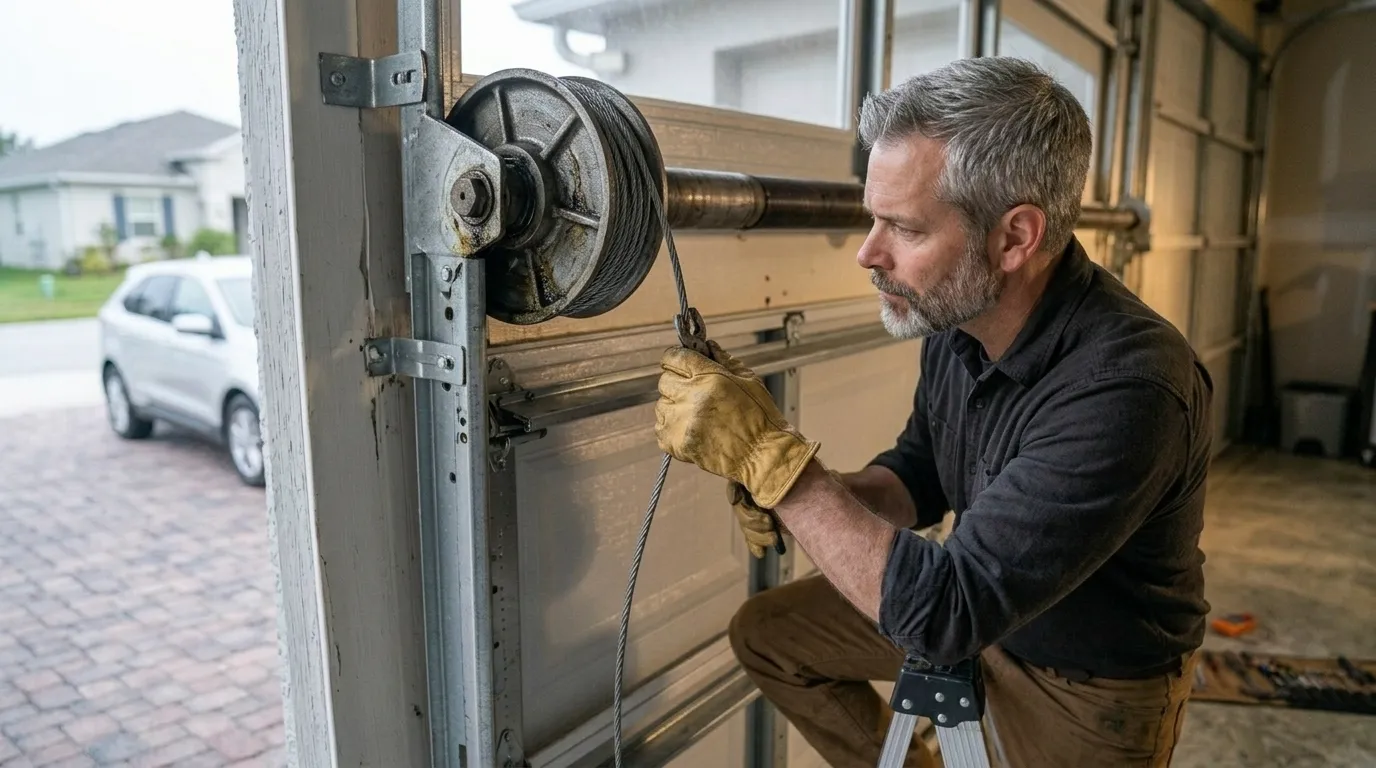
We're not going to hand you a number here, because the honest answer is 'it depends on what's behind the door.' A torsion spring swap on a standard double door is one job. A torsion spring swap on a door where the drum, cable, and bracket are all original 1955-era parts, and the replacement has to be fabricated or sourced rather than pulled off a shelf, is a different job with a different bill.
Median household income across this service area runs $72,020, and most jobs we quote sit within what a household at that income can plan for without it being a crisis - but we're not going to pretend every job is small. Age of the door and age of the house drive the number more than anything else. A door installed in the last fifteen years usually takes standard parts. A door that's been on the house since before 1960 sometimes needs a part matched or modified, and that adds labor time, not just a part cost.
We'll tell you on-site, before we start, what the actual scope is and why. If a job is going to run longer because the hardware is nonstandard, that's the first thing we say, not the last line on the invoice.
Doing Nothing For Now
Not every noisy door or stiff spring needs a same-day call. If a door is opening and closing on a working opener, and the only issue is a rattle or a slow roller, waiting a few weeks rarely turns into an emergency - though we won't tell you it never does.
Where waiting gets risky is a door that's already binding or dragging on one side. In a cold-severe climate, a track that's slightly out of alignment in October is more out of alignment by January, because the metal keeps working against itself through every freeze-thaw cycle. On a house built well before 1960, that misalignment is often tied to the frame itself shifting slightly over decades, not just the door hardware, so it tends to get worse rather than settle.
Our honest limitation: we can't tell you over the phone whether your situation is the safe-to-wait kind or the get-it-looked-at-soon kind. A spring under tension that looks fine can let go without much warning, and that's not a call worth guessing on. If you're not sure which category you're in, that itself is a reason to get it checked rather than watched.
The Problem
The core problem in this market isn't broken doors - it's mismatched parts on old openings. A house built in 1955 has a garage opening, track spacing, and header height that don't match what ships standard today. Somewhere along the line a previous owner or a past repair swapped in a part that's close enough but not exact, and it's been working under strain ever since, whether that's a spring rated slightly wrong for the door weight or a track shimmed to fit instead of matched to the frame.
Add the cold-severe winters and that strain compounds. Metal that's already carrying an odd load also has to survive daily temperature swings between an unheated garage and outside air. That's the combination we see over and over across the pre-1960 stock in this service area: 155,574 owner-occupied houses out of 279,154 households, a lot of them with a garage door that's been patched more than once.
A service call here is as much diagnosis as repair. Before anything gets replaced, we're checking whether the part that failed was ever the right part for that door and that opening in the first place.
How it works
From “it’s stuck” to “it’s fixed”
01
Tell us what’s wrong
Describe the symptom - won’t open, loud bang, opener runs but the door won’t move.
02
On-site diagnosis
A technician tests the door under power and by hand and finds what actually failed.
03
Clear, up-front plan
You get the fix that’s needed and what drives the cost - before any work starts.
04
Repaired & tested
The repair is done, the door is set true and tested, and the work area left clean.
Serving Pittsburgh, PA - tell us what your door’s doing and we’ll take it from there.
Why does my garage door make more noise in the winter?
Cold-severe winters here cause steel hardware to contract, which tightens tolerances that were already loose from age. On pre-1960 houses especially, tracks and rollers sized decades ago start binding more in deep cold, and that shows up as grinding or squealing that eases some once temperatures climb back up.
Do you carry parts for older garage doors?
It depends on the part. Standard springs, cables, and rollers we carry on the truck. Original hardware from houses built in the 1940s and 1950s sometimes has to be matched or sourced separately, which we'll flag before starting the job rather than after.
Is it worth repairing a door instead of replacing it?
Often yes, especially if the opener and panels are sound and it's one component that failed. We'll tell you plainly if a door's age and condition mean repair money is better spent on replacement - we don't have a reason to push one over the other beyond what actually makes sense for your door.
Ready to get your garage door sorted?
Tell us what it’s doing and where you are in Pittsburgh - we’ll take it from there.