Pittsburgh's pre-1960 housing stock and severe cold winters both push garage door tracks out of alignment. Here's why it happens and what it takes to fix.
Most of the housing stock across this service area was built before 1960, with the broader range running from 1938 to 2014 and a median build year of 1955. That matters here because track hardware from that era was sized and bracketed differently than what gets installed today. In neighborhoods like the Hill District, Squirrel Hill North and South, Beechview, and Carrick, a lot of garages still carry original or first-replacement track that was never engineered for the taller, heavier sectional doors sold now.
On top of the age of the hardware, the region sits in a severe cold climate band. Repeated freeze-thaw cycles work on the concrete slab under the track and on the wood or masonry the brackets are lagged into. As the slab heaves even slightly through a winter, the vertical track section loses its plumb line by a fraction of an inch. That's enough for a roller to start riding the edge of the track instead of sitting flush inside it. Add a few winters of that cycle and the roller eventually pops loose, especially at the curve where vertical track transitions to horizontal.
This isn't a homeowner-caused problem in most of these cases. It's the combination of old bracket hardware and a freeze-thaw climate doing what it does every year.
The Cost of This Job
I don't have a price to give you here, and I'm not going to make one up. What I can tell you is what drives the number up or down on this specific job. If the track itself is only bent at one bracket point, that's a bracket and short track-section swap, and it's a shorter visit. If the whole vertical run has pulled away from the framing, which is more common on the pre-1960 stock in this area, you're looking at full track replacement on that side, sometimes both sides if the header settled unevenly.
Houses with original 1950s-era openings sometimes have track widths and bracket spacing that don't match current stock dimensions exactly. That can mean cutting and re-drilling rather than a straight bolt-in swap, which adds labor time even when the part itself is inexpensive. None of that is a Pittsburgh-specific price, but it is a Pittsburgh-specific reason the same repair can take longer in a 1955-built garage than in a newer one.
Doing Nothing For Now
A door that's already riding rough on the track doesn't fix itself, and cold weather doesn't give it a break. Once a roller has partially jumped the track, the door is being held in position by fewer contact points than it was designed for. Every open-and-close cycle after that puts more sideways load on the remaining rollers and on the cable that runs the length of the track.
In a severe cold climate, that stress compounds. Metal contracts in low temperatures, so a track that's already slightly bowed tightens further against the roller in January than it does in July. That's when a door that's been limping along for weeks suddenly locks up hard or drops unevenly on one side. Waiting through a winter with a known track problem is the most common way a $150 bracket fix turns into a full track and roller replacement - I say that as a general pattern, not a promised price.
If your door is grinding, hesitating, or visibly leaning to one side when it moves, that's the door telling you the track has already shifted, not a sound to ignore until spring.
The Problem
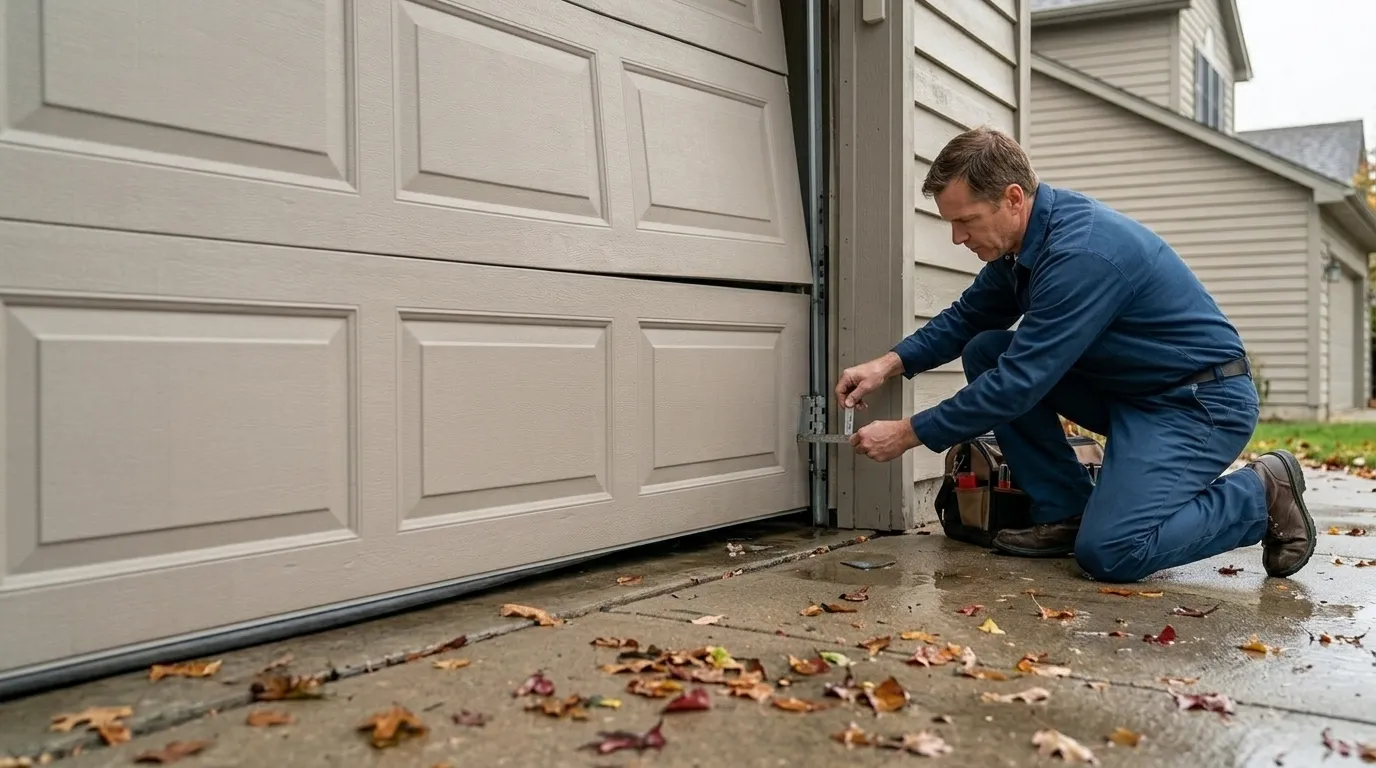
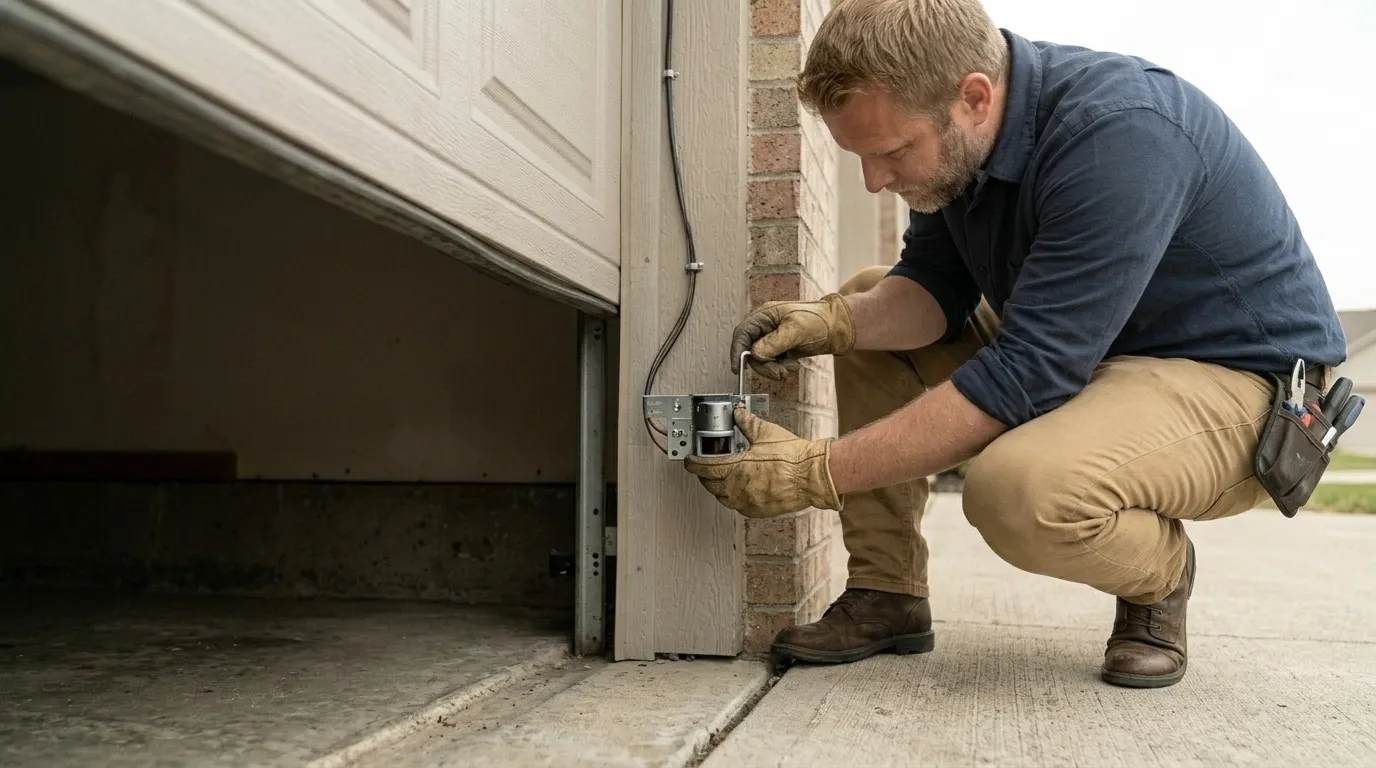
A garage door goes off track when a roller loses its seat inside the track channel, usually because the track itself has bent, spread, or pulled away from its mounting brackets. On the older housing stock common across this area's pre-1960 neighborhoods, the brackets were often lagged into wood framing that has shrunk and shifted over six or seven decades of seasonal moisture change. Loose brackets let the track flex sideways under load, and a flexing track eventually lets a roller slip past the lip that's supposed to hold it in.
Cold makes the same mechanical issue worse. Track sections are torsion-loaded when the door is closed, held under spring tension. In freezing temperatures, metal contracts and lubricant thickens, so the roller doesn't ride as smoothly through the curve where vertical track meets horizontal track. That's the single most common point where I find a jumped roller - right at that curve, not along the straight run.
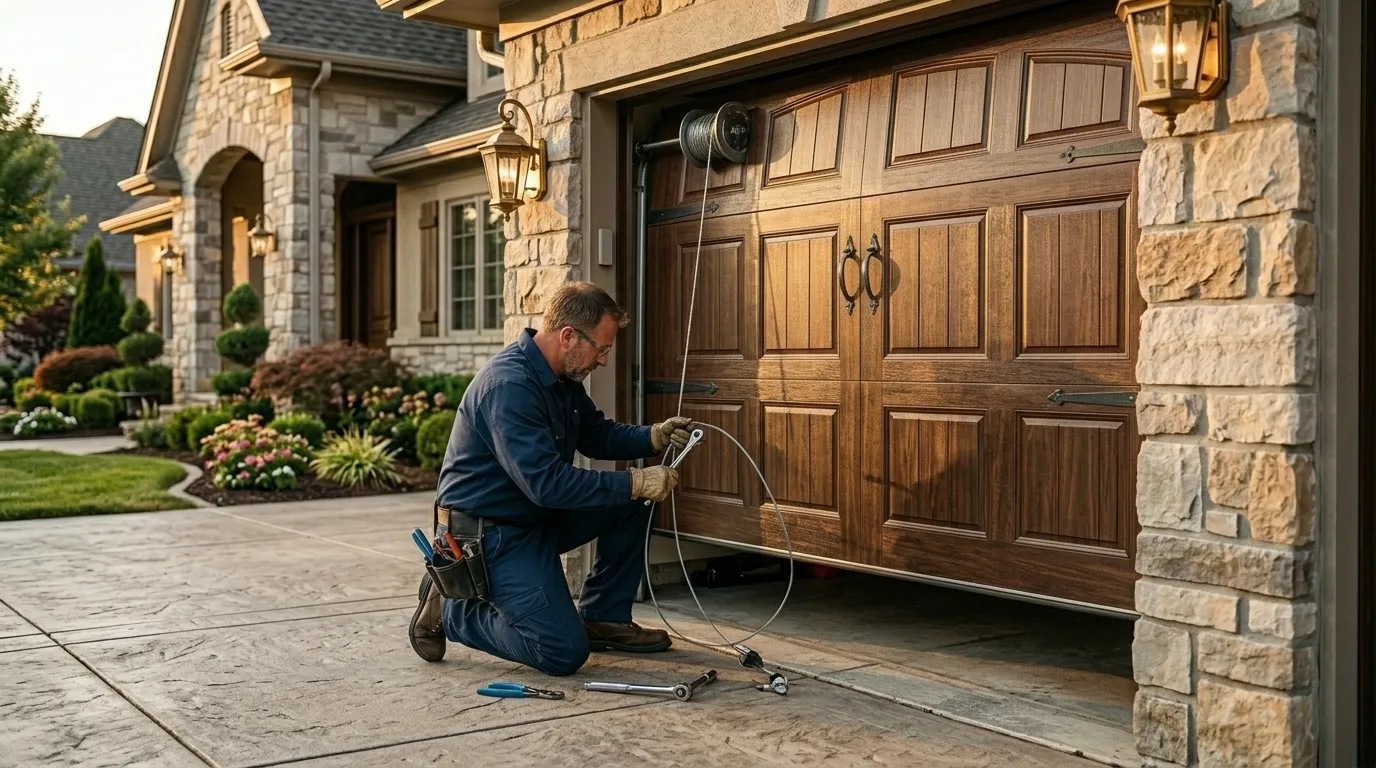
Once a roller is off track, the fix is either re-seating it (if the track hasn't bent) or replacing the damaged section and bracket (if it has). Trying to force the door open or closed once it's off track usually bends the track further and turns a bracket repair into a track replacement.
How it works
From “it’s stuck” to “it’s fixed”
01
Tell us what’s wrong
Describe the symptom - won’t open, loud bang, opener runs but the door won’t move.
02
On-site diagnosis
A technician tests the door under power and by hand and finds what actually failed.
03
Clear, up-front plan
You get the fix that’s needed and what drives the cost - before any work starts.
04
Repaired & tested
The repair is done, the door is set true and tested, and the work area left clean.
Serving Pittsburgh, PA - tell us what your door’s doing and we’ll take it from there.
Why did my garage door suddenly jump off the track in cold weather?
Cold contracts the metal track and thickens the lubricant on the rollers, so a track that was already slightly loose or bent has less give right when the door needs it most. This is common in this climate band during the coldest stretches of winter, especially on older track hardware.
Is a bent track always a full replacement?
No. If only one bracket has pulled loose and the track itself is still straight, re-securing the bracket and re-seating the roller is often enough. Full track replacement is needed when the metal itself has bowed or spread, which is more common on original hardware from the area's older housing stock.
Can I push the door back onto the track myself?
I'd rather you didn't. A door under spring tension that's off track can drop or swing unexpectedly, and forcing it usually bends the track further. It's a short call-out to reseat it correctly.
Ready to get your garage door sorted?
Tell us what it’s doing and where you are in Pittsburgh - we’ll take it from there.