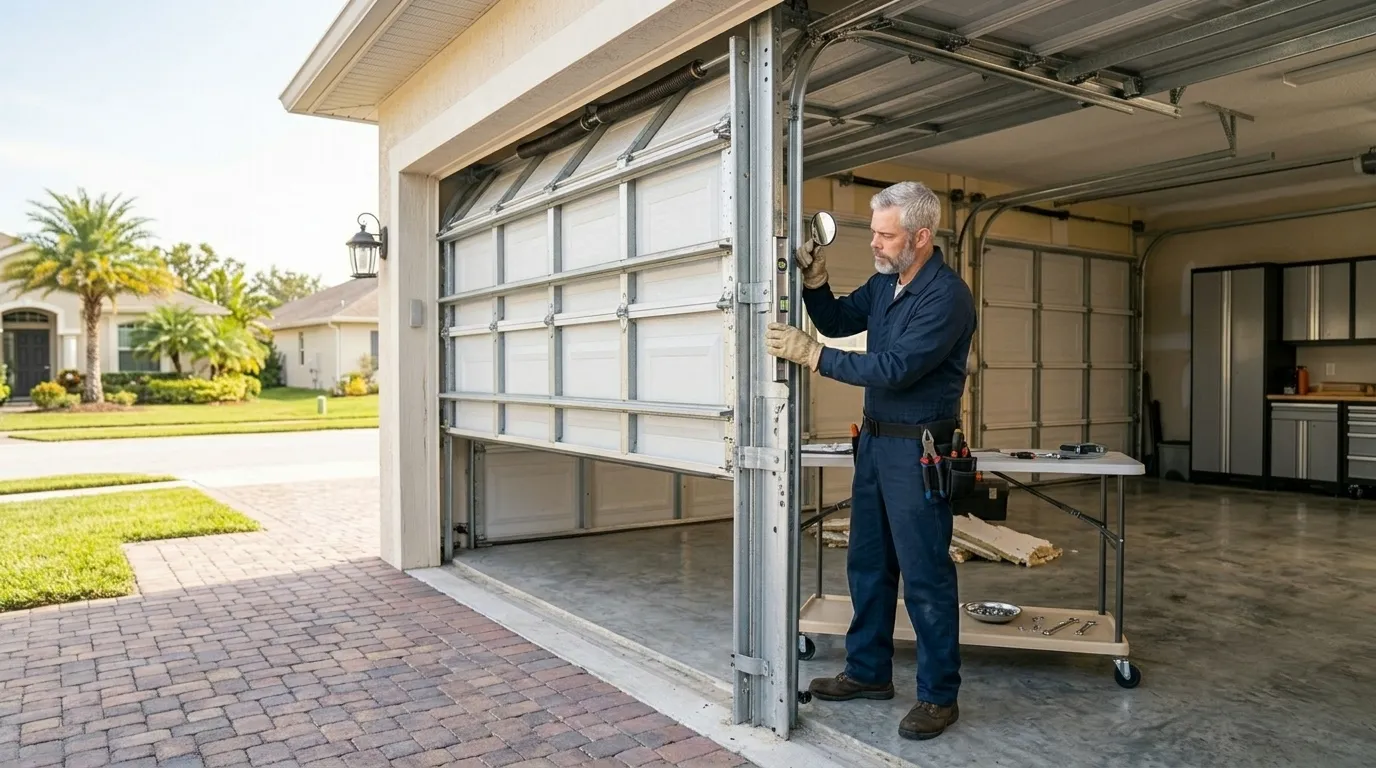
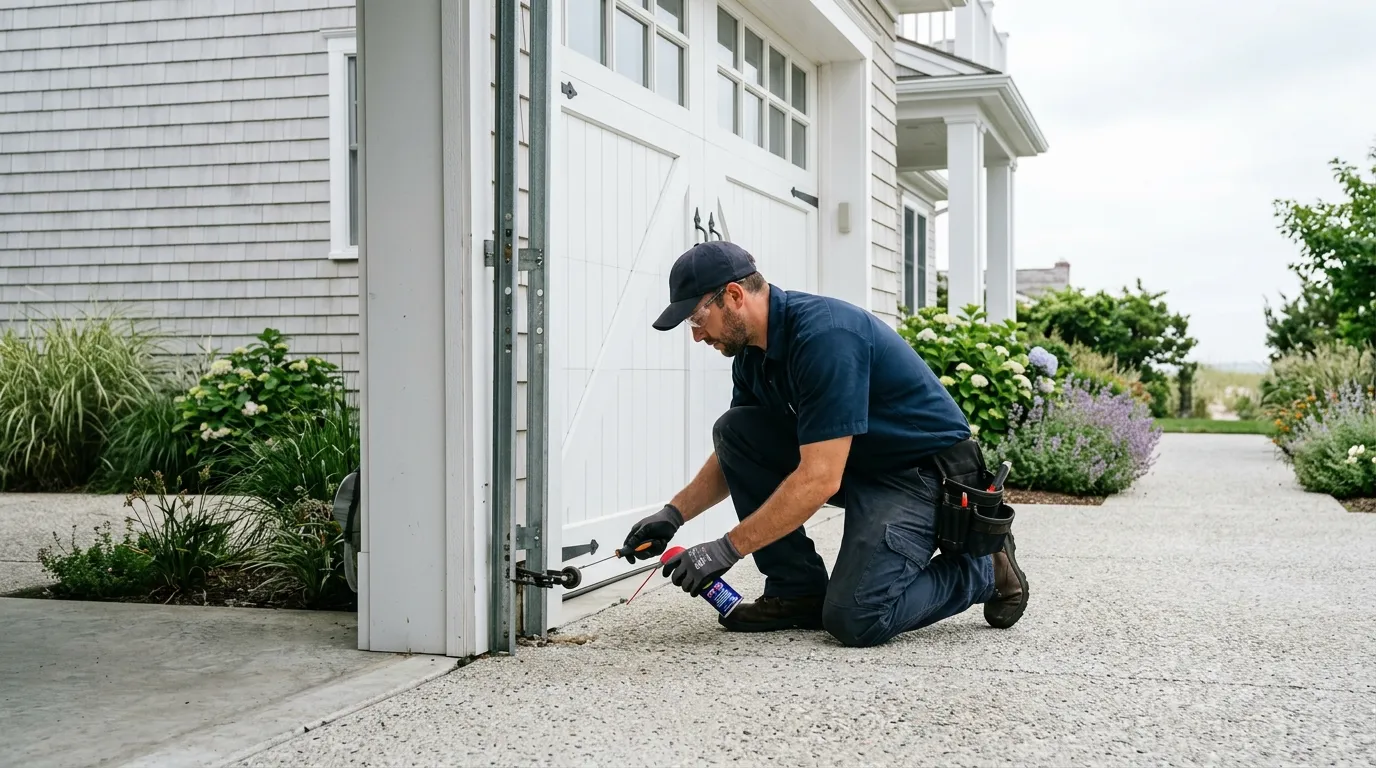
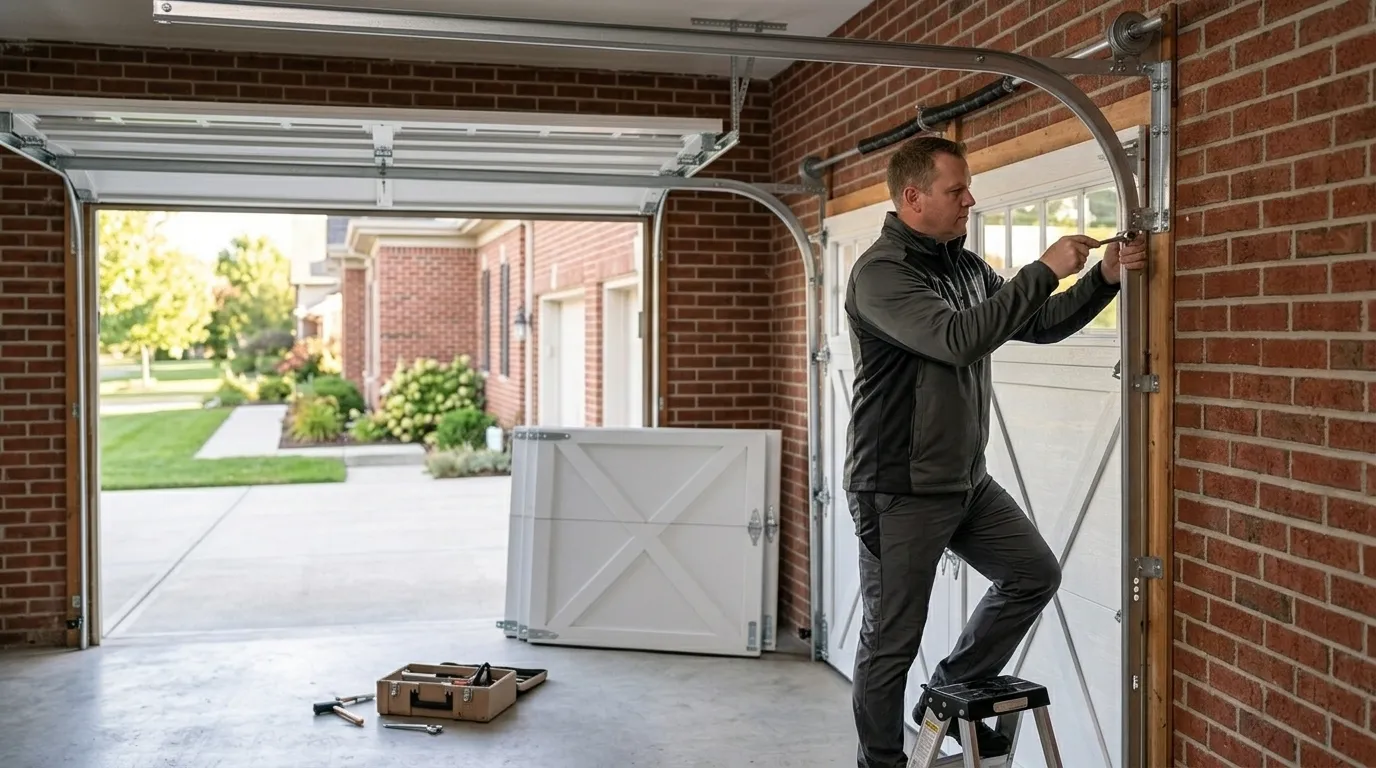
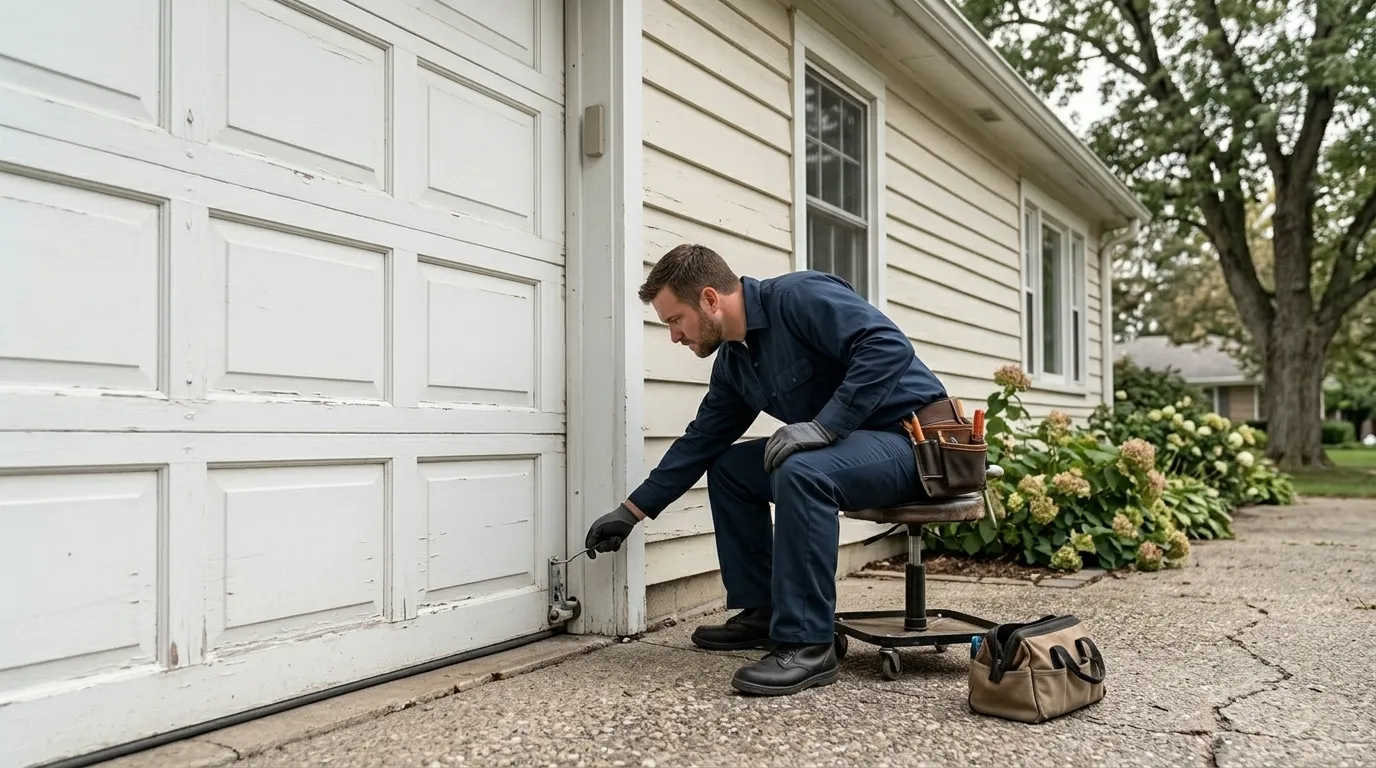
Most of the housing across this service area went up between 1938 and 2014, with the median build year landing around 1955, and the stock is mostly pre-1960 across the 108 named areas we work in, from the Hill District and Downtown out to Squirrel Hill, Beechview, and Carrick. That matters because a door and its hardware age on a schedule set by the house, not by the calendar. A technician starts by checking whether the track, hinges, and spring anchor points are original to a mid-century build or a later replacement, since a lot of these houses have had one or two door swaps but kept the original framing and header. Combine that with a COLD severe climate band, and you get a second layer: steel tracks and torsion bars that go through repeated freeze-thaw cycles every winter, which loosens fasteners and stiffens lubricant faster than a mild climate would. So the first pass is always the same two questions - how old is this opening, and how many winters has this hardware actually seen. Everything else, the noise, the drift, the slow close, usually traces back to one of those two answers.
The Cost of This Job
We don't quote a number without seeing the door, but a few things push a Pittsburgh job toward the higher or lower end of the range. Age is the biggest one - a door and opener original to a 1955-era build usually means non-standard bracket spacing or a track profile that a stock replacement part won't match, so the job takes longer and sometimes needs a custom bend rather than an off-the-shelf part. A COLD severe climate also means springs and cables see more cycles of contraction each winter, which shortens their working life compared to a milder region, so replacement intervals here run tighter than the national average parts suppliers print on the box. Median household income across the area sits around $72,020, and most of the repair calls we get are homeowners trying to decide whether a $150 part swap is worth it against a door that's already showing other age-related wear. That's a real decision, not a sales pitch, and a technician should walk you through it honestly rather than push the bigger job by default.
Doing Nothing For Now
Sometimes doing nothing is the right call, and a technician should say so. If a door on one of the older builds around here is sticking a little in January but closing fine the rest of the year, that's often just the cold tightening up old lubricant on original hardware, not a failure. Where it stops being a wait-and-see is when a spring shows visible gap or rust at the coil, or a cable strand is fraying near the bottom bracket - COLD severe winters accelerate both of those failure modes because the metal contracts and expands more here than it would in a milder climate, and that cycling is what breaks springs, not just age alone. Waiting through another freeze-thaw season on a door that's already showing those signs usually turns a controlled repair into an emergency call, and emergency calls cost more time for everyone. So the honest answer is: minor stiffness in winter on an older door, fine to watch. Visible spring damage or fraying cable, don't wait for spring to fix it.
The Problem
The recurring problem on this side of the region is a mismatch between original 1950s-era hardware and modern parts. A technician pulls the panel expecting a standard torsion setup and instead finds side-mounted extension springs sized for a door built before the more common torsion systems became standard - not uncommon on houses from the 1938-2014 build range we see here, especially the older end of it. That's not a flaw in the house, it's just what a door looked like when that neighborhood was built. The complication is that some of those parts aren't stocked the way current hardware is, and matching an old bracket pattern sometimes means adapting a new part rather than a straight swap. We'll tell you when that's the case rather than force a fit that won't hold up through another COLD severe winter. This is also the honest limitation worth naming here: if the opener or track is old enough that parts are genuinely hard to source, replacement is usually the more sound call over a repair we can't fully stand behind.
How it works
From “it’s stuck” to “it’s fixed”
01
Tell us what’s wrong
Describe the symptom - won’t open, loud bang, opener runs but the door won’t move.
02
On-site diagnosis
A technician tests the door under power and by hand and finds what actually failed.
03
Clear, up-front plan
You get the fix that’s needed and what drives the cost - before any work starts.
04
Repaired & tested
The repair is done, the door is set true and tested, and the work area left clean.
Serving Pittsburgh, PA - tell us what your door’s doing and we’ll take it from there.
Why does my garage door stick every winter but nothing else seems wrong?
That's usually cold-weather stiffening of lubricant and slight metal contraction in the track, especially common on original hardware from the area's older housing stock. If it frees up once temperatures rise and there's no visible spring or cable damage, it's typically not urgent, though a technician should still check the spring coil for gap or rust while there.
Is my house too old for a standard replacement door?
Not necessarily, but houses built earlier in the area's 1938-2014 range sometimes have non-standard bracket spacing or older spring configurations that don't match current stock parts directly. A technician needs to see the opening and existing hardware to know whether it's a straight swap or needs adapting.
How do I know if a repair is worth it versus replacing the whole door?
It comes down to the age and condition of the hardware behind the panel, not just the panel itself. If the springs, track, and opener are all original and showing wear from repeated winter cycling, a repair may only buy a short stretch before the next part fails, and replacement becomes the more honest recommendation.
Ready to get your garage door sorted?
Tell us what it’s doing and where you are in Pittsburgh - we’ll take it from there.