What That Garage Door Noise Is Actually Telling You
In Pittsburgh's pre-1960 housing stock and severe cold winters, certain garage door noises point to real wear. Here's what each sound means and what it costs to fix.
Most of the housing stock around Pittsburgh went up between 1938 and 2014, with a median build year of 1955, and that median matters more than the range. A door built or replaced on a house from that era is running on hardware that's been through seventy winters of freeze-thaw cycling. This region sits in a severe cold climate band, and that combination - old track brackets, old lag bolts into old jamb wood, plus repeated ice and thaw - is exactly what turns a quiet door into a noisy one. A grinding sound on a house in Squirrel Hill North or Brookline usually means something different than it would in a subdivision built in 2015, because the hardware itself has aged differently. Cold doesn't just make steel contract. It dries out old grease in rollers and bearings that were packed decades ago, and it lets rust take hold in the metal-to-metal contact points on track brackets that have been there since the Truman administration. A rattle in January on a house from the 1950s is often the door telling you the lubrication cycle finally lost the fight with the cold, not a sign the whole unit is failing. Knowing the age of the housing stock in a given pocket of the city changes how you listen to the door before you touch a wrench.
The Cost of This Job
We don't have a set price to quote here without seeing the door, and giving you a number that isn't grounded in the actual hardware would be worse than saying nothing. What we can tell you is what drives the cost up or down. A worn roller or a dry hinge on a door from the 1955 median build year is usually a small job - the parts are simple and interchangeable regardless of age. A grinding opener gear or a bent track bracket on original hardware from a pre-1960 house often costs more, because the bracket spacing and door weight from that era don't always match current stock parts, and something has to be adapted or shimmed to fit. If the noise turns out to be a spring under tension losing its temper in cold weather, that's not a lubrication fix - it's a replacement, and it's not a job to price over the phone or do yourself. The honest answer is that the sound tells you the category of problem before anyone gives you a number, and a straight diagnosis on-site beats a guess.
Doing Nothing For Now
Some noises really can wait. A slight squeak from a roller on a door that opens and closes at a normal speed isn't an emergency, even on an older house - it's wear announcing itself early, which is the best time to hear it. Waiting through one more cold snap won't turn that into a failure by itself. What doesn't wait is a noise that changes character - a squeak that turns into a bang, or a smooth pull that turns into a jerky one with a click at the same spot in the cycle every time. On houses from the 1938-2014 stock, and especially the pre-1960 majority across this area, that kind of pattern usually means a spring or cable is close to letting go, and a door that's fought severe cold for months is more likely to fail at the moment of highest tension, not gradually. If a spring goes while the door is up, or while someone's under it, that's the outcome doing nothing was protecting against. The honest limitation here: we can't tell you from a description alone which category your noise is in. Some sounds genuinely need a look before anyone can say wait or don't.
The Problem
The core issue is that a lot of garage doors in this area are running well past the point where their original hardware was designed to age gracefully, sitting in a climate that's hard on steel and grease. With a median build year of 1955 and housing stretching back to 1938 across the neighborhoods and towns in this service area - from Hill District and Downtown out through Bethel Park and Bridgeville - a huge share of doors were installed or last upgraded decades before anyone was thinking about cold-weather lubrication specs. Add severe cold winters that stress metal fatigue and dry out lubrication faster than a mild climate would, and you get doors that develop noise well ahead of doors the same age in warmer regions. The noise itself isn't the problem. It's the signal. A homeowner in Carrick or Beechview hearing a new sound from a door that's been quiet for years isn't imagining it - the hardware is reacting to exactly the two conditions this area has in abundance: age and cold. Listening early, rather than waiting for silence to turn into a stuck door, is the only real defense against a repair becoming a full replacement.
How it works
From “it’s stuck” to “it’s fixed”
01
Tell us what’s wrong
Describe the symptom - won’t open, loud bang, opener runs but the door won’t move.
02
On-site diagnosis
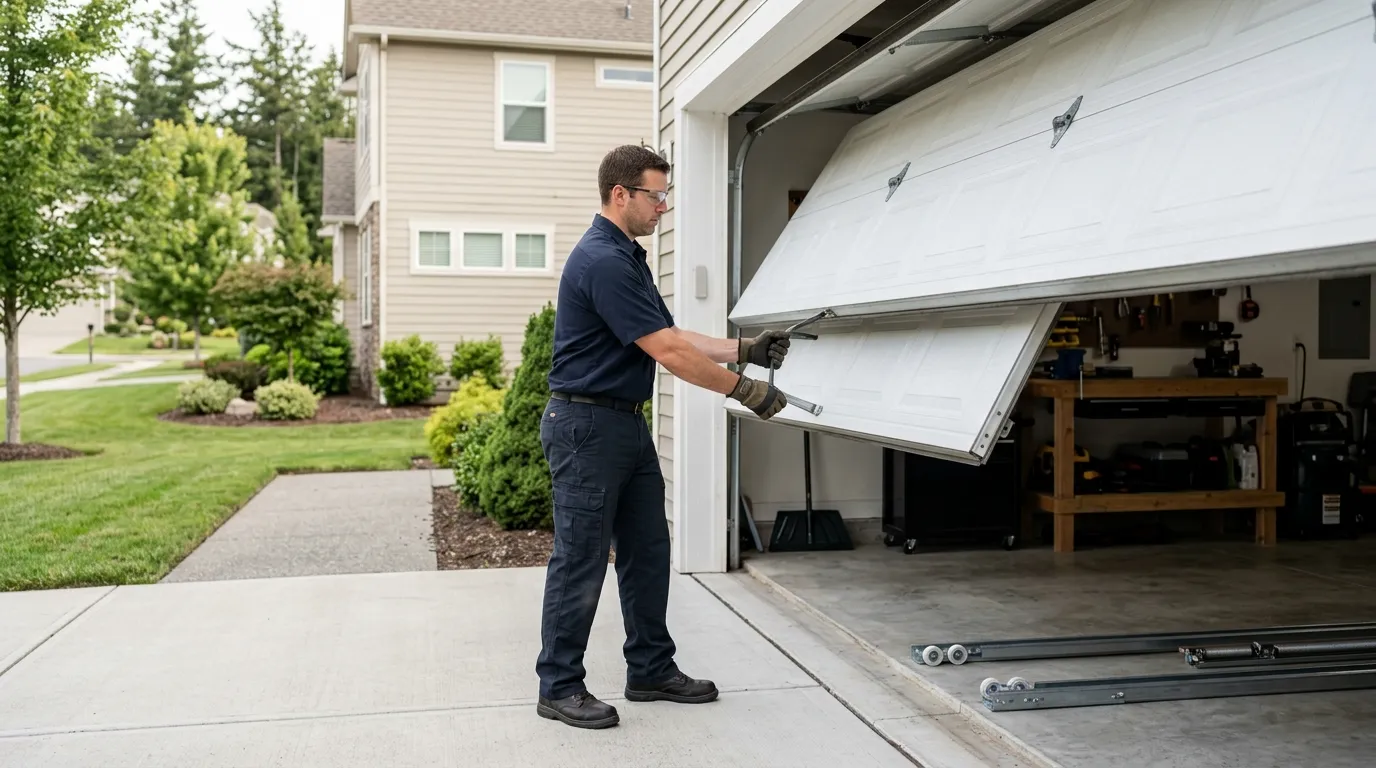
A technician tests the door under power and by hand and finds what actually failed.
03
Clear, up-front plan
You get the fix that’s needed and what drives the cost - before any work starts.
04
Repaired & tested
The repair is done, the door is set true and tested, and the work area left clean.
Serving Pittsburgh, PA - tell us what your door’s doing and we’ll take it from there.
My garage door makes a grinding noise only in cold weather. What does that mean?
Cold-weather-only grinding usually points to dried or thickened grease in rollers or bearings, made worse by severe cold. On older hardware common across this area's pre-1960 housing stock, the metal contact points have less lubrication reserve left, so cold exposes wear that a warmer season might mask. It's worth a look before the noise turns into a stuck door.
Is a squeaky door on an older Pittsburgh house urgent?
Not usually, if the squeak is steady and the door still moves smoothly. A consistent squeak on a house from the area's 1938-2014 build range is often just a dry roller or hinge. It becomes urgent when the sound changes character - a bang, a catch, or a new click at the same point in the cycle every time.
Can I just oil the noisy parts myself?
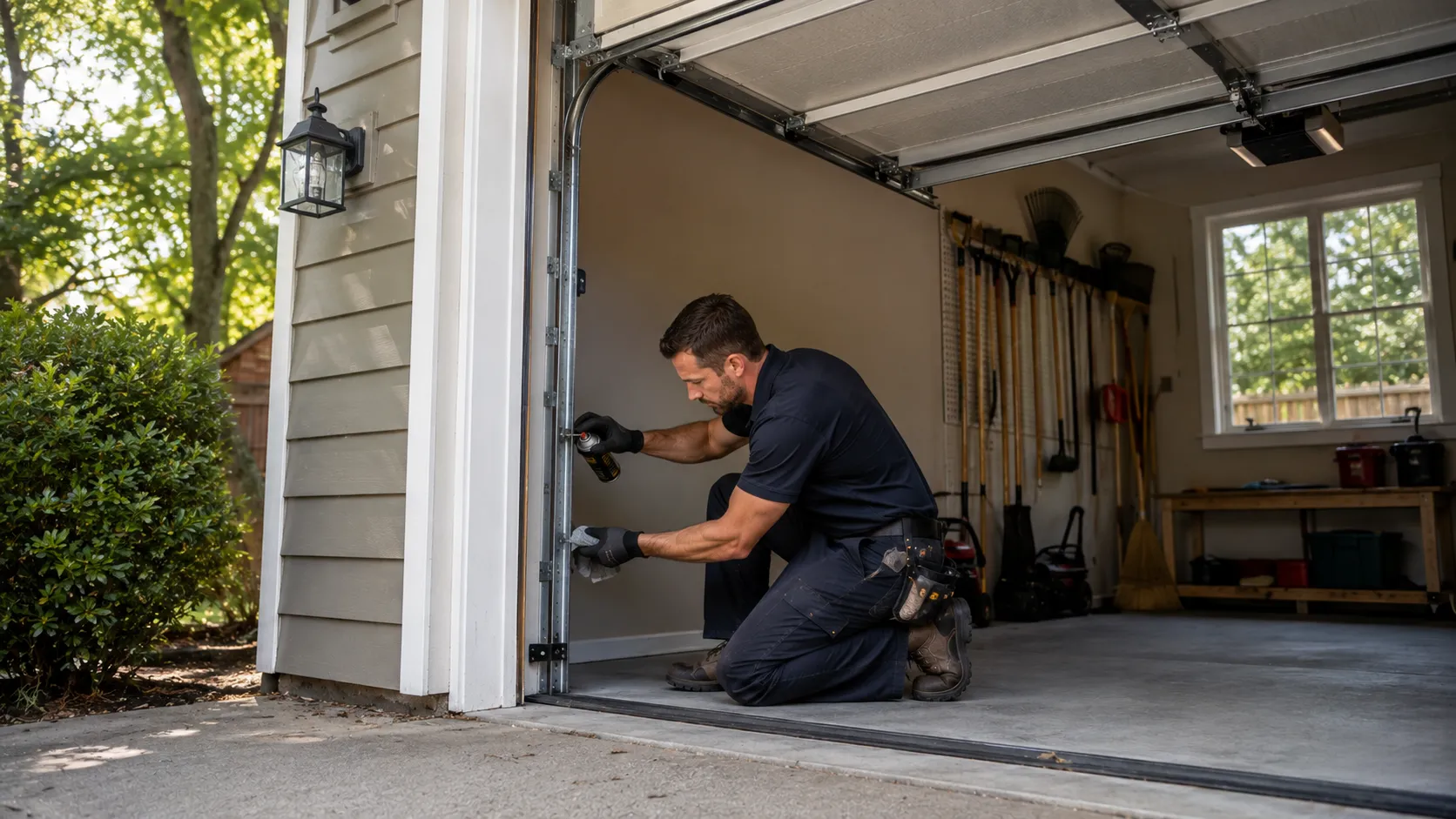
For simple squeaks from rollers or hinges, light lubrication can help temporarily. But if the noise comes from a spring under tension or a grinding opener gear, that's not a lubrication job, and working near a loaded spring without the right tools is genuinely dangerous. We'd rather tell you that upfront than let you find out the hard way.
Why does the same-age door in a warmer state sound fine?
Severe cold cycles put more stress on steel components and dry out lubrication faster than milder climates do. A door built the same year in a warmer region simply hasn't fought the same freeze-thaw pattern, so it tends to develop noise later in its life than one that's spent decades in this climate band.
Ready to get your garage door sorted?
Tell us what it’s doing and where you are in Pittsburgh - we’ll take it from there.