What the Repair Takes
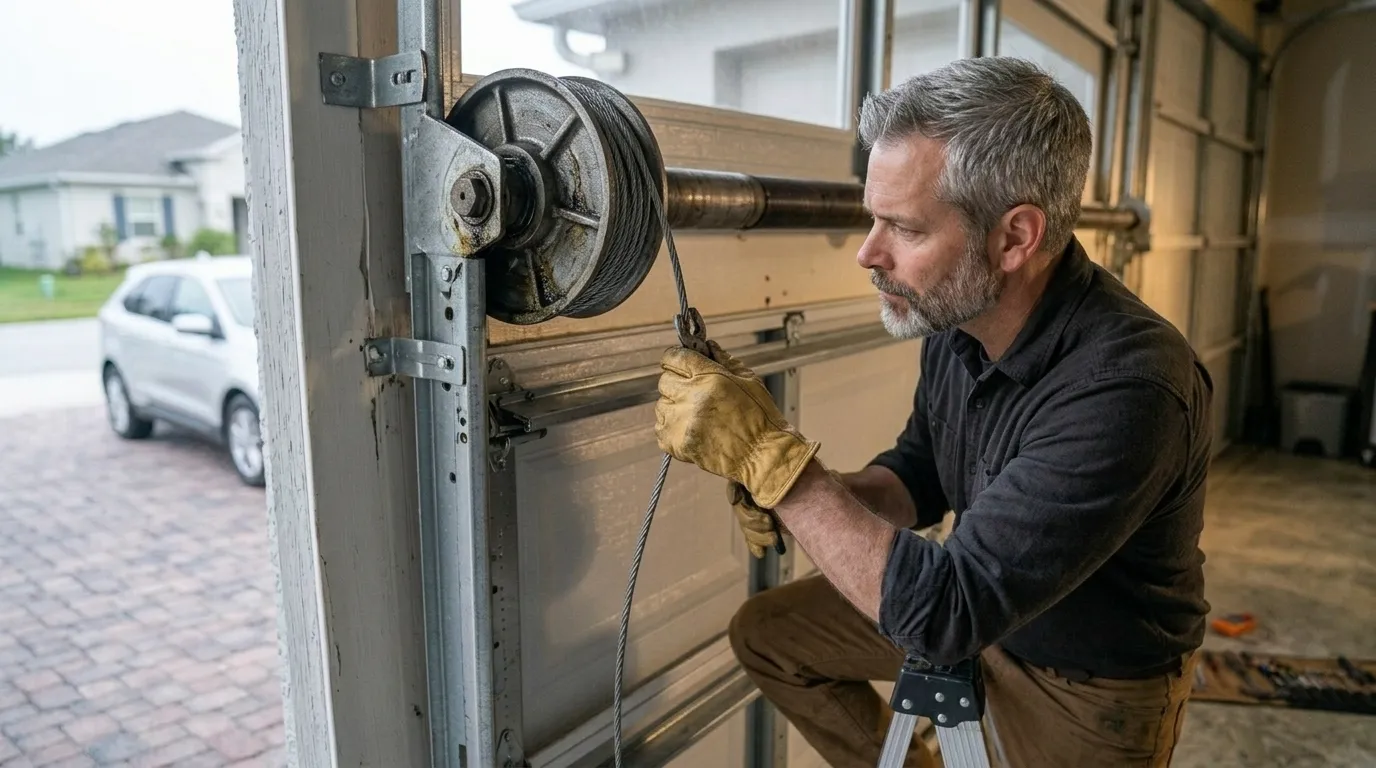
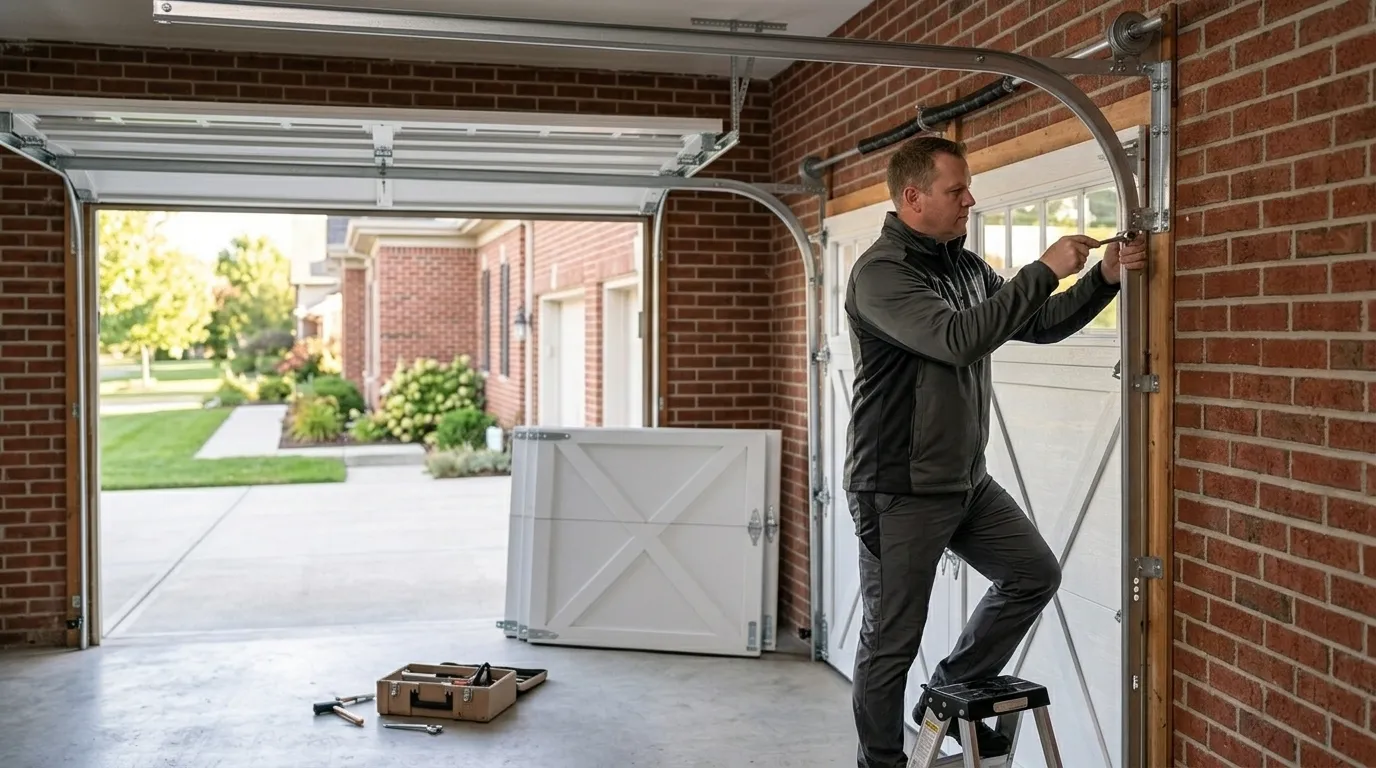
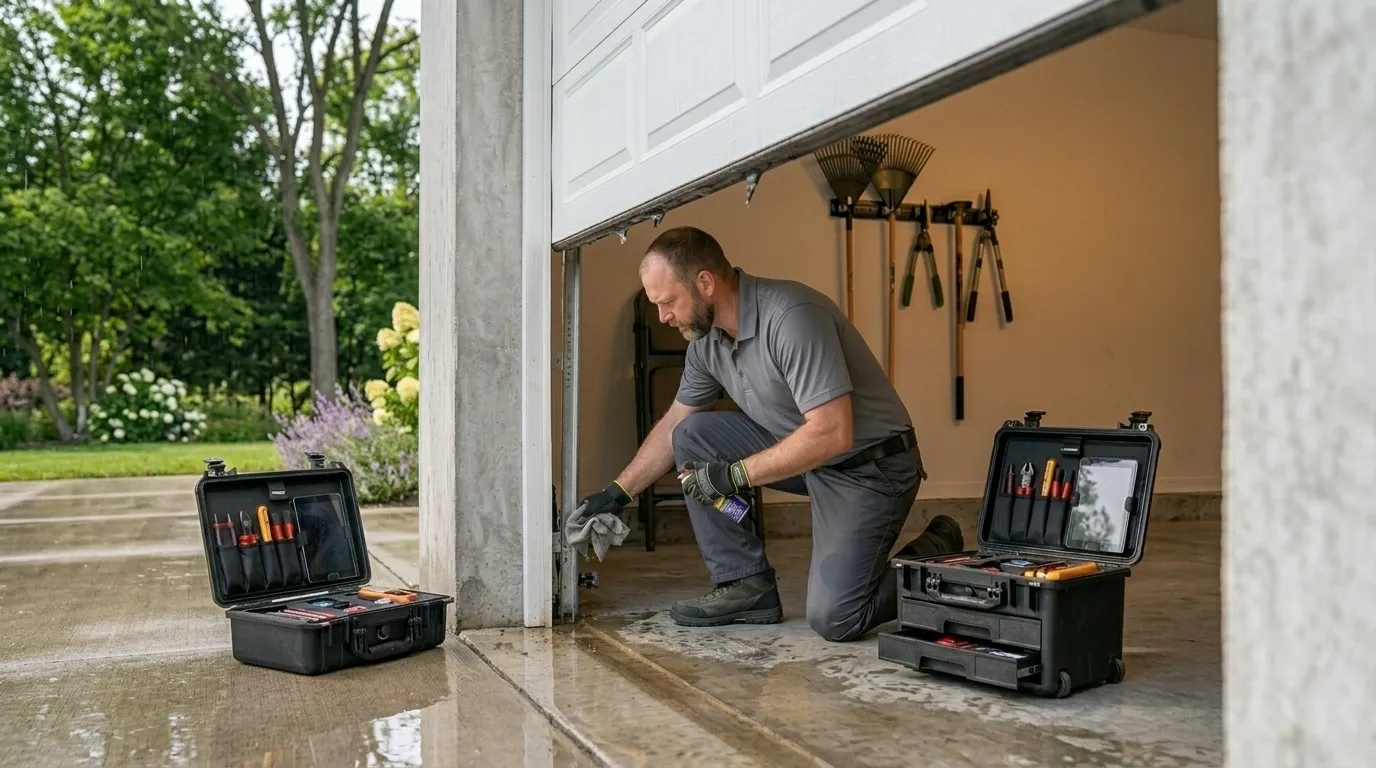
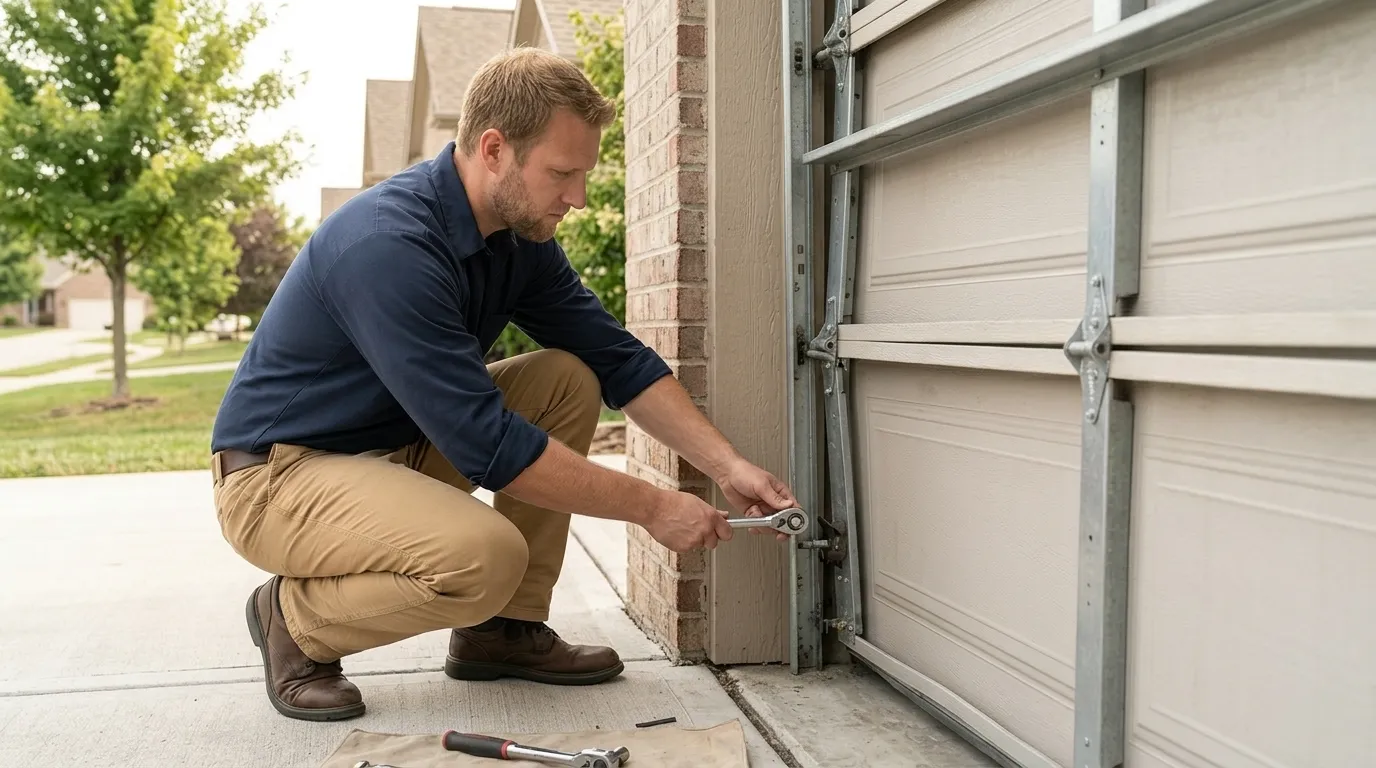
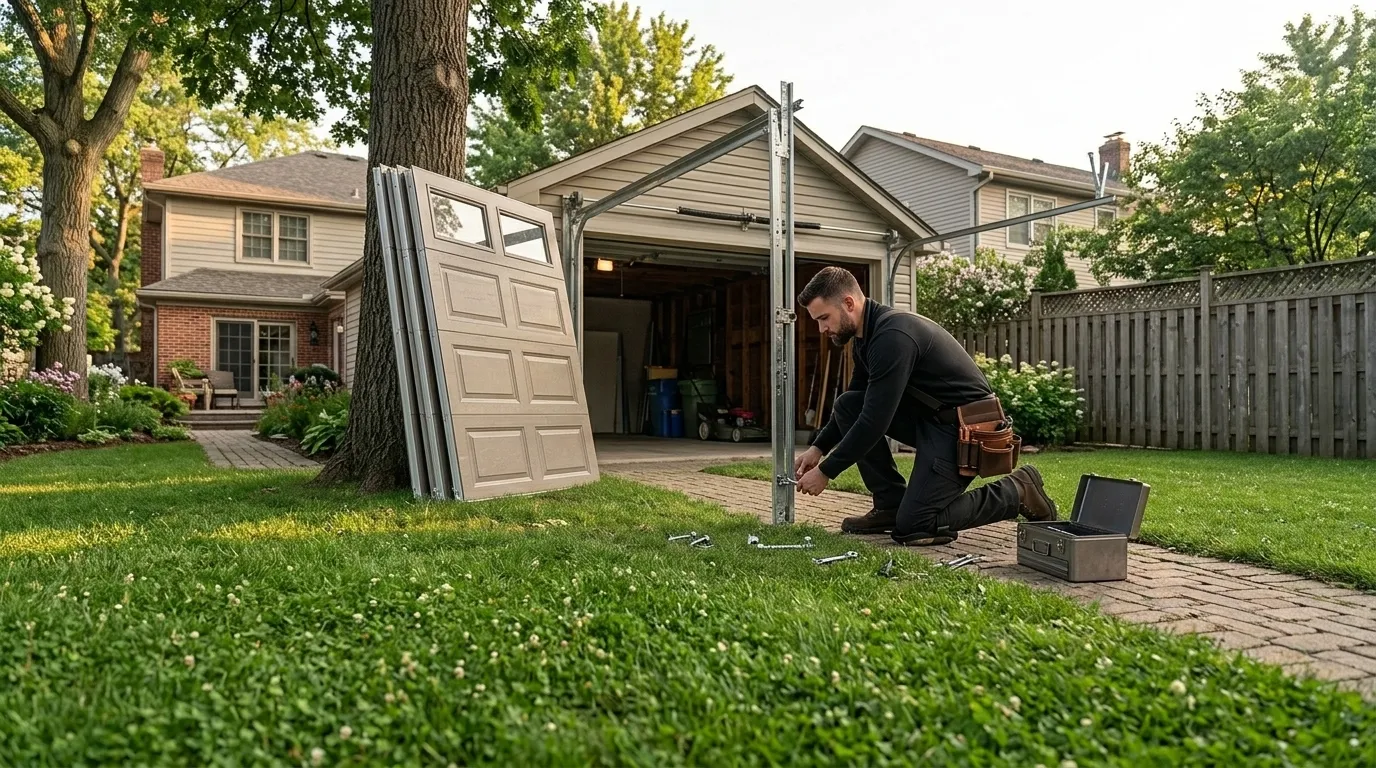
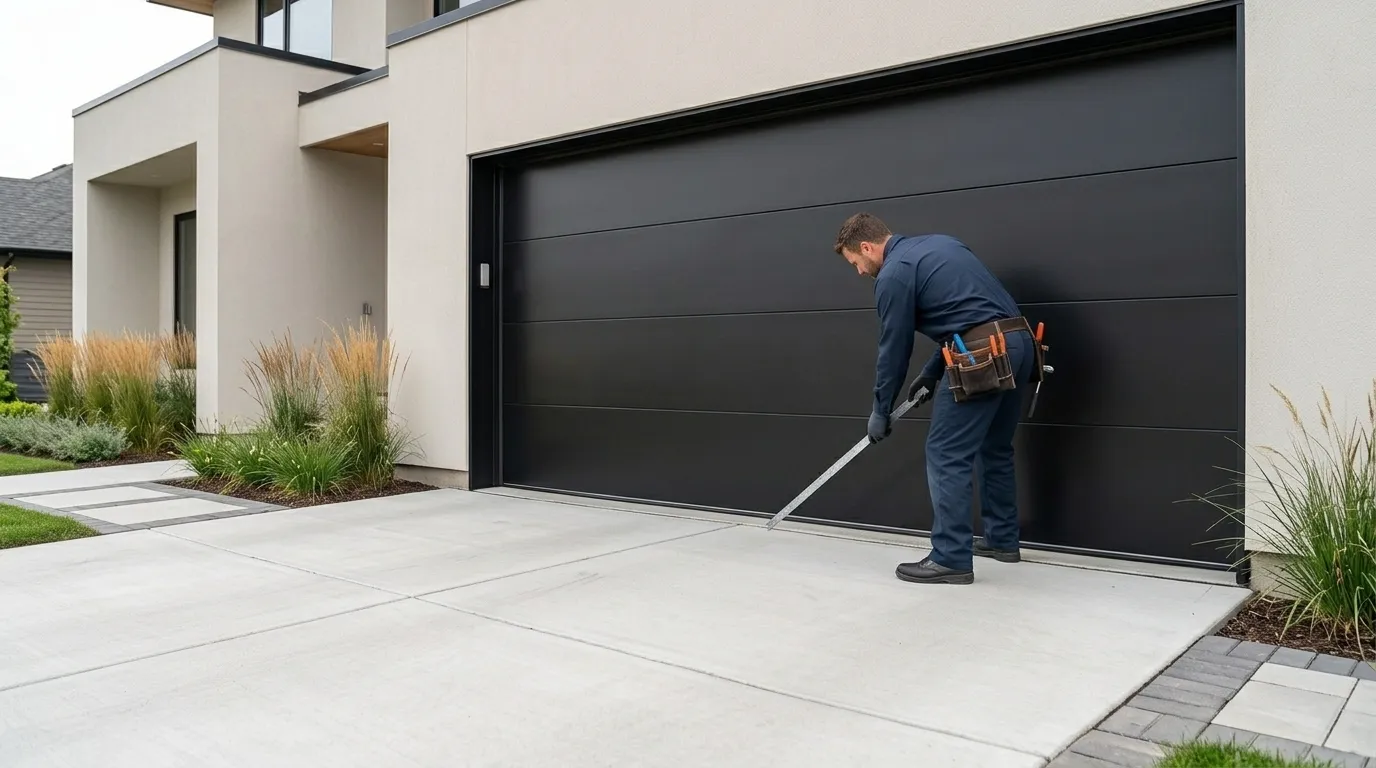
A torsion spring job on a door this old usually starts with sizing, not swapping. Original hardware from the 1938-1960 window often used spring and drum combinations that don't match anything on a current parts shelf, so we measure wire size, coil length, and drum diameter on site rather than assuming a stock replacement will balance the door correctly. Get that wrong and the opener strains, the cable jumps the drum, or the door slams the last foot of travel - all symptoms of a spring that's close but not right.
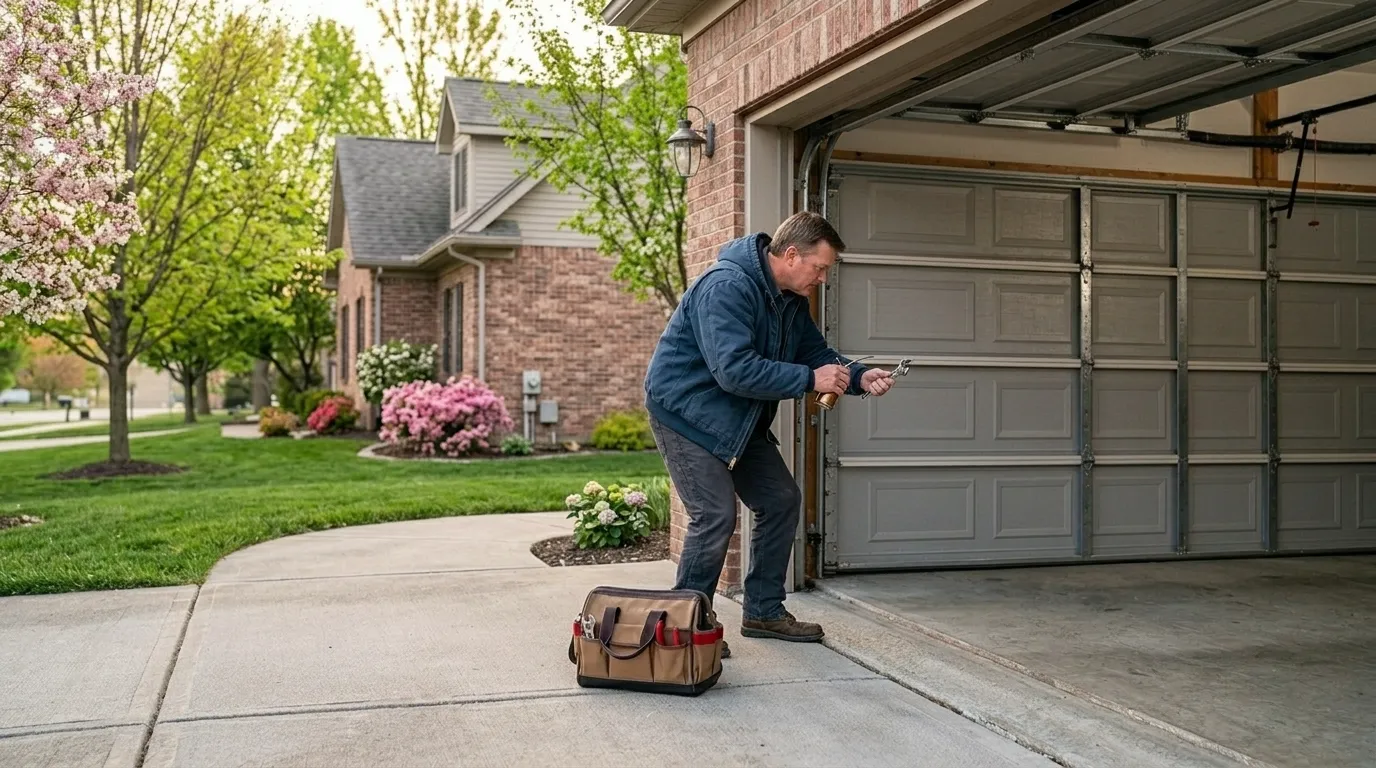
Cold-climate work also means checking the track alignment against the jamb before touching the spring at all. If decades of freeze-thaw have shifted the wood even a little, tensioning a new spring against a track that's out of plumb just transfers the load somewhere else - usually the rollers or the top panel hinge. So the repair takes longer than swapping a part: it means confirming the door travels true first, then sizing torsion to the actual weight and balance of that specific door, not a catalog number.
One honest limit here - if the header or jamb wood has rotted enough that fasteners won't hold torque, that's a carpentry problem before it's a garage door problem, and we'll tell you that rather than force a spring onto framing that can't take the load.
What You Are Seeing
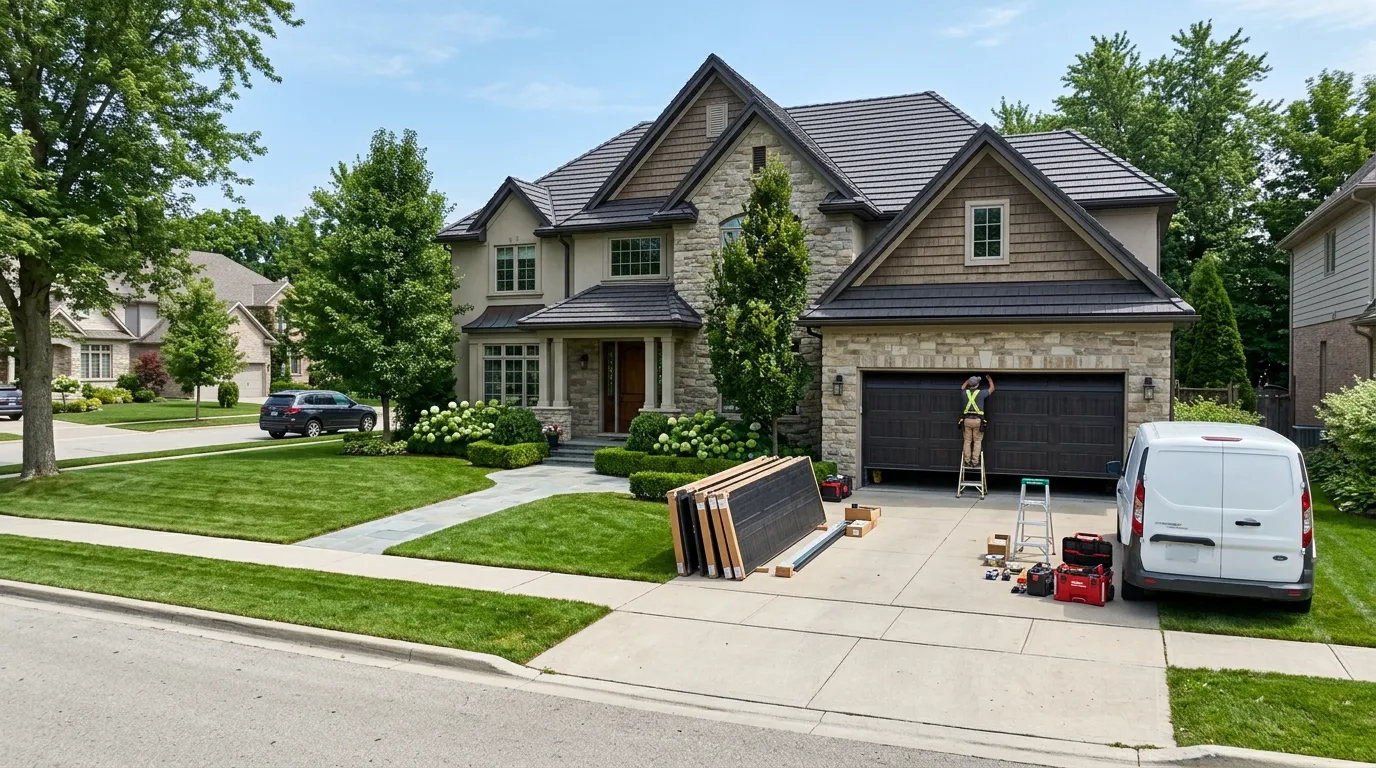
The most common call we get from these older houses is a door that won't open past a foot or two, or one that slams down hard on the last few inches - both classic signs of a torsion spring that's lost tension or broken outright. On original hardware, that spring has usually been cycling since well before the current owner bought the house.
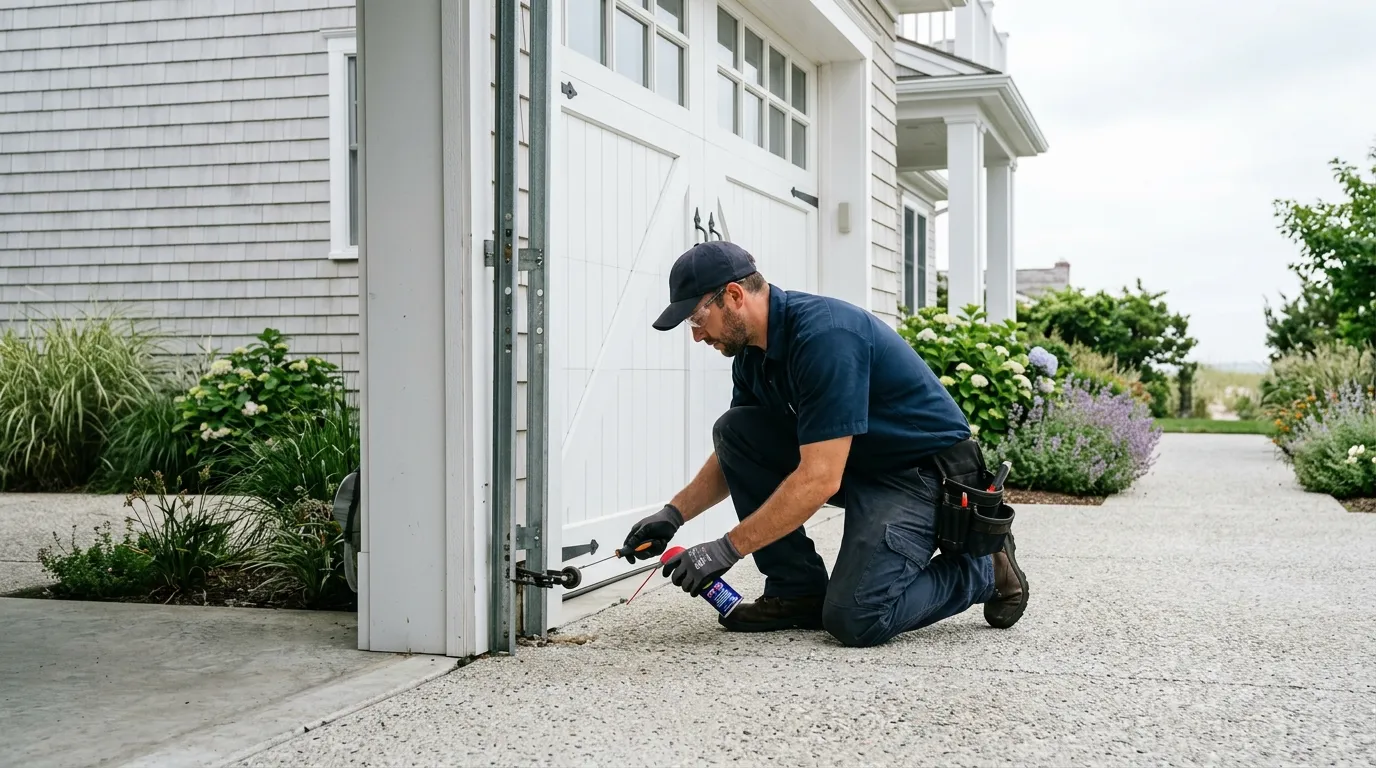
Second most common: a door that opens fine in fall but starts binding or grinding partway through winter. That's the cold doing exactly what COLD-severe means - stiffening old lubricant, shrinking metal tolerances, and exposing a track that was already slightly out of alignment. It was tolerable in September; it isn't in January.
A third pattern shows up on houses where the opener was added decades after the original door - the opener strains, reverses partway, or trips its limit switch. That's usually the opener trying to compensate for a spring or cable that's no longer doing its share of the lifting, not a fault in the opener itself. Treating the symptom (adjusting the opener) instead of the cause (the spring) just buys a few more weeks before the same call comes back.