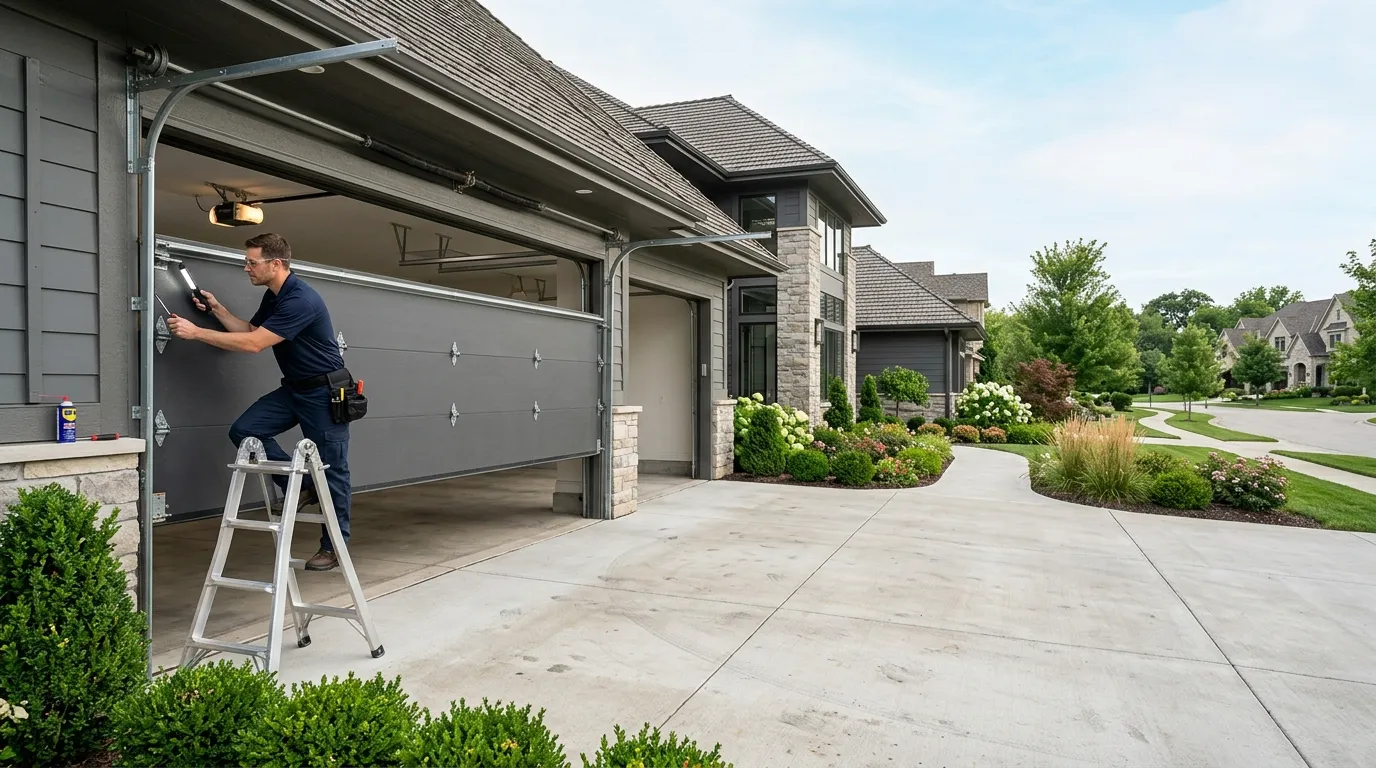
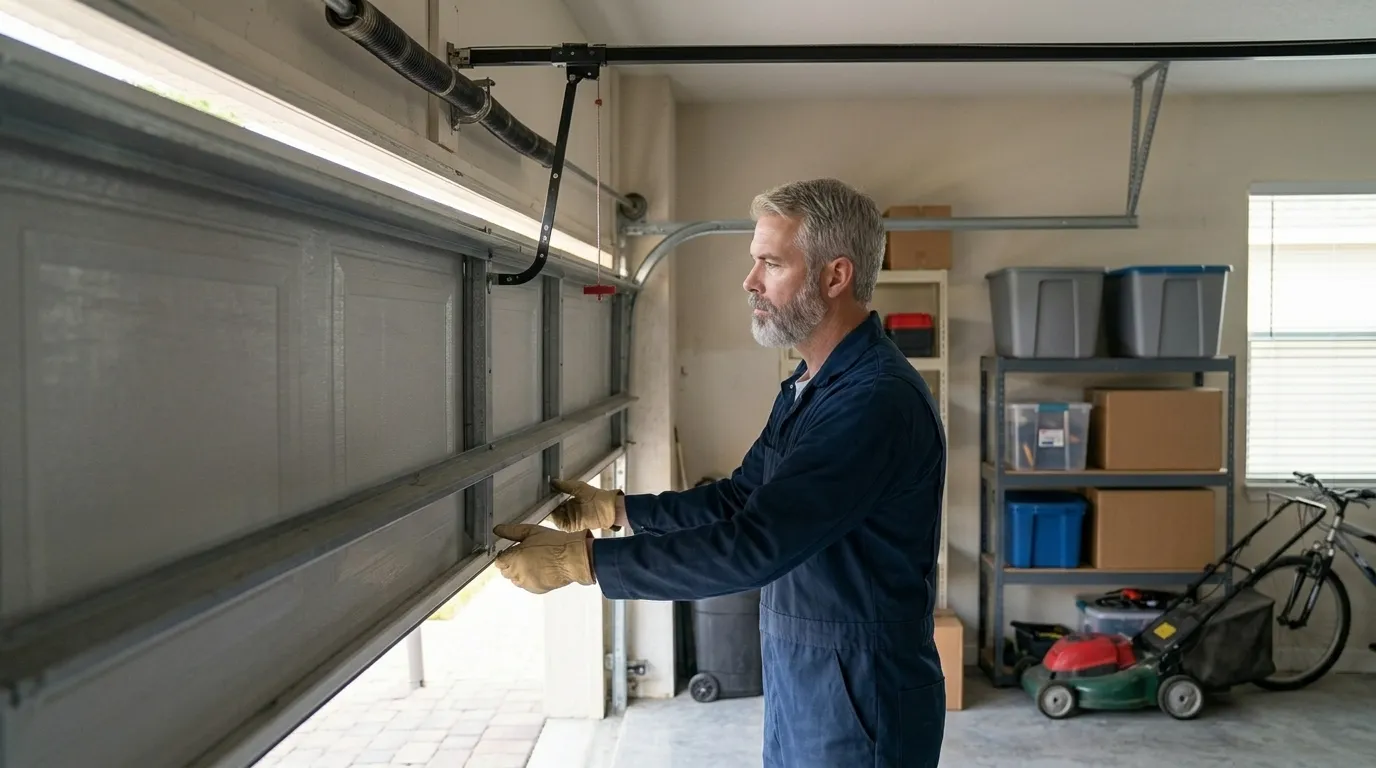
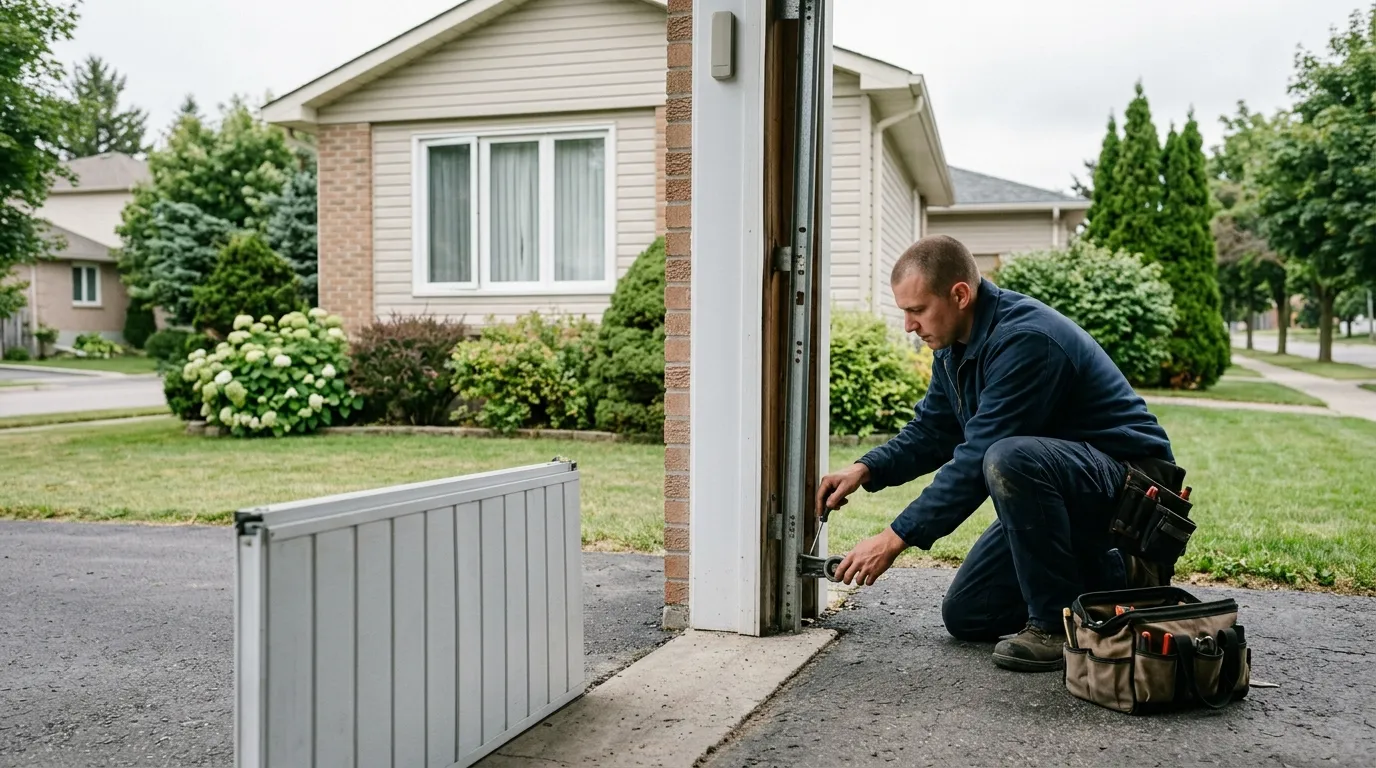
Serving Ambridge homes built mostly before 1938 with pre-war garage door hardware, worn extension springs, and non-standard openings. We travel out from Pittsburgh, 17 miles east.
Ambridge's median house dates to 1938, which is older than the 1955 median across the rest of our service area. That gap of nearly two decades matters more than it sounds. A door and track system built for a 1938 opening was almost never designed with the standardized hardware that came later - a lot of these garages were framed before torsion springs on a center bracket became the norm, and plenty still run older extension spring setups with the exposed cables that newer code steers away from. We see openers bolted onto headers that were never built for the load, and doors sized an inch or two off from what a big-box replacement panel expects off the shelf. None of this means the door is unsafe by default. It means measuring twice before ordering parts, because a size that fits a house three streets over in a newer subdivision may not fit here at all. If your opener or spring is original, or close to it, you're dealing with hardware categories a lot of newer trucks don't carry stock for.
The Calls We Get From Here
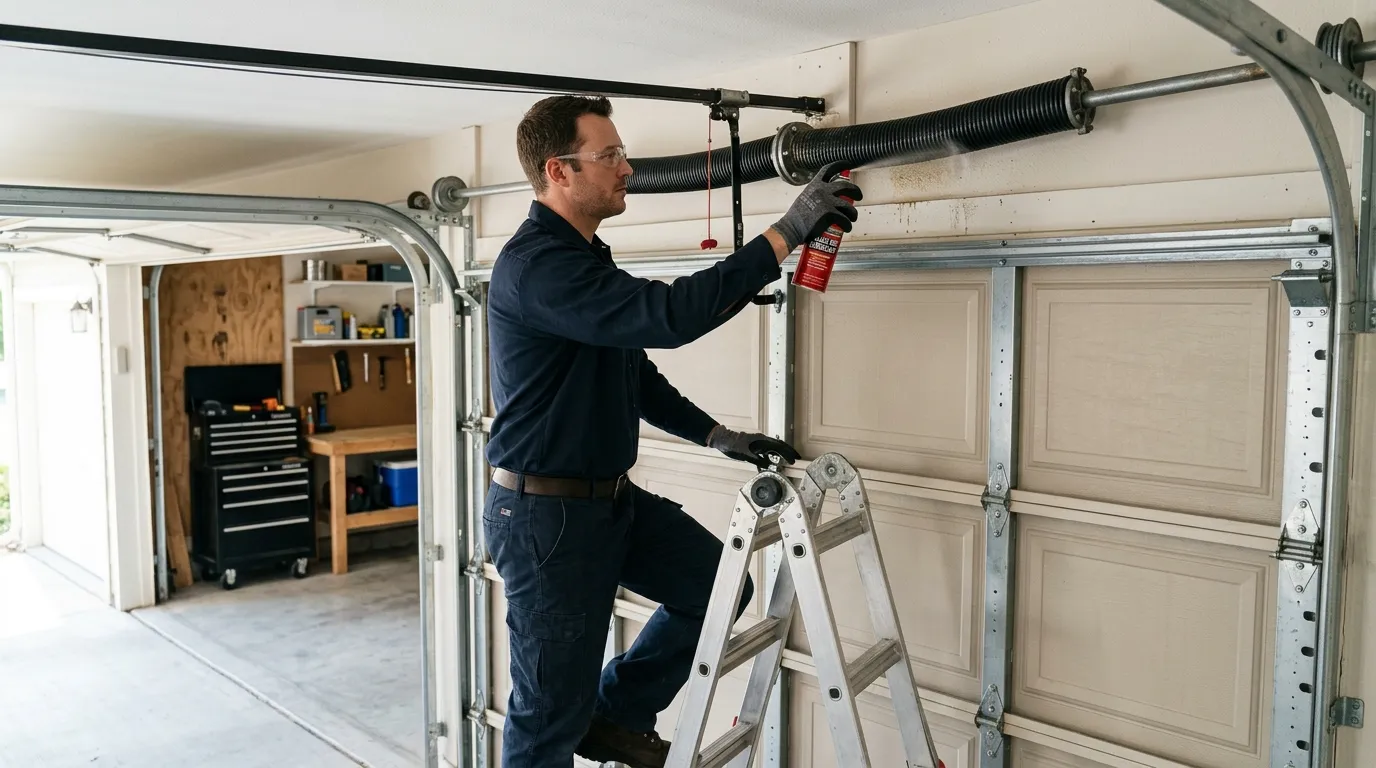
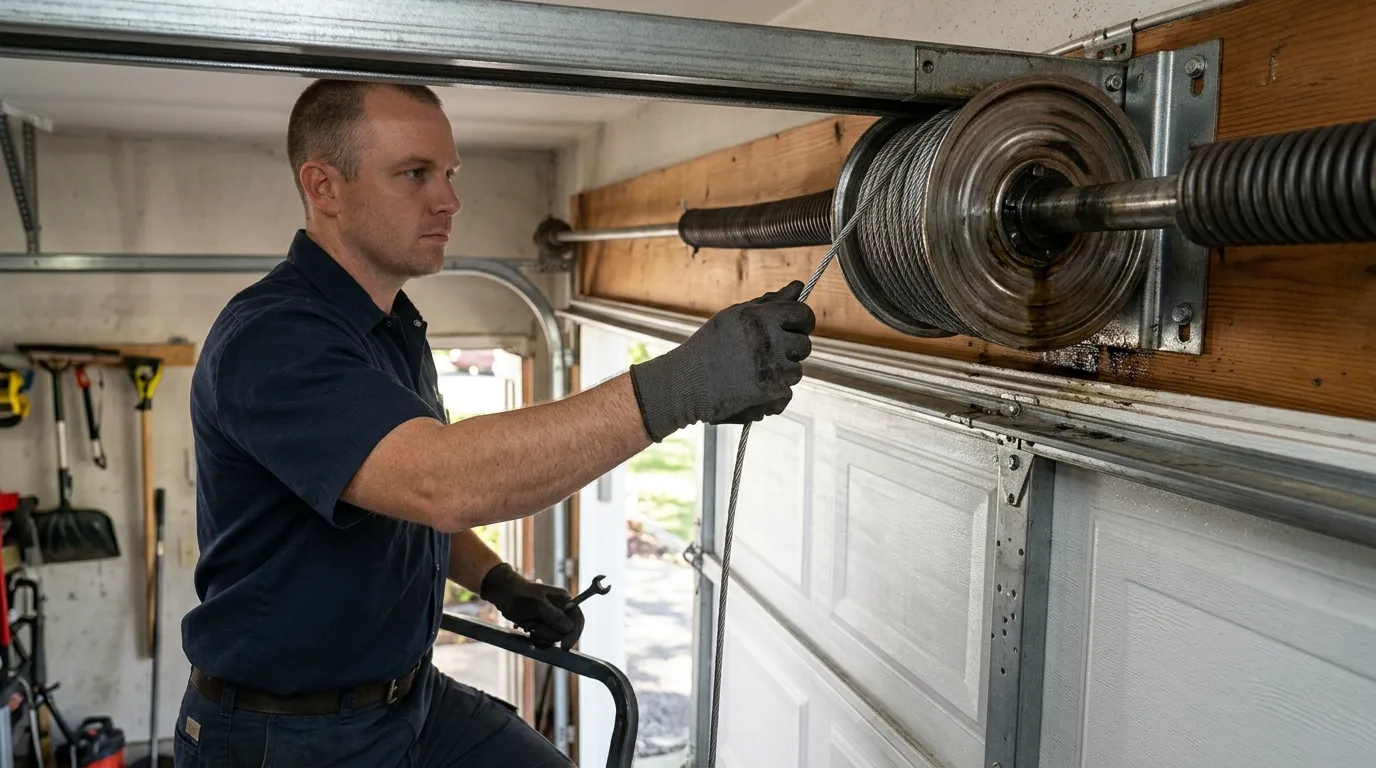
Given the age of the housing stock, the calls we get from Ambridge skew toward worn-out extension springs, tracks bent from decades of use, and openers that are simply at the end of their service life rather than broken in one clean way. Rollers on original steel track tend to be undersized by today's standard, so noise complaints are common even when nothing has technically failed yet. We're straight with people here: if a door is on its original 1930s or 40s hardware and the spring lets go, replacing the whole spring and cable system is usually the honest call rather than patching one part and leaving the rest to fail next winter. One limitation worth saying plainly - we don't stock every obsolete extension spring size on the truck, since so few houses anywhere still use them, and a very old or oddly-sized door sometimes means an order and a second trip rather than a same-visit fix.
Getting Here
We run this call from Pittsburgh, about 17 miles from Ambridge. We don't keep a depot or crew stationed in town - a truck comes out from Pittsburgh for each job, same as it does for the rest of our coverage area. That distance doesn't change what work we do once we're there, but it's worth knowing up front rather than assuming a local shop around the corner.
This Area's Housing
About 3,191 households make up Ambridge, a small fraction of the roughly 279,154 households across our full coverage area. Median household income here runs $50,978, notably below the $72,020 median for the service area as a whole, which tends to mean more owners holding onto original doors and openers longer rather than replacing on a set schedule. The broader region's housing spans 1938 to 2014 with most of the 108 named areas we cover skewing pre-1960, but Ambridge sits at the older end of that range rather than the middle. Add the region's cold, severe winter climate and you get doors that have to survive freeze-thaw cycling on hardware that's already decades past its expected life. None of that means every door needs replacing tomorrow - plenty of well-maintained old doors still run fine - but it does mean age is usually the first thing worth checking before assuming a repair is simple.
How it works
From “it’s stuck” to “it’s fixed”
01
Tell us what’s wrong
Describe the symptom - won’t open, loud bang, opener runs but the door won’t move.
02
On-site diagnosis
A technician tests the door under power and by hand and finds what actually failed.
03
Clear, up-front plan
You get the fix that’s needed and what drives the cost - before any work starts.
04
Repaired & tested
The repair is done, the door is set true and tested, and the work area left clean.
Serving Pittsburgh, PA - tell us what your door’s doing and we’ll take it from there.
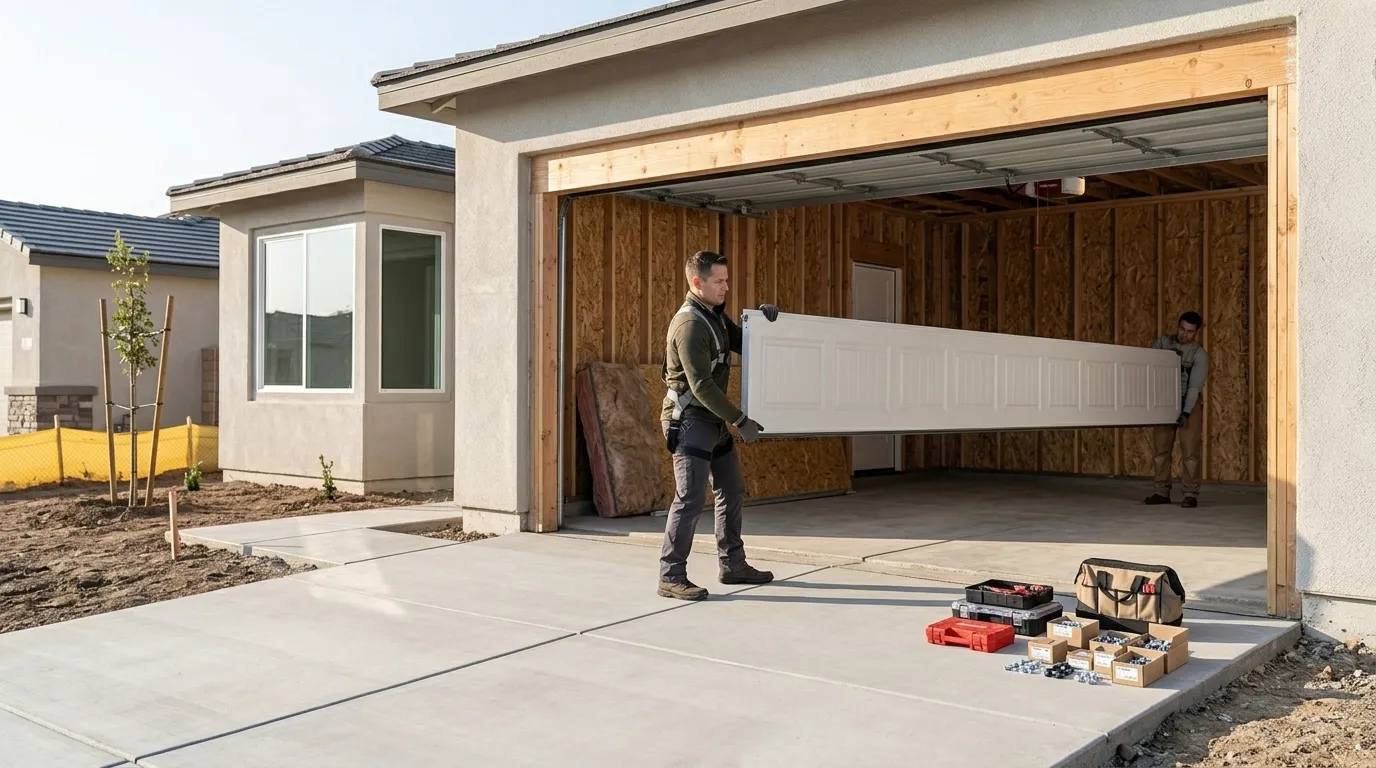
Not necessarily. Age alone doesn't rule out a repair, but if your door or opener dates close to Ambridge's 1938 median build year, some parts may be obsolete and require ordering rather than a same-day fix. We'll tell you honestly when replacement makes more sense than patching an old system.
Do you have a shop in Ambridge?
No. We run jobs here from Pittsburgh, about 17 miles away. There's no local depot or stationed crew - a truck comes out for each call, the same way it does across the rest of our coverage area.
Why does my door sound rougher than my neighbor's newer one?
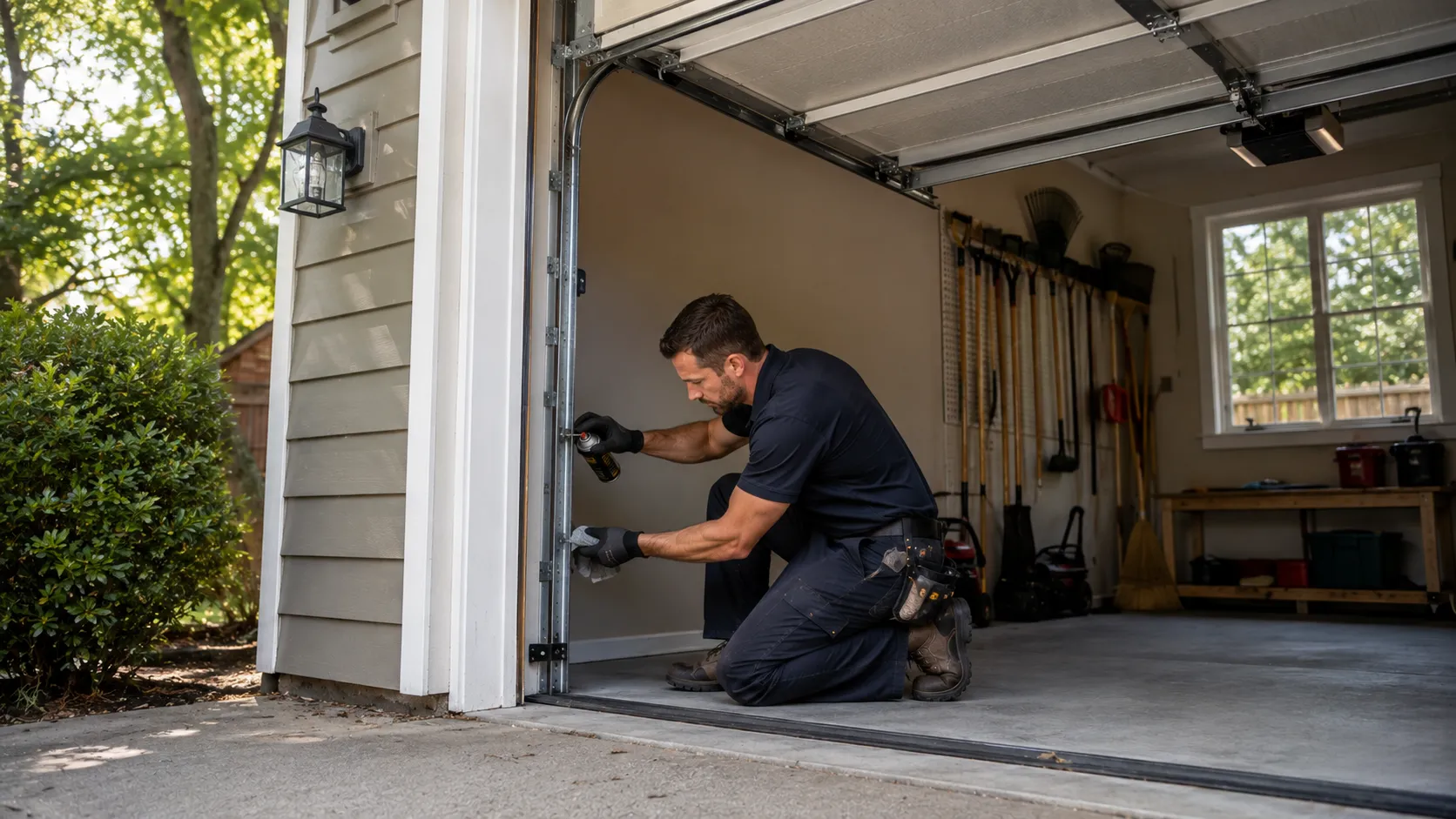
Older steel track and undersized rollers, common on houses built before 1960 in this area, tend to run noisier than modern setups even when nothing is actually broken. It's often a maintenance issue rather than a failure, but worth having checked.
Ready to get your garage door sorted?
Tell us what it’s doing and where you are in Pittsburgh - we’ll take it from there.