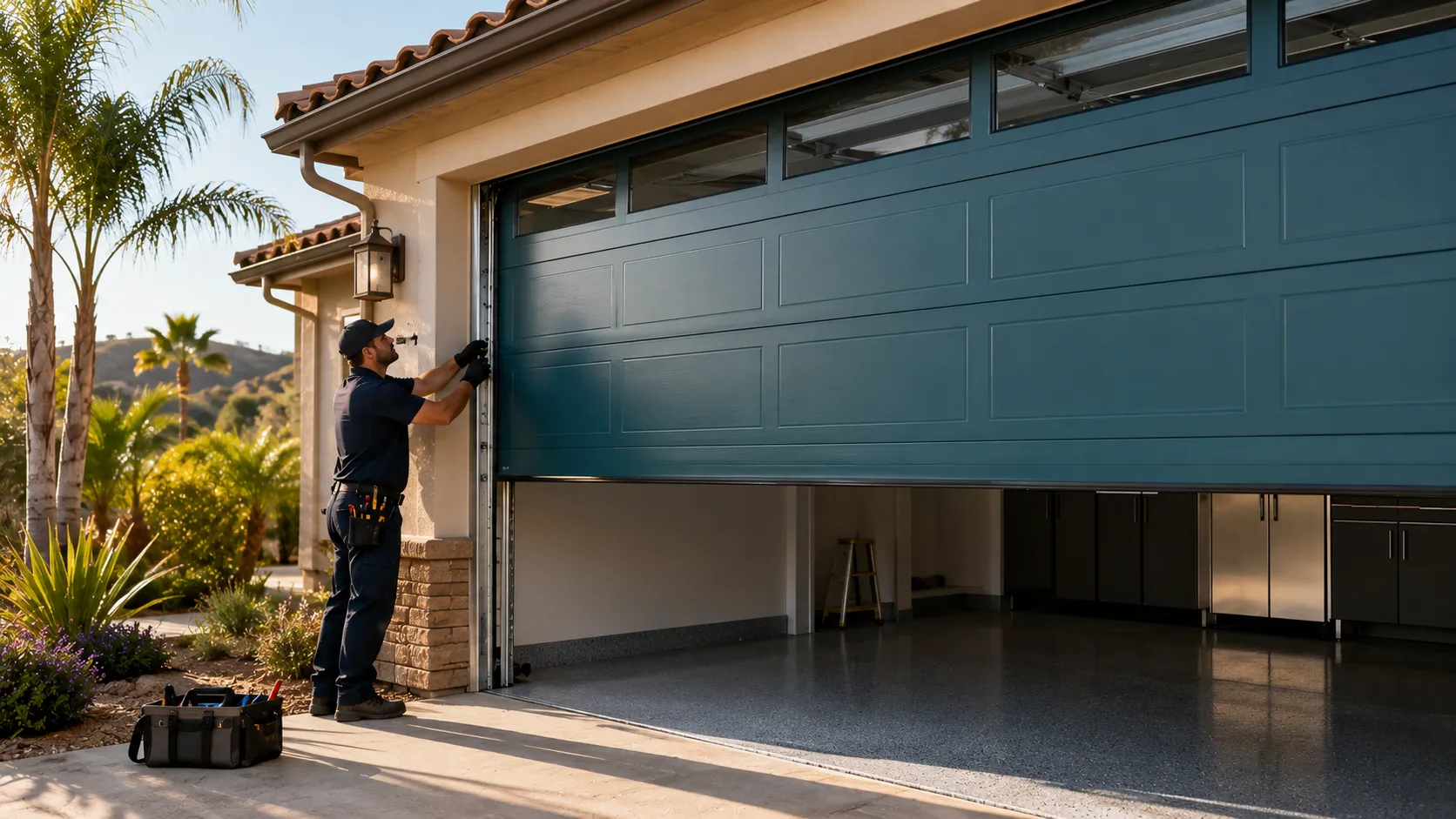
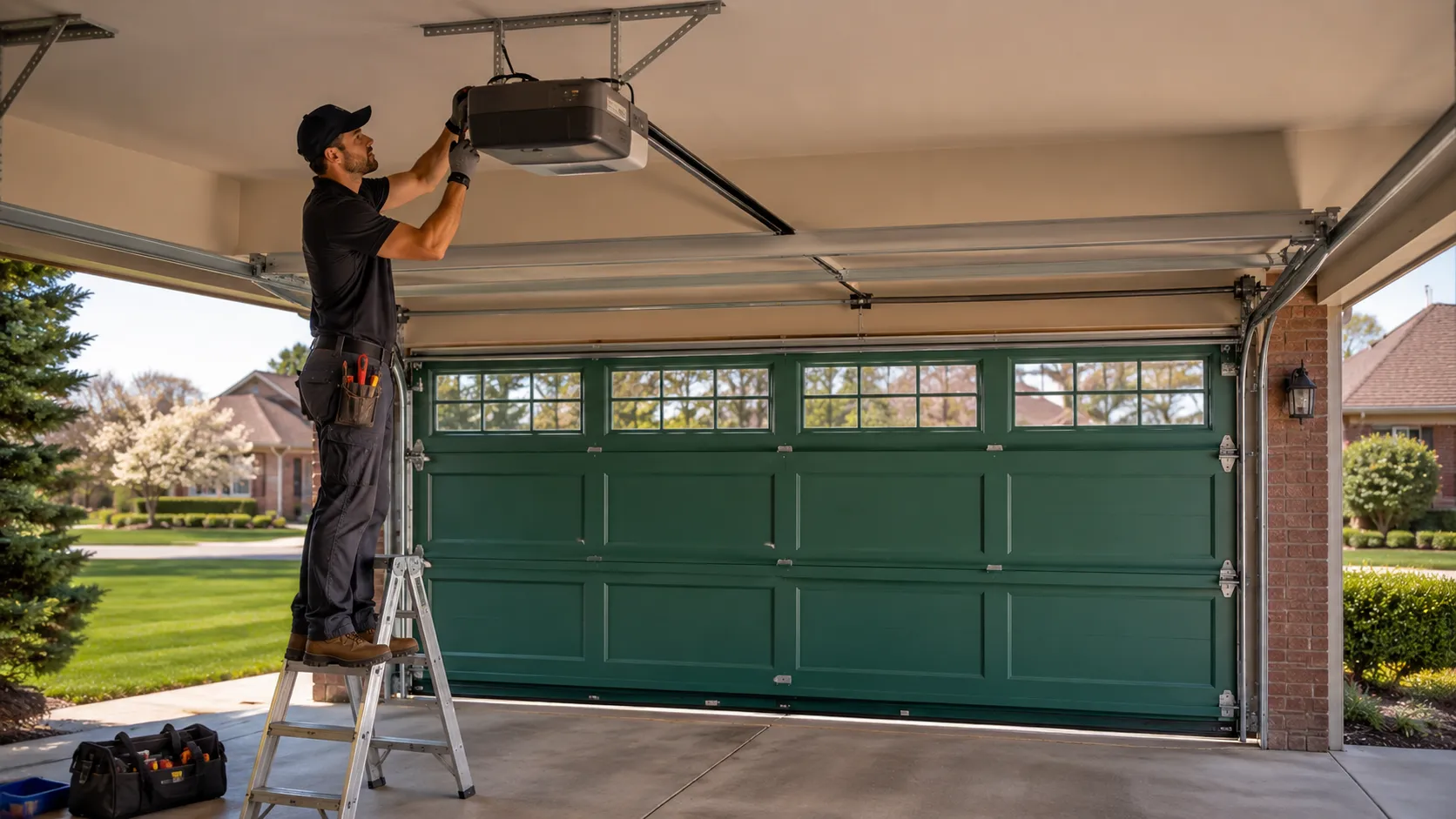
Pittsburgh Garage Door Pros travels 15 miles to Bell Acres, PA, fixing springs and openers built for this area's 1963-era homes and cold Pittsburgh winters.
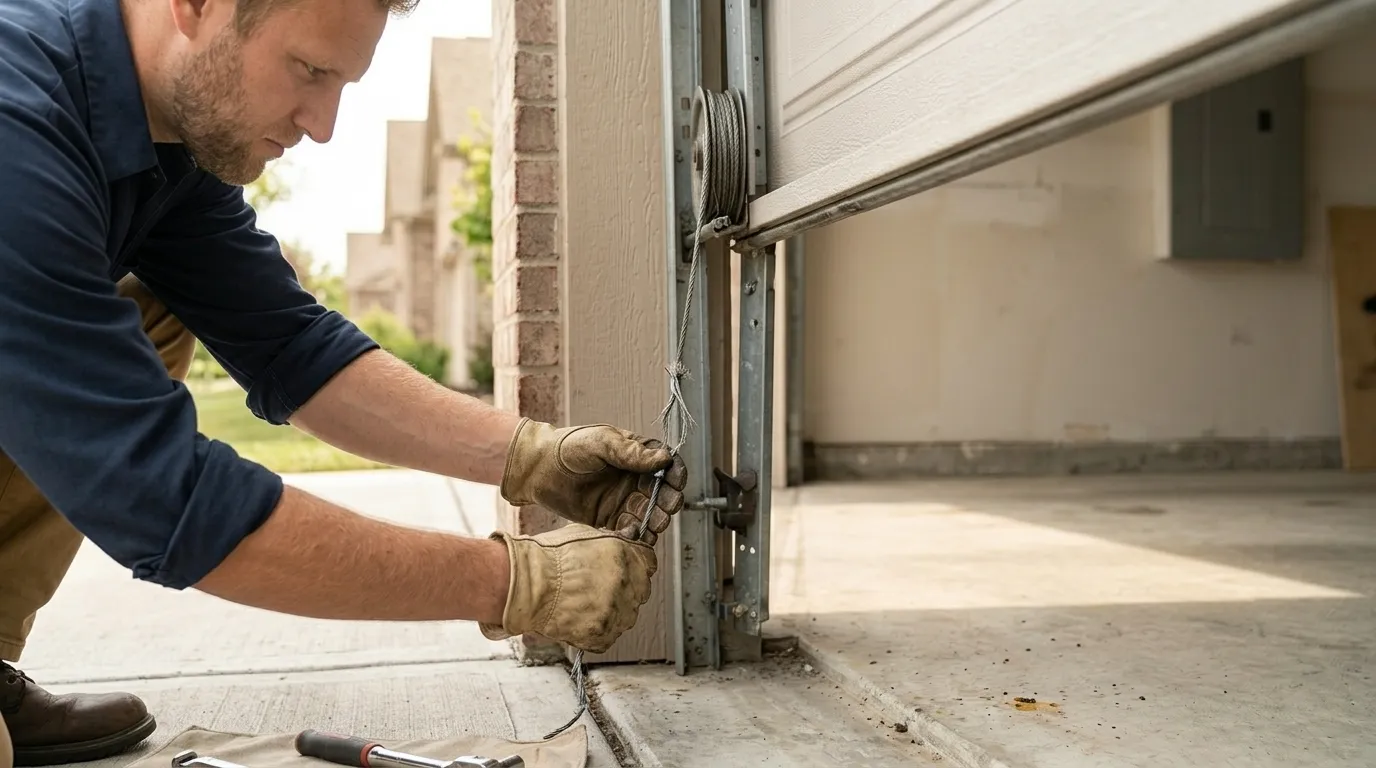
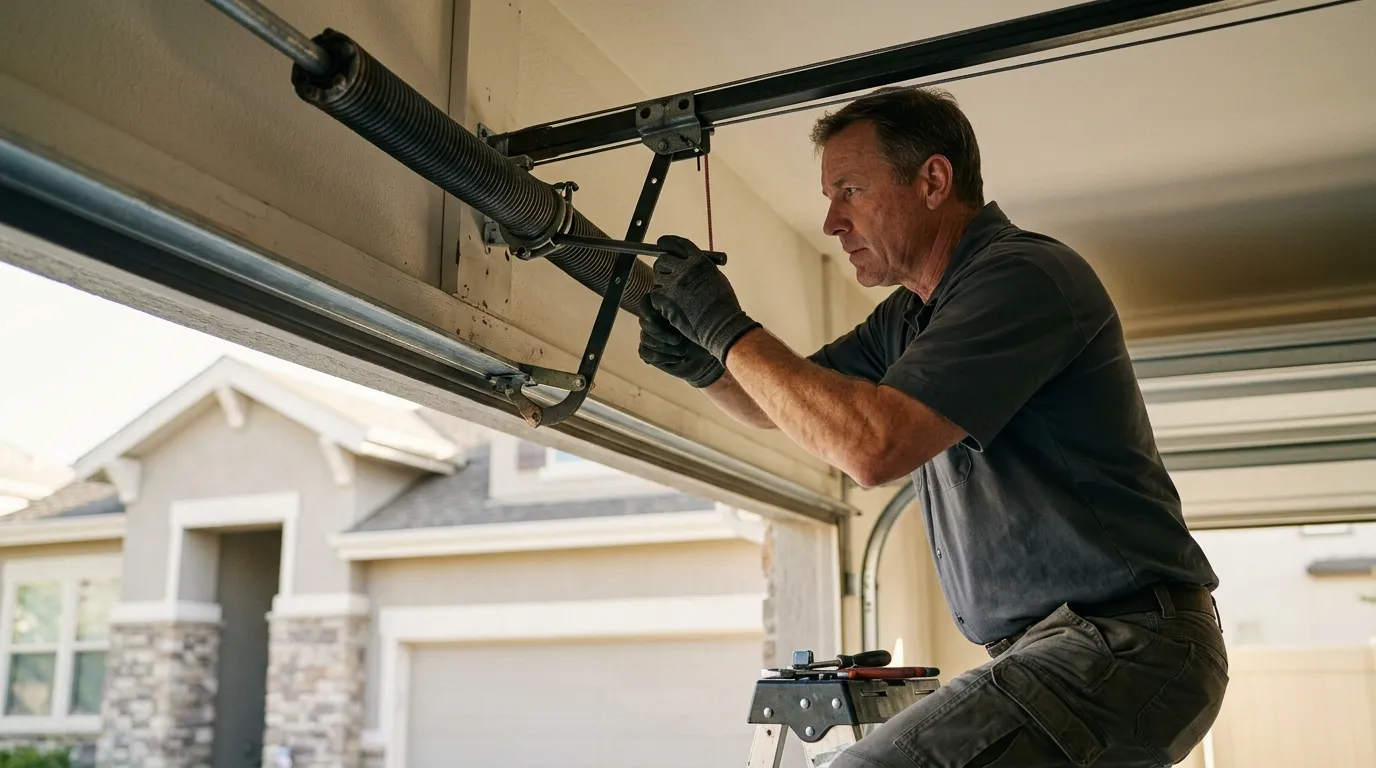
The homes here mostly went up around 1963, which puts Bell Acres a good eight years past the median build year for the wider Pittsburgh service area, where the typical house dates to 1955. That gap matters more than it sounds. A house built in 1955 is more likely to still have an original one-piece door on side-mounted hardware, the kind almost nobody stocks parts for anymore. A house built in 1963 is more likely to have started with an early torsion-spring setup, or an extension-spring system that's since been retrofitted at least once. Either way, the springs, drums, and cables on doors from this era are past due for replacement even if nothing has failed yet.
The region sits in a cold, severe climate band, and that hits steel doors and their hardware the same way regardless of income level or lot size: cable rust, hardened lubricant in the torsion tube, and cold-stiffened extension springs that snap rather than stretch. We won't tell you every door here has the same problem, because we haven't inspected every door here. But the build year gives a strong starting point for what a service call is likely to find before a truck ever pulls up.
The Calls We Get From Here
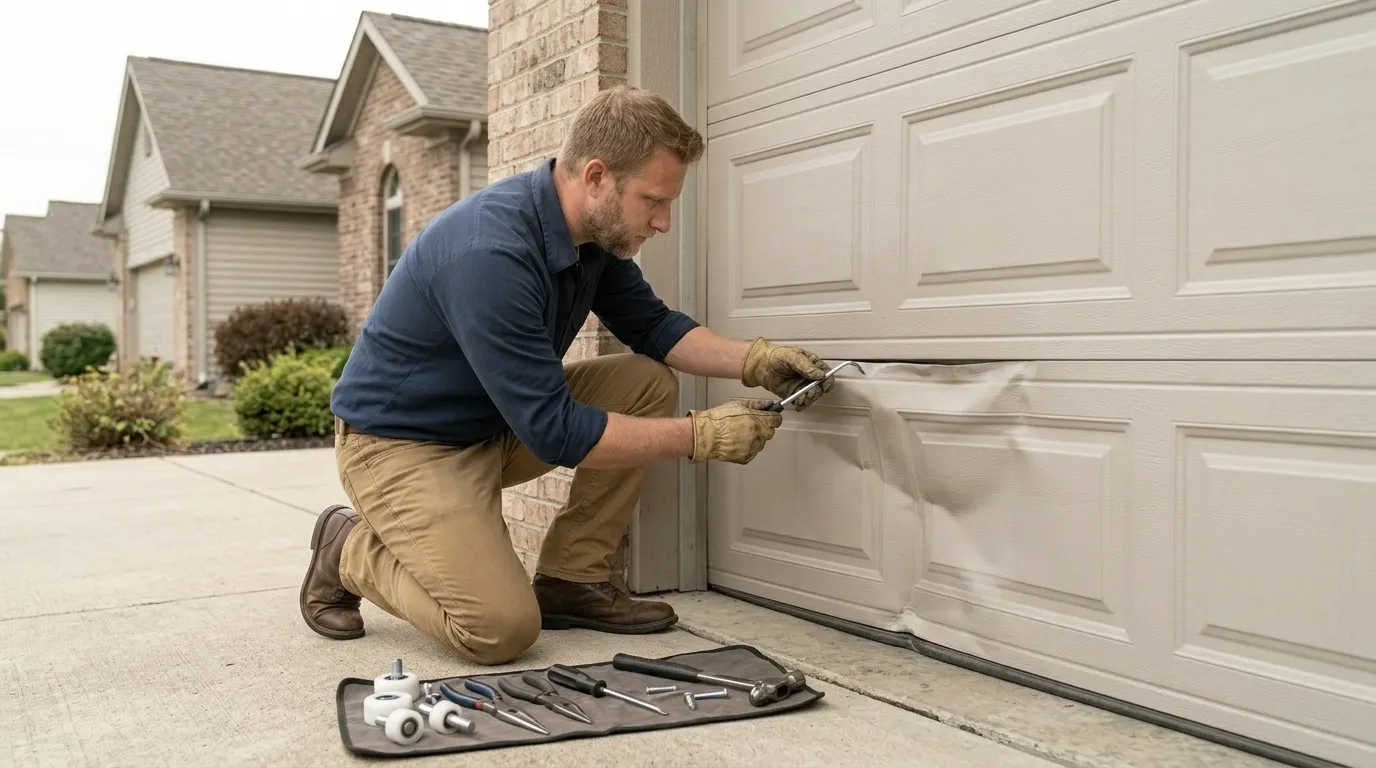
Given the 1963-ish median build year, the calls that make sense for this area tend to center on aging torsion or extension spring setups rather than the oldest one-piece doors you'd find in a neighborhood built a decade earlier. Expect worn rollers, dry-rotted weatherstripping, and openers that are on their second or third motor since the house was built. Steel panel doors from the early 60s that were never repainted often show rust at the bottom panel first, especially after a hard winter, which fits the severe cold climate this whole area sits in.
With median household income here running well above the broader service area's figure, it's also common to find wider two-car doors and heavier insulated panels than you'd see on a typical starter house from the same period, which changes the spring weight and cable sizing on a repair. That's worth knowing before ordering a replacement spring, because using a spec for a lighter door leads to a door that won't stay open.
One limitation worth saying plainly: we don't carry every custom panel style in the truck. If a door here was a builder upgrade rather than a stock model, matching panels sometimes means a short order wait rather than a same-visit fix.
Getting Here
Bell Acres is about 15 miles out from Pittsburgh, where the company is based. There's no depot or standing crew in Bell Acres itself - a truck comes out from Pittsburgh for each job, same as it does for the rest of the service area. That distance is longer than some of the closer-in stops on our route, so a job here gets scheduled as a trip rather than something worked in between calls a few blocks apart.
We're not going to claim a response time we can't back up for a location this far out, and we're not going to pretend there's a local presence that doesn't exist. What we can say is that the drive is a known, fixed distance, not an estimate, and it's built into how a visit here gets planned from the Pittsburgh side.
This Area's Housing
Bell Acres is a small area by household count - around 602 households, compared to the roughly 279,154 households and 155,574 owner-occupied houses across the broader service area we cover out of Pittsburgh. Median household income here runs about $161,184, more than double the service area's median of $72,020. That difference tends to show up in the doors themselves: larger openings, heavier insulated panels, and openers with features a builder wouldn't have put on a standard tract house from the same era.
The median build year of 1963 puts most of the housing stock here just past the front edge of the torsion-spring era that became standard through the 1960s and 70s, versus the service area's overall median of 1955, which leans more toward the oldest one-piece and extension-spring doors. None of this tells us what's on any one specific house, but it's a reasonable starting point for guessing what a first visit is likely to turn up before the door ever gets opened.
How it works
From “it’s stuck” to “it’s fixed”
01
Tell us what’s wrong
Describe the symptom - won’t open, loud bang, opener runs but the door won’t move.
02
On-site diagnosis
A technician tests the door under power and by hand and finds what actually failed.
03
Clear, up-front plan
You get the fix that’s needed and what drives the cost - before any work starts.
04
Repaired & tested
The repair is done, the door is set true and tested, and the work area left clean.
Serving Pittsburgh, PA - tell us what your door’s doing and we’ll take it from there.
Are the garage doors in Bell Acres older than the rest of the area you cover?
Not quite the opposite, actually - Bell Acres' median build year is 1963, about eight years newer than the 1955 median for the broader service area. That usually means more early torsion-spring setups and fewer of the oldest one-piece doors, though individual houses vary.
Do you have a crew based in Bell Acres?
No. Pittsburgh Garage Door Pros is based in Pittsburgh, about 15 miles from Bell Acres, and trucks travel out from there for each job. There's no local depot or standing crew here.
Why would a bigger door need a different spring than a standard one?
Spring sizing is based on door weight, not just width. Homes in this area tend to have wider two-car doors and heavier insulated panels than a typical starter-home door from the same period, so using a standard spring spec can leave a door that won't stay open.
Can you always match the panel style on an older custom door?
Not always on the first visit. We carry common panel styles on the truck, but a builder-upgrade door from the early 1960s sometimes needs a specific panel ordered in, which can mean a short wait rather than a same-day match.
Ready to get your garage door sorted?
Tell us what it’s doing and where you are in Pittsburgh - we’ll take it from there.