Carnegie homes mostly date to 1952, six miles from our Pittsburgh shop. We know the torsion hardware and cold-climate wear that come with that housing stock.
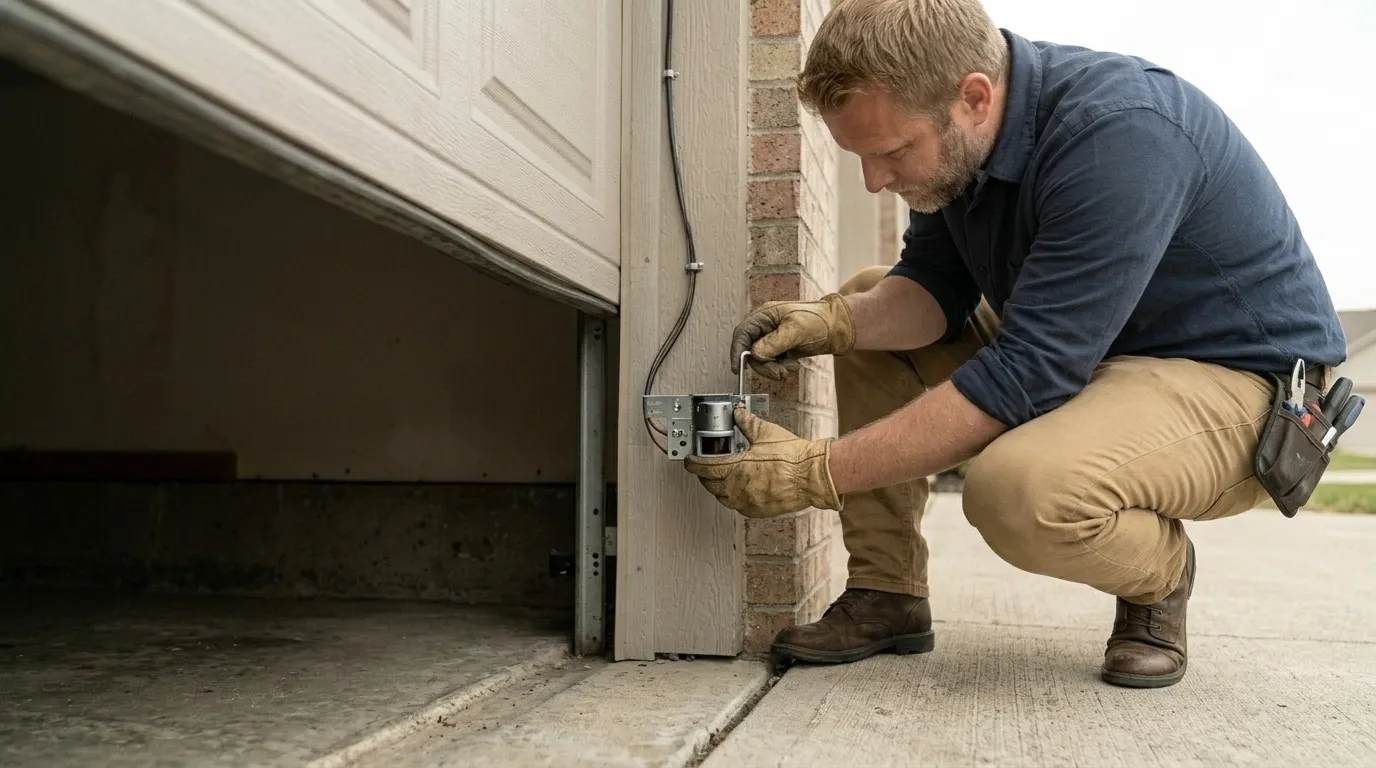
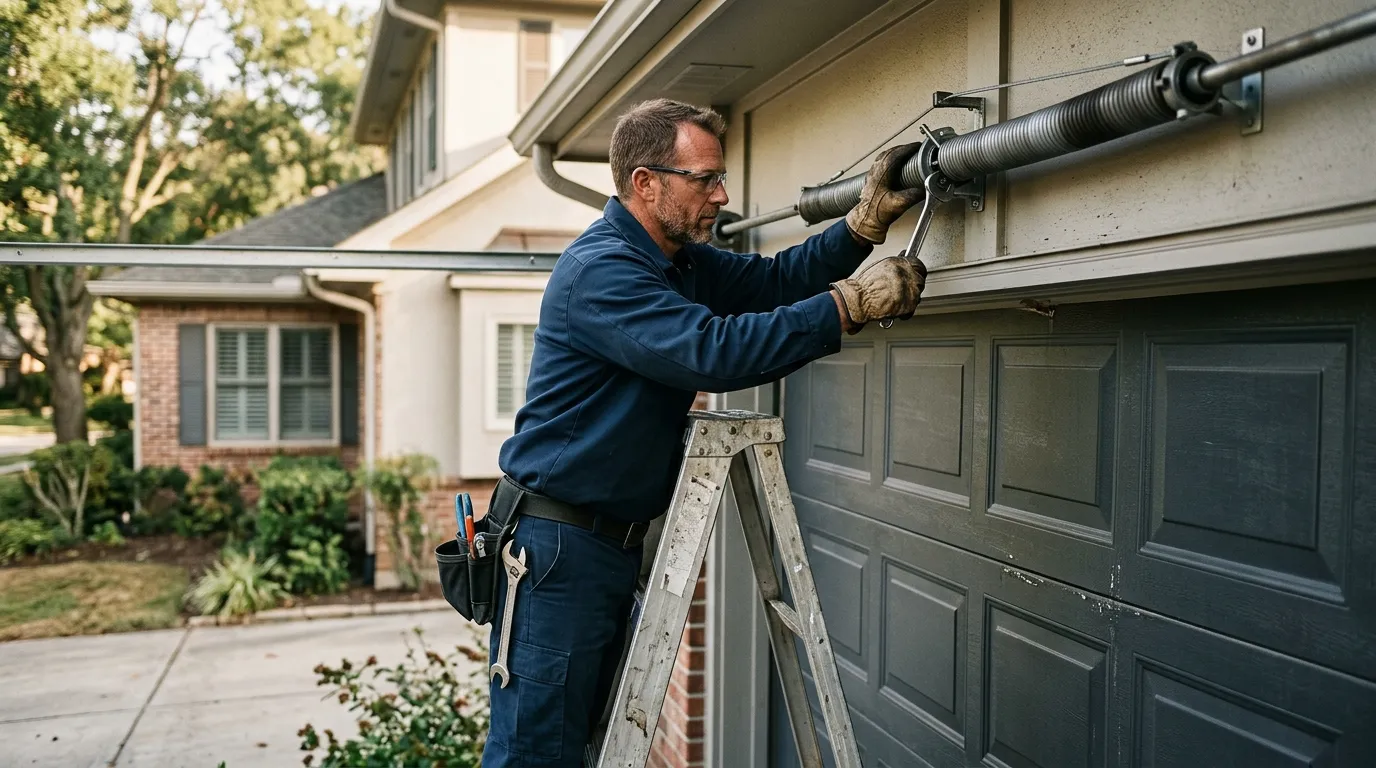
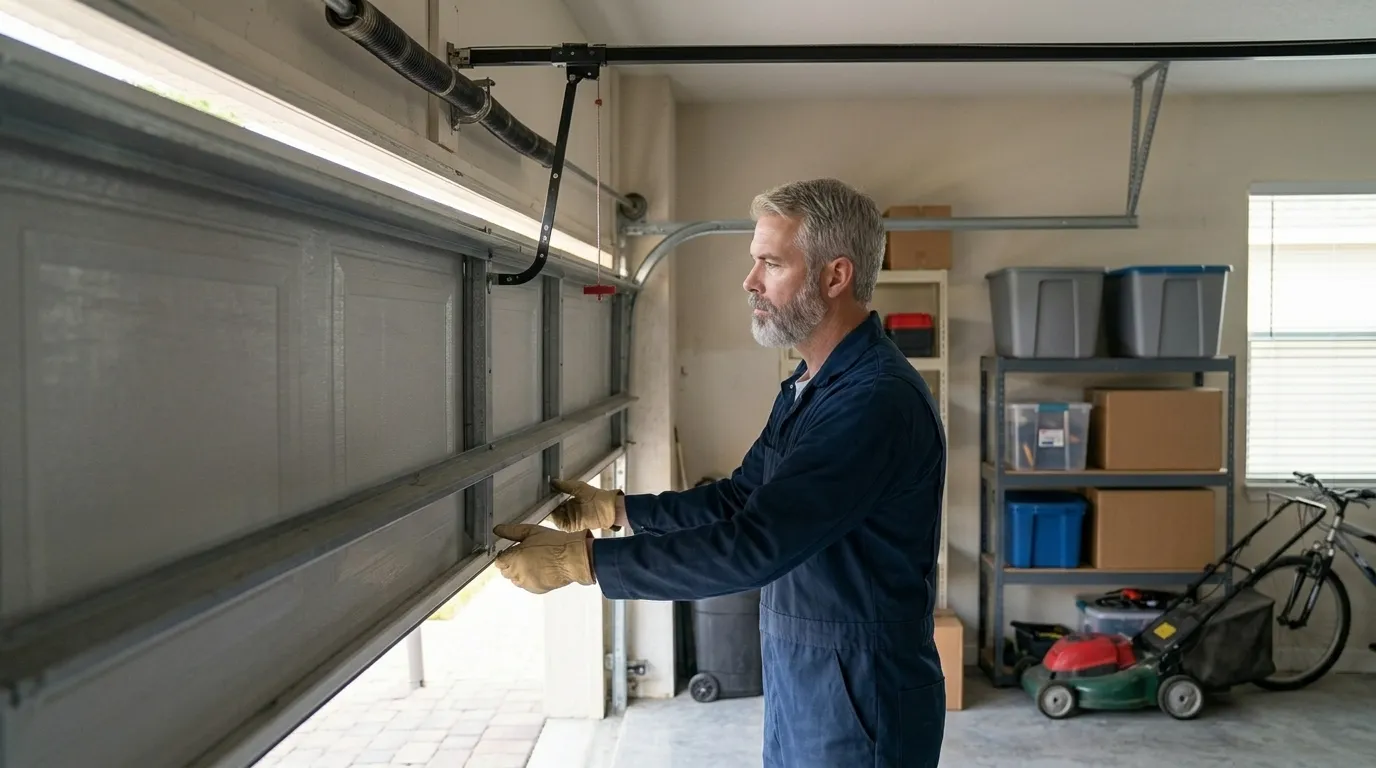
Carnegie's median house went up in 1952, right in line with the pre-1960 stock that dominates most of this service area. That matters more than it sounds like it should. A door built or replaced in the decades after a house like that was framed is almost always sized for openings that don't match today's standard stock doors - narrower jambs, lower headroom, sometimes a single-car bay where a builder later tried to squeeze in a wider door. We see torsion springs mounted on brackets that haven't been made in years, and tracks bent from decades of manual doors getting converted to openers without anyone re-squaring the hardware.
The cold-severe climate band this area sits in adds its own wear pattern on top of the age issue. Steel doors from that era don't have the thermal breaks or weatherstripping channels that later doors do, so cold snaps make old rollers brittle and old cable ends corrode faster at the drum. None of this is a Carnegie-specific defect - it's what happens when 1950s-era hardware meets Western Pennsylvania winters for seventy-plus years. We carry parts for both the old torsion setups and the newer galvanized standard, because on a street like this you genuinely don't know which one you'll find until the door's open.
The Calls We Get From Here
Most of what comes in from Carnegie is spring failure on doors that have never been replaced, plus opener units struggling to lift panels that have picked up moisture weight over the decades. With 4,266 households in the area and a median income of $62,327, we get a fair number of calls where the homeowner wants an honest read on repair versus replace rather than an automatic upsell - and on doors this old, sometimes replacement really is the better math once you add up spring, cable, and roller work separately.
We also get calls tied directly to the cold: torsion springs that let go on the first hard freeze of the season, and openers that start grinding once temperatures drop and old lubricant thickens. That's consistent with the cold-severe climate rating for this whole service area, not something unique to one street, but it's real and it's predictable enough that we stock the parts for it.
One honest limit: if a spring or panel is a discontinued size from that era, we may need to order it, and that can add a few days to the job. We'll tell you upfront if that's the case rather than promise a same-day fix we can't back up.
Getting Here
We run out of Pittsburgh, and Carnegie sits about 6 miles out, one of several communities on this side of the service area alongside places like Crafton, Green Tree, and Bridgeville that fall in the same general distance range. We don't keep a truck or a depot in Carnegie itself - every job here is a trip out from the shop, so if you're weighing us against someone who claims to be based locally, ask what that actually gets you versus a company that shows up with the right parts because it's seen this housing stock before.
Being 6 miles out doesn't change what's in the truck. It changes when we can get there, and we're upfront about that rather than promising a window we can't hold to.
This Area's Housing
Across the wider service area, houses run from 1938 up through 2014, but Carnegie's own median build year of 1952 puts it solidly in the older half of that range - closer to the earliest wave than the newest. That means original openings sized for doors that don't exist on shelves anymore, and it means a housing stock that's had, on average, seventy years to accumulate the small structural shifts - settling foundations, shifted jambs - that throw a garage door track out of square.
With 4,266 households in the area, that's a lot of doors built to a mid-century standard now running openers and hardware that came along decades after the house did. It's not a problem unique to this town, but the concentration of that era here is higher than in newer-built parts of the broader service area, which runs all the way to houses built as recently as 2014. When we quote a job here, we're pricing for 1950s framing and openings first, and treating anything newer as the exception rather than the rule.
How it works
From “it’s stuck” to “it’s fixed”
01
Tell us what’s wrong
Describe the symptom - won’t open, loud bang, opener runs but the door won’t move.
02
On-site diagnosis
A technician tests the door under power and by hand and finds what actually failed.
03
Clear, up-front plan
You get the fix that’s needed and what drives the cost - before any work starts.
04
Repaired & tested
The repair is done, the door is set true and tested, and the work area left clean.
Serving Pittsburgh, PA - tell us what your door’s doing and we’ll take it from there.
No. We run out of Pittsburgh and travel to Carnegie for every job, about 6 miles each way. We're upfront about that distance rather than implying a local depot we don't have.
Why do so many doors in Carnegie need spring replacement?
A lot of the housing here dates to around 1952, and steel torsion springs from or matched to that era have had decades of cold-severe winters to fatigue. Combined with age, cold snaps are often what finally breaks a spring that was already near the end of its life.
Is it worth repairing an old door instead of replacing it?
Sometimes, sometimes not. If the opening is an odd mid-century size and multiple parts are failing at once, the repair costs can stack up close to a replacement door. We'll walk you through the actual numbers before you decide, not just push a repair.
Can you get parts for older, discontinued hardware?
Often yes, but not always same-day. Some torsion brackets and panel sizes from the 1950s aren't stocked anymore, and we may need to order them, which can add a few days to the job. We'll tell you upfront if that applies.
Ready to get your garage door sorted?
Tell us what it’s doing and where you are in Pittsburgh - we’ll take it from there.