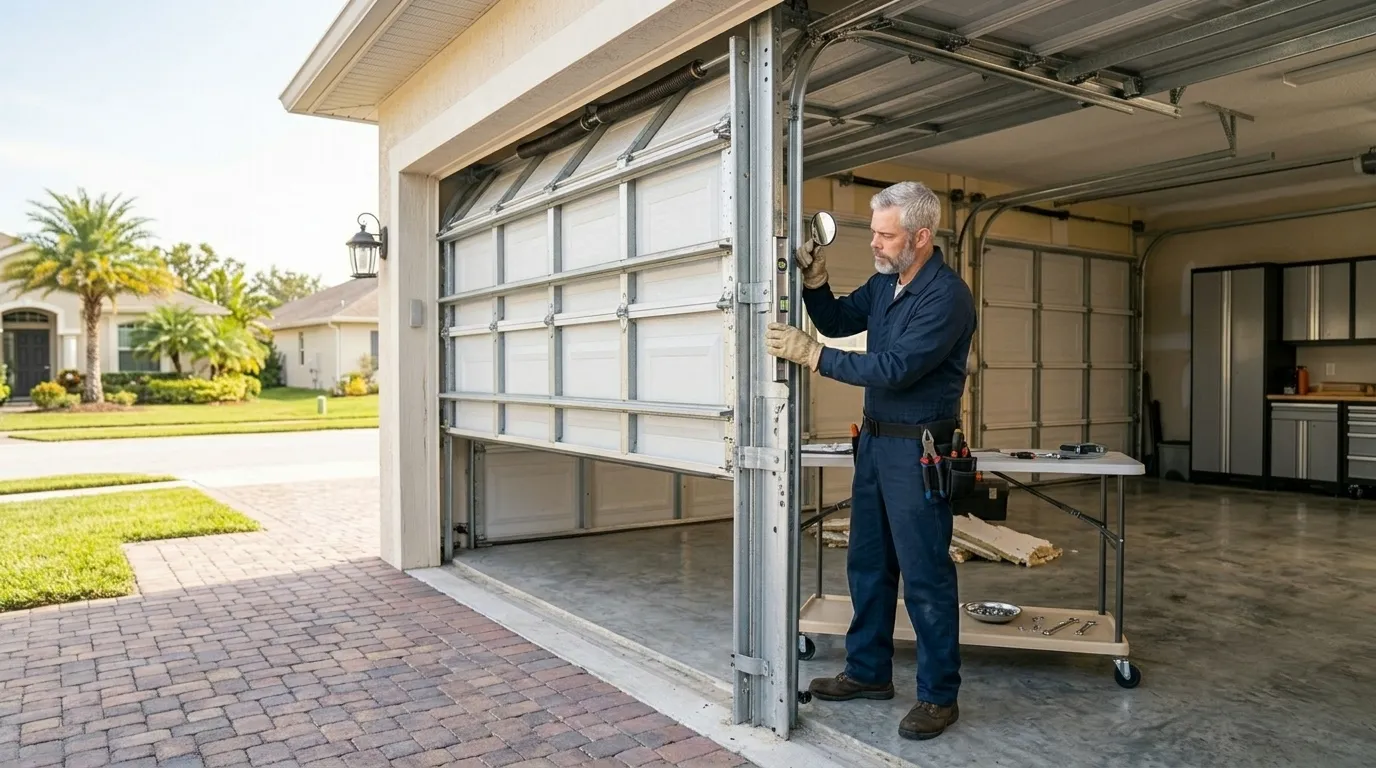
Export homes mostly date to the 1940s, older than the wider Pittsburgh housing stock. We travel from Pittsburgh to fix the doors and hardware that era left behind.
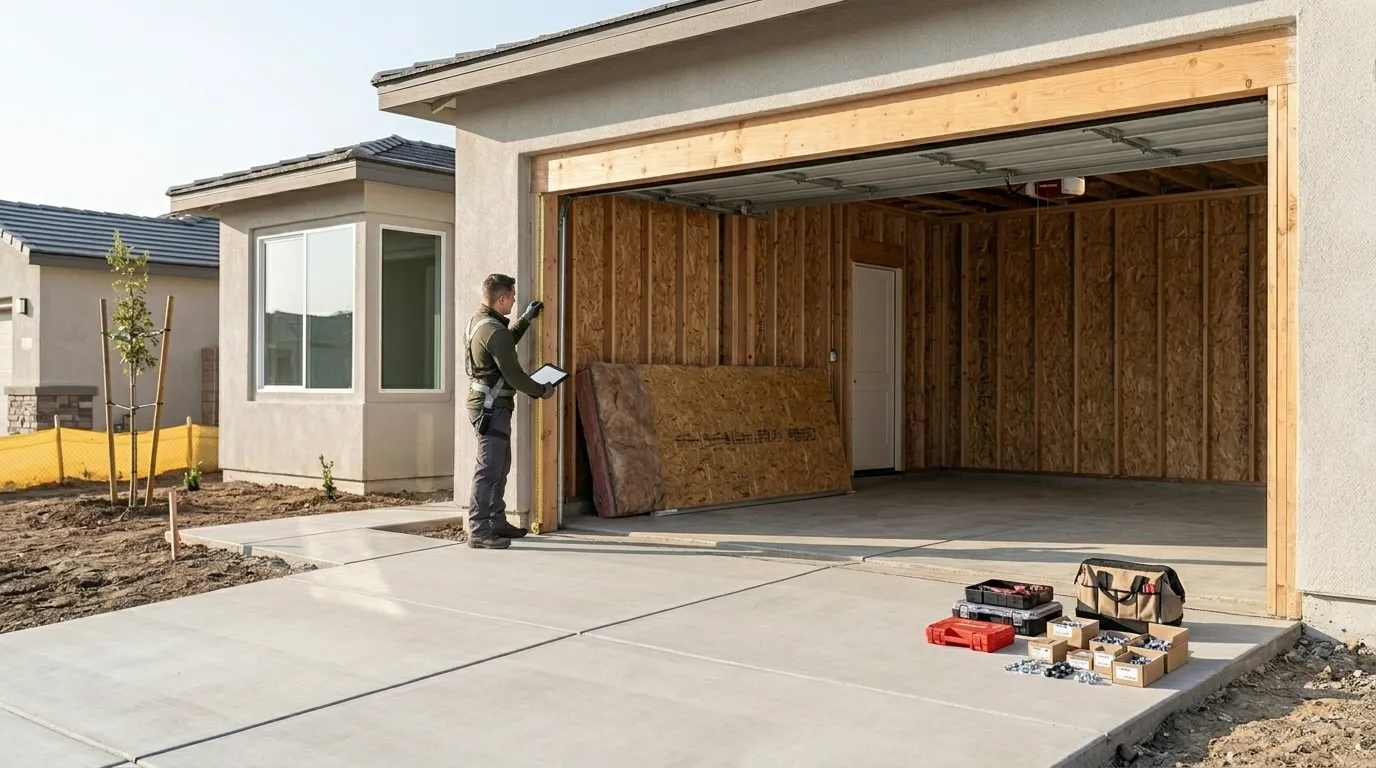
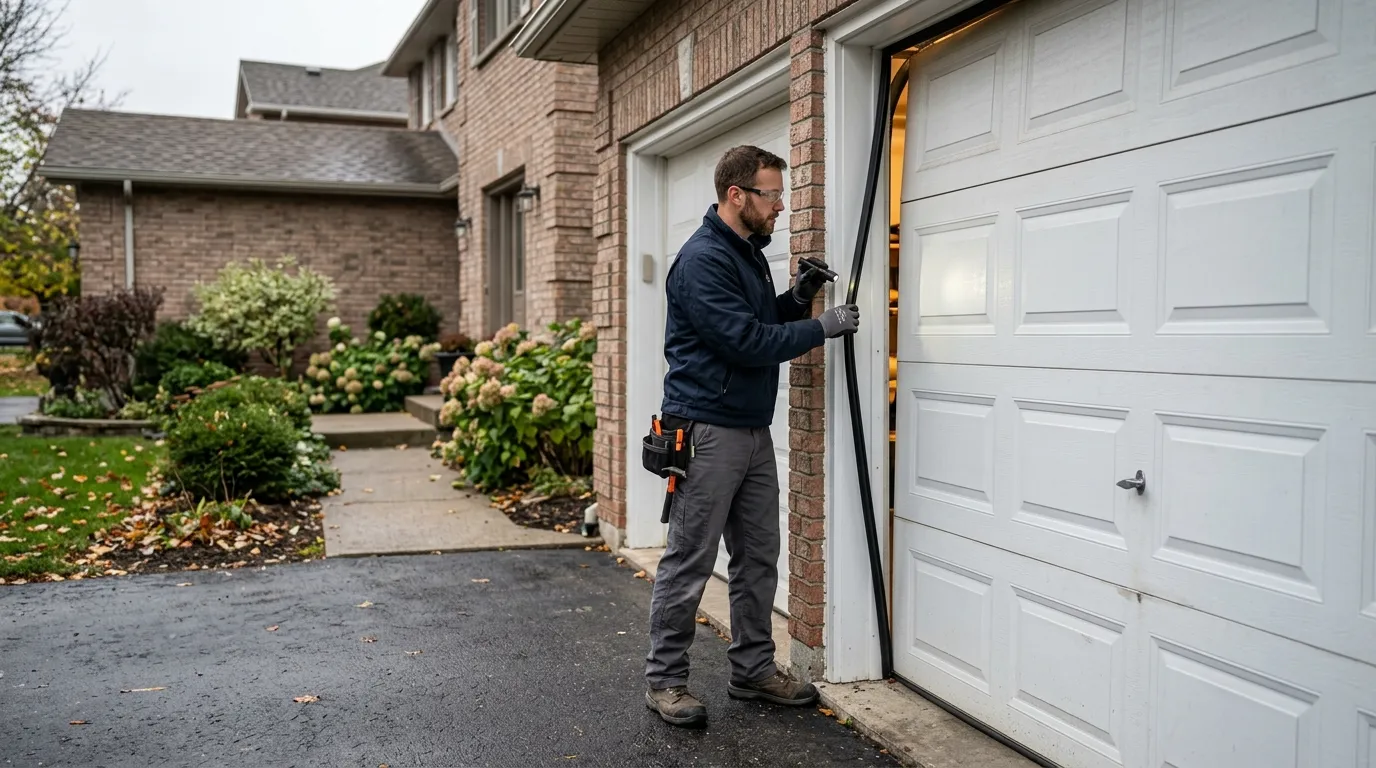
Export's houses cluster around 1946, which is a decade or more ahead of the median build year for the wider Pittsburgh service area. That gap matters more than it sounds. A door hung in the late 1940s was built for a garage opening designed before double-car bays were standard, and a lot of those original openings in Export never got widened when owners swapped in a modern door. What you end up with is a newer door panel mounted on an older frame, sometimes with jamb brackets that were never square to begin with.
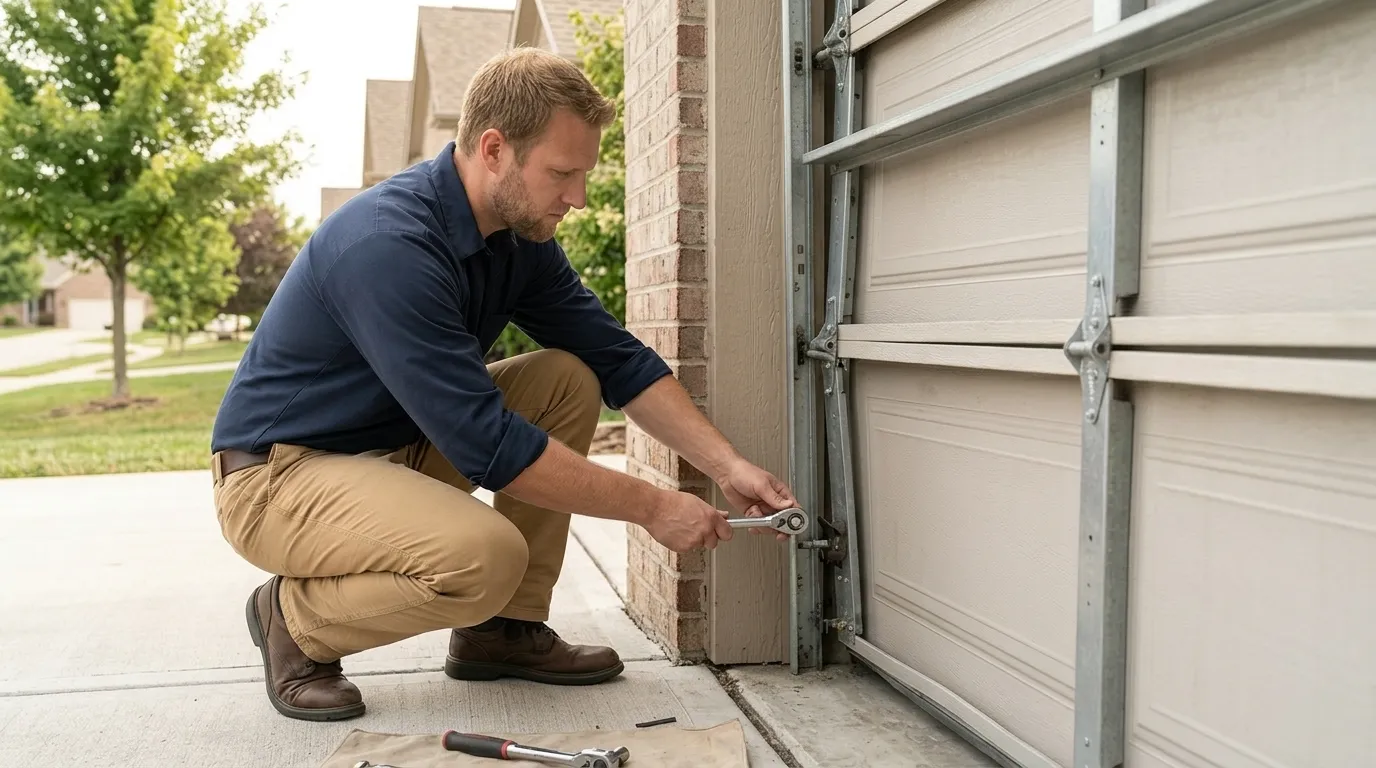
The cold matters here too. This region sits in a severe cold climate band, and a door built to a 1940s opening doesn't seal the way a door built to current weatherstripping standards does. Gaps at the bottom corners let wind through, and in a garage that was never meant to hold a car in winter, that draft finds its way into the house. We see it most on the framing side: shims that have compressed over decades, hinges pulling loose from wood that's dried out, and track brackets set at slightly different heights because the opening itself was never quite plumb.
None of this means the door is a lost cause. It means the fix usually starts with the frame, not the hardware.
The Calls We Get From Here
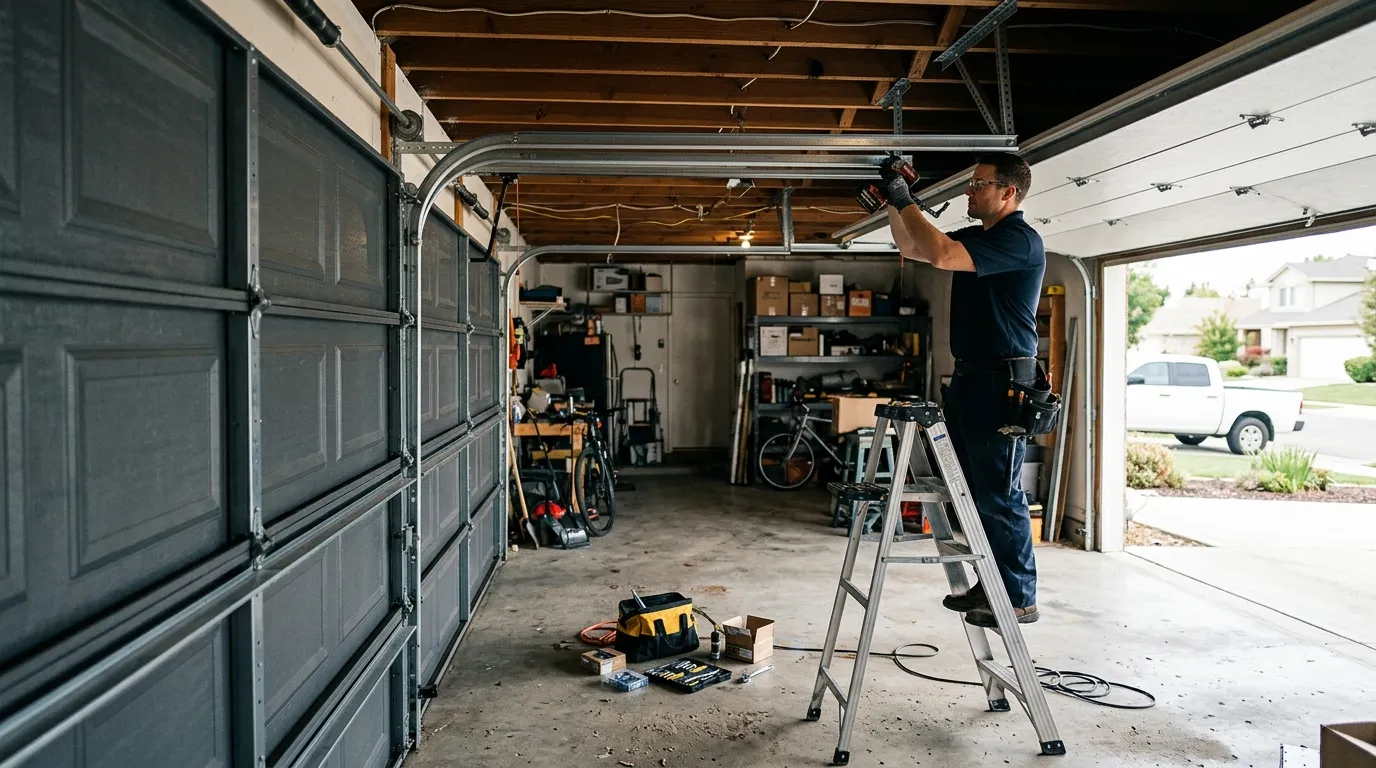
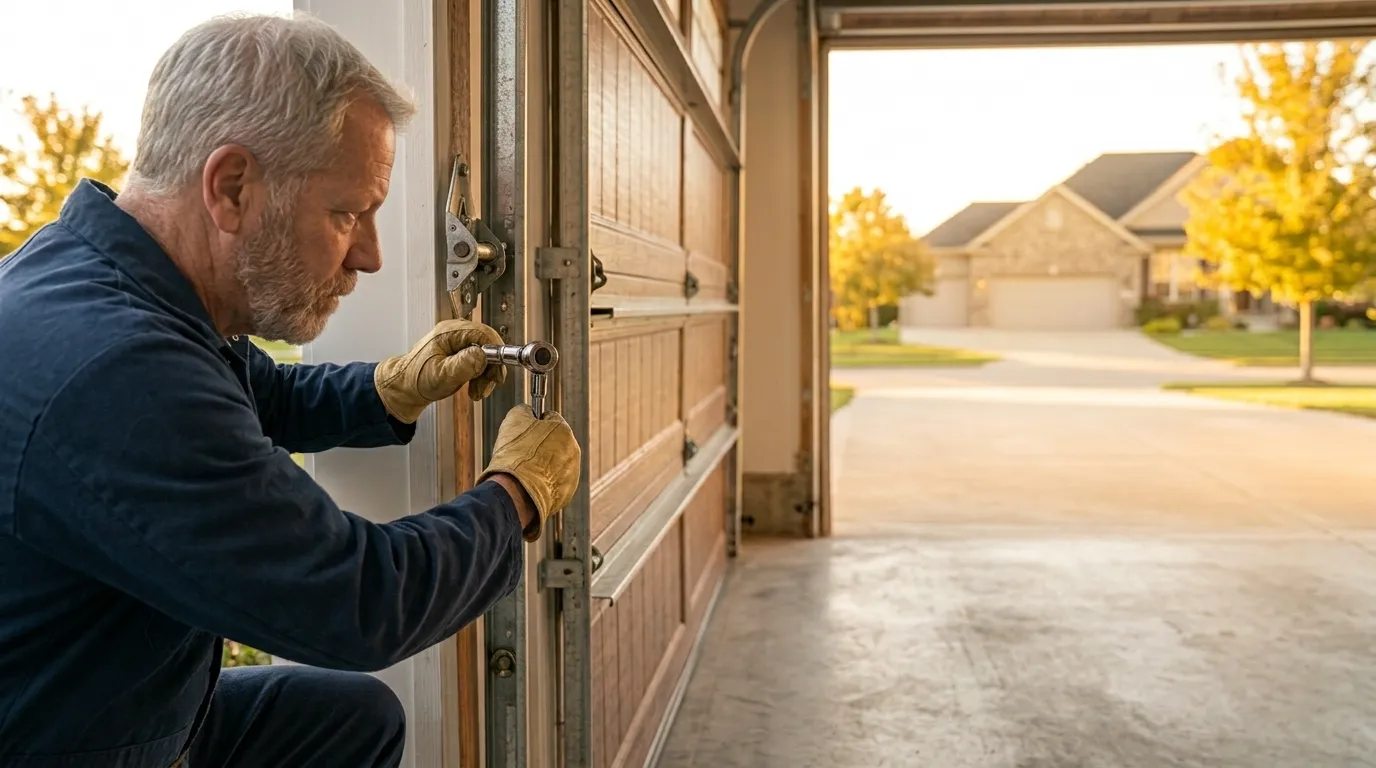
Given the age of the housing, the calls from Export skew toward hardware that's original or close to it. Torsion springs on a door installed decades ago are past any reasonable service life, and when one goes, it usually takes the day with it - the door won't lift, or it slams down if someone's already got it partway open. We also get calls about rollers that have worn oval instead of round, which makes the door sound like it's grinding even when the opener motor is fine.
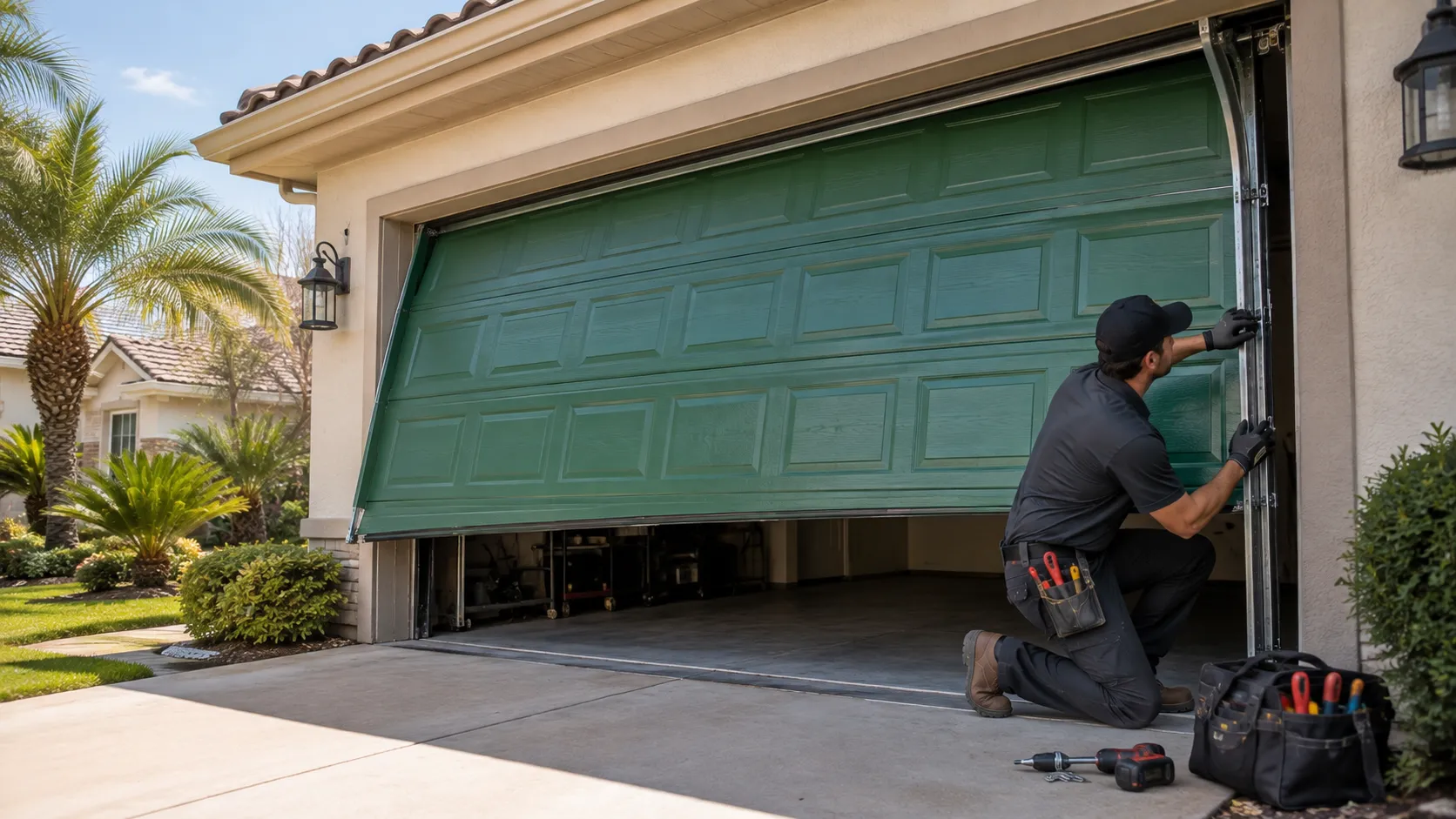
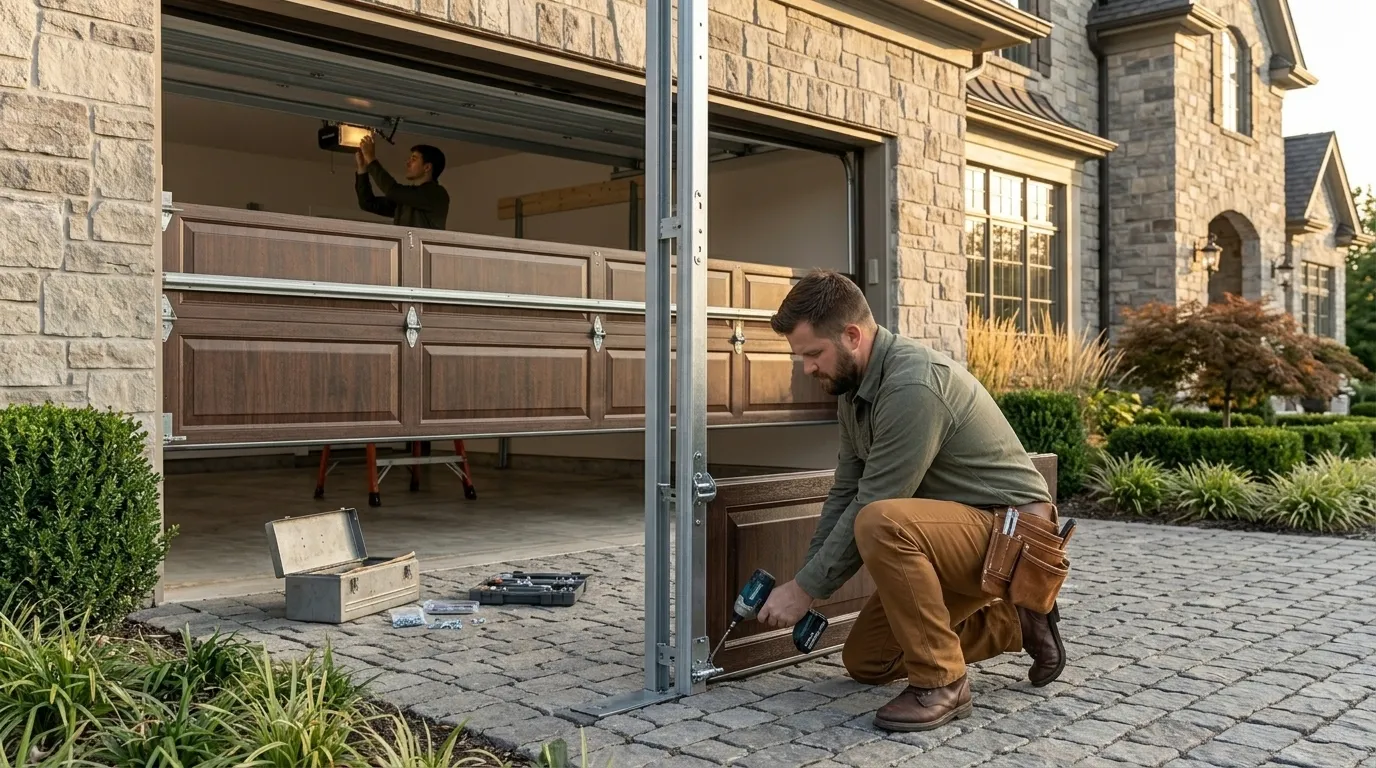
On the newer end, some Export homes have had a replacement door put on an old frame, and those calls are different: the door binds partway through its travel because the track was never re-set to match the new panel's weight, or the opener strains because it's lifting a heavier insulated door than the old springs were sized for.
We don't do panel painting or cosmetic touch-up work, and we won't pretend a door with a cracked bottom panel and rusted-through hinges is worth patching instead of replacing. Some of what's out there in Export has earned retirement, and we'll tell you that straight rather than bill for a repair that won't hold.
Getting Here
Export sits about 19 miles out from our base in Pittsburgh. We don't keep a truck stationed in Export - every job here means a drive out from the city, and we're upfront about that because it affects scheduling more than it affects the work itself. Once we're on site, the job runs the same as it would closer in.
The honest tradeoff is that same-day availability depends on the day's route, not on how close you are to a depot that doesn't exist here. If you're weighing us against someone based closer to Export, that's a fair thing to weigh. What we bring is the same crew and the same parts stock every time, not a different sub depending on who's nearest that week.
This Area's Housing
Export is a small area - around 435 households - and that median build year of 1946 puts most of the housing stock ahead of the broader Pittsburgh service area's 1955 median. Median household income here runs about $55,208, noticeably below the $72,020 median across the wider service area, which tends to track with what we see on site: more owners holding on to original hardware longer, and more repair calls instead of full replacements, simply because a full teardown-and-rebuild isn't always the first move when the budget's tighter.
Across the full Pittsburgh service area there are roughly 279,154 households and 155,574 owner-occupied houses, so Export is a small slice of that total - but it's a distinct one. A door here is more likely to be original to the house or a direct swap onto an original frame than in newer-built pockets of the region, and that's the detail that should drive any repair-versus-replace decision, not just what the door looks like from the driveway.
How it works
From “it’s stuck” to “it’s fixed”
01
Tell us what’s wrong
Describe the symptom - won’t open, loud bang, opener runs but the door won’t move.
02
On-site diagnosis
A technician tests the door under power and by hand and finds what actually failed.
03
Clear, up-front plan
You get the fix that’s needed and what drives the cost - before any work starts.
04
Repaired & tested
The repair is done, the door is set true and tested, and the work area left clean.
Serving Pittsburgh, PA - tell us what your door’s doing and we’ll take it from there.
Likely, yes. Export's housing centers on 1946, noticeably older than the median across the broader Pittsburgh service area. If your door and opener are original to the house, they're pushing eighty years old, which is well past normal service life for springs, cables, and rollers even if the panel itself still looks fine.
Do you have a crew based in Export?
No. We work out of Pittsburgh, about 19 miles away, and travel to Export for every job. There's no local depot here, so scheduling depends on the day's route rather than proximity. Once we're on site, the repair itself is handled the same as any closer job.
Why does my door bind partway through opening?
On older Export openings, this is often a frame issue rather than a door issue - decades of settling can throw brackets slightly out of level. If a newer door was installed on an original 1940s-era opening without resetting the track, that mismatch causes binding too. We check the frame before touching the hardware.
Is it worth repairing an original door instead of replacing it?
Sometimes. Springs, cables, and rollers are worth fixing on a sound panel. But if the bottom panel is cracked or hinges are rusted through, we'll say so - patching a door that's structurally done isn't a good use of your money, even if it's cheaper up front.
Ready to get your garage door sorted?
Tell us what it’s doing and where you are in Pittsburgh - we’ll take it from there.