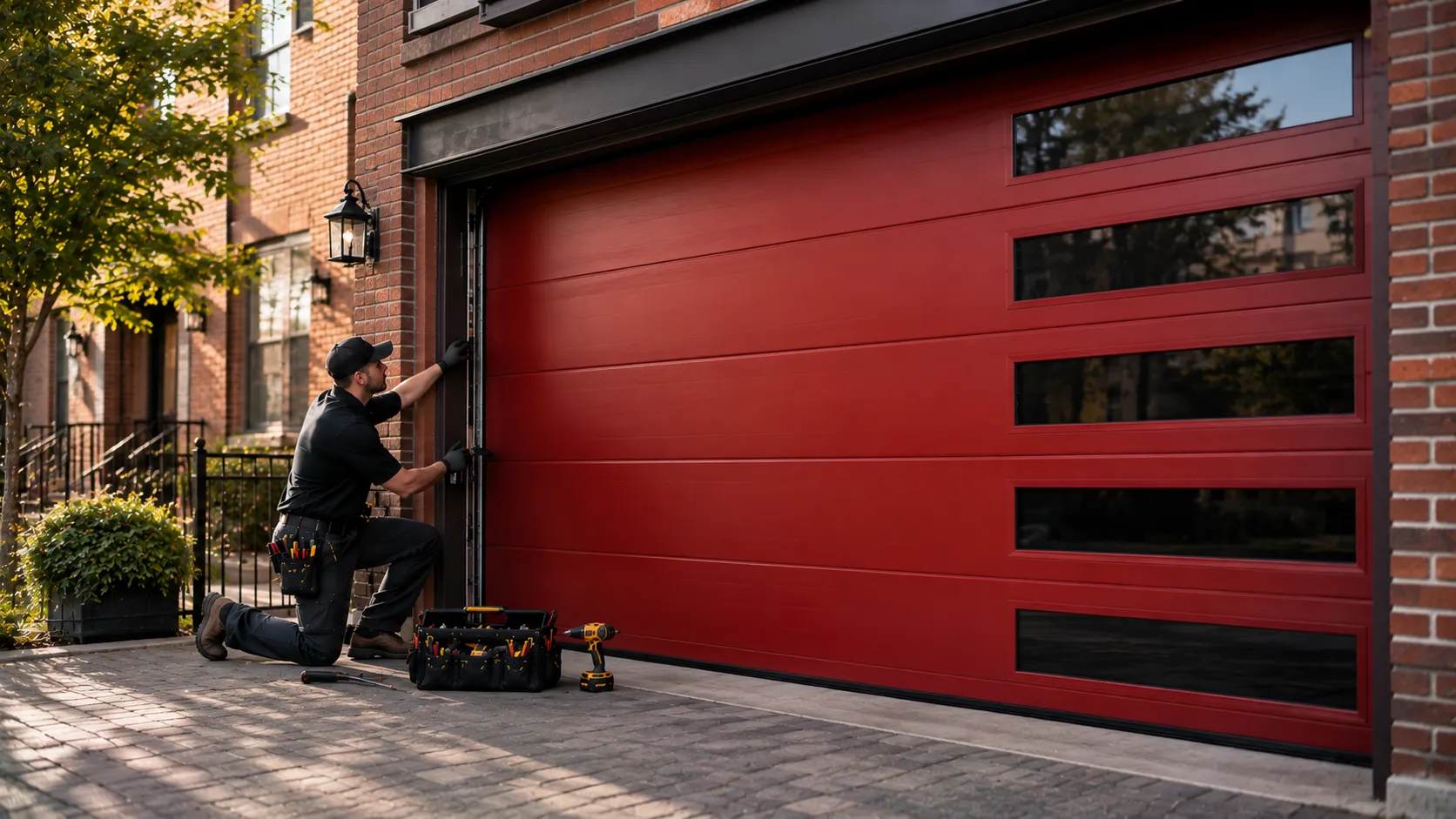
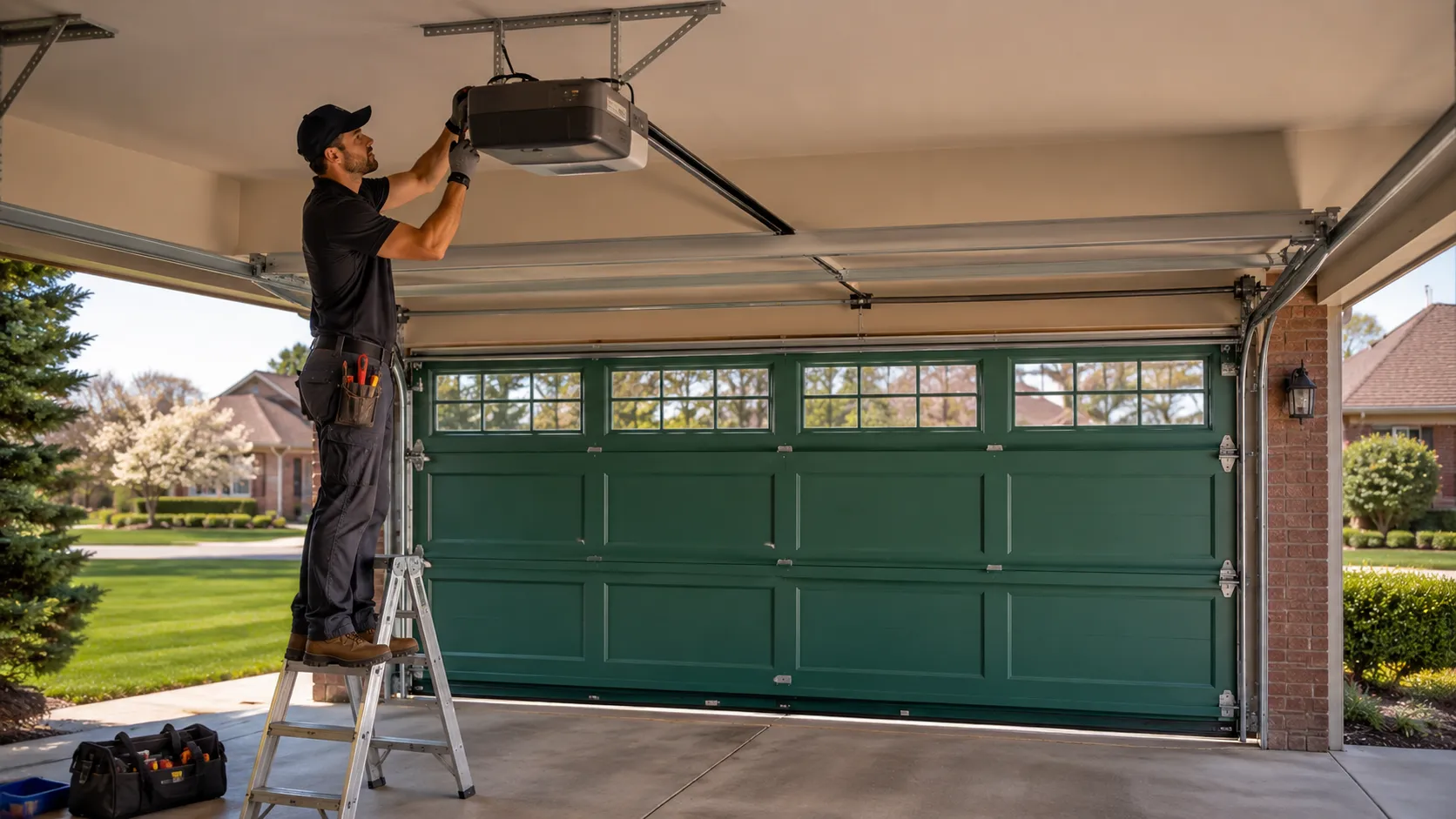
Gastonville homes mostly date to the early 1970s, later than most of our coverage area. We travel from Pittsburgh for spring, opener, and track repairs built for that stock.
Gastonville's housing stock centers on 1971, a good fifteen to twenty years newer than the median build year across the rest of our coverage area. That gap matters more than it sounds like it should. Homes going up in the early 1970s were more likely to get factory-installed torsion spring systems on steel sectional doors, not the older extension-spring setups or one-piece tilt-up doors you find on 1950s stock closer to the city core.
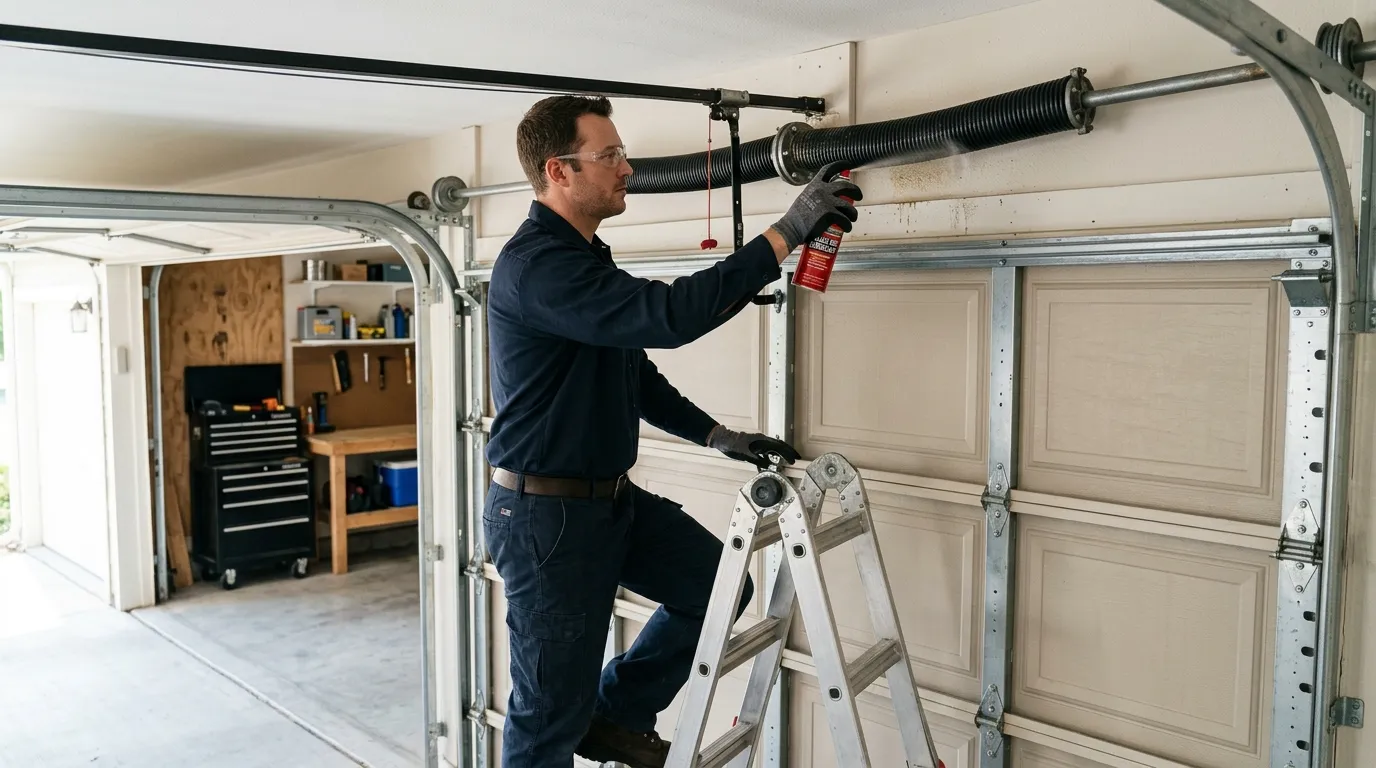
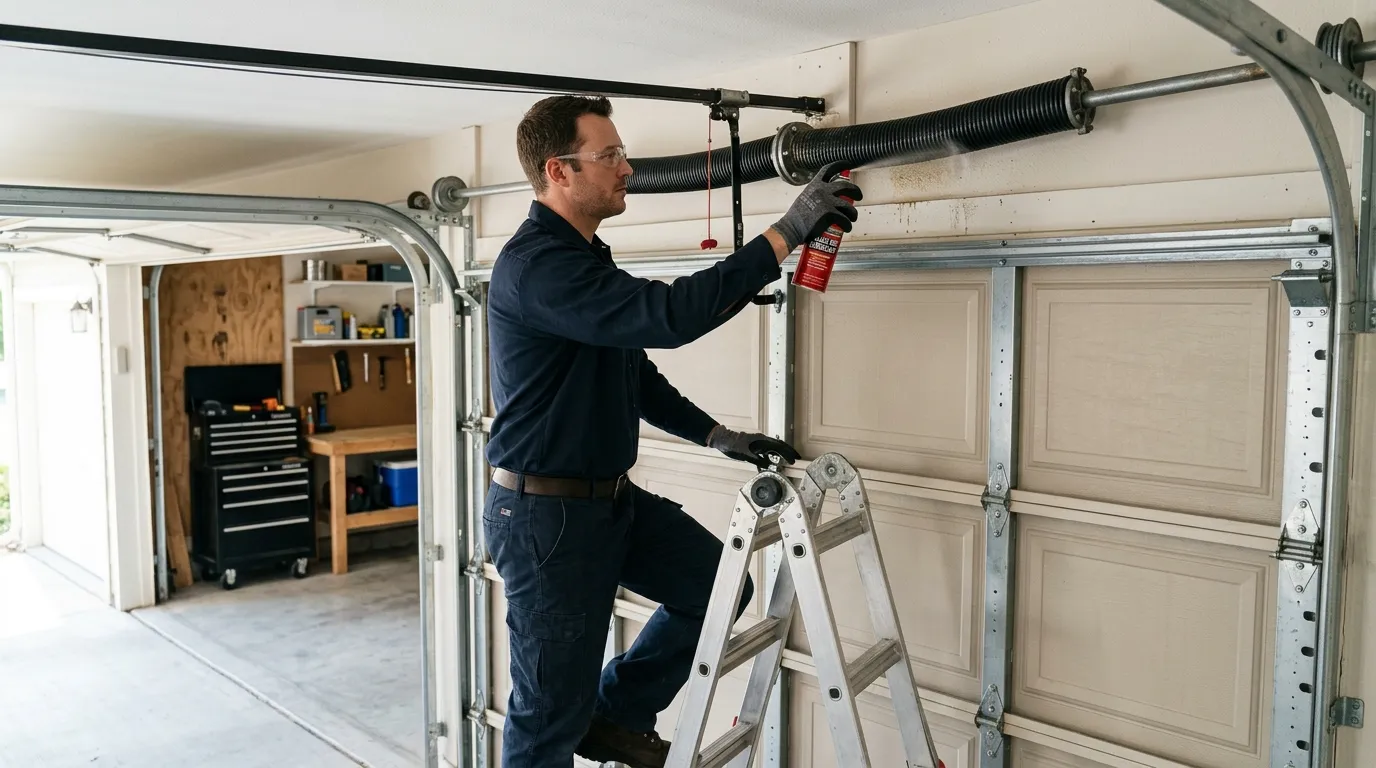
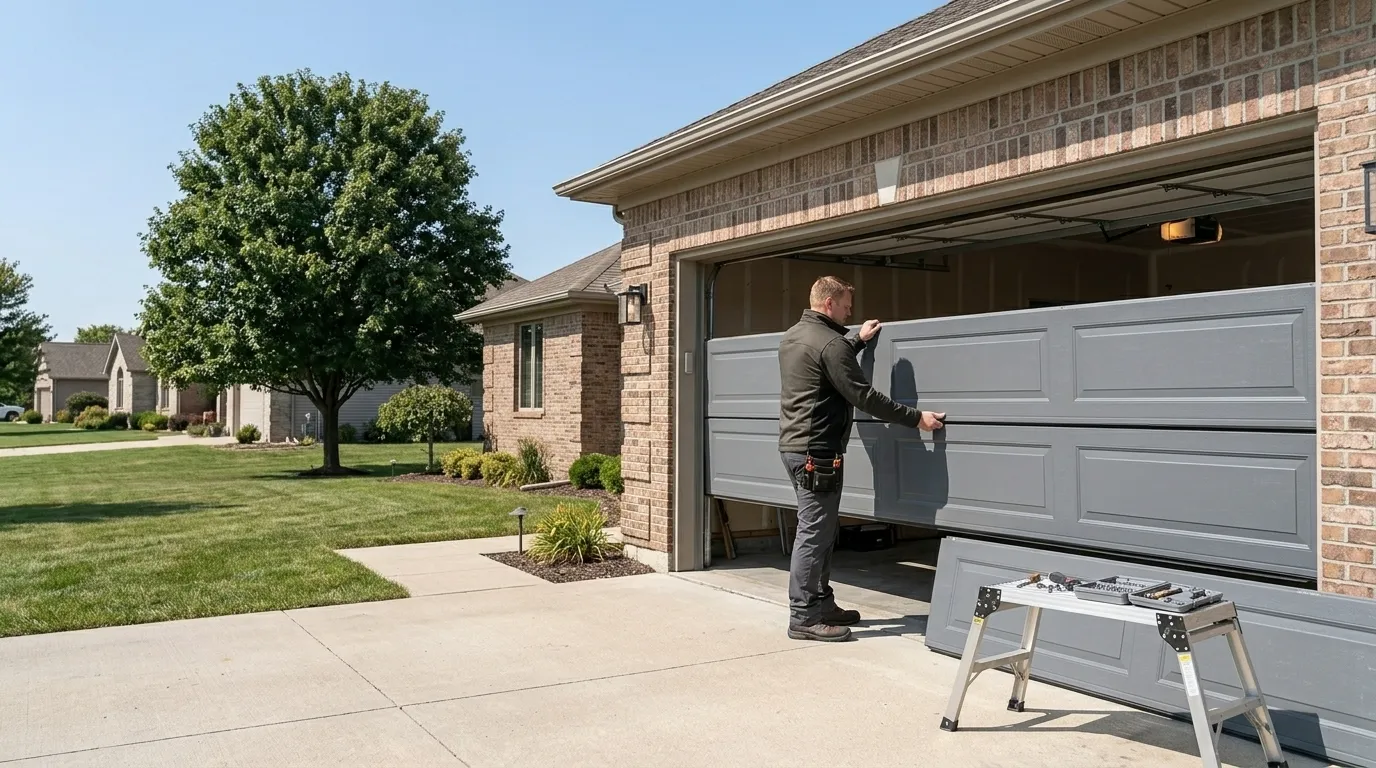
What we actually find on Gastonville calls: torsion springs that have finally worn out after decades of cycles, original steel tracks that have loosened at the wall brackets, and openers from a couple of upgrade cycles ago that are due for a chain or belt swap. We don't see nearly as many of the old side-mounted extension spring jobs here that we do in the older pockets of the service area - the housing just wasn't built that way to begin with.
One honest limitation: if your door is original to a 1971 build and the torsion spring has never been replaced, we're not going to try to patch it. At that age the drum and cable are usually worn past the point where a spring swap alone is a safe fix, and we'll say so before we start.
The Calls We Get From Here
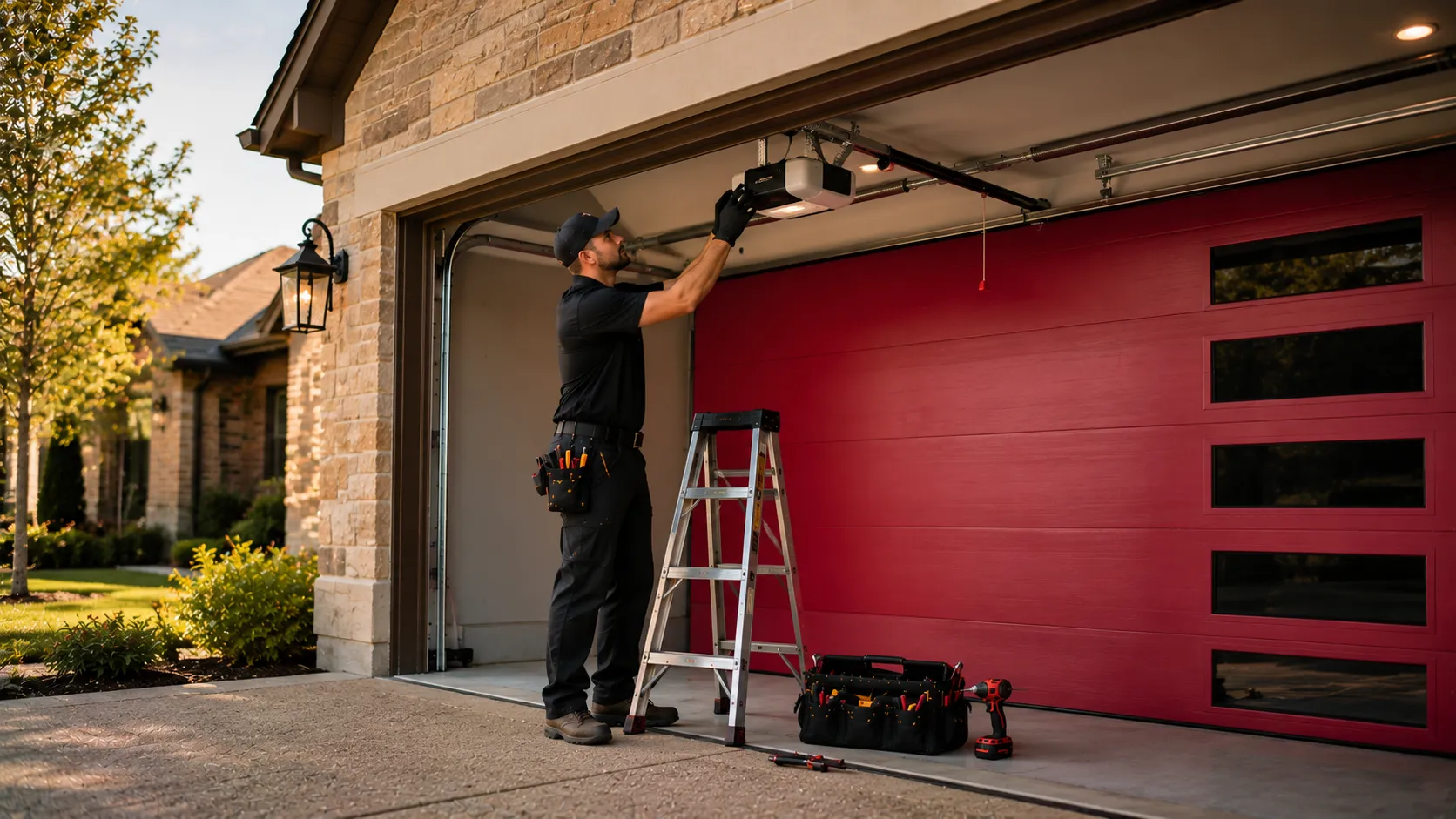
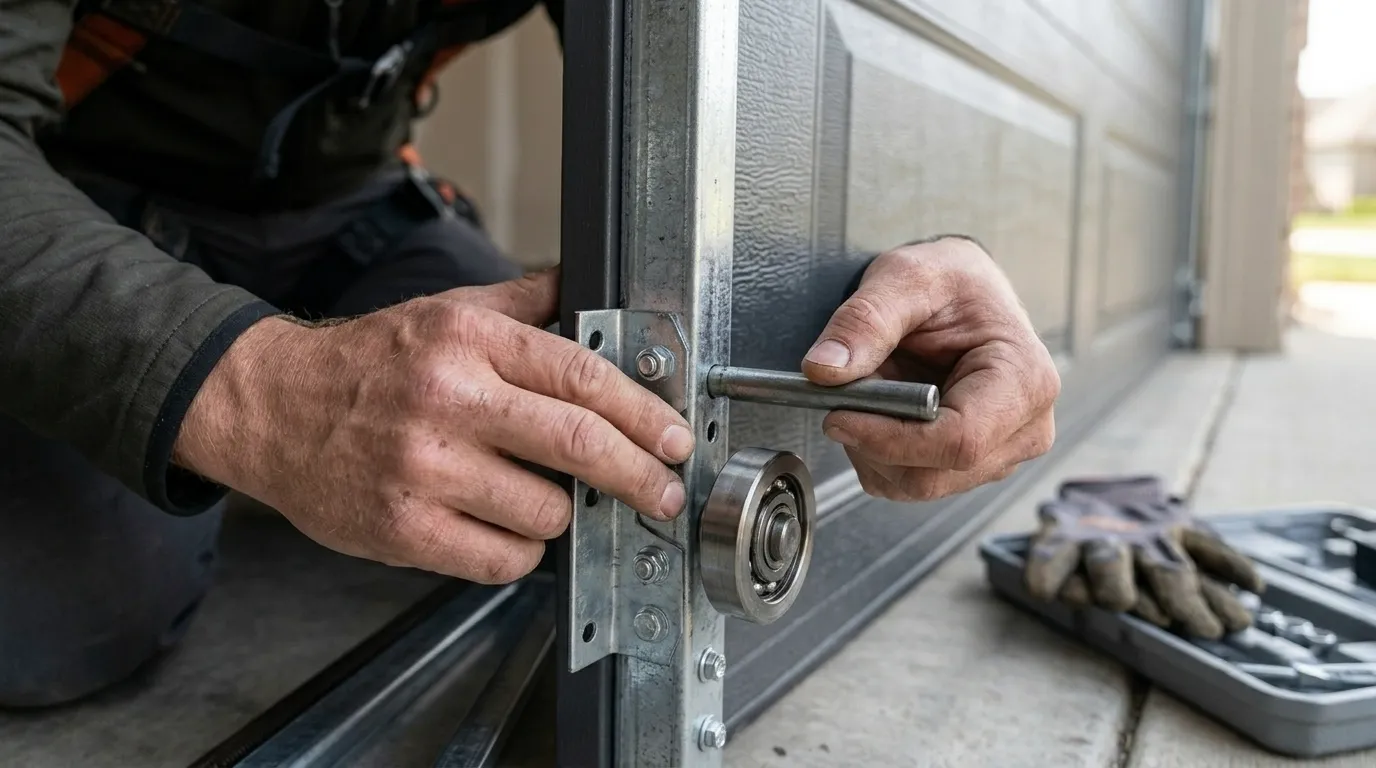
Most of what comes in from Gastonville falls into a narrow band: torsion springs at or past their rated cycle count, openers original to a 1980s or 1990s retrofit that are finally giving out, and rollers that have worn grooves into steel tracks after years of a door running slightly out of alignment. Given the area's household income sits around $78,438, a step above the roughly $72,020 median across the wider service area, we also see more calls for full opener upgrades rather than patch repairs - homeowners here are more likely to replace a dying opener with a quieter belt-drive unit than nurse the old chain-drive along.
The cold winters this region gets - and this area sits squarely in that same severe cold climate band as the rest of our coverage - mean steel tracks contract and springs lose tension faster than they would somewhere milder. That shows up as doors that reverse partway up on a cold morning, or a spring that finally lets go on the first hard freeze of the season. It's a predictable pattern, not a mystery, and it's the same pattern we watch for on every winter call out this way.
Getting Here
Gastonville sits about 12 miles out from Pittsburgh, farther than most of the areas we typically run. We don't keep a depot or a crew stationed in Gastonville - every job here means a truck coming out from Pittsburgh, same as it does for the rest of our coverage area.
That distance doesn't change how we handle the job once we're on site, but it's worth being upfront about: a same-day slot on a busy day is more likely to go to a job closer to the truck's route, and we'd rather tell you that plainly than promise a window we can't guarantee. If your door is stuck open or the spring has let go and the car's trapped inside, say so when you call - that's the kind of thing that gets moved up regardless of distance.
This Area's Housing
With roughly 1,290 households, Gastonville is one of the smaller pockets in our coverage area, and it reads differently than the older, denser blocks closer to Pittsburgh. A 1971 median build year puts most of this housing stock a full generation past the 1955 median for the broader service area, which covers close to 280,000 households and 108 named areas ranging from homes built in the late 1930s up through recent construction.
What that means in practice: fewer of the original one-piece wood doors and side-mounted hardware that show up in pre-1960 neighborhoods, and more steel sectional doors on torsion springs that are now reaching 40-plus years old. Garage doors don't usually last that long without at least one full spring and cable replacement, and openers from that era are well past any reasonable service life. If your door and opener are both original to the house, it's worth having both looked at together rather than waiting for the spring to fail first and the opener to follow a year later.
How it works
From “it’s stuck” to “it’s fixed”
01
Tell us what’s wrong
Describe the symptom - won’t open, loud bang, opener runs but the door won’t move.
02
On-site diagnosis
A technician tests the door under power and by hand and finds what actually failed.
03
Clear, up-front plan
You get the fix that’s needed and what drives the cost - before any work starts.
04
Repaired & tested
The repair is done, the door is set true and tested, and the work area left clean.
Serving Pittsburgh, PA - tell us what your door’s doing and we’ll take it from there.
Is my garage door original to my house if it was built around 1971?
It's possible but not likely at this point. Steel sectional doors from that era, along with the torsion springs and openers installed with them, are well past normal service life. If you haven't had the spring or opener replaced since the house was built, it's worth an inspection rather than waiting for a failure.
Do you have a crew based in Gastonville?
No. We run out of Pittsburgh and travel to Gastonville and the surrounding area for every job. There's no local depot here, so scheduling depends on the day's route rather than a fixed local response window.
Why do springs seem to fail more in winter here?
This area sits in the same severe cold climate band as the rest of our coverage. Cold makes steel contract and reduces spring tension, so a spring that's already near the end of its cycle count is more likely to let go on a hard freeze morning than in mild weather.
Should I repair or replace an opener from the 1980s or 90s?
At that age we usually recommend replacement over repair. Parts for openers that old are hard to source, and a newer belt-drive unit runs quieter and safer. We'll still look at the specific opener before recommending anything - some are worth one more repair.
Ready to get your garage door sorted?
Tell us what it’s doing and where you are in Pittsburgh - we’ll take it from there.