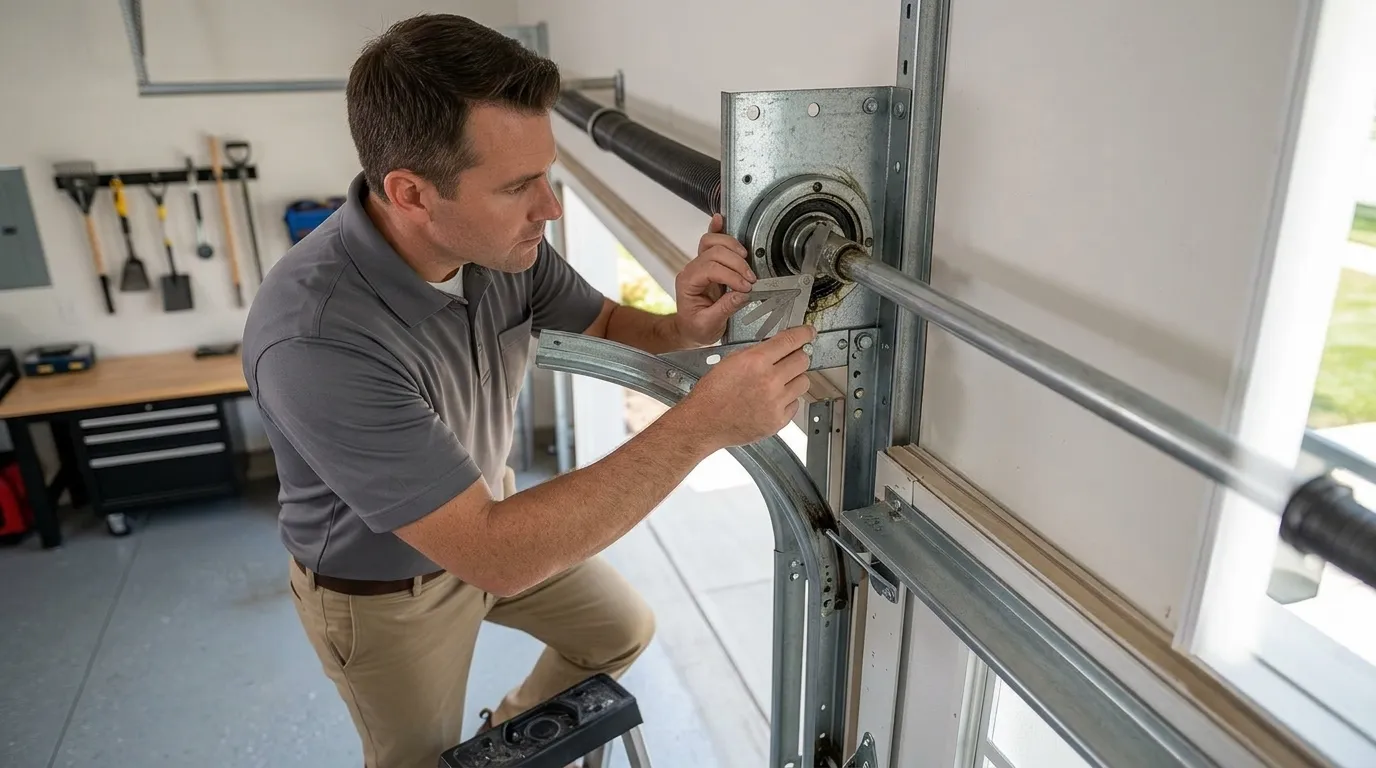
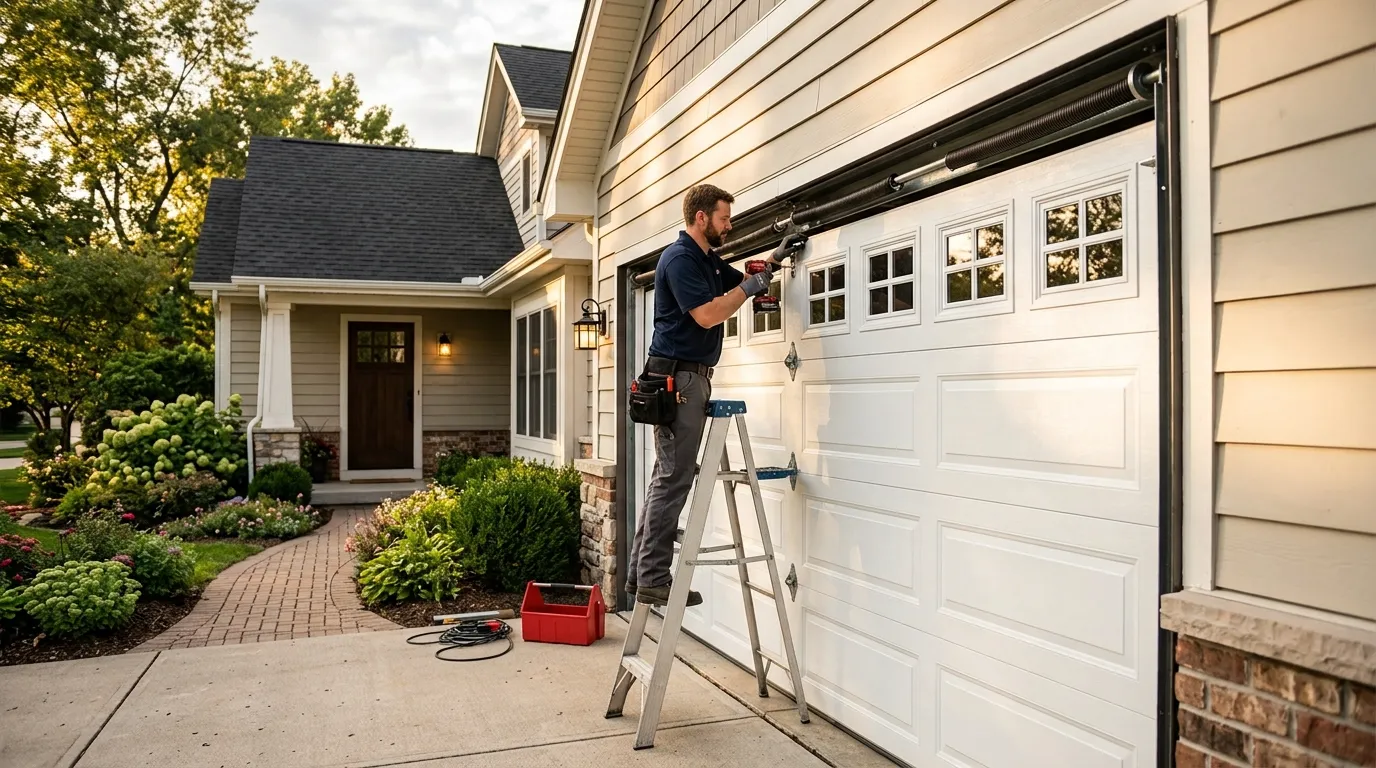
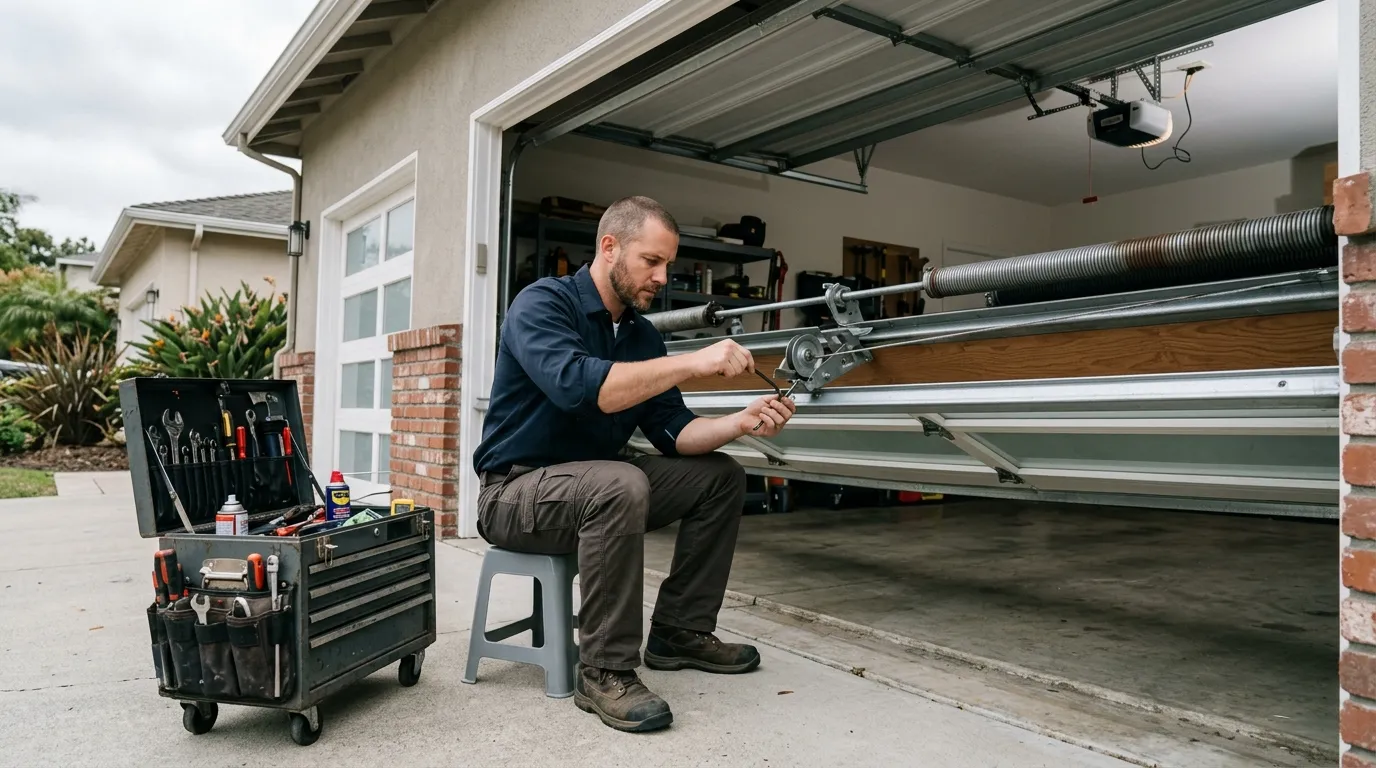
Green Tree's houses mostly went up around 1962, a good seven years newer than the median across our whole coverage area. That gap matters more than it sounds like it should. By the early 1960s, builders here had mostly moved off the old one-piece tilt-up doors and onto sectional doors with torsion springs mounted on a center shaft above the opening - a setup that's easier to service than the side-mounted torsion hardware you find on older stock a few miles away.
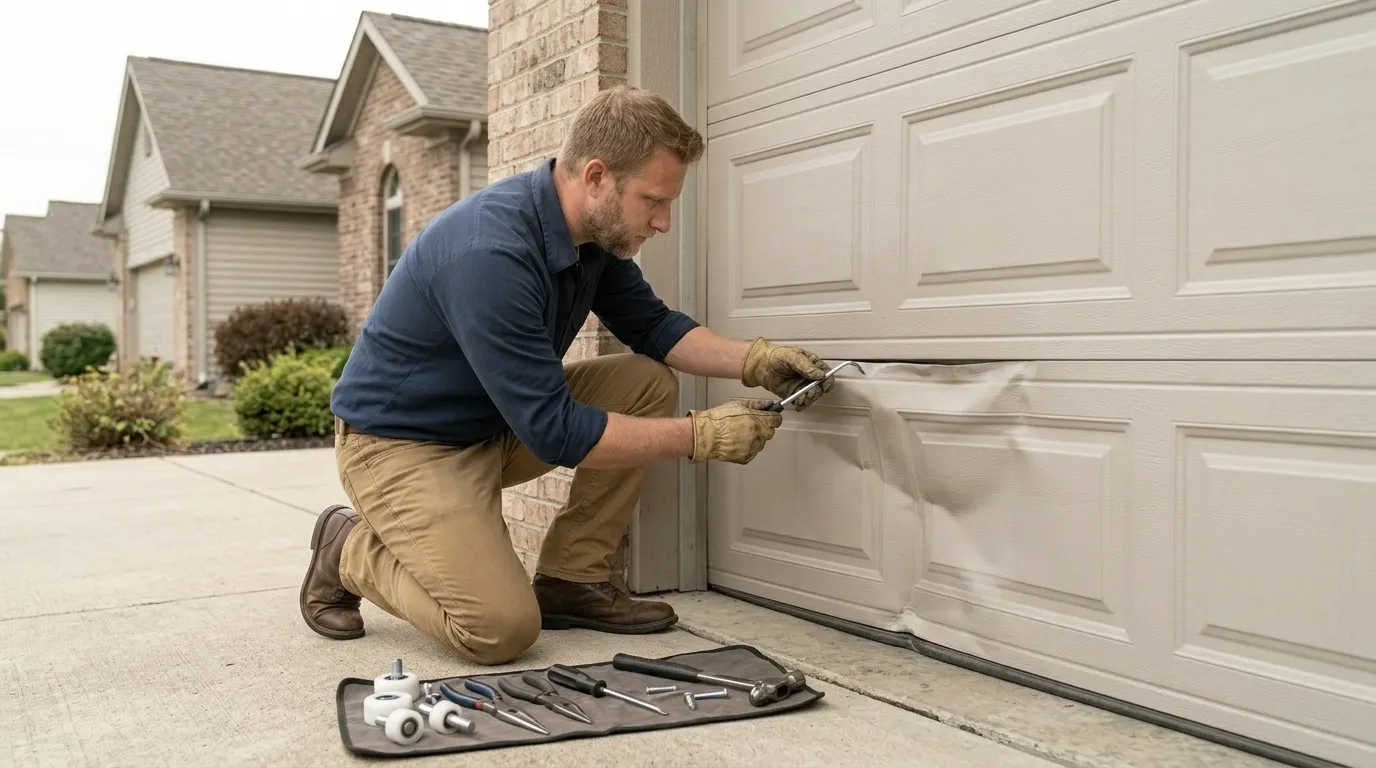
What that means for you: parts availability is usually better, because standard torsion springs and modern-width tracks fit most Green Tree openings without custom work. The failure points we see are the ones you'd expect from a door pushing sixty years old even if it's been replaced once - worn rollers, a stretched extension cable, a center bearing plate that's rusted from Pittsburgh winters. We're not chasing obsolete jamb widths and oddball spring stretch here the way we do on some pre-1940 blocks nearby.
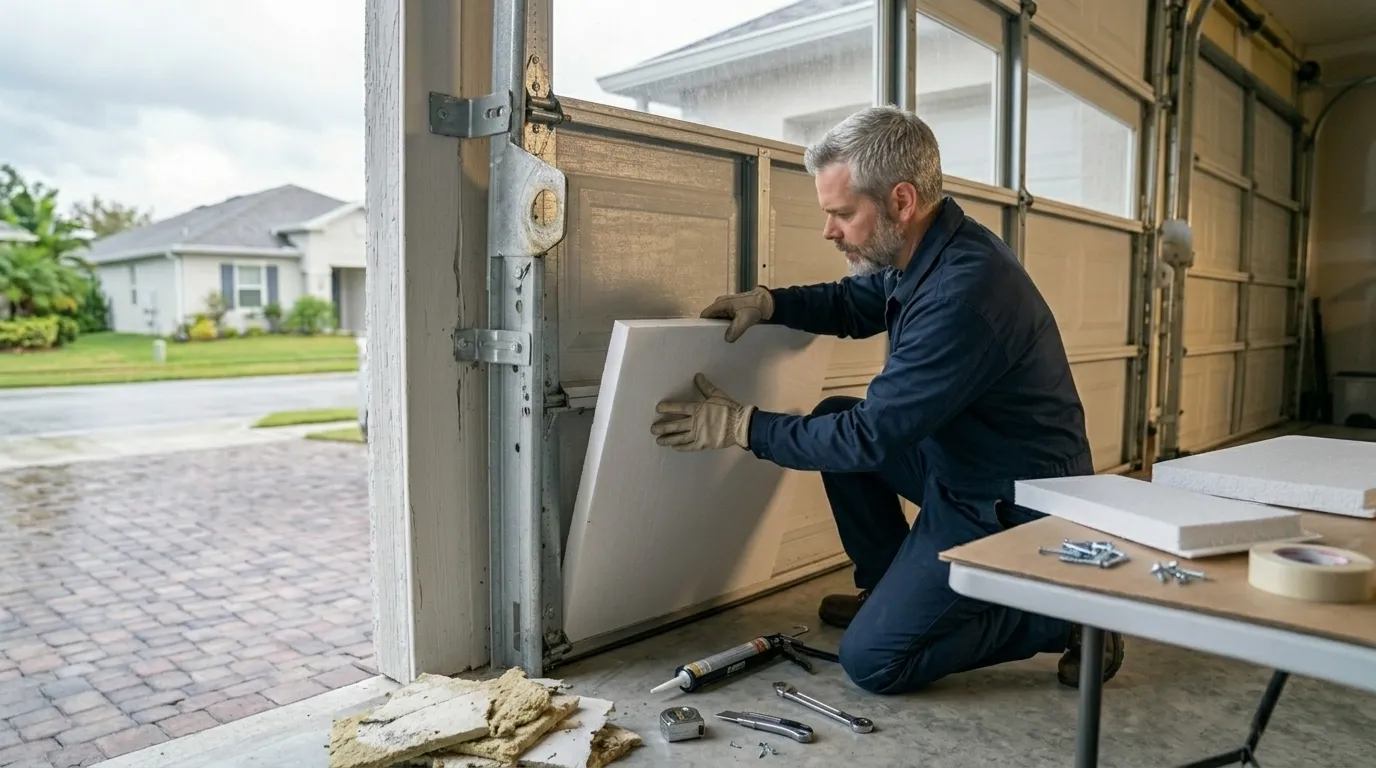
One honest limitation: if your house still has the original 1962 door and track, we'll tell you straight when the track is bent enough that shimming it isn't worth your money and a new door section makes more sense than another patch.
The Calls We Get From Here
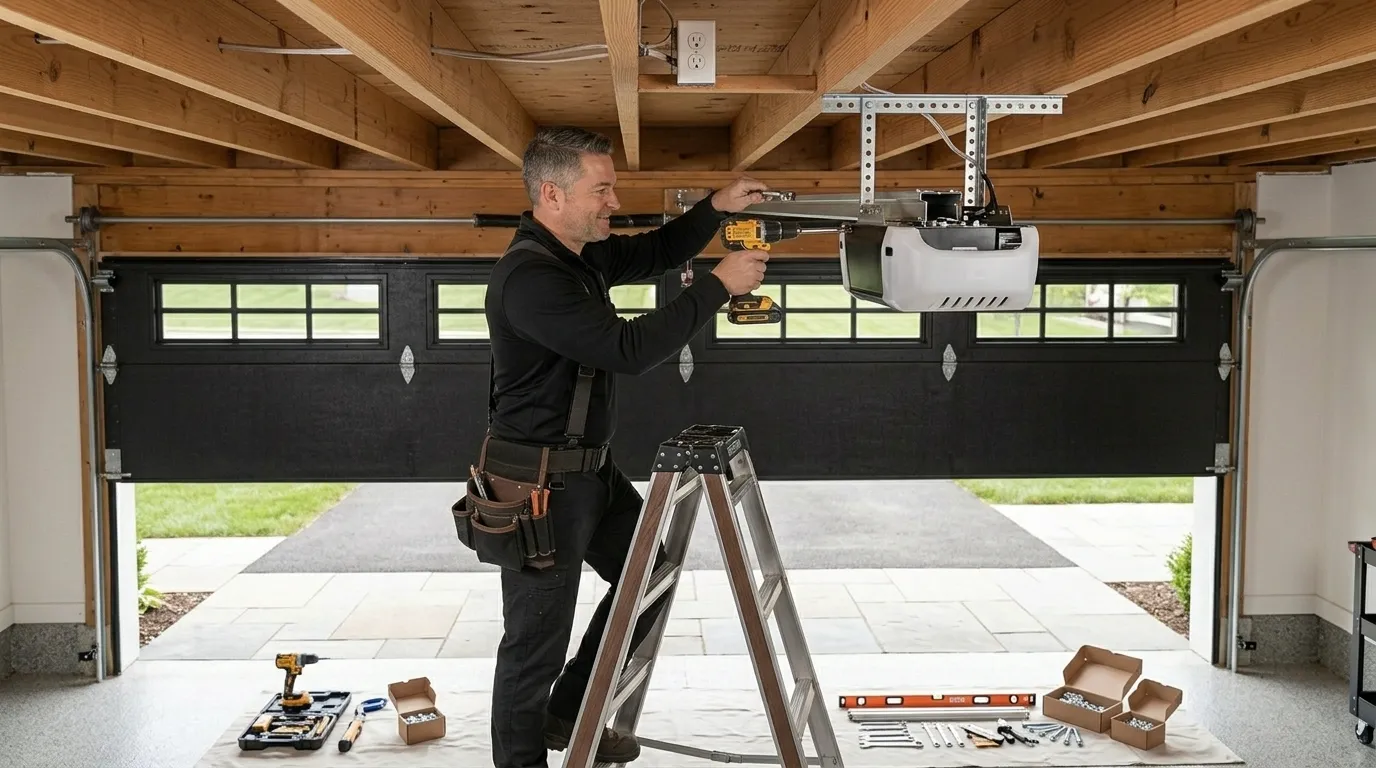
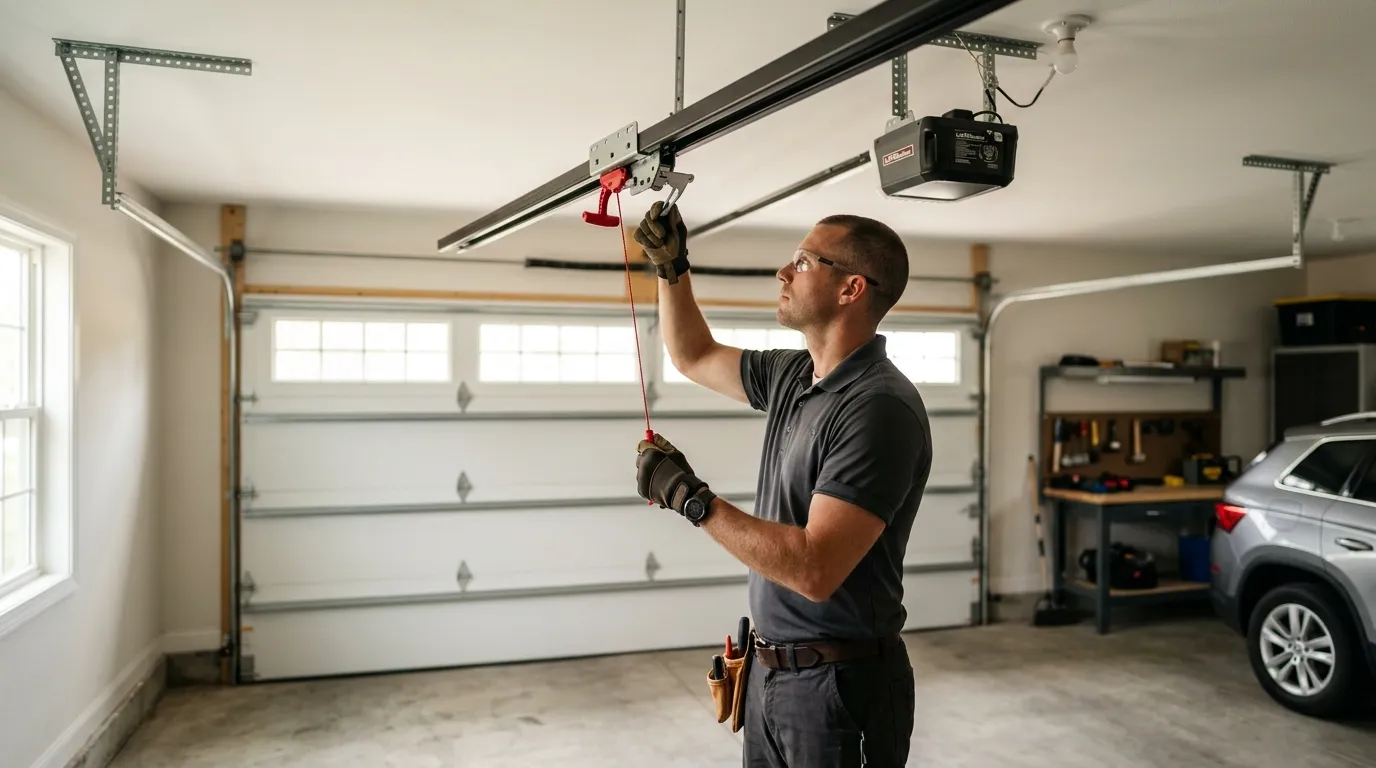
With about 2,459 households in Green Tree, the calls we get skew toward maintenance issues on doors that are aging but not ancient - a torsion spring giving out after a decade or two of daily cycles, an opener drive gear stripped from ice buildup on the track in a hard winter, or a sensor knocked out of alignment by a bumped car. The area's median household income, $87,828, runs well above the wider service area's $72,020, and we see that reflected in the calls too: more requests for insulated doors and quieter belt-drive openers, fewer emergency patch jobs on doors people are trying to squeeze one more year out of.
Cold-climate wear is real here regardless of income. Pittsburgh's winters are classified as severe cold, and that means metal contraction, stiff old lubricant, and cables that snap more often in January than July. If your door has gotten noisy or slow to close as the temperature dropped, that's usually weather doing its job on aging hardware, not a sign the whole unit needs replacing.
Getting Here
We run out of Pittsburgh, and Green Tree sits about 4 miles out - a short trip, not a dedicated local branch. We don't keep a depot or a crew stationed in Green Tree; the truck comes from Pittsburgh for every call. That's worth knowing if you're timing a repair around a specific window.
Green Tree borders several communities we also reach at similar distances - Baldwin and Brentwood sit close by to the south and east, with Crafton and Carnegie a bit further out. If you're near the Green Tree line and unsure whether your address falls in our coverage, call and ask rather than guess from a map.
This Area's Housing
Across the wider service area, housing runs older - mostly pre-1960 stock spread over 108 named communities, with a median build year of 1955. Green Tree breaks from that pattern at 1962, which puts it on the newer edge of our coverage rather than the older core. That difference isn't cosmetic. Doors and openers installed or replaced on 1960s-built homes are more likely to have already gone through at least one modernization cycle - meaning standard-width sectional doors instead of the narrower openings common on 1930s and 1940s construction elsewhere in the area.
With 155,574 owner-occupied houses across the full service area, we work on a wide range of ages every week, and Green Tree's homes tend toward the easier end of that range for parts and labor. That doesn't mean nothing goes wrong - it means when something does, we're usually replacing standard parts rather than hunting down something no longer manufactured.
How it works
From “it’s stuck” to “it’s fixed”
01
Tell us what’s wrong
Describe the symptom - won’t open, loud bang, opener runs but the door won’t move.
02
On-site diagnosis
A technician tests the door under power and by hand and finds what actually failed.
03
Clear, up-front plan
You get the fix that’s needed and what drives the cost - before any work starts.
04
Repaired & tested
The repair is done, the door is set true and tested, and the work area left clean.
Serving Pittsburgh, PA - tell us what your door’s doing and we’ll take it from there.
About 4 miles from Pittsburgh. We don't have a depot in Green Tree itself - every job is a truck run from Pittsburgh, so it helps to have a rough idea of your preferred appointment window when you call.
Are Green Tree garage doors easier to fix than older homes nearby?
Often, yes. Most Green Tree homes date to around 1962, later than the area's overall 1955 median, so they're more likely to have standard sectional doors and center-mounted torsion springs rather than the older side-mounted hardware found on pre-1940 houses nearby.
Do winters here cause garage door problems?
Yes. Pittsburgh's winters fall in the severe cold band, and that means stiff lubricant, metal contraction, and cables and springs working harder in January than in summer. A door that's suddenly noisy or slow in cold weather is usually reacting to temperature, not necessarily failing outright.
Is it worth replacing an original 1962 door instead of repairing it?
Sometimes. If the track is bent badly enough that shimming won't hold or the door itself has warped, patching it repeatedly costs more over time than a new door section. We'll tell you honestly when repair isn't the better value.
Ready to get your garage door sorted?
Tell us what it’s doing and where you are in Pittsburgh - we’ll take it from there.