We service Irwin, PA homes built mostly in the 1950s, 16 miles from Pittsburgh. Repair for the torsion springs and openers common on doors from that era.
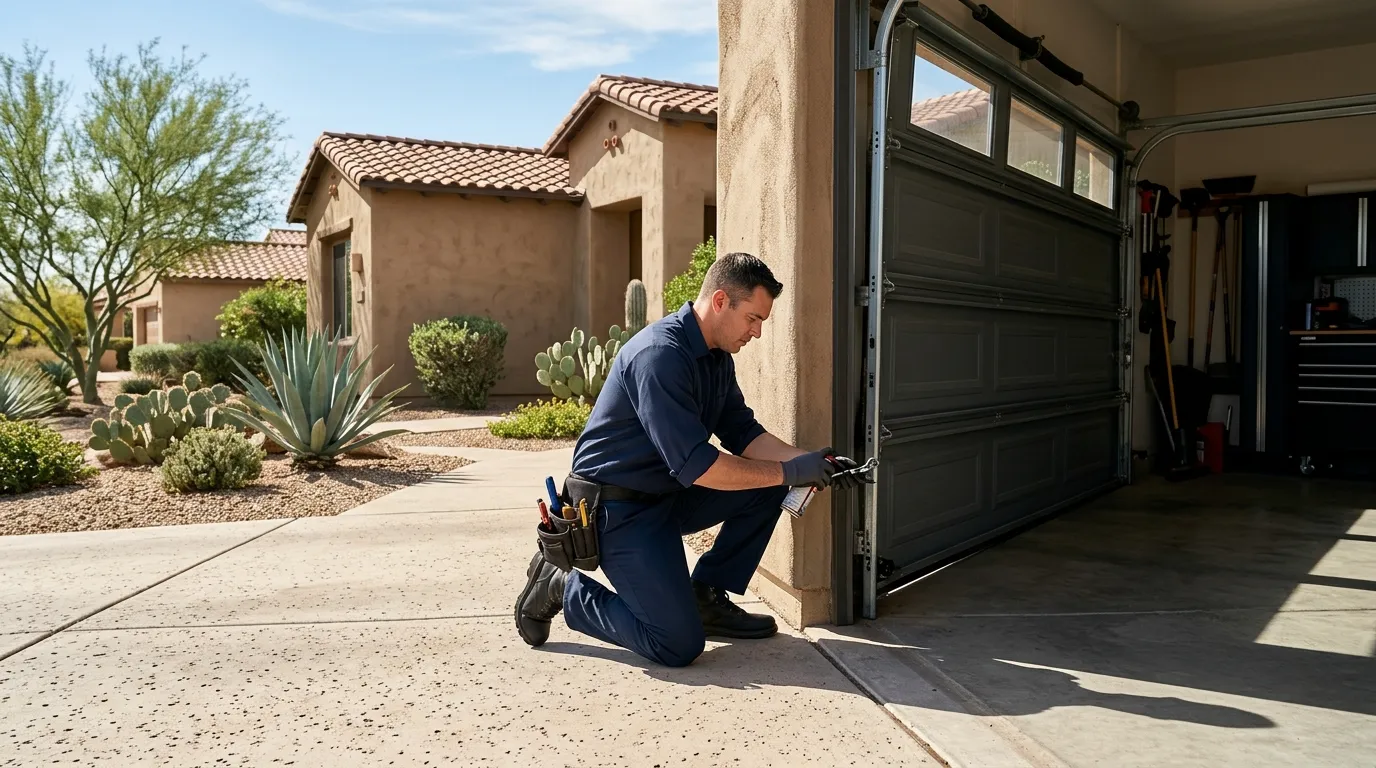
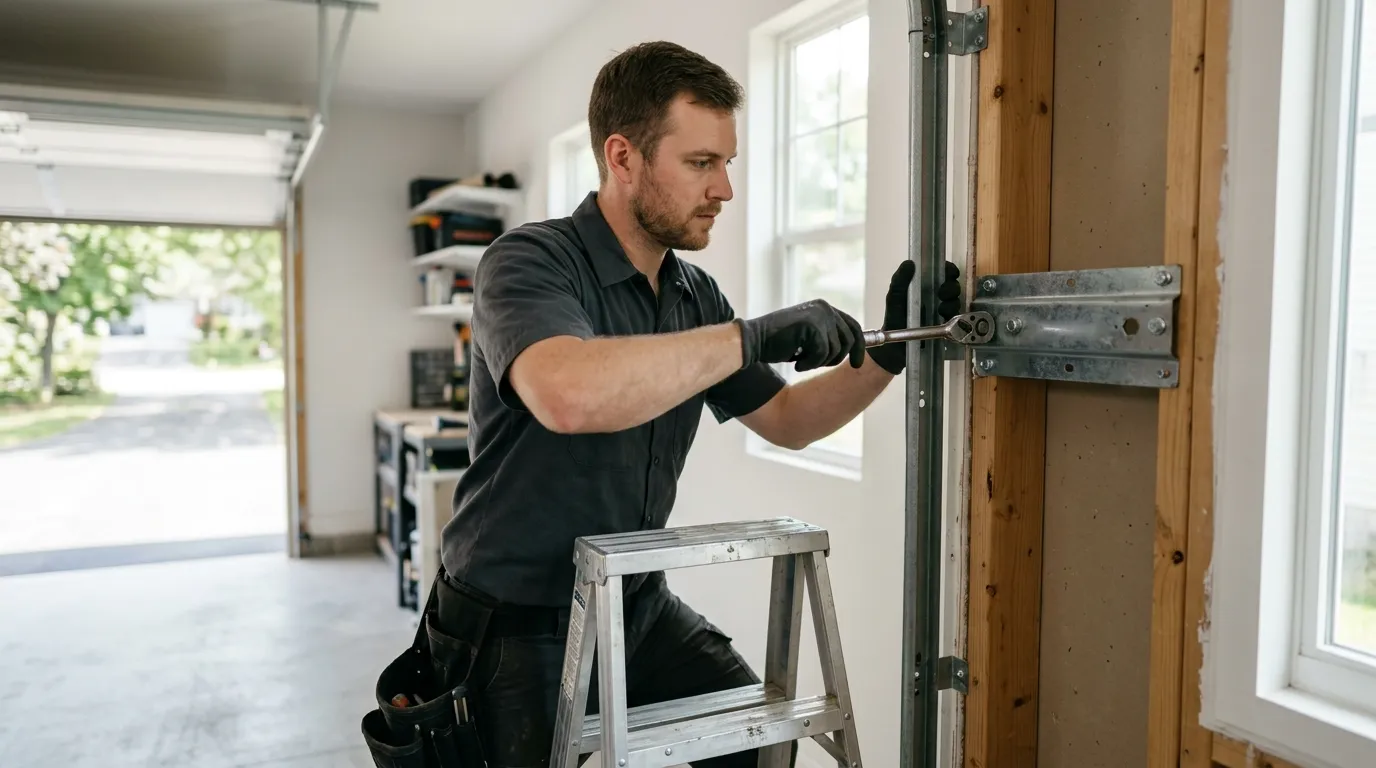
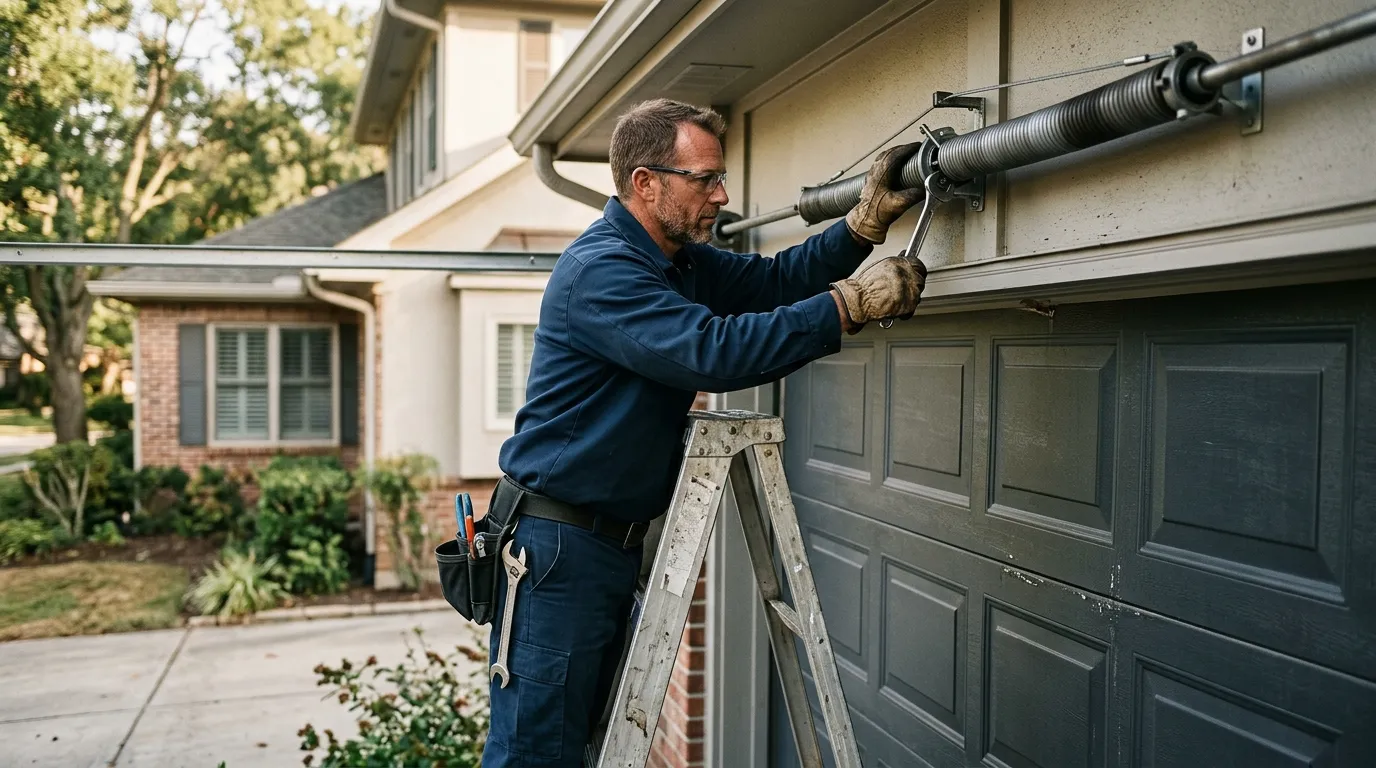
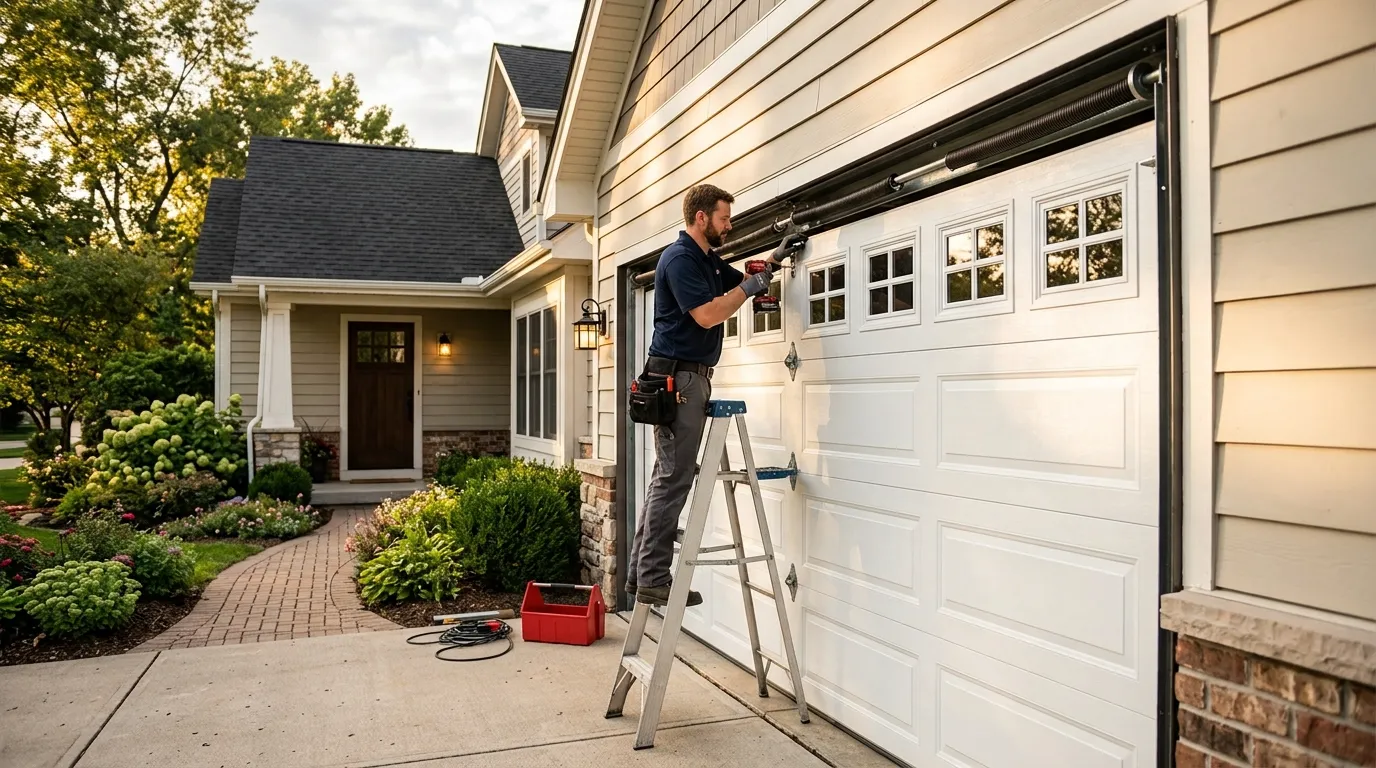
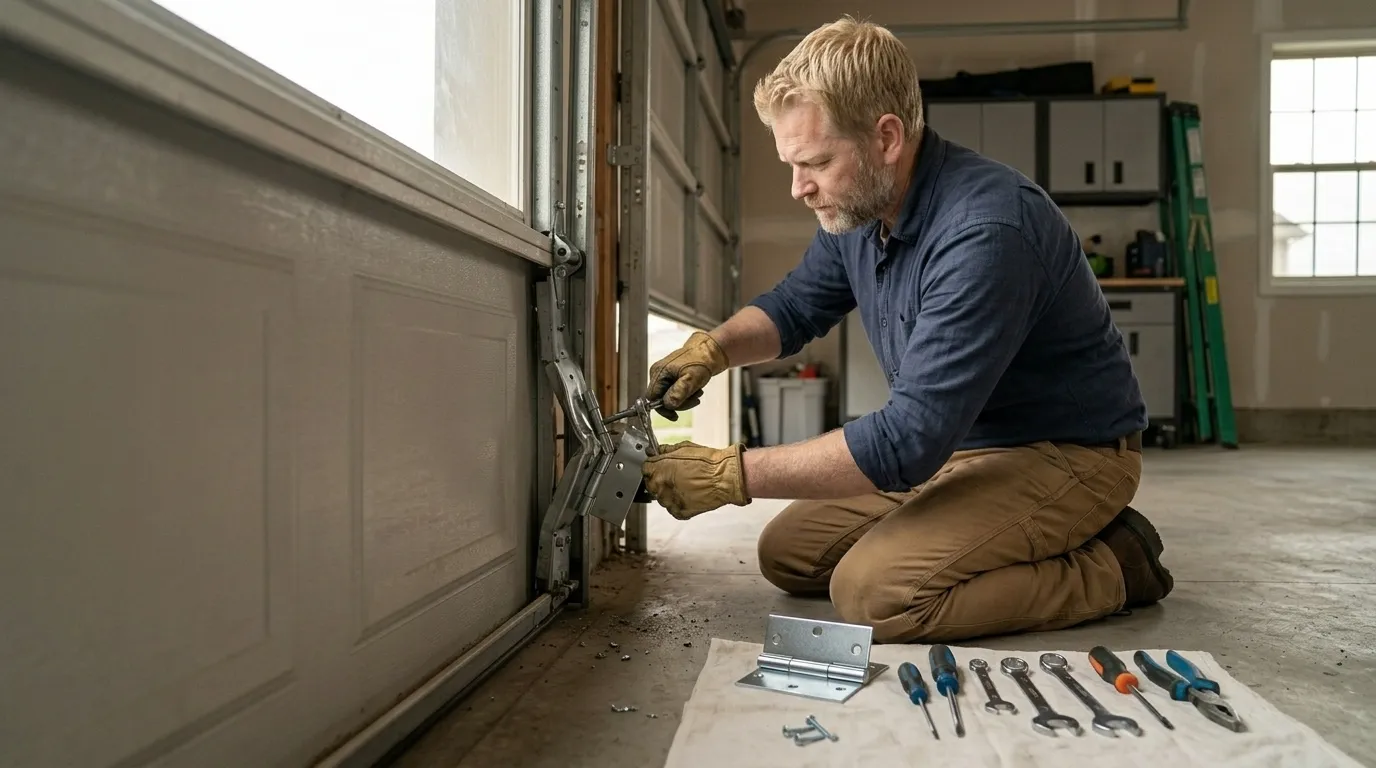
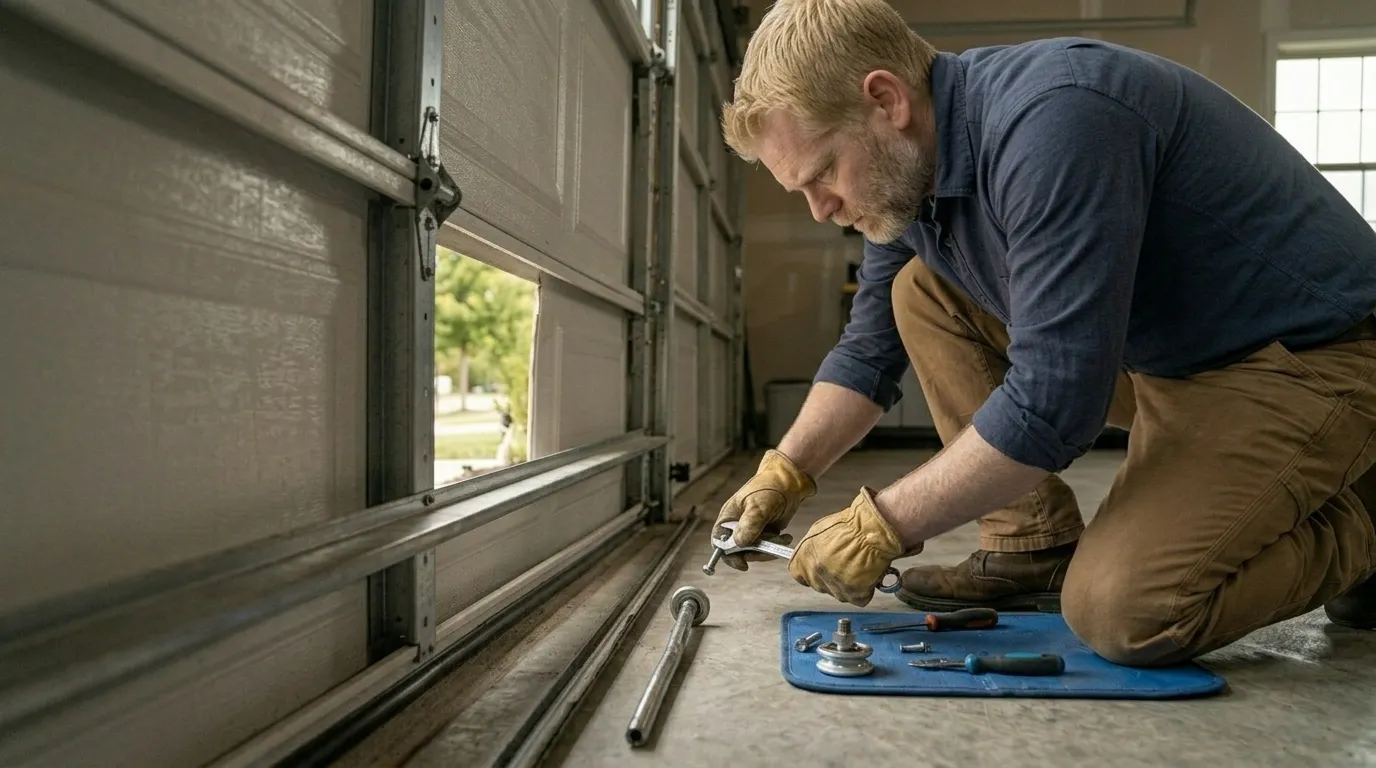
Irwin's housing runs older than the newer subdivisions closer to Pittsburgh's edge - the typical house here went up around 1956, which puts a lot of original garage doors on the property still. That means single steel panels, no insulation layer, and extension springs mounted along the horizontal tracks instead of the torsion springs over the header that showed up on doors built later. Extension springs stretch and fatigue with every cycle, and on a door that's been opening and closing since the mid-1950s, the cable ends and pulley brackets are usually as tired as the springs. The openers we find in these garages are often second or third replacements already - chain-drive units bolted onto framing that was never built for a garage door opener in the first place. Cold makes all of this worse. The service area sits in a severe cold climate band, and steel panels without insulation contract hard in a hard freeze, which is when a marginal roller or a hairline crack in an old panel finally gives out. If your door is original to a 1956-era house, the fix usually isn't one part - it's the whole spring and cable system at once.
The Calls We Get From Here
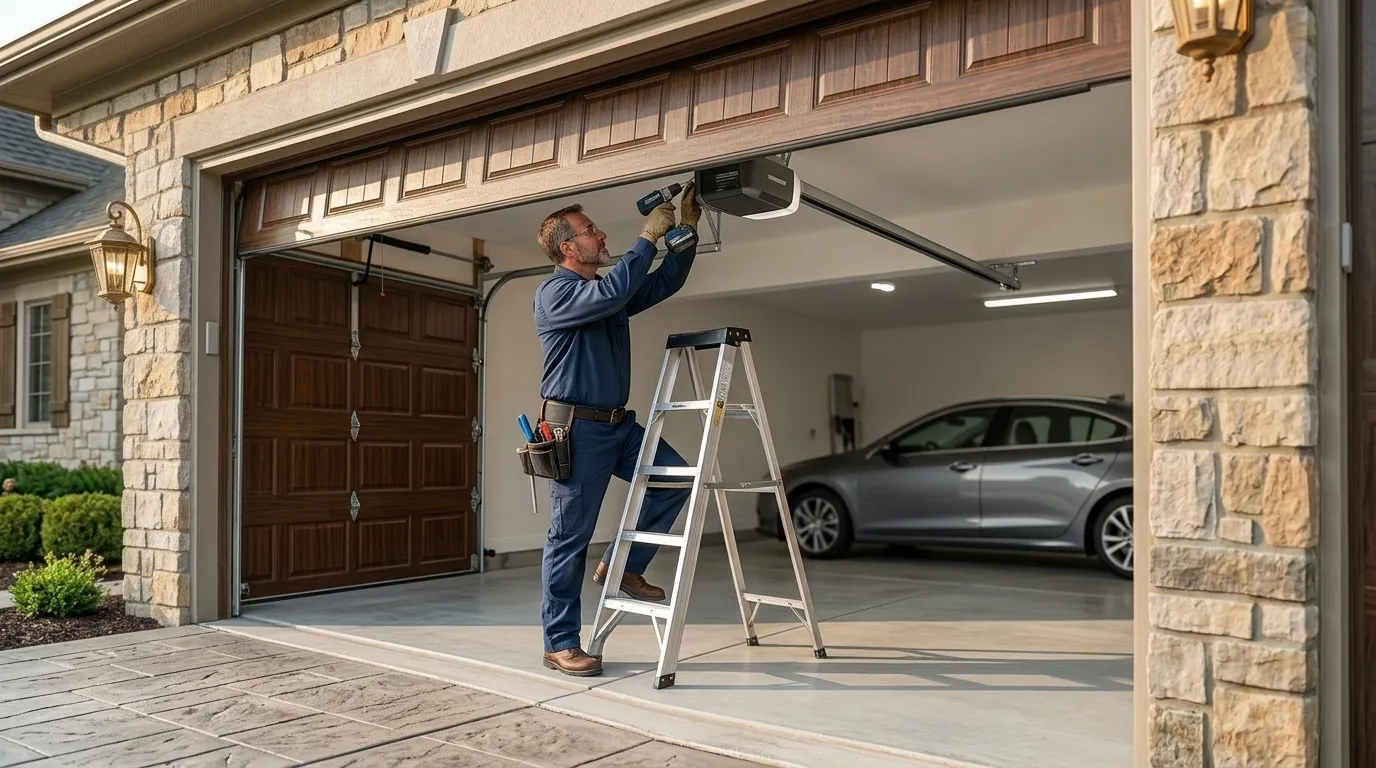
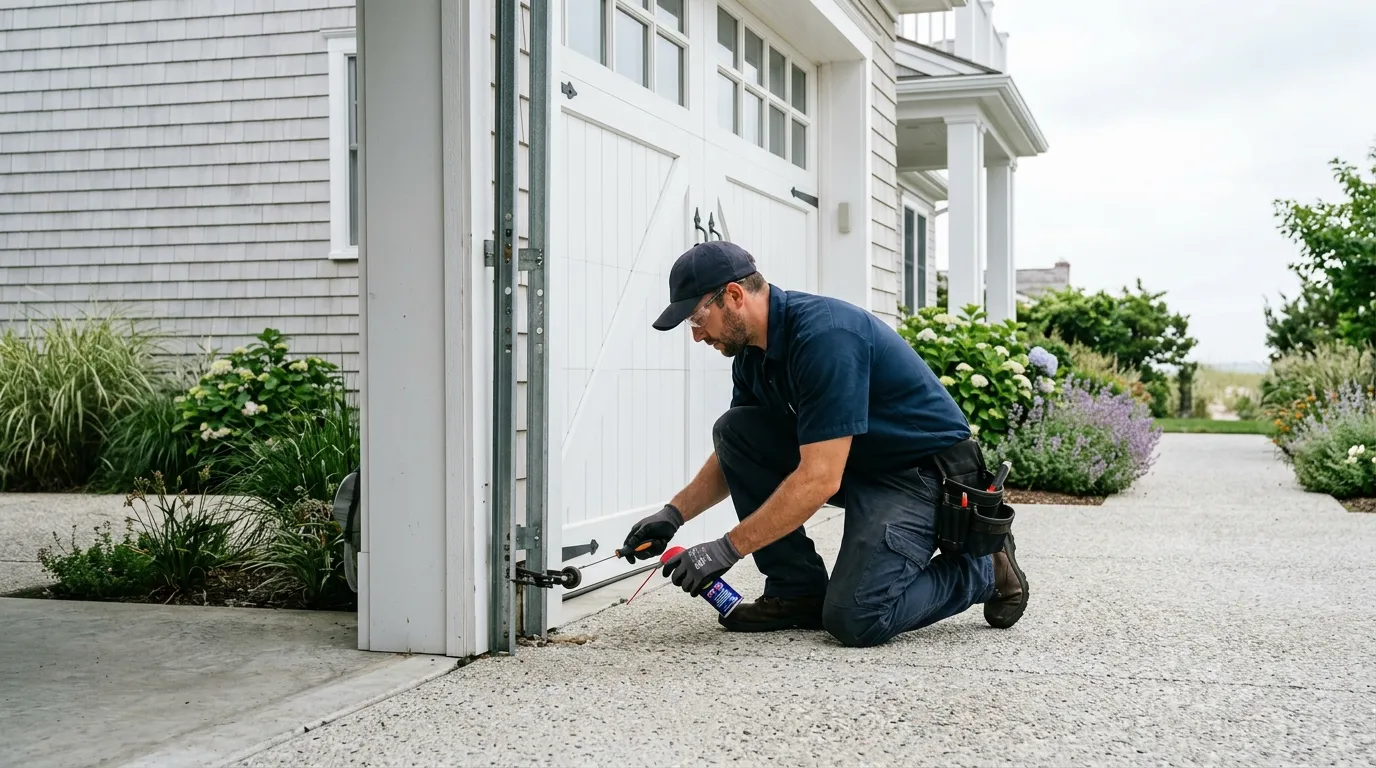
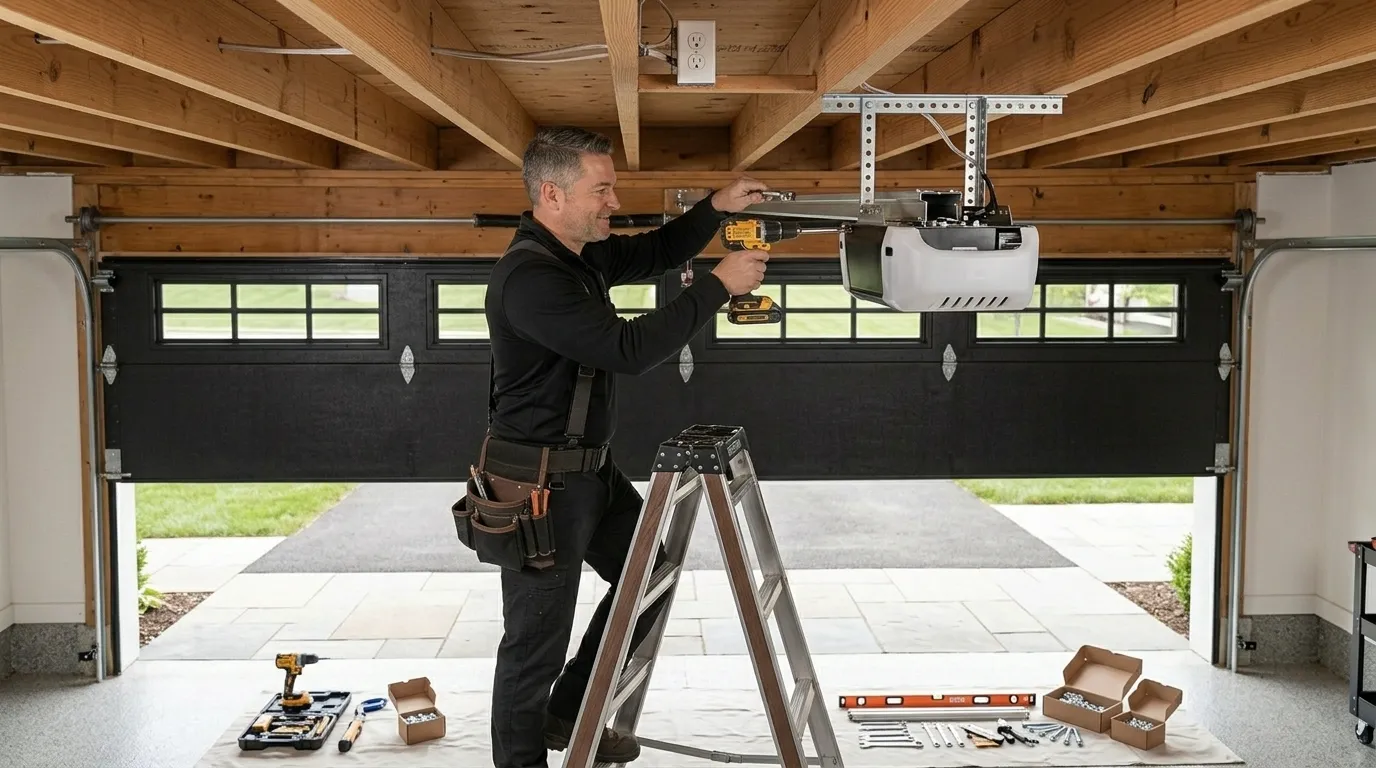
Most of the calls we take from Irwin fall into a short list: a broken extension spring on a door that hasn't been serviced in years, a track that's pulled loose from a wall stud that's shifted with the house, or an opener that's stopped responding because the wiring behind it is original and brittle. We also see a fair number of panel replacements where rust has eaten through the bottom section - common on doors that never got insulation or a vapor barrier underneath. Openers get replaced more than repaired out here, since parts for units from that era are hard to source and a new opener with a battery backup is usually the better call anyway. One thing we're upfront about: if a door has extension springs original to the house, we'll tell you when a full torsion conversion makes more sense than patching a system that's going to keep failing piece by piece. That's not the answer for every door, but on 1956-era stock it comes up more often than not.
Getting Here
Irwin sits about 16 miles from our shop in Pittsburgh, and we don't keep a truck or depot out this way - every job here means a drive out from the city side of the coverage area. That's worth knowing if you're calling for something urgent: we're coming from Pittsburgh, not from a yard three streets over. We still run calls out to Irwin regularly, and the trip doesn't change what we bring to the job - same stock of springs, cables, and opener parts we'd carry anywhere else in the coverage area. What it does mean is that scheduling works better with a little notice rather than a same-hour call, simply because of the distance involved.
This Area's Housing
Irwin has about 2,052 households, a small slice next to the larger totals closer to Pittsburgh's core, where the coverage area counts well over a quarter million households total. Median household income here sits at $60,747, noticeably under the $72,020 median across the wider service area, and that gap shows up in how homeowners approach a garage door repair - more patch-and-keep-going, fewer full replacements before a door actually fails. The median year built of 1956 lines up closely with the broader area's median of 1955, so Irwin isn't unusual for the region, but it does mean the same era of hardware: single-layer steel doors, extension springs, older track gauges. The severe cold climate band that covers the whole service area doesn't skip Irwin, and a house built in the mid-1950s wasn't built with modern insulation standards in mind, garage included. None of that means an old door is a lost cause - plenty of them just need the wear parts caught before they fail outright, and a well-kept 1956 door can still run fine with the right springs and rollers.
How it works
From “it’s stuck” to “it’s fixed”
01
Tell us what’s wrong
Describe the symptom - won’t open, loud bang, opener runs but the door won’t move.
02
On-site diagnosis
A technician tests the door under power and by hand and finds what actually failed.
03
Clear, up-front plan
You get the fix that’s needed and what drives the cost - before any work starts.
04
Repaired & tested
The repair is done, the door is set true and tested, and the work area left clean.
Serving Pittsburgh, PA - tell us what your door’s doing and we’ll take it from there.
No. We run out of Pittsburgh, about 16 miles away, and every Irwin job is a drive out from there. We still cover the area regularly, but same-hour emergency calls work better with a bit of notice given the distance.
Why does my 1950s garage door keep breaking?
Houses in Irwin mostly date to the mid-1950s, and a lot of the original doors are still up on extension springs and older track hardware. Those parts wear out with age and cold, and once one component fails the rest usually aren't far behind.
Is it worth repairing an old door instead of replacing it?
Sometimes. If the panels are solid and it's just springs or rollers, a repair can hold for years. But on a door original to a 1956-era house with worn cables, brittle wiring, and a tired opener, a full torsion conversion often ends up cheaper than repeated patch calls.
Ready to get your garage door sorted?
Tell us what it’s doing and where you are in Pittsburgh - we’ll take it from there.