Jefferson Hills homes mostly went up in the 1980s, not the 1950s stock common closer to Pittsburgh. We bring the right parts for that era's doors and openers.
Jefferson Hills is a newer build than most of the areas we cover. The median home here dates to around 1982, a good three decades past the 1955 median for the wider service area, where most stock is pre-1960. That gap changes what we find behind your garage door.
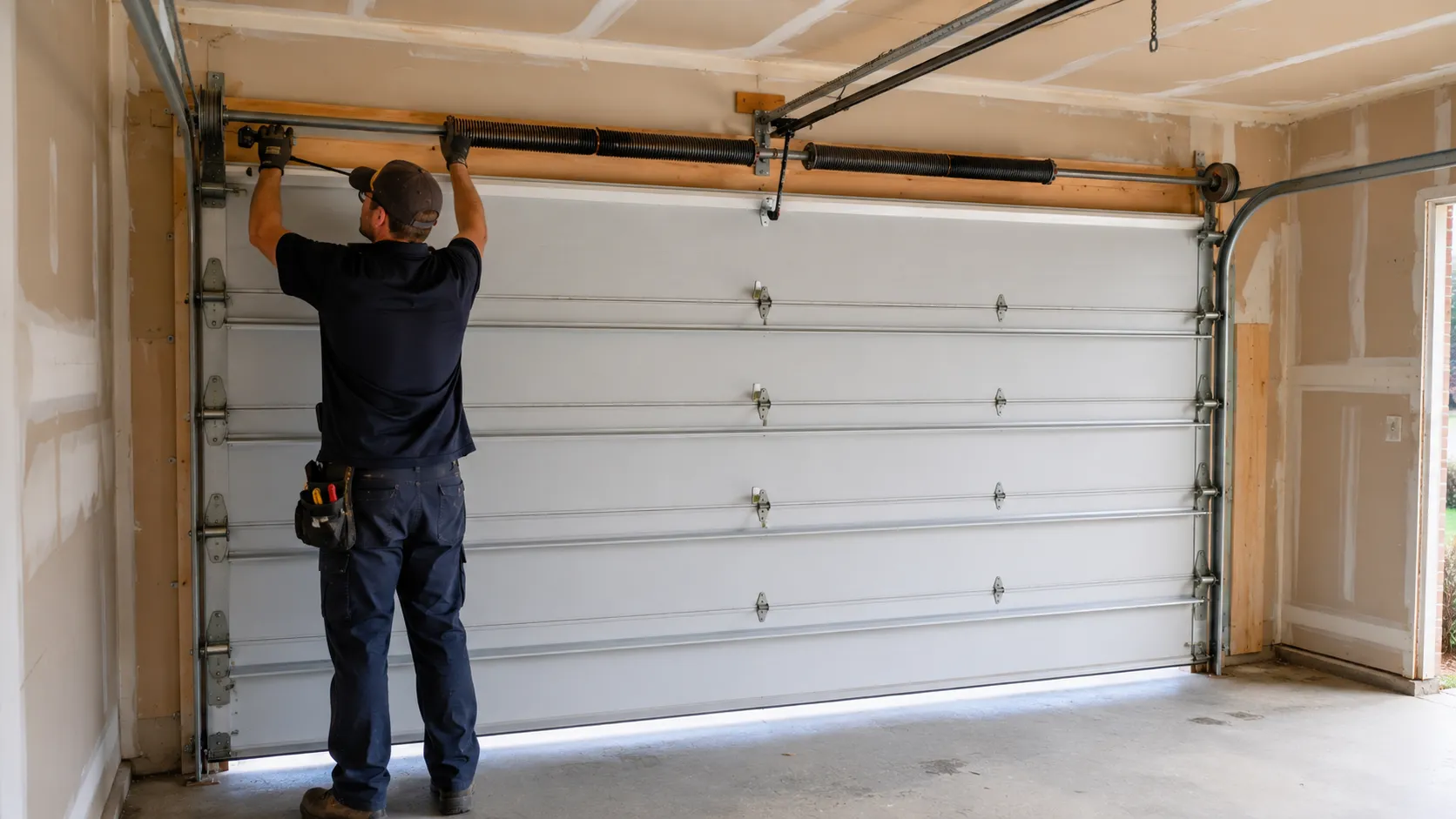
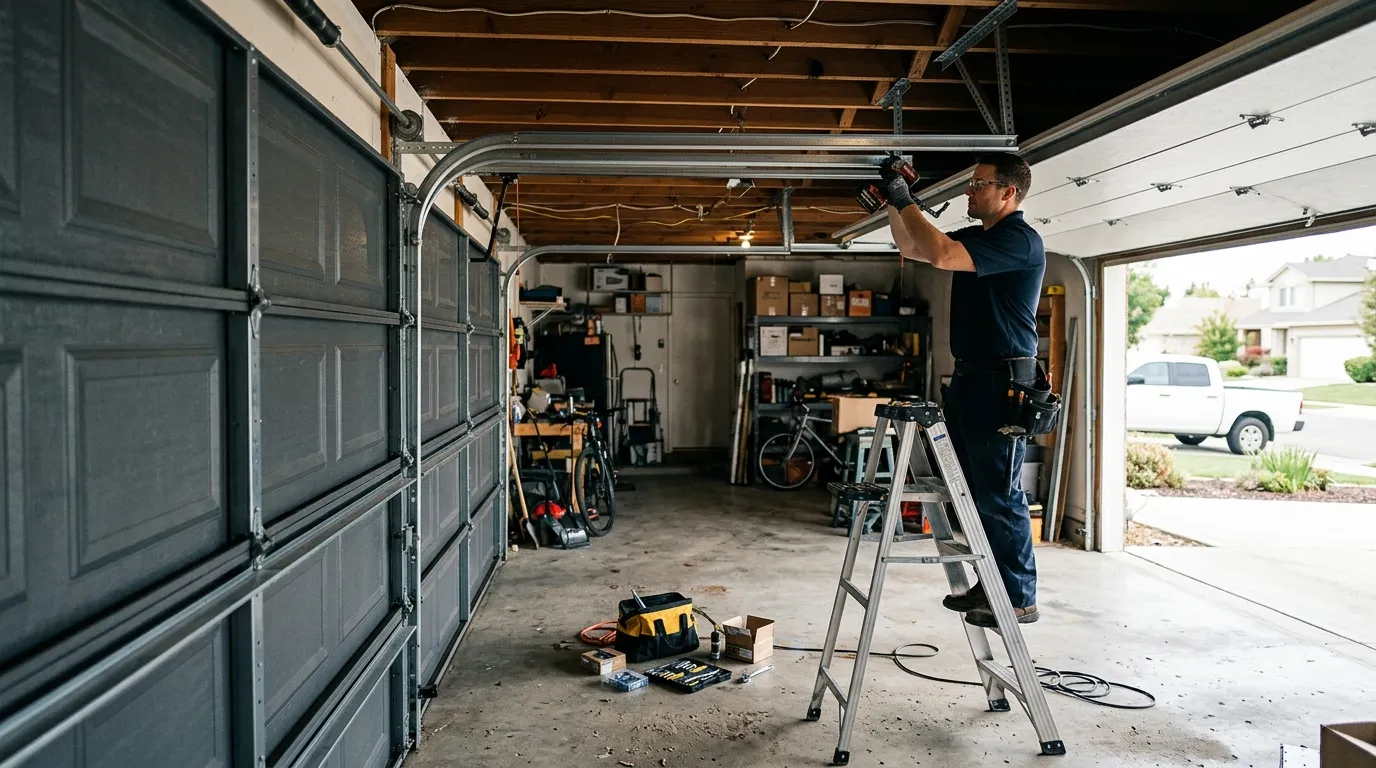
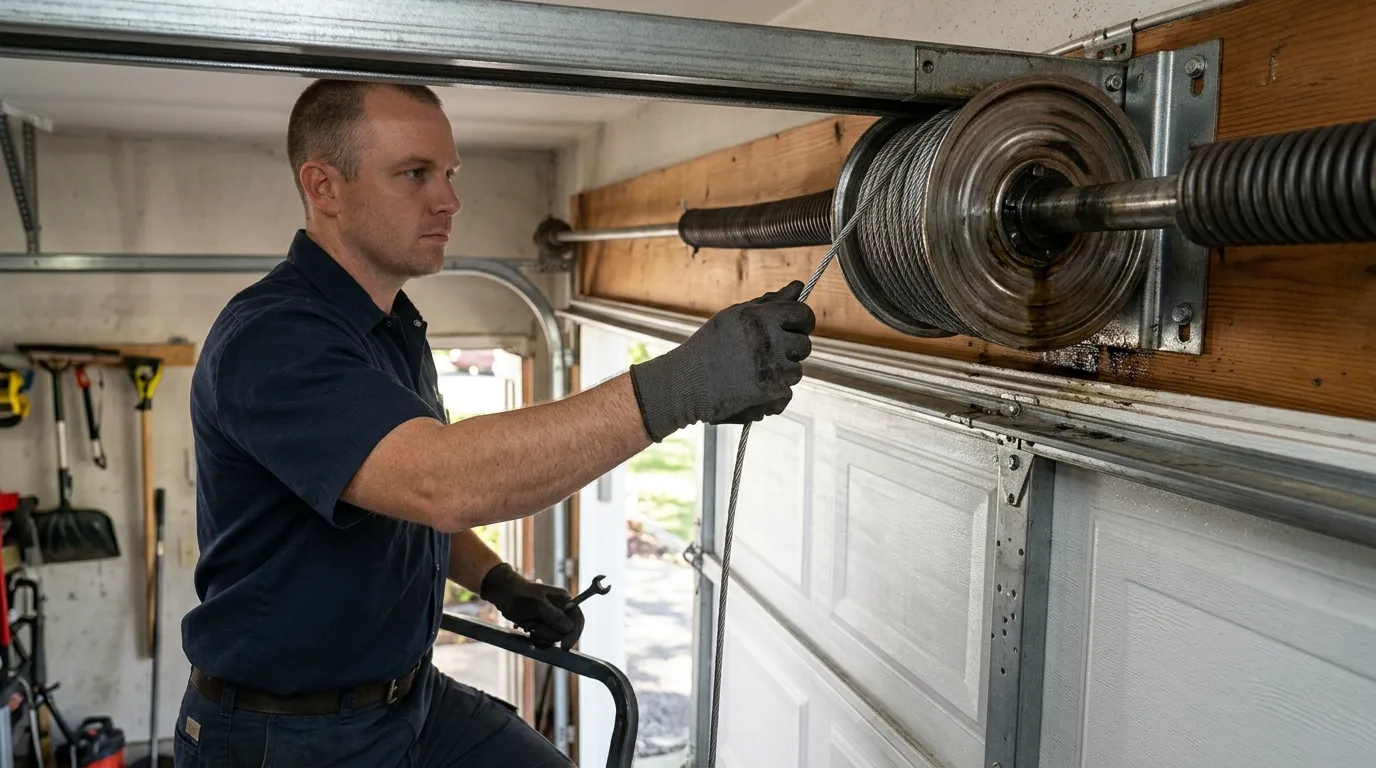
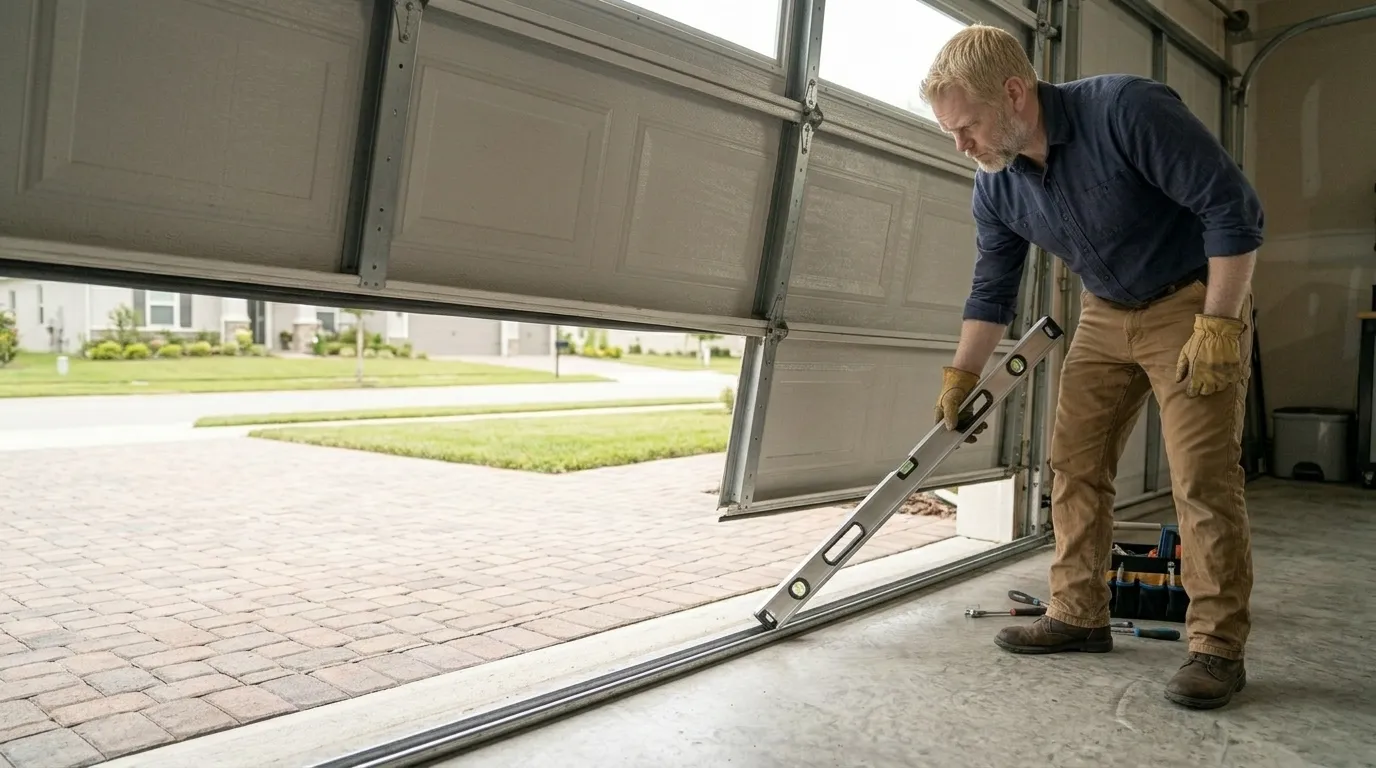
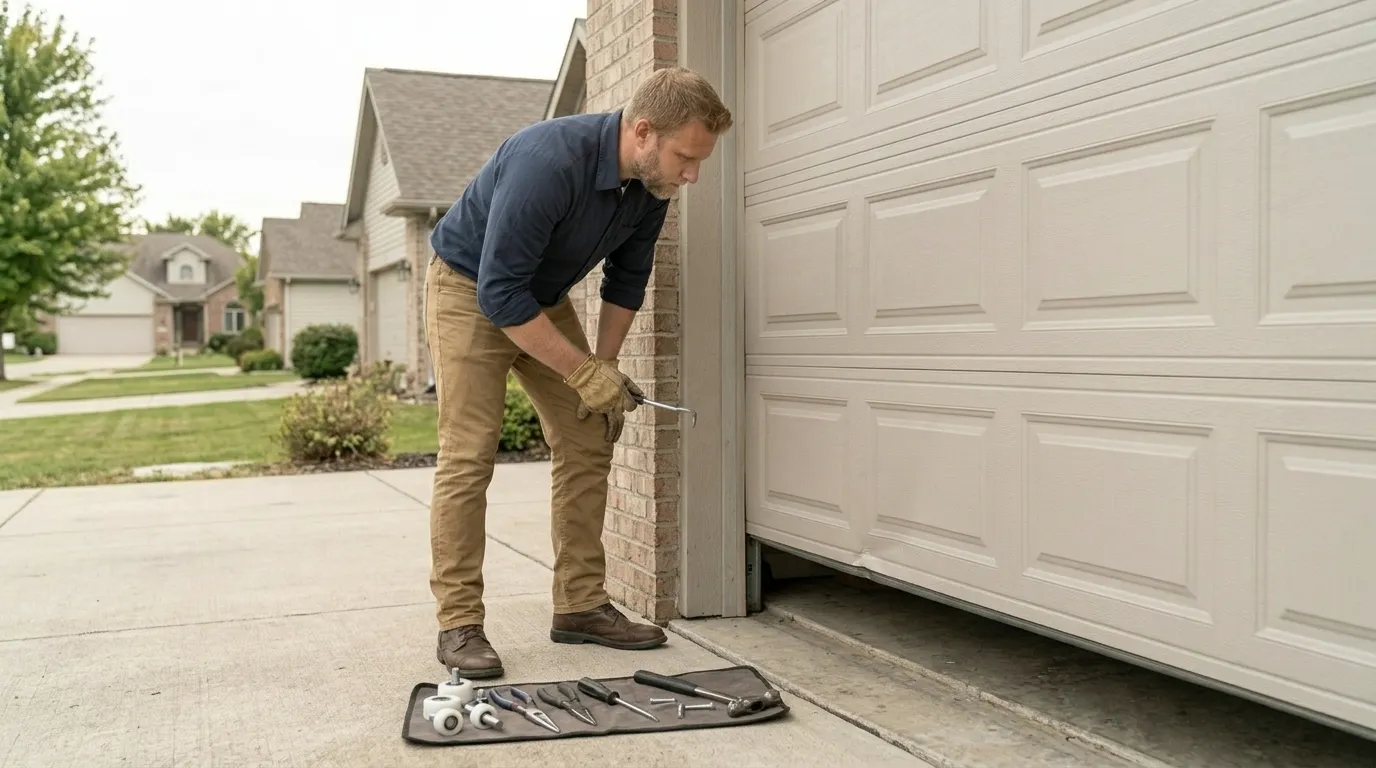
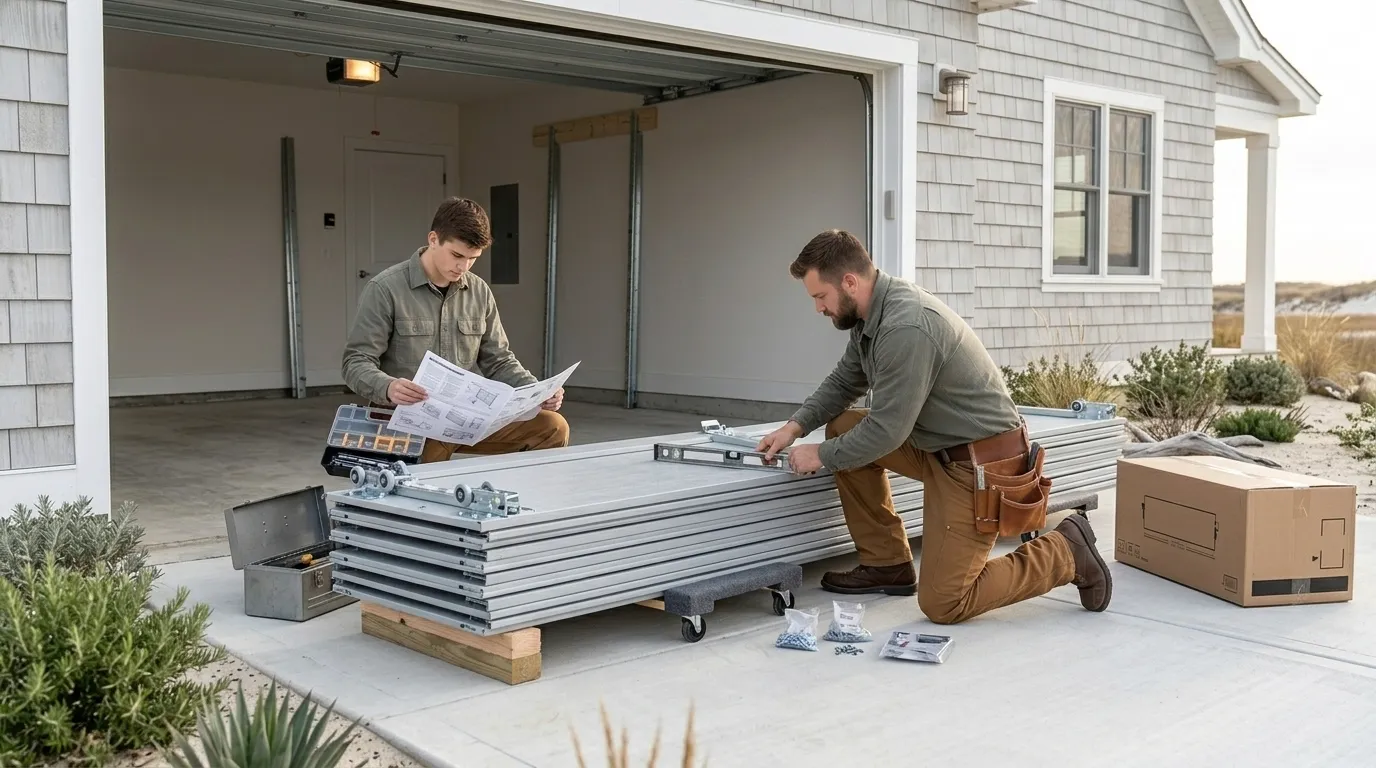
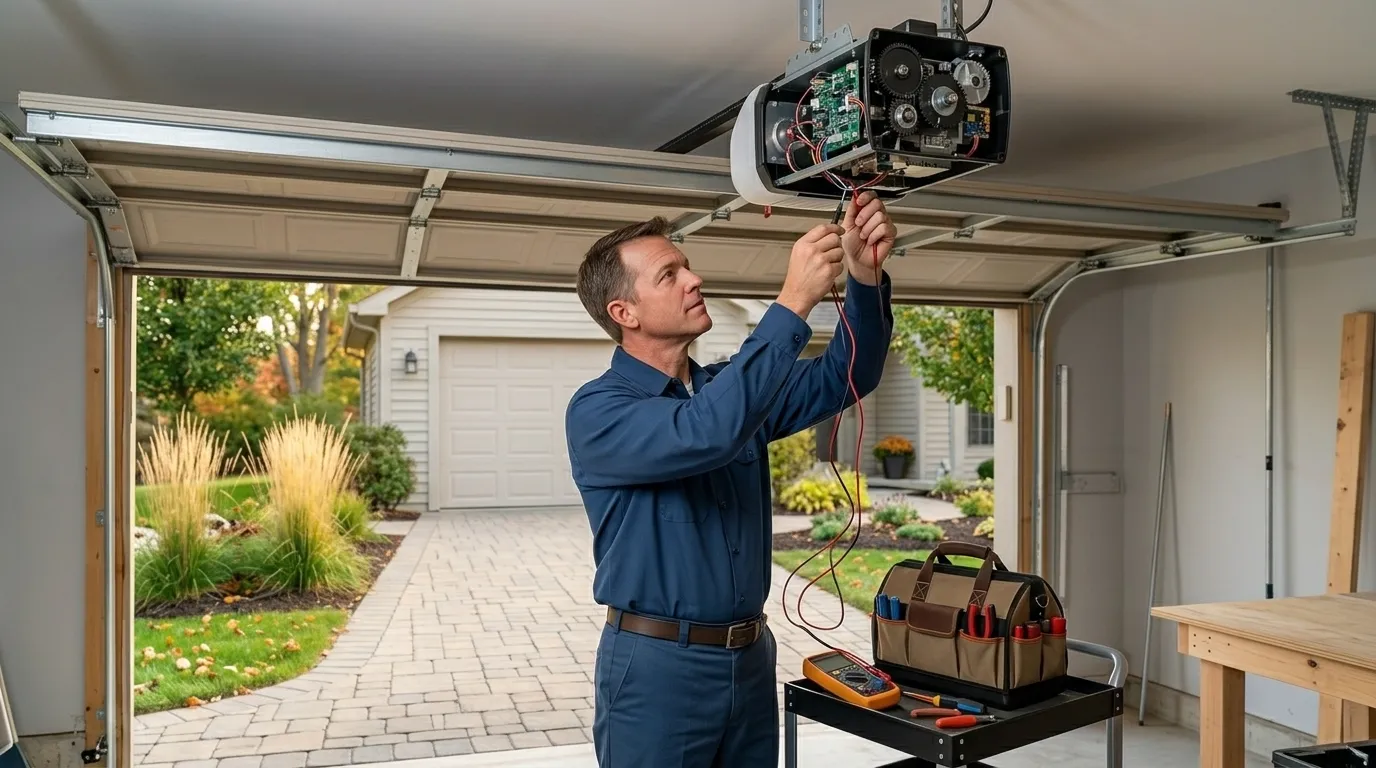
A 1950s house usually has an original one-piece door on side-mounted torsion hardware, if it hasn't been replaced. A 1982-built house typically started life with a sectional steel door and torsion springs mounted on a center shaft over the header, plus an opener that's more likely a chain-drive unit from the late 80s or 90s if it's never been swapped. The failure points are different too: on doors this age, we see worn nylon rollers, dried-out cables, and openers with logic boards that finally give out after 30-plus years of duty cycles, more than we see the split wood panels and flat-spring hardware common on older stock elsewhere.
One honest note: if your opener is original to a house built in the early 80s, parts for that exact model are usually gone. At that point, we're not chasing a part number, we're talking replacement, because a working circuit board for a discontinued unit isn't something we can order in.
The Calls We Get From Here
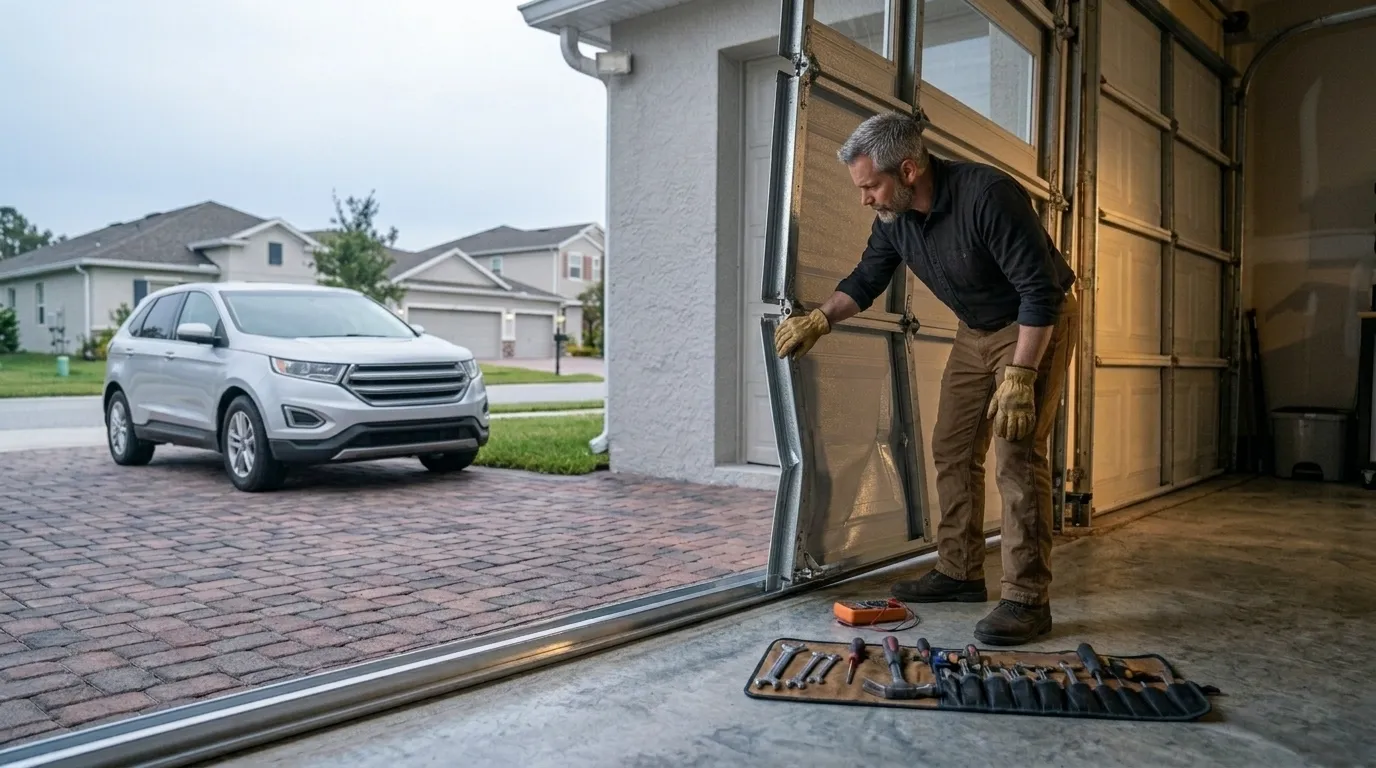
Given the age of construction, most Jefferson Hills calls are wear-and-tear failures on doors that have had 30 to 40 years of openings, not the code-driven retrofits we see on much older housing stock. Torsion springs rated for a certain cycle count start snapping around the same age window, and a lot of Jefferson Hills doors are sitting right in that window now.
The area also sits in the same severe-cold climate band as the rest of the region, so winter is when we see the most cable and roller failures - metal contracts, grease stiffens, and a spring or cable that was already marginal lets go on the first hard freeze. That part isn't unique to Jefferson Hills, but combined with the age of the housing stock, it means a lot of these doors are due, not just old.
With household income here running well above the wider service-area median, we also get more calls asking about insulated replacement doors and quieter belt-drive openers rather than a straight repair - homeowners here are more often choosing to upgrade the whole door instead of patching a 40-year-old one.
Getting Here
Jefferson Hills sits about 10 miles out from our Pittsburgh base, south of the city past Pleasant Hills, West Mifflin, and Bethel Park, all of which fall along that same corridor. We don't keep a truck stationed in Jefferson Hills - every job here is a drive out from Pittsburgh, same as the rest of our coverage area.
That distance doesn't change how we handle the job once we're there, but it's worth being upfront about: we're not a shop around the corner, we're a company that travels to you. If you're comparing us against someone with a depot closer to home, factor that in when you're thinking about timing.
This Area's Housing
With roughly 4,705 households, Jefferson Hills is a smaller footprint than most of the areas we serve, and its housing skews newer than almost anywhere else on our list - median build year around 1982 against a regional median of 1955, with most of the wider service area's 108 named areas sitting on pre-1960 stock. That's a meaningfully different housing generation, and it means Jefferson Hills as a whole doesn't carry the same volume of original 1940s and 1950s garage doors that dominate calls elsewhere.
Median household income here, at $117,518, also runs well above the $72,020 median across the full service area's 279,154 households. In practice that shows up as more requests for full door and opener replacement rather than patch repairs, and more interest in insulated doors given the severe-cold winters common to the whole region. It's not that Jefferson Hills doors fail less often - 40-year-old torsion springs fail on schedule regardless of the owner's income - it's that replacement is a more common first choice here than repair-and-wait.
How it works
From “it’s stuck” to “it’s fixed”
01
Tell us what’s wrong
Describe the symptom - won’t open, loud bang, opener runs but the door won’t move.
02
On-site diagnosis
A technician tests the door under power and by hand and finds what actually failed.
03
Clear, up-front plan
You get the fix that’s needed and what drives the cost - before any work starts.
04
Repaired & tested
The repair is done, the door is set true and tested, and the work area left clean.
Serving Pittsburgh, PA - tell us what your door’s doing and we’ll take it from there.
Why does my opener from the 80s have no replacement parts?
Openers from that era are mostly discontinued, boards included. If yours dates to the original build around 1982, we'll usually recommend a new opener rather than hunting for a part that isn't manufactured anymore. It's a straightforward swap and it's often cheaper than a special-order board even if one turned up.
Are Jefferson Hills garage doors different from ones closer to Pittsburgh?
Generally yes. Housing here is newer, built mostly in the 1980s rather than the 1940s-50s stock common closer in. That means sectional steel doors on center-shaft torsion springs rather than one-piece doors on side-mounted hardware, and openers of a different generation entirely.
Do you have a truck based in Jefferson Hills?
No. We run out of Pittsburgh and drive out for every job here, about 10 miles each way. We don't advertise a local response time because we're not stationed in town - just being upfront about that.
Is it worth repairing a 40-year-old torsion spring setup or replacing the whole door?
Depends on the door. If the panels and track are solid and it's just the spring or cable, repair makes sense. If the door's original to a house built in the early 80s and several components are failing at once, replacement usually costs less over time than repeated repairs.
Ready to get your garage door sorted?
Tell us what it’s doing and where you are in Pittsburgh - we’ll take it from there.