Lawrence homes mostly went up around 1993, later than most of the Pittsburgh service area. We drive out from Pittsburgh, 12 miles away, for repairs suited to that newer hardware.
Lawrence doesn't match the rest of the territory we cover. Across the wider Pittsburgh service area the typical house went up around 1955, which means old torsion setups, one-piece doors, and hardware nobody stocks anymore. Lawrence is different - the median home here dates to about 1993, decades newer than that broader stock.
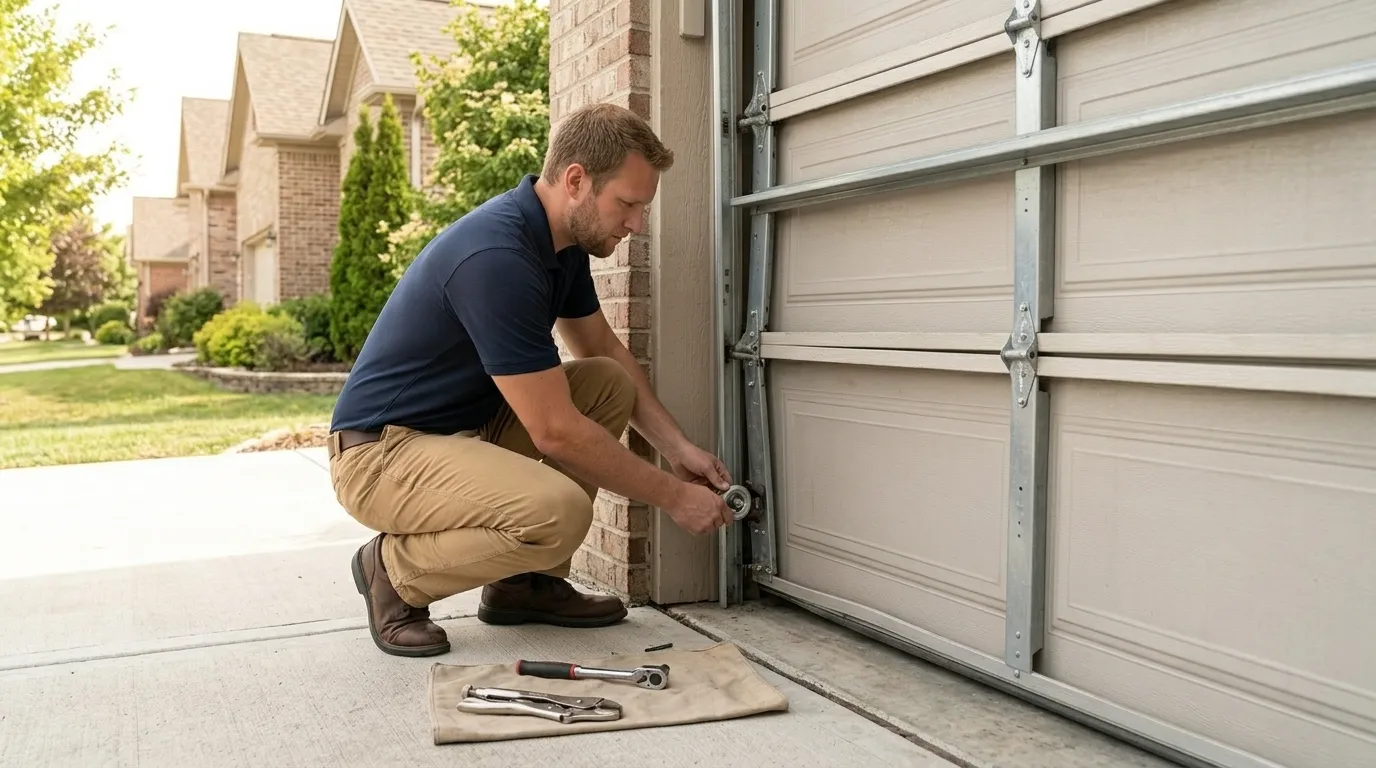
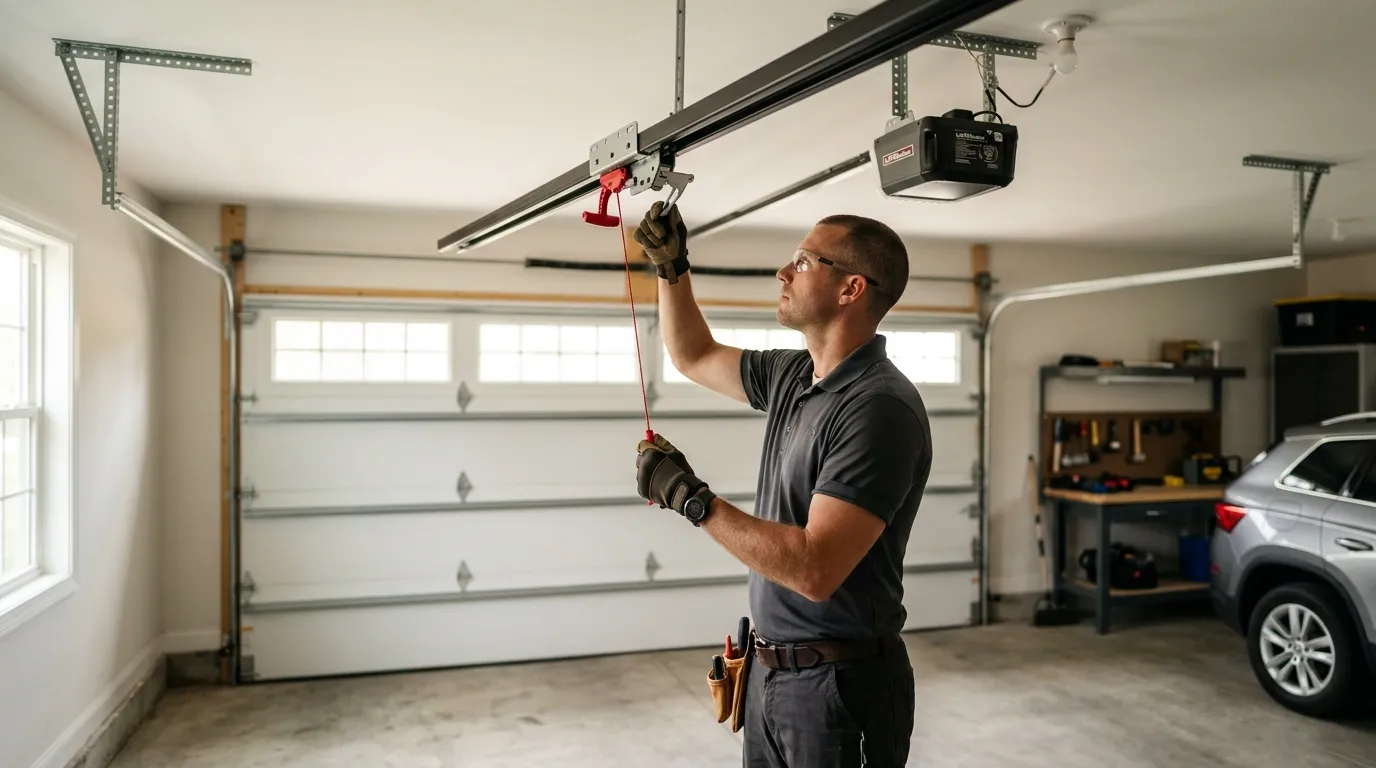
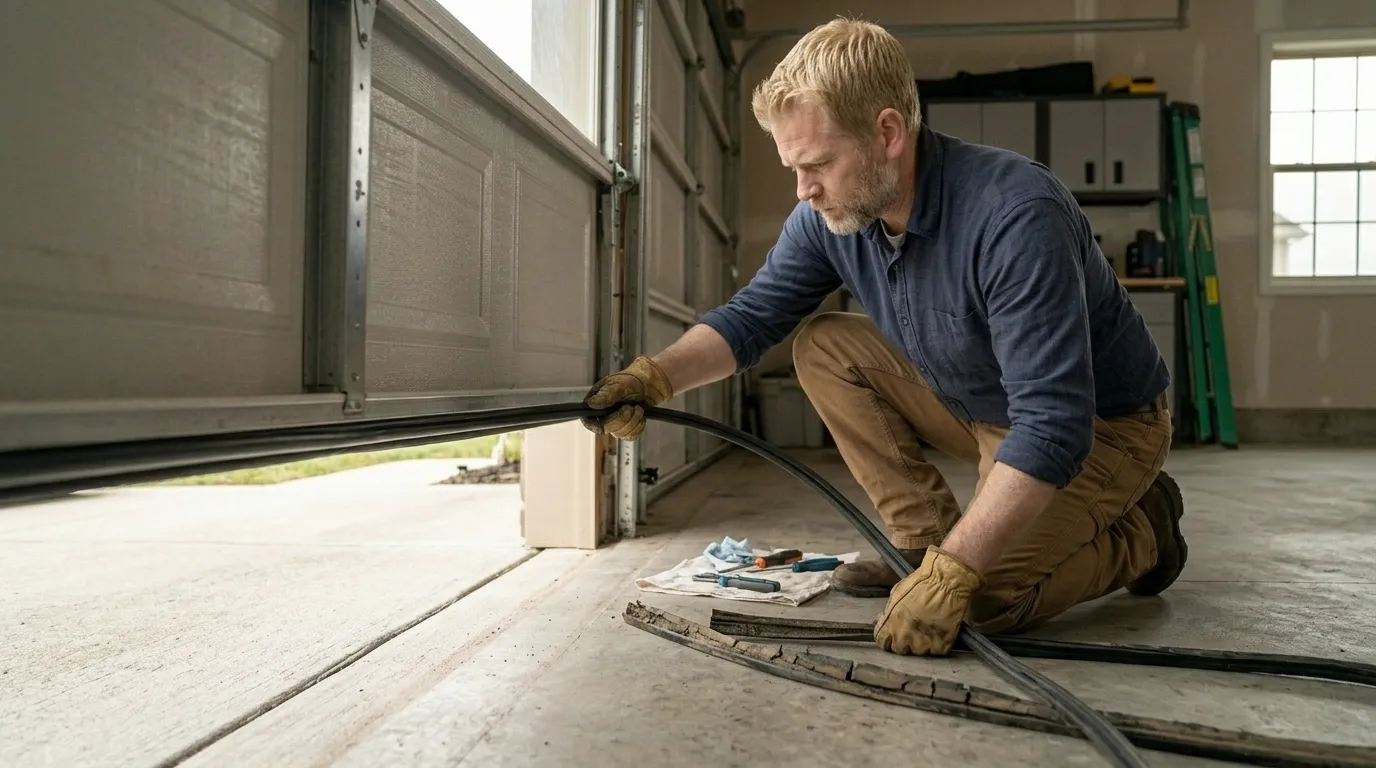
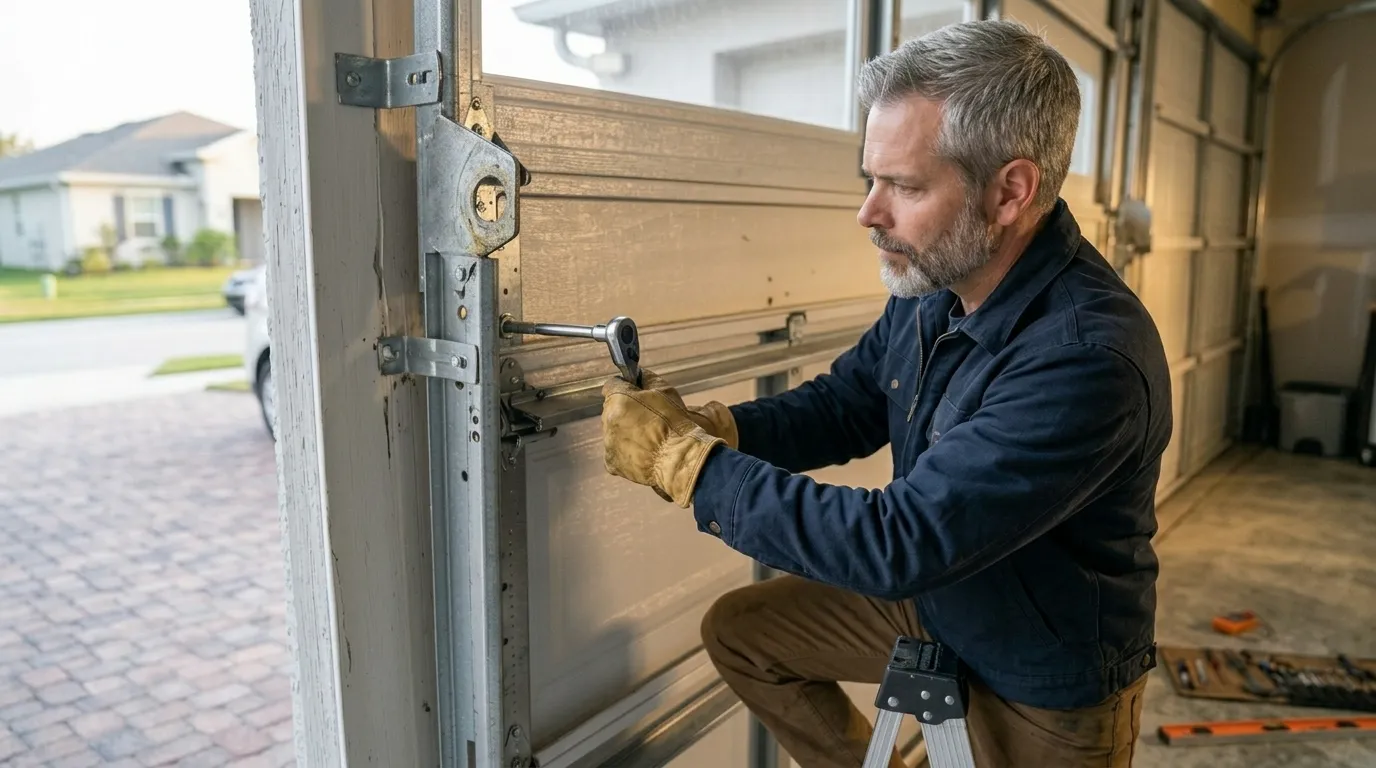
That later build year matters for what actually breaks. A 1993 door is far more likely to be a sectional steel door on a factory torsion spring, with a chain or belt-drive opener bolted in sometime in the 90s or since, rather than the older extension-spring, single-panel setups common in the pre-1960 pockets we also serve. The failure points are the ones you'd expect from a door that age now: worn rollers, a spring that's finally given out after 20-plus years of cycles, opener logic boards or drive gears that have simply worn down, and weatherstripping that's cracked from cold.
We're not showing up with parts sized for a 1948 door. A Lawrence service call usually means standard torsion springs, standard track, and openers that are repairable rather than obsolete. That's a simpler job in most cases, though not always a cheaper one if the opener itself needs replacing rather than repairing.
The Calls We Get From Here
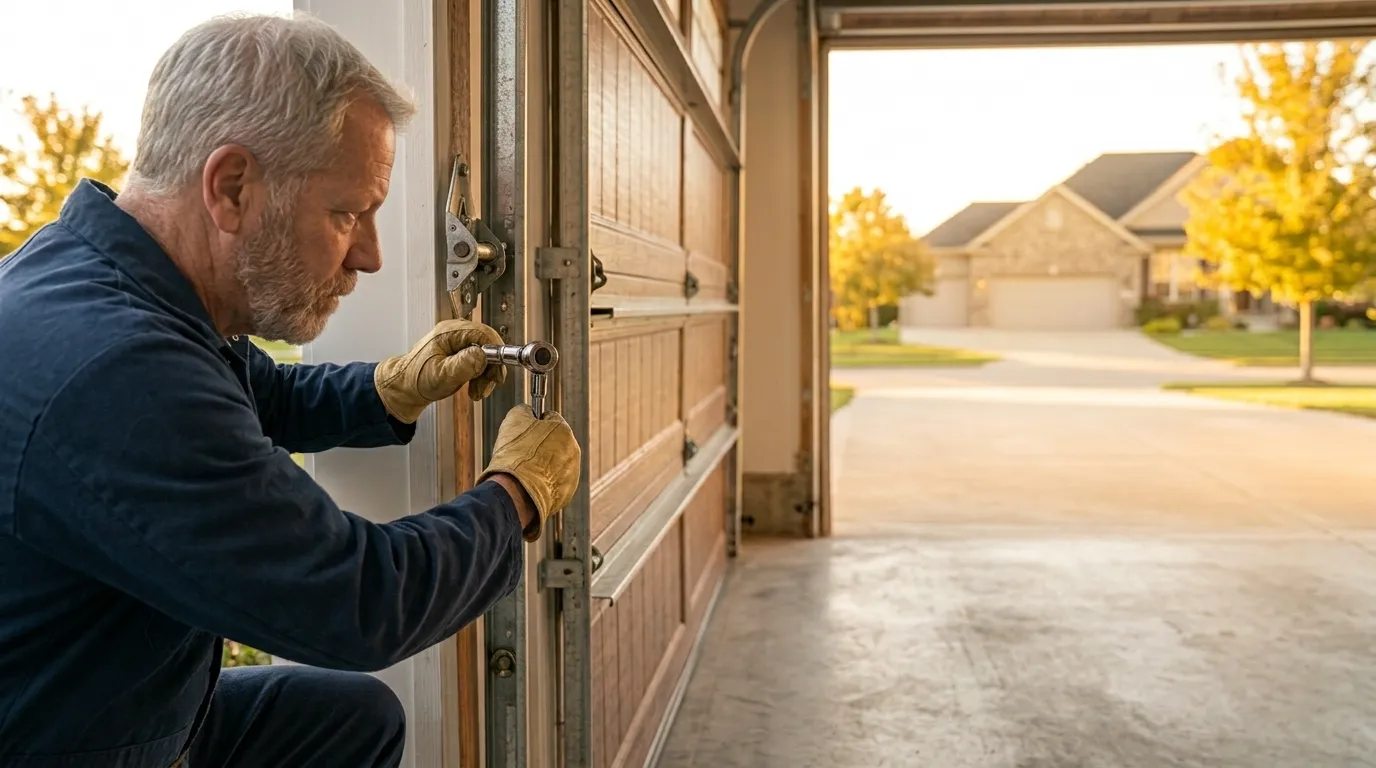
Given a housing stock centered on the early 90s, the most common calls from Lawrence are torsion spring failures on doors that have finally hit their cycle limit, opener issues where the motor or gear set has worn out rather than anything exotic, and track or roller wear from age and winter use. Cold-weather binding is real here too - the region sits in a severe cold climate band, and stiff or frozen tracks in January are a normal call, not an emergency exclusive to older homes.
With roughly 575 households in Lawrence, we're not running a high volume of calls to any one street, but the pattern is consistent: doors and openers from the same rough era failing in the same rough way, around the same age. Household income here runs close to $69,007, which tracks with what we see on the job - most owners want a straight repair over a full replacement when the door itself is still sound, and we'll tell you honestly when that's the right call versus when the opener or spring system is past the point of being worth patching.
Getting Here
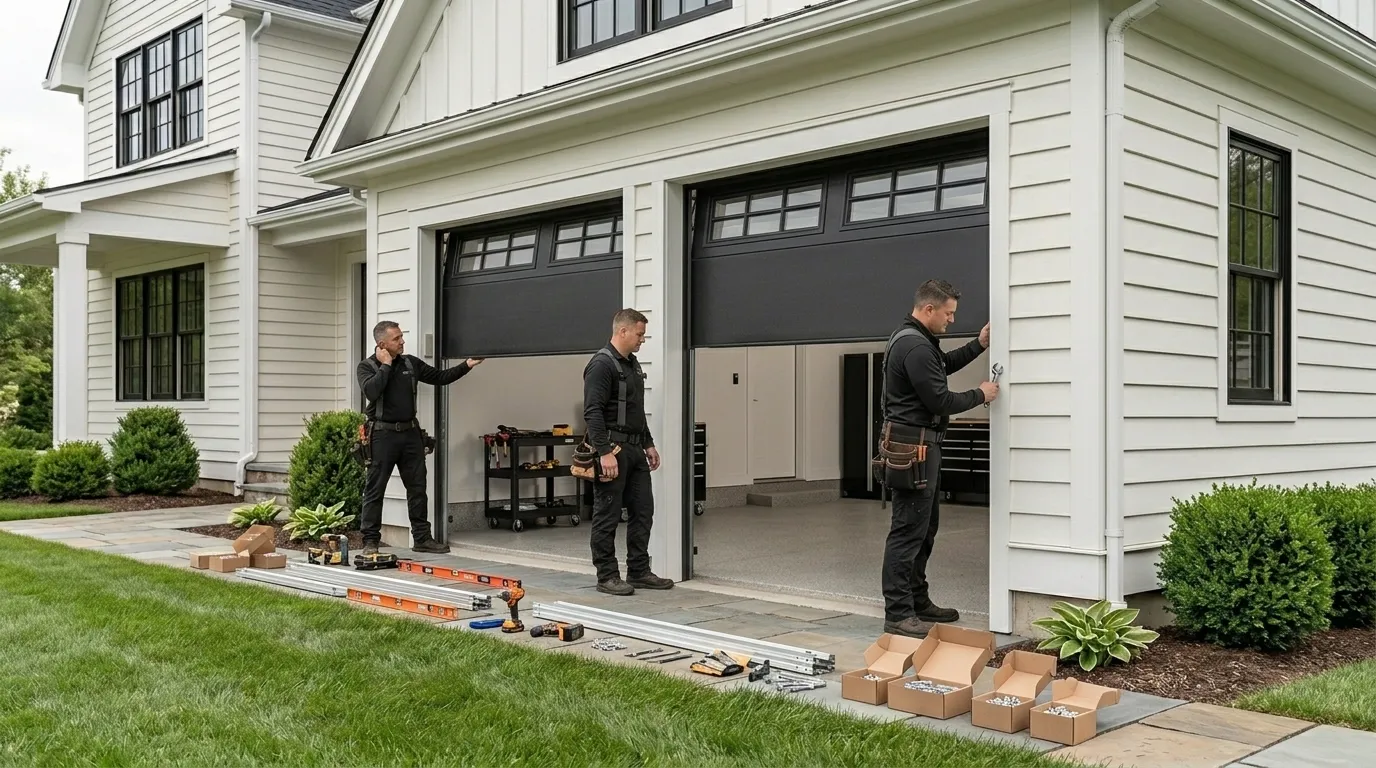
Lawrence sits about 12 miles out from our base in Pittsburgh. We don't keep a depot or crew stationed in Lawrence - every job here means a truck coming out from the city, so we schedule the drive into the appointment rather than promising a walk-up response time we can't back up.
It's a straightforward trip, not a detour we tack onto another job, so it doesn't change how we price or handle the work once we're there. It does mean we ask a few more questions on the phone before we head out - make, model, what the door's doing - so the truck is loaded right the first time instead of us turning around for a part.
This Area's Housing
With a median build year around 1993, Lawrence's housing stock is meaningfully younger than the 1938-2014 range and 1955 median that describes the wider Pittsburgh service area. That earlier median comes from 108 mostly pre-1960 named areas across the region - Lawrence isn't one of the old ones.
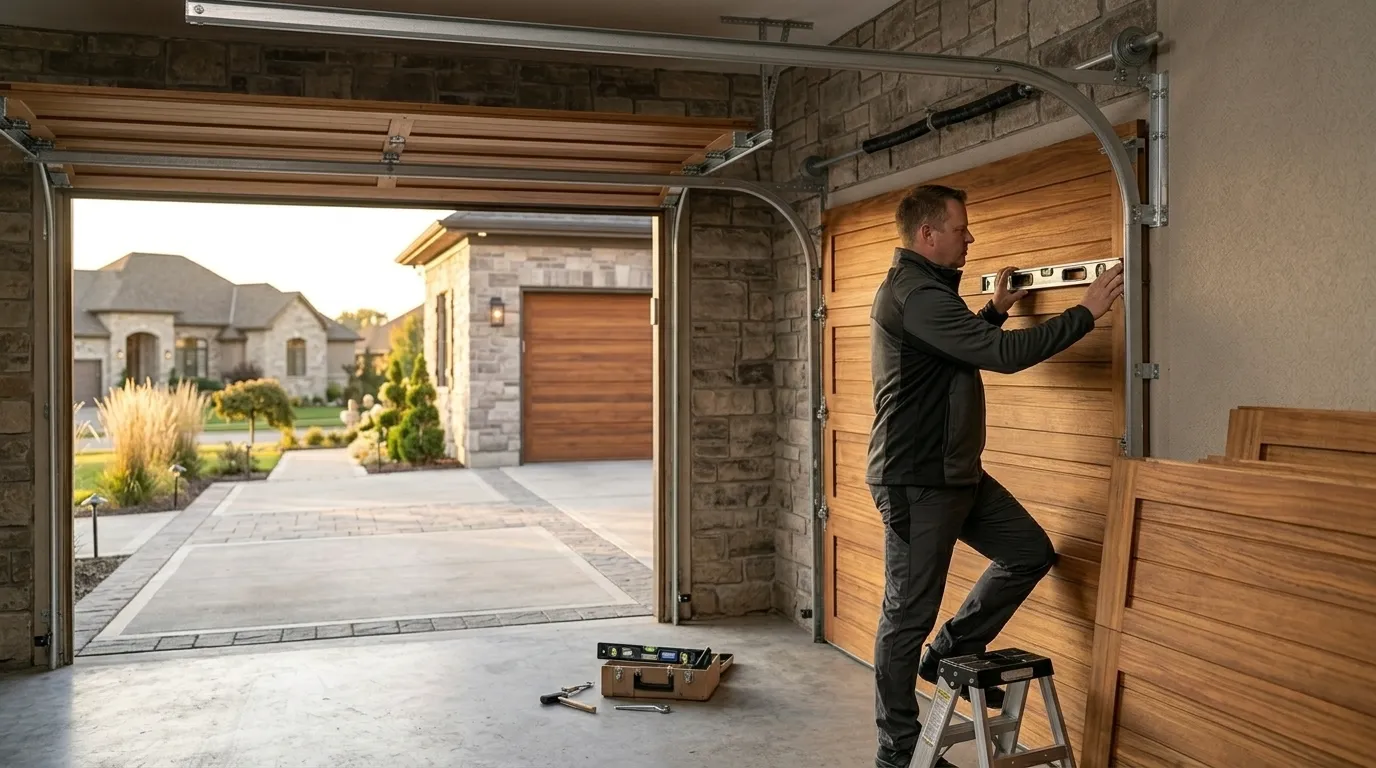
What that means in practice: fewer of the original single-panel wood doors, less side-mounted torsion hardware from the 1950s that's genuinely hard to source parts for, and more of the standard steel sectional doors and chain-drive or belt-drive openers that came in with 90s-era construction. The failures skew toward normal wear-and-tear on parts that are still in production, rather than sourcing problems on parts that aren't.
One honest note: a door that age isn't brand new either. Openers from the early-to-mid 90s are old enough that circuit boards and drive components do fail, and at that point replacement can make more sense than repair. We'll look at the actual unit and tell you which side of that line it's on rather than defaulting to either answer.
How it works
From “it’s stuck” to “it’s fixed”
01
Tell us what’s wrong
Describe the symptom - won’t open, loud bang, opener runs but the door won’t move.
02
On-site diagnosis
A technician tests the door under power and by hand and finds what actually failed.
03
Clear, up-front plan
You get the fix that’s needed and what drives the cost - before any work starts.
04
Repaired & tested
The repair is done, the door is set true and tested, and the work area left clean.
Serving Pittsburgh, PA - tell us what your door’s doing and we’ll take it from there.
No. We're based in Pittsburgh and drive out to Lawrence, about 12 miles away, for service calls. We don't keep a crew or depot stationed here, so we build the drive time into scheduling rather than promising an on-the-spot response.
Are Lawrence garage doors different from the older Pittsburgh housing stock?
Generally yes. Lawrence's median home dates to around 1993, well after the 1955 median that describes much of the wider service area. That means more standard steel sectional doors and factory torsion springs, and fewer of the older single-panel doors with hard-to-source hardware.
Do you fix openers or just replace them?
We look at the actual unit first. Many opener issues on doors from the early-to-mid 90s onward are repairable - worn gears, a bad capacitor, a failing sensor. When the drive system or logic board is genuinely shot, we'll say so rather than repairing something that will fail again in a month.
Does the cold affect garage doors in Lawrence?
Yes. The region sits in a severe cold climate zone, and stiff tracks, brittle weatherstripping, and springs that struggle in low temperatures are common winter calls here, regardless of the age of the door.
Ready to get your garage door sorted?
Tell us what it’s doing and where you are in Pittsburgh - we’ll take it from there.