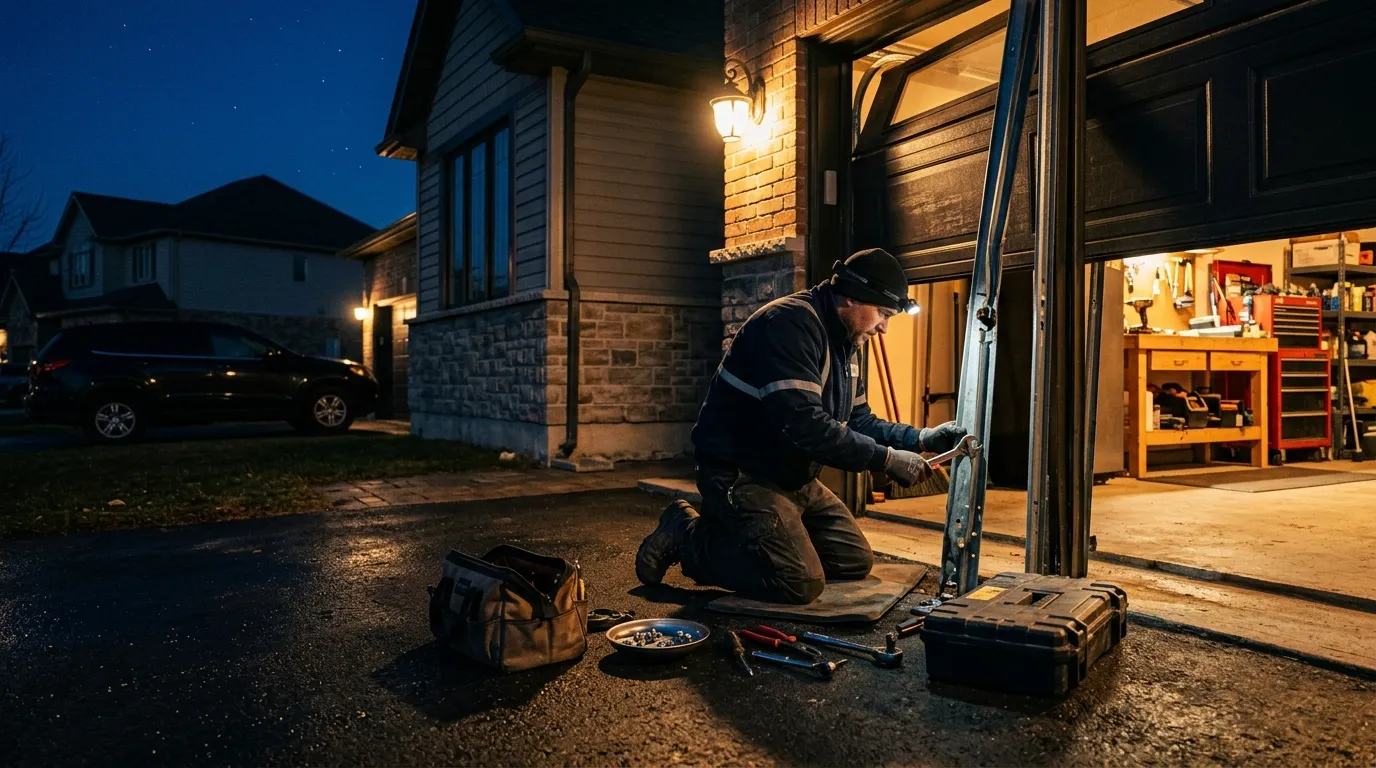
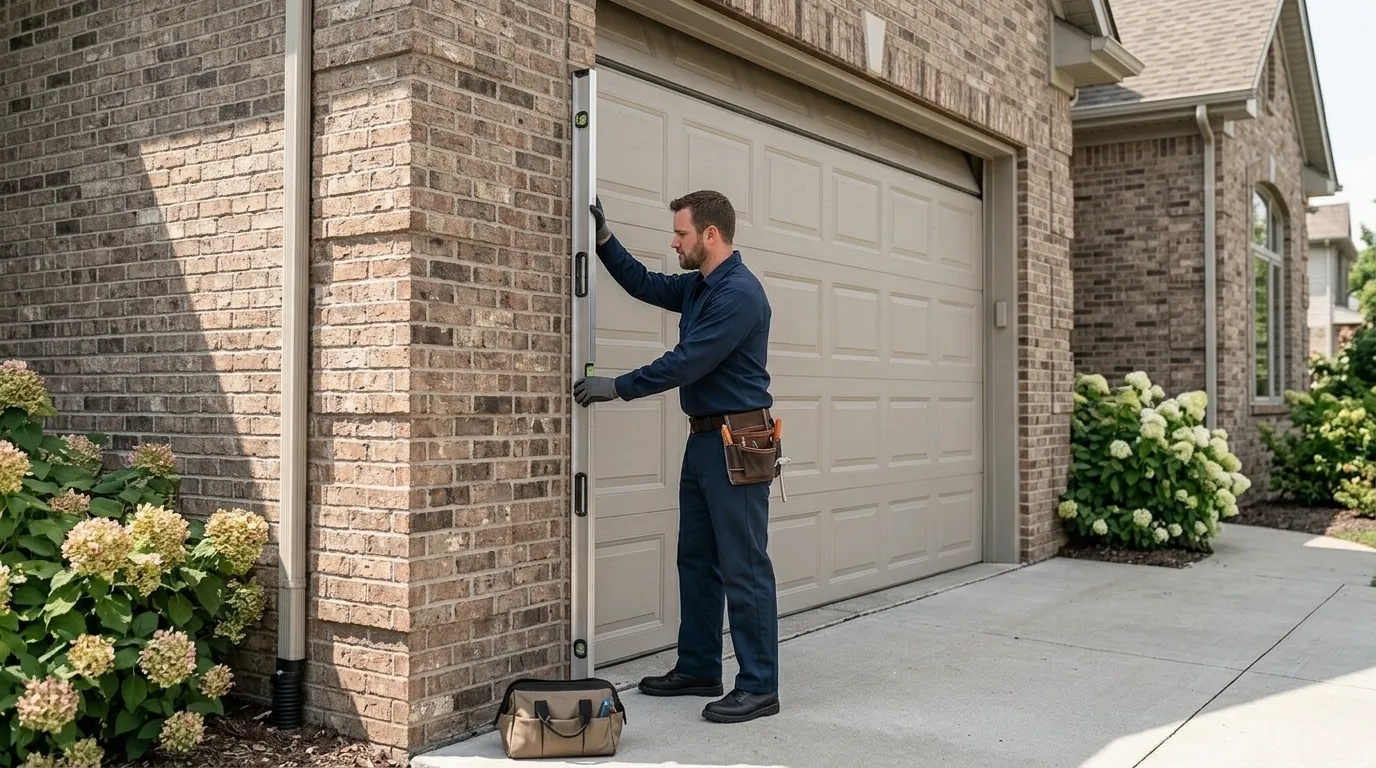
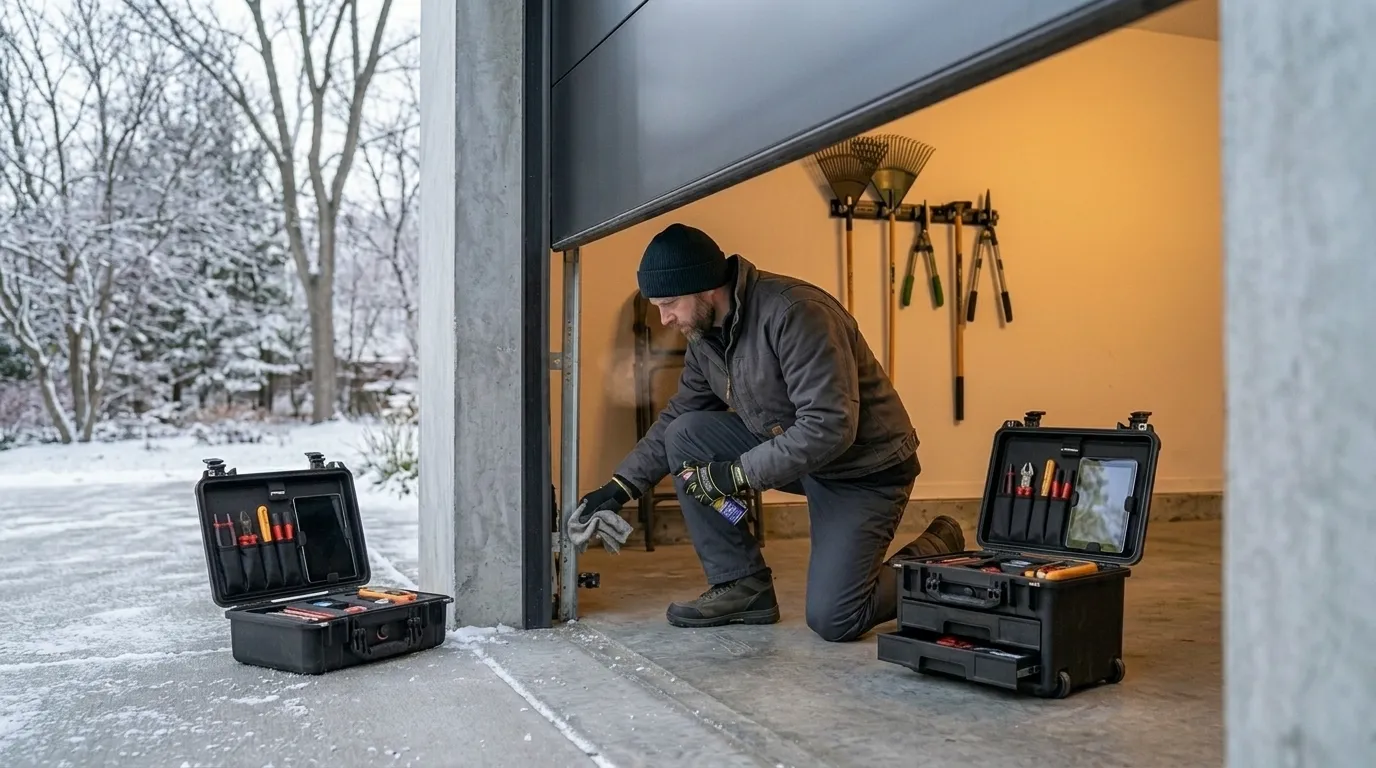
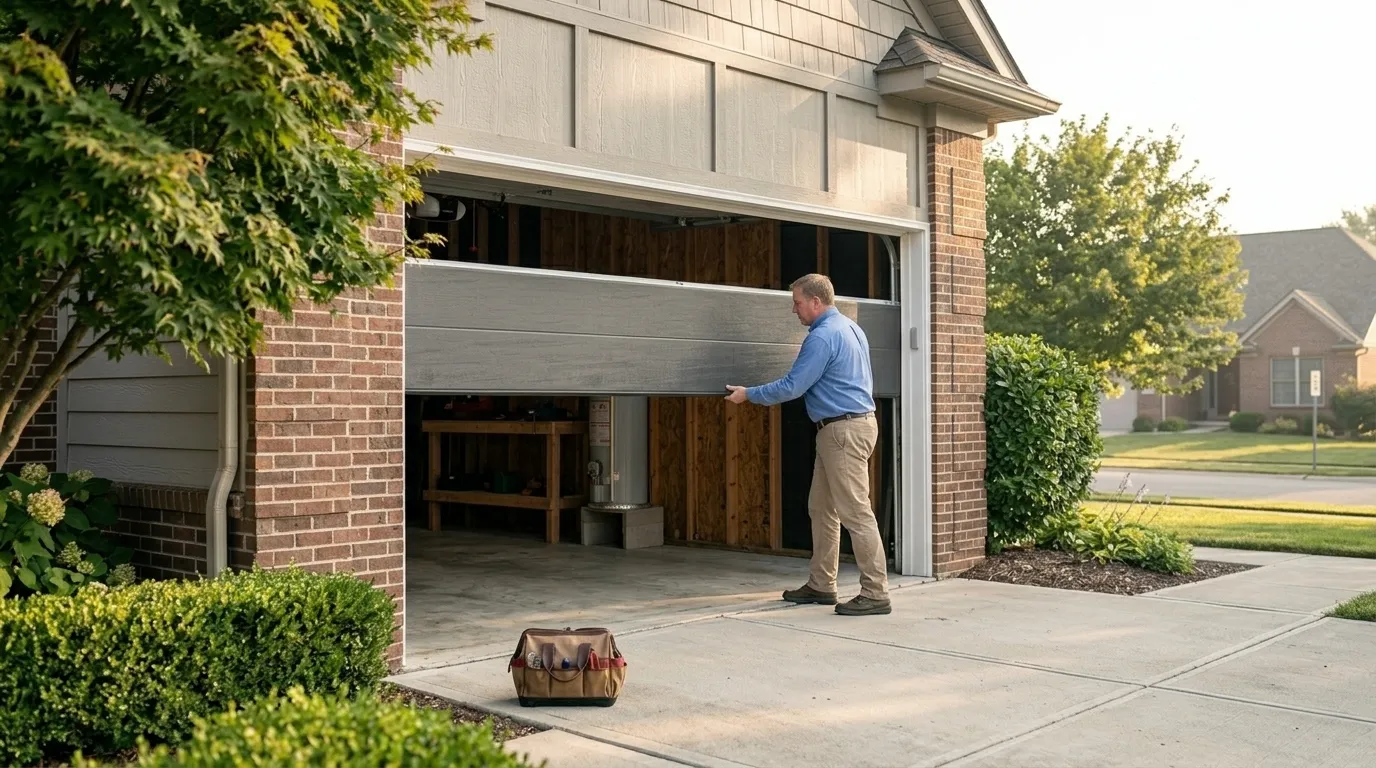
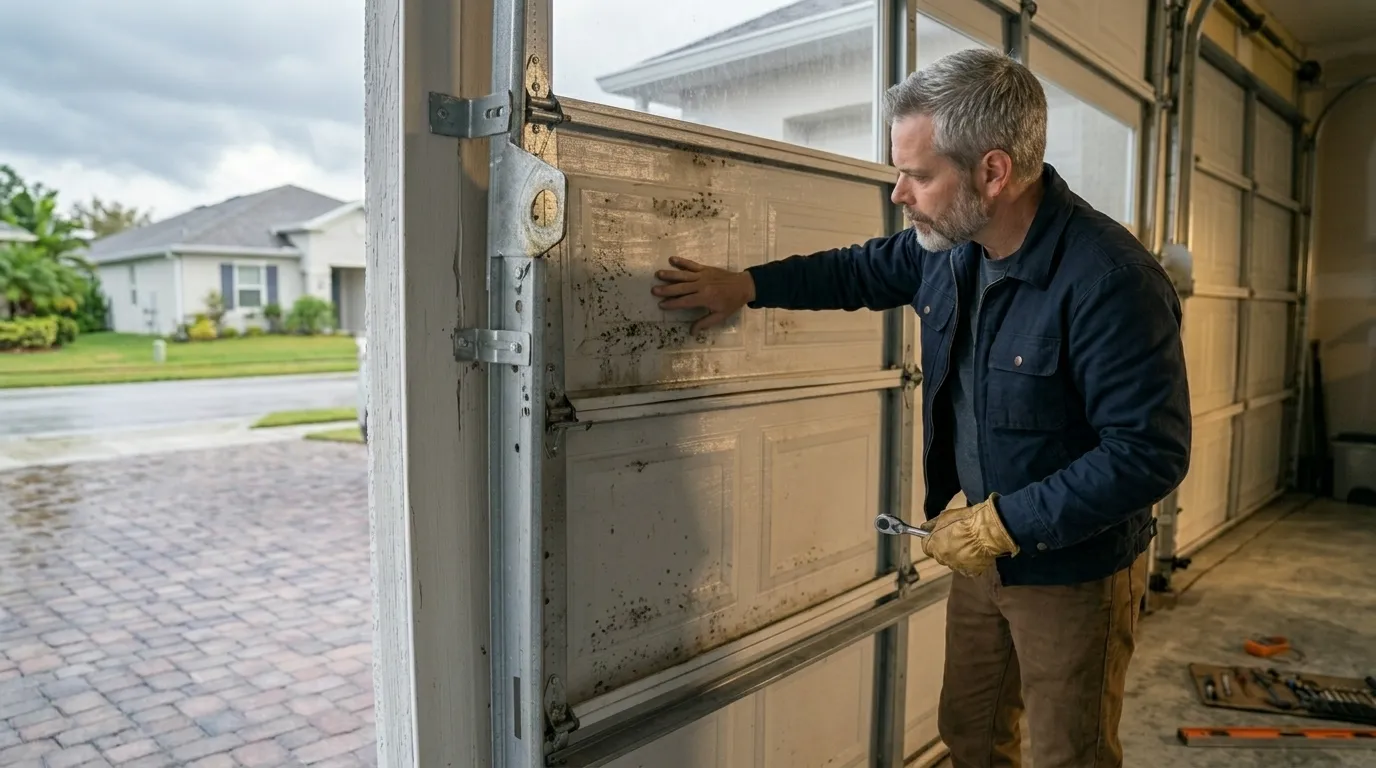
Liberty's housing stock centers on 1954, right in the thick of the wider area's 1938-2014 build range, and that one number tells you almost everything about the door hanging on the front of the garage. A house framed in the mid-1950s usually got a single one-piece wood or early steel door on side-mounted torsion hardware, not the sectional panel doors with center-mounted springs that show up in newer construction. That hardware was built to a different standard, and parts for it aren't sitting on a shelf the way modern extension springs are. When a track bracket cracks or a hinge pin wears through on one of these original setups, we sometimes have to source or adapt a part rather than grab it off the truck. The cold-severe climate this area sits in adds its own wear: steel contracts in deep cold, and that shrinkage puts extra strain on old cable drums and roller brackets that have already had seven decades of temperature swings. Houses built later in that 1938-2014 range, closer to the 2000s end, tend to have modern torsion springs and insulated steel panels, so the fixes there look nothing like the fixes on a 1954 original. Knowing which era you're standing in front of changes the whole job.
The Calls We Get From Here
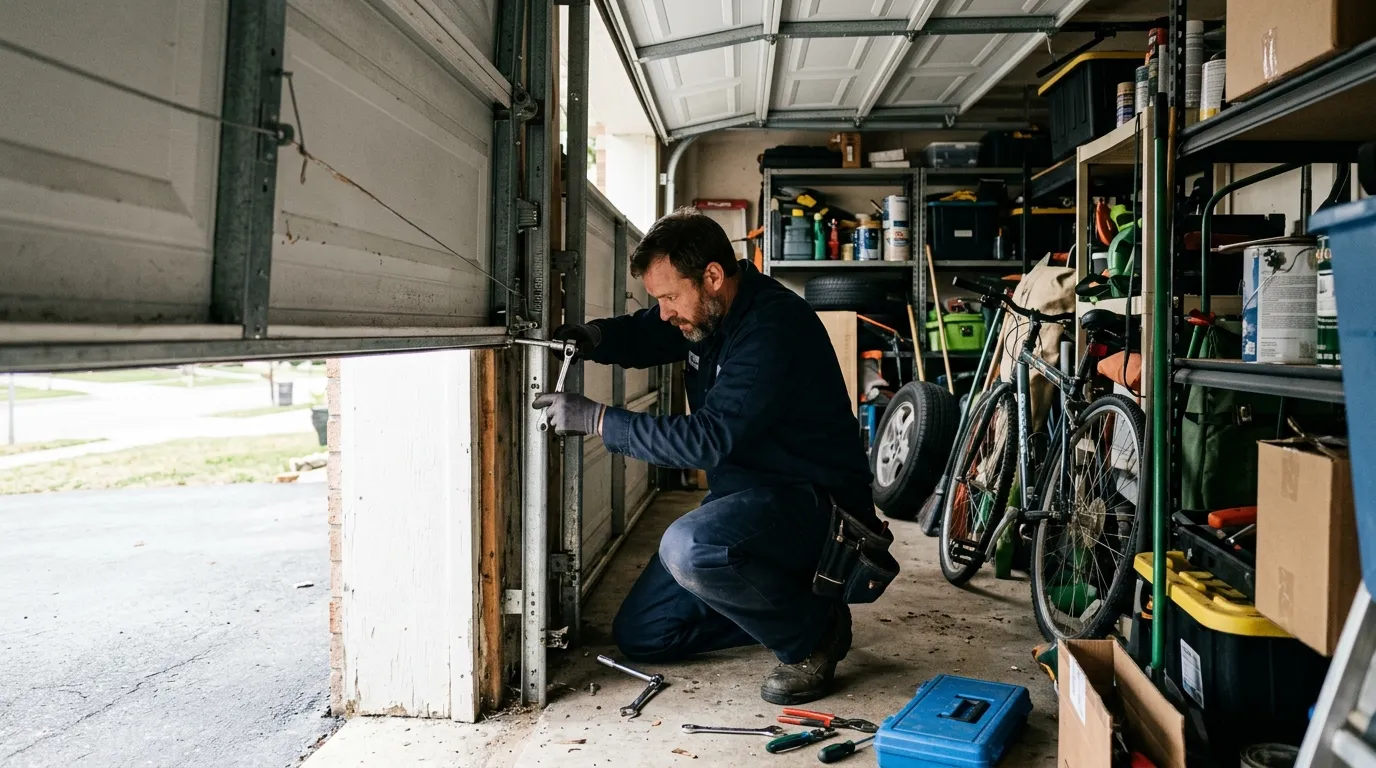
Most of what we get called out for in Liberty traces straight back to that 1954 median build year and the cold-severe winters that come with this part of the region. Torsion springs on original hardware are the most common failure - the steel fatigues over decades of cold-weather contraction and finally snaps, usually on a morning after a hard freeze. Second most common: openers on older wiring runs that never got upgraded when the door itself was replaced, so you end up with a newer panel bolted to circuitry that's fighting the load. We also see rollers and hinges that have corroded from repeated freeze-thaw cycling rather than from age alone - it's the swings, not just the years, that break things down. What we don't see as often here are the issues typical of newer subdivisions - insulated panel seal failures, keypad sensor faults - because so much of the stock predates those materials. If your door is original to a 1950s build and it's making a grinding sound in cold weather, that's almost always a spring or drum problem, not an opener problem, and it's worth having someone look before it lets go entirely.
Getting Here
We run out of Pittsburgh, about 10 miles from Liberty, and we don't keep a depot or drop-off point in the area - every job here is a truck coming out from the city. That distance means we plan the route rather than treat it as a walk-up call, so when you reach out, expect us to talk through timing before anything else. We don't quote a response time we can't back up, and we won't pretend to have a presence in Liberty we don't have. What we can say is that the trip is short enough that it's a normal part of our coverage, not an edge case, and 10 miles doesn't change how we price a spring replacement or an opener swap once we're on site. If you're weighing whether to call us versus someone based closer, the honest answer is that the work itself - diagnosing 1950s-era torsion hardware in a cold climate - is the same skill set regardless of which side of Pittsburgh it's on.
This Area's Housing
Liberty is a small area by household count - about 1,063 households - set against a median income of $76,607, a bit higher than the $72,020 median across the wider service area. That income figure matters less for whether people can afford a repair and more for what kind of repair they tend to choose: in our experience, areas running above the regional median are more willing to replace an aging door outright rather than patch original hardware repeatedly, and Liberty's numbers put it in that range. The housing itself sits inside the broader pattern of 108 named areas where most stock went up before 1960, and Liberty's own 1954 median puts it solidly in that pre-1960 majority rather than at the newer edge of the 1938-2014 range. With just over a thousand households, this isn't a large enough area to have its own distinct architectural pocket - it reads as a continuation of the same mid-century building wave that shaped its neighbors, which is exactly why the torsion-spring and old-opener calls we described above are the norm here, not the exception.
How it works
From “it’s stuck” to “it’s fixed”
01
Tell us what’s wrong
Describe the symptom - won’t open, loud bang, opener runs but the door won’t move.
02
On-site diagnosis
A technician tests the door under power and by hand and finds what actually failed.
03
Clear, up-front plan
You get the fix that’s needed and what drives the cost - before any work starts.
04
Repaired & tested
The repair is done, the door is set true and tested, and the work area left clean.
Serving Pittsburgh, PA - tell us what your door’s doing and we’ll take it from there.
Liberty sits in a cold-severe climate band, and steel garage door hardware contracts in deep cold. On original 1950s-era torsion springs, that repeated contraction speeds up metal fatigue, so failures cluster in the coldest stretches of winter rather than spreading evenly across the year.
Do you have a shop or depot in Liberty?
No. We run out of Pittsburgh, about 10 miles away, and travel out for every job. We don't keep equipment or staff stationed in Liberty itself, so scheduling is planned as a trip rather than a walk-in visit.
Is it worth replacing an original 1950s door instead of repairing it?
Often yes, especially once original hardware starts failing repeatedly. Parts for side-mounted torsion setups from that era aren't always stocked the way modern components are, and at some point sourcing or adapting parts costs more than a straightforward replacement with current hardware.
Will an opener installed years ago still work with a newer door?
It depends on the wiring and the opener's rated lift capacity, which older installs sometimes don't match once a heavier insulated panel is added. That mismatch is one of the more common issues we run into on homes where the door was updated but the opener wasn't.
Ready to get your garage door sorted?
Tell us what it’s doing and where you are in Pittsburgh - we’ll take it from there.