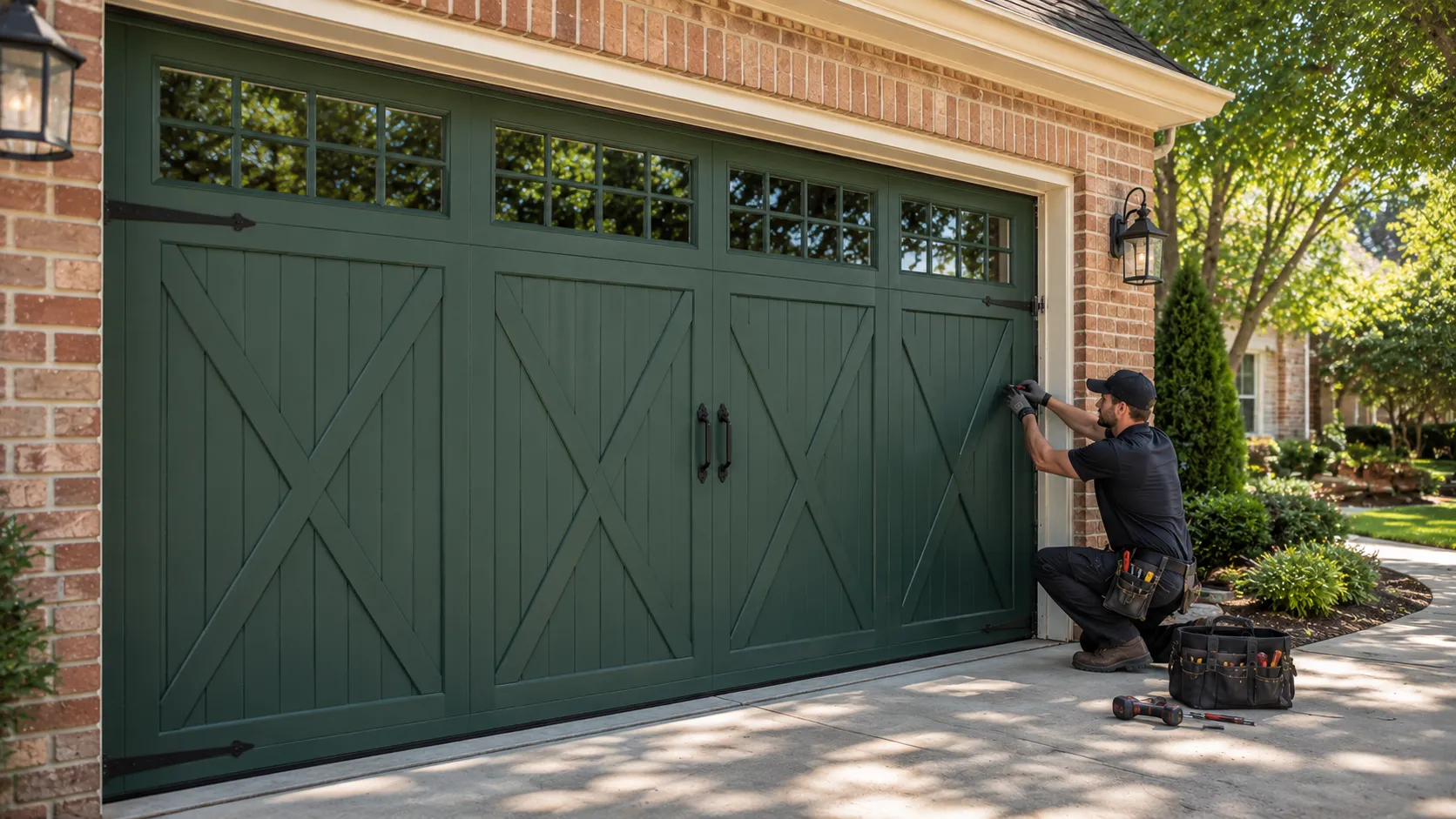
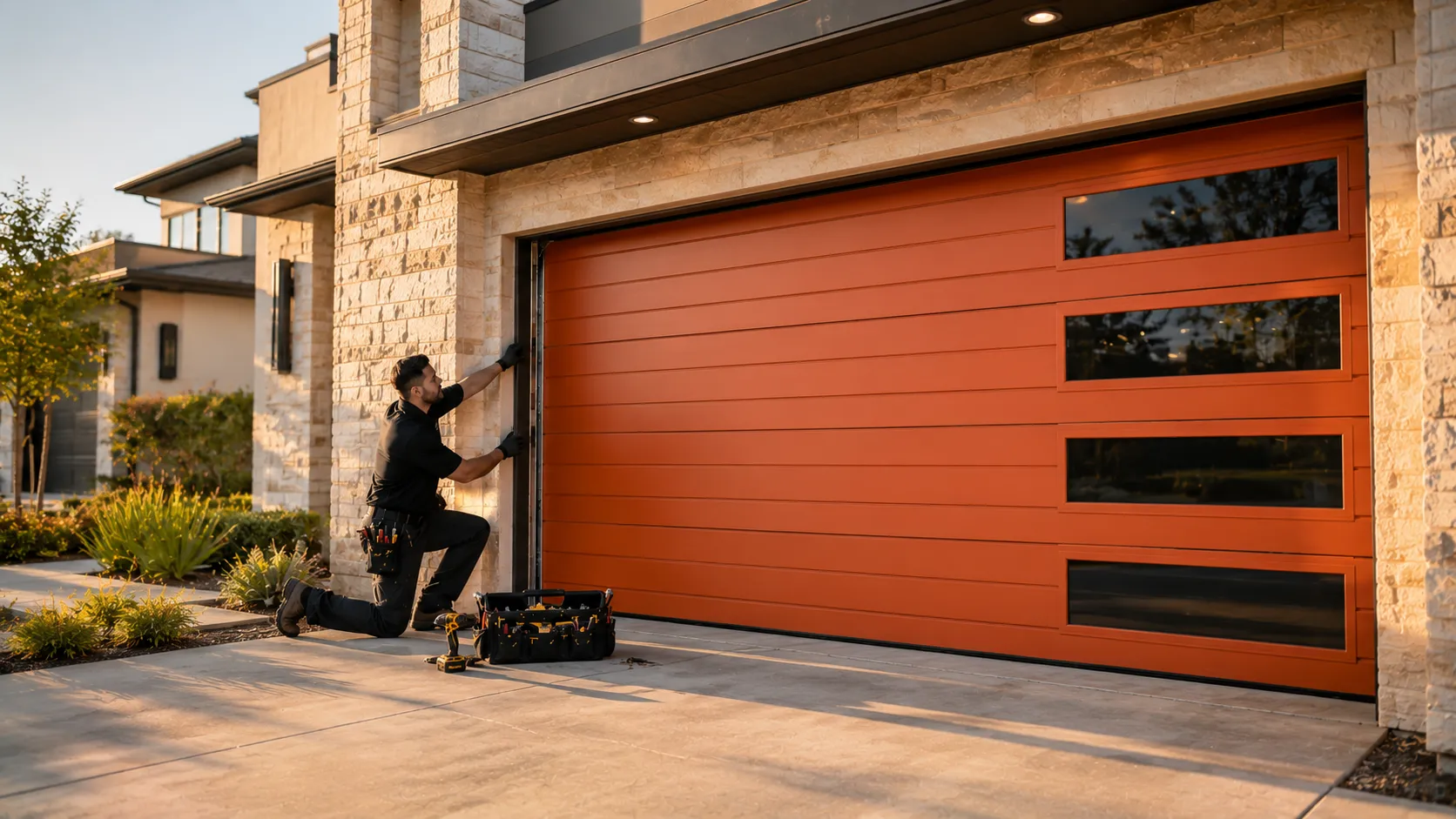
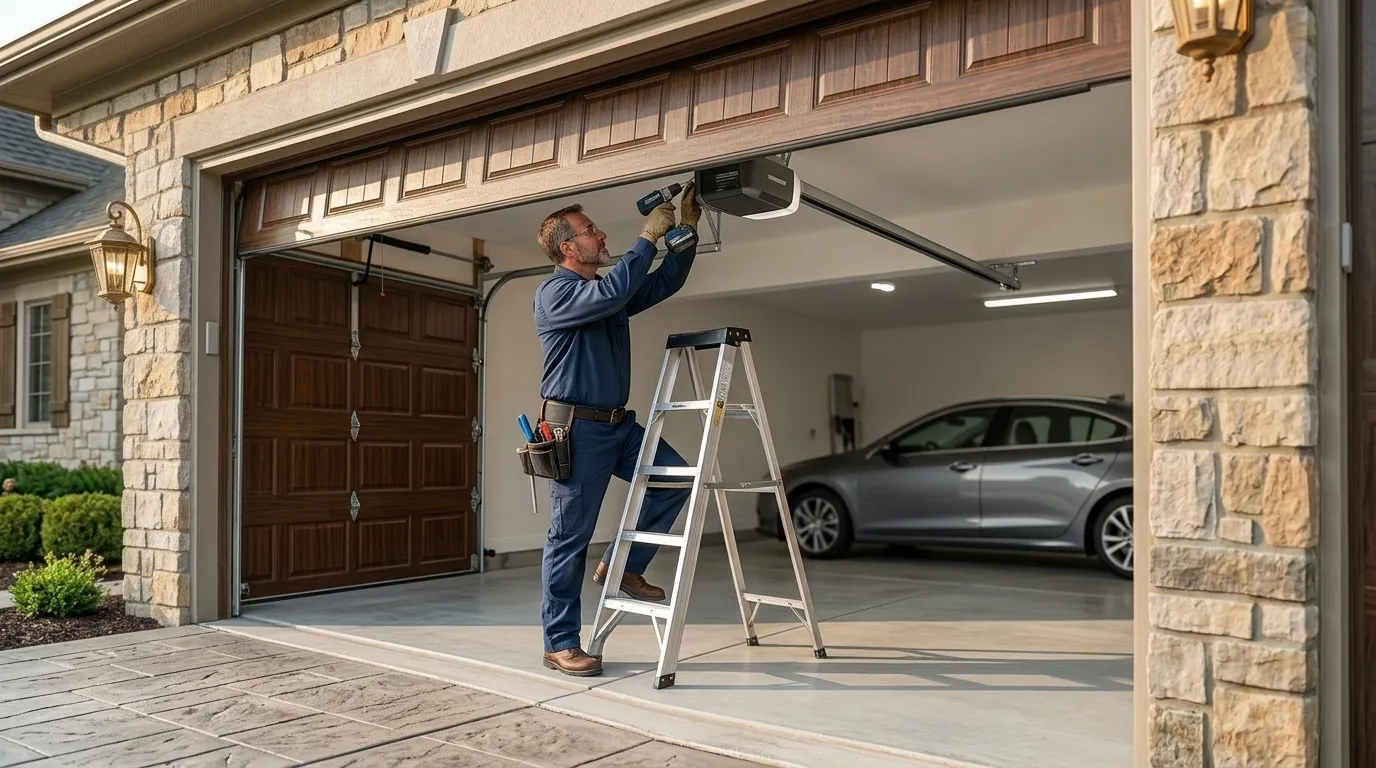
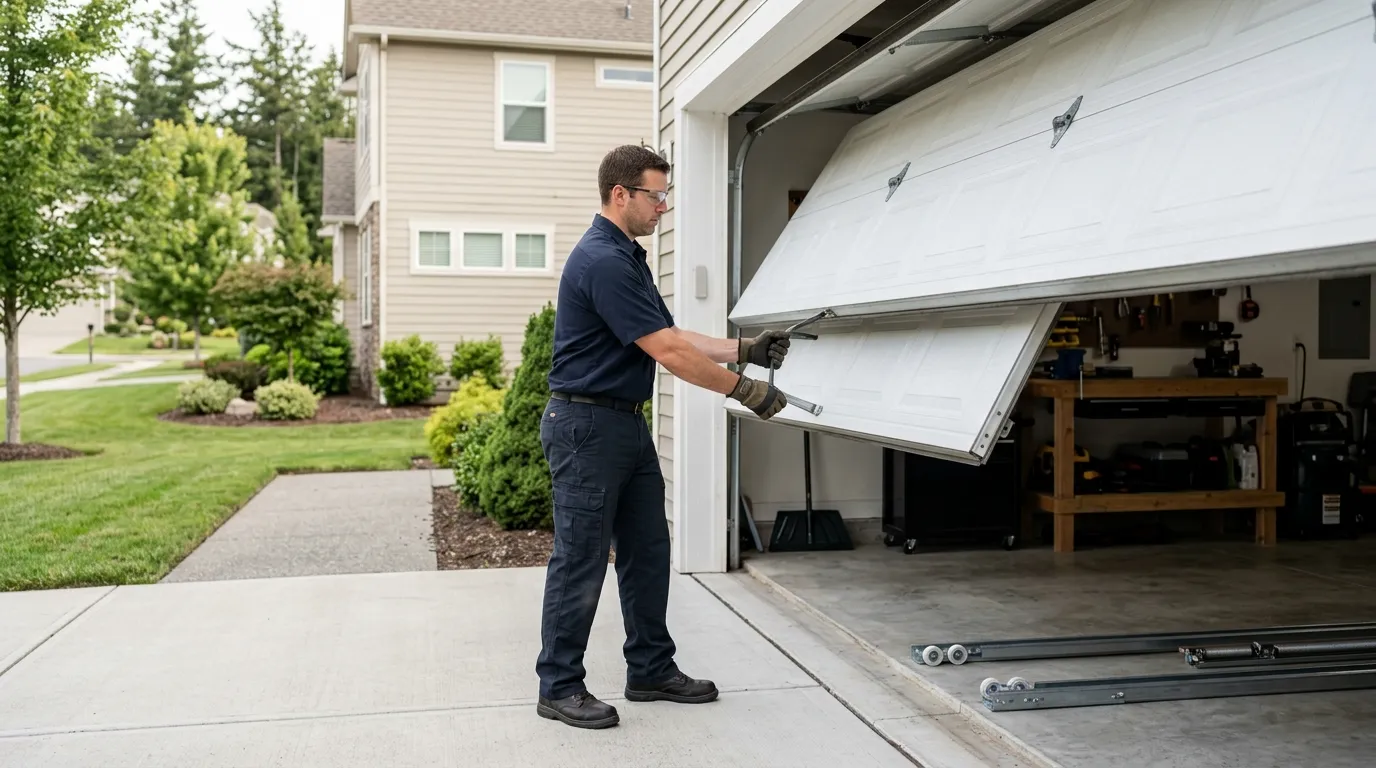
McMurray homes mostly date to 1971, later than most of our coverage area. We travel from Pittsburgh to fix the sectional doors and torsion springs that come with that housing stock.
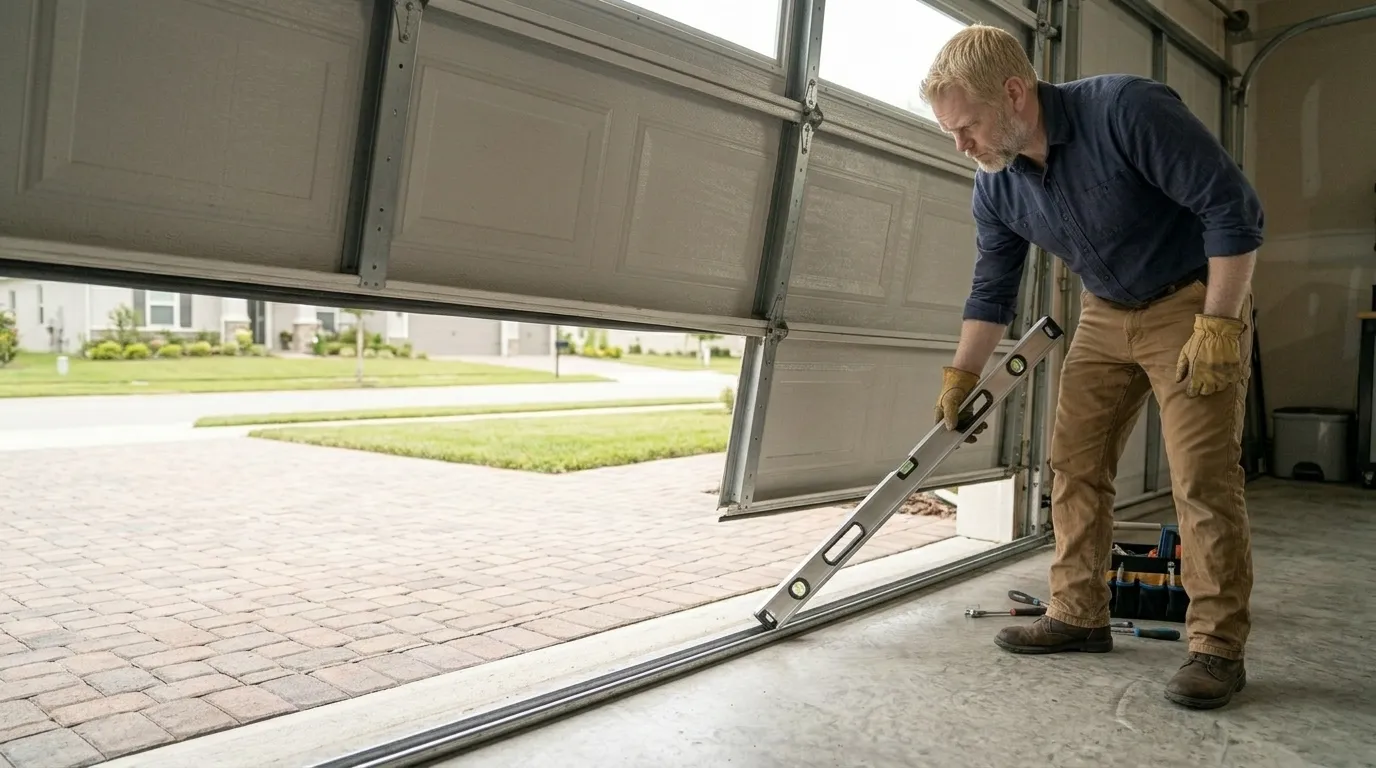
McMurray's housing stock centers on 1971, a good sixteen years newer than the 1955 median across the rest of our service area, where most of the 108 named communities we cover are still sitting on pre-1960 construction. That gap matters more than it sounds like it should. A garage built in 1971 almost never has the old one-piece hinged slab door you find on the pre-1960 side of the map - it has an early steel sectional door, usually on extension springs mounted along the horizontal tracks, sometimes upgraded to torsion hardware somewhere along the way by a previous owner.
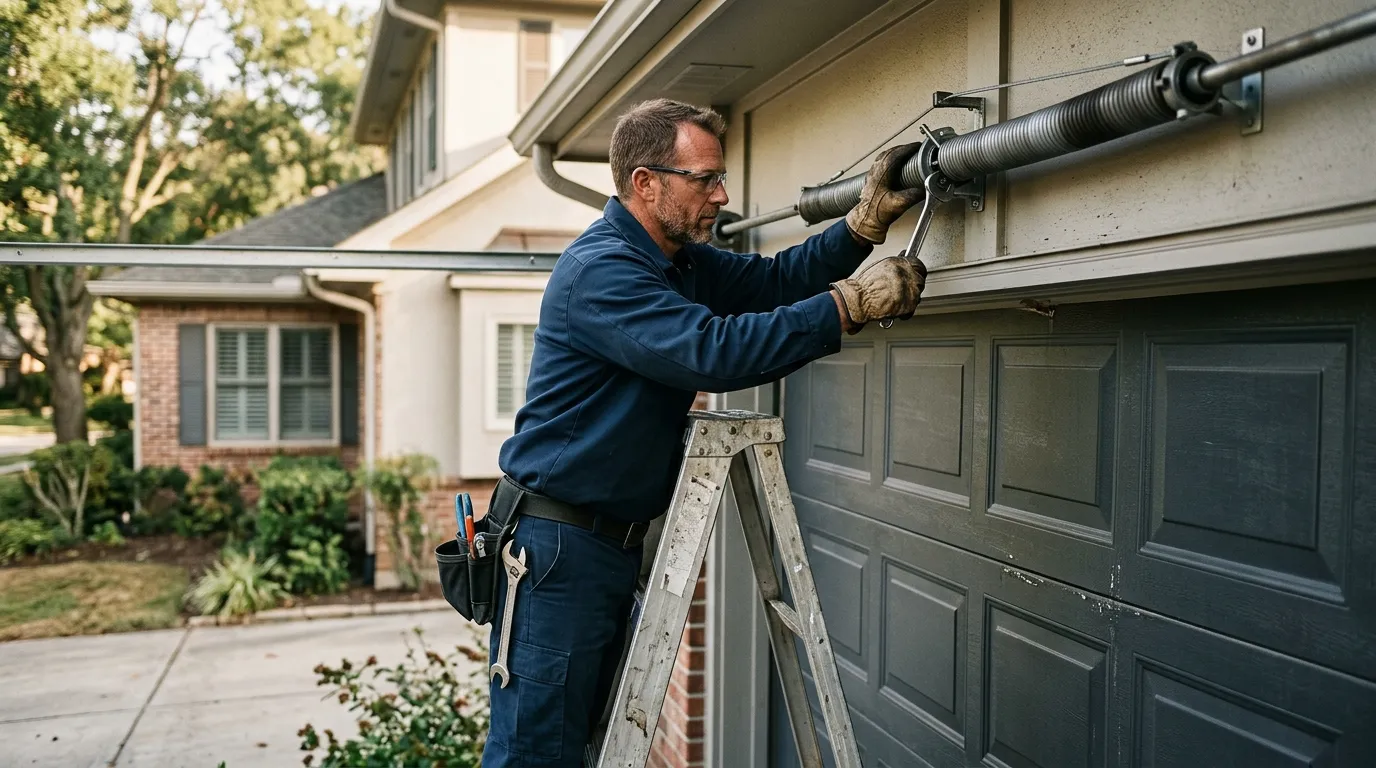
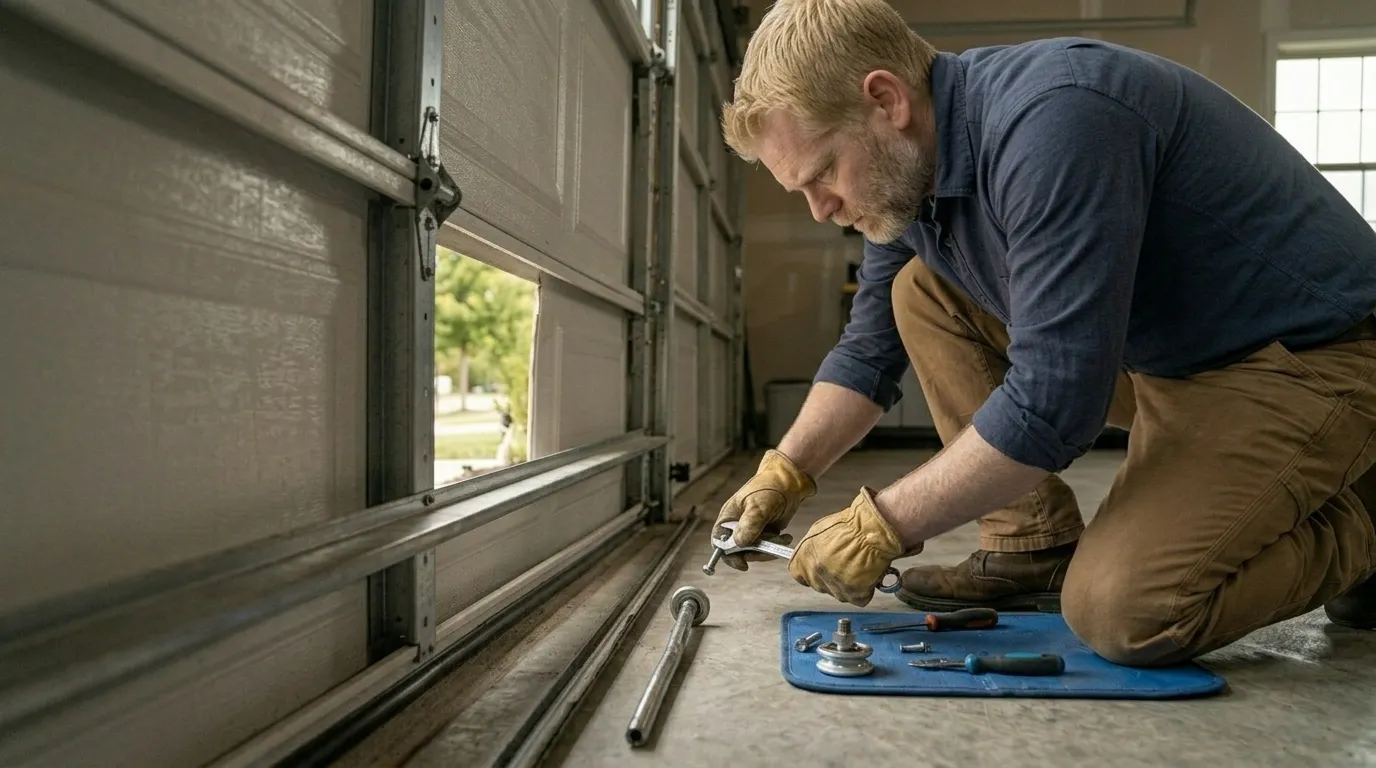
The failures are different too. On a 1971 door, we're usually looking at worn extension spring pulleys, brittle nylon rollers that were never swapped out, or a torsion conversion that was done cheap decades ago and is now due. We don't see the wood-rot-around-the-track problems that plague the oldest housing in the area, but we do see doors that have had one motor swap already and are on their second or third opener.
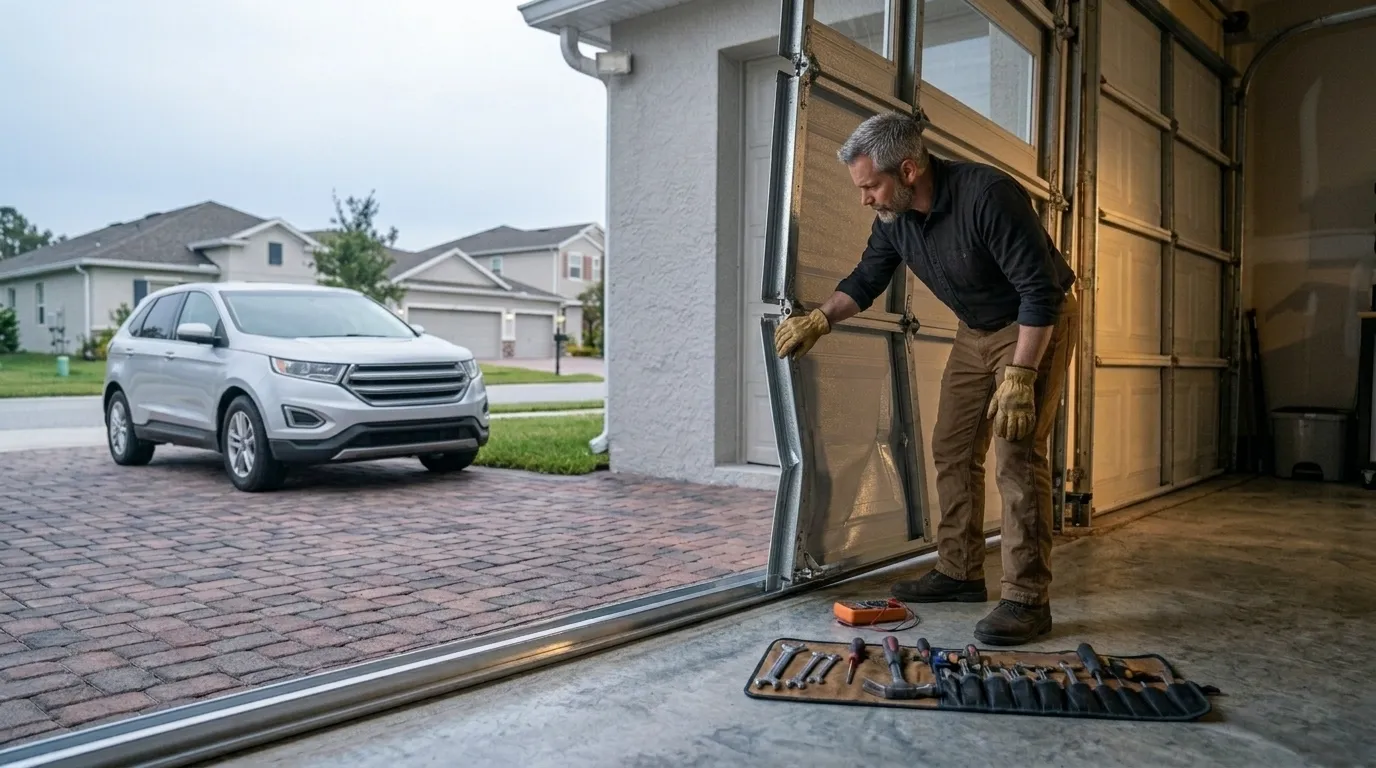
We won't tell you your door needs replacing just because it's from 1971 - plenty of steel sectional doors from that era are still square and worth keeping, provided the panels aren't rusted through at the bottom section. We'll look at what's actually failing before we say fix or replace.
The Calls We Get From Here
A lot of what we hear from McMurray is a spring that let go without warning - usually an extension spring, since that's what a lot of 1971-era doors shipped with, and those don't give much notice before they snap. Second most common is an opener that's grinding or reversing partway up, which on a door this age is often a drive gear worn out inside a chain-drive unit that's been running since the last owner had it installed.
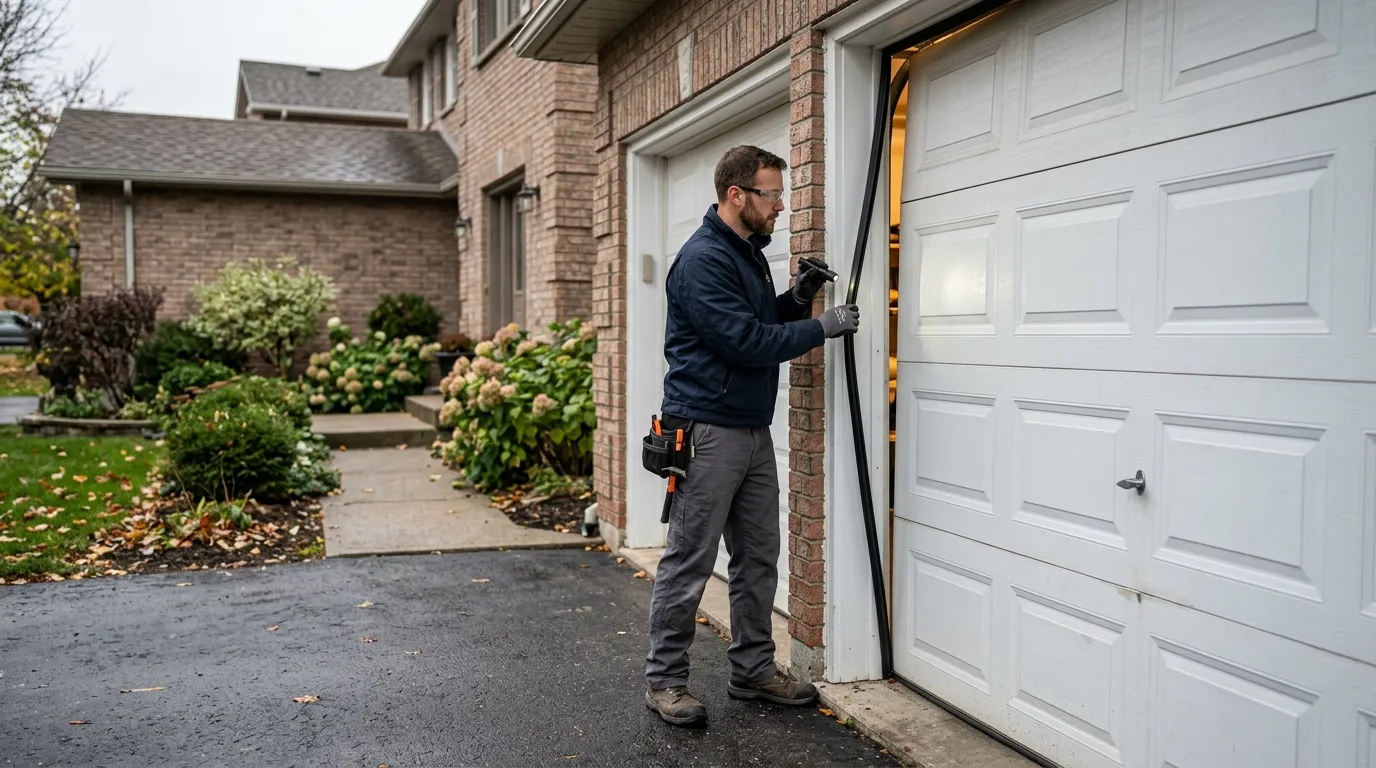
We also get calls about noisy rollers. Original steel rollers from a 1971 build are past due for nylon replacements almost everywhere we see them, and the noise is usually the first sign homeowners notice before anything actually breaks.
One thing we're upfront about: if a spring has already snapped and the door is stuck down with a car inside, we can talk you through getting it manually released, but the parts and labor to do it right still take a scheduled visit - we don't stock every spring size on the truck for every door built in this era, so if yours is an odd length we may need a day to get the right one in.
Getting Here
We run from Pittsburgh, and McMurray sits about 12 miles out, which puts it toward the far edge of where we take calls regularly. There's no depot or drop location in McMurray itself - every truck comes from Pittsburgh, so if you're booking a same-day slot, drive time is part of what we're working around.
We don't want to overpromise here. Twelve miles isn't far, but it's farther than a lot of the towns closer in, and it can mean the difference between an afternoon slot and a next-day one depending on how the schedule's running. If timing matters - a stuck door with a car trapped inside, for instance - say so when you call, and we'll tell you honestly what's realistic instead of just booking you in.
We'd rather be straight about the drive than promise a response time we can't back up from 12 miles away.
This Area's Housing
McMurray is a smaller piece of our coverage area - about 1,584 households, compared with 279,154 across the whole service territory we work. It's also one of the higher-income pockets we serve: median household income here runs $151,478, more than double the $72,020 median for the wider area. That tends to show up in the calls themselves - more owners asking about insulated doors and quieter belt-drive openers upfront, fewer patch jobs to stretch a door another winter.
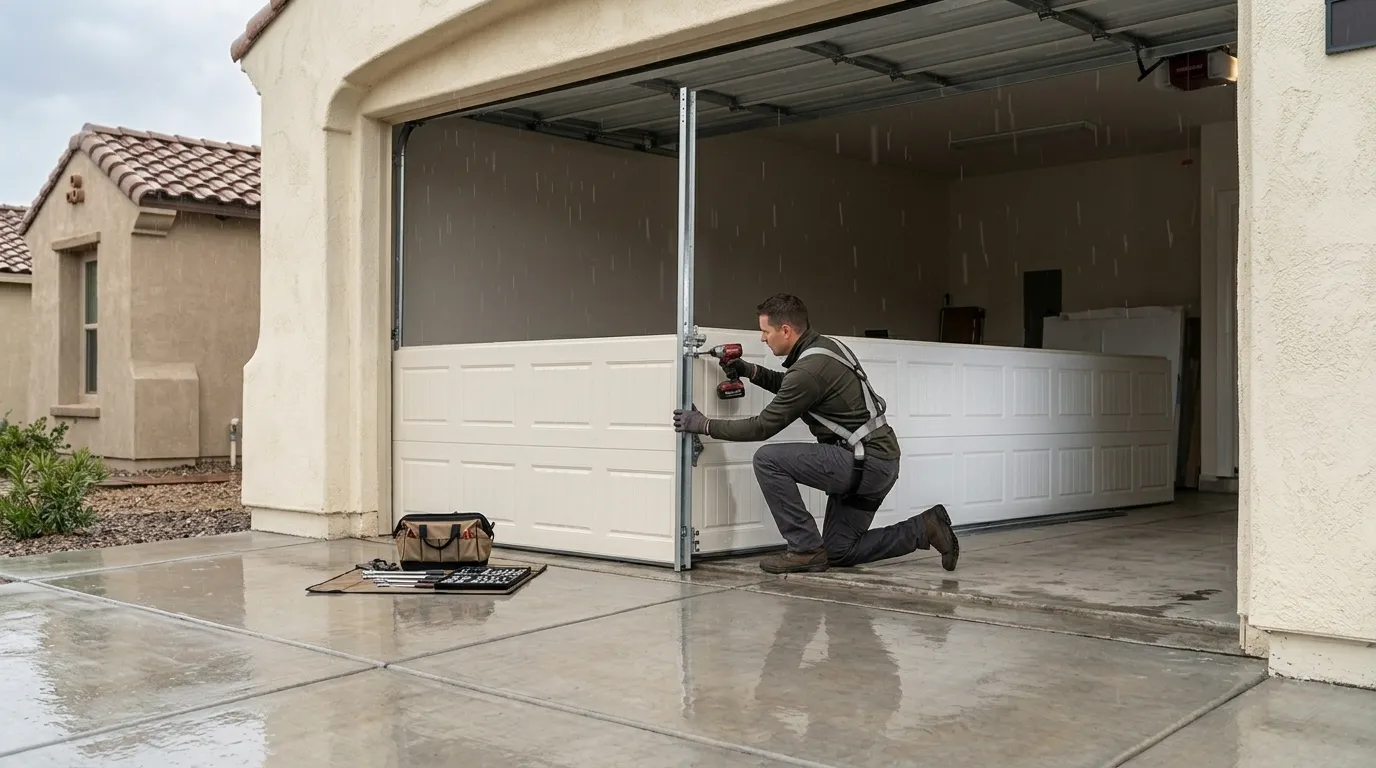
The climate doesn't care about income, though. This is a severe cold-climate zone, and a 1971 steel door without much insulation behind the panel skin performs the same here as anywhere else in that band - it transfers cold, and in an attached garage that means a colder wall on the other side. If you're weighing a full door swap against a repair, that's often the deciding factor for houses of this vintage: keep the working hardware, but talk about an insulated panel replacement when the door itself starts showing rust or the seams start to gap.
How it works
From “it’s stuck” to “it’s fixed”
01
Tell us what’s wrong
Describe the symptom - won’t open, loud bang, opener runs but the door won’t move.
02
On-site diagnosis
A technician tests the door under power and by hand and finds what actually failed.
03
Clear, up-front plan
You get the fix that’s needed and what drives the cost - before any work starts.
04
Repaired & tested
The repair is done, the door is set true and tested, and the work area left clean.
Serving Pittsburgh, PA - tell us what your door’s doing and we’ll take it from there.
No. We run out of Pittsburgh and drive out to McMurray, about 12 miles each way. There's no local depot, so scheduling depends on the day's route rather than a nearby base.
Is my McMurray garage door too old to fix?
Not necessarily. Most homes here date to around 1971, which puts the door and hardware well past their original lifespan on springs and rollers, but the steel panels themselves often hold up fine. We look at panel condition and track alignment before we suggest replacing rather than repairing.
Why did my spring snap with no warning?
A lot of McMurray's housing stock from the early 1970s shipped with extension springs rather than torsion springs, and extension springs typically fail suddenly rather than showing gradual wear. If yours let go without warning, that's consistent with the era.
Do you stock parts for older openers on the truck?
Not for every model. Doors from this era have often had one or two opener replacements already, so hardware varies house to house. If your part isn't a common size, we may need a day to source it rather than fix it on the first visit.
Ready to get your garage door sorted?
Tell us what it’s doing and where you are in Pittsburgh - we’ll take it from there.