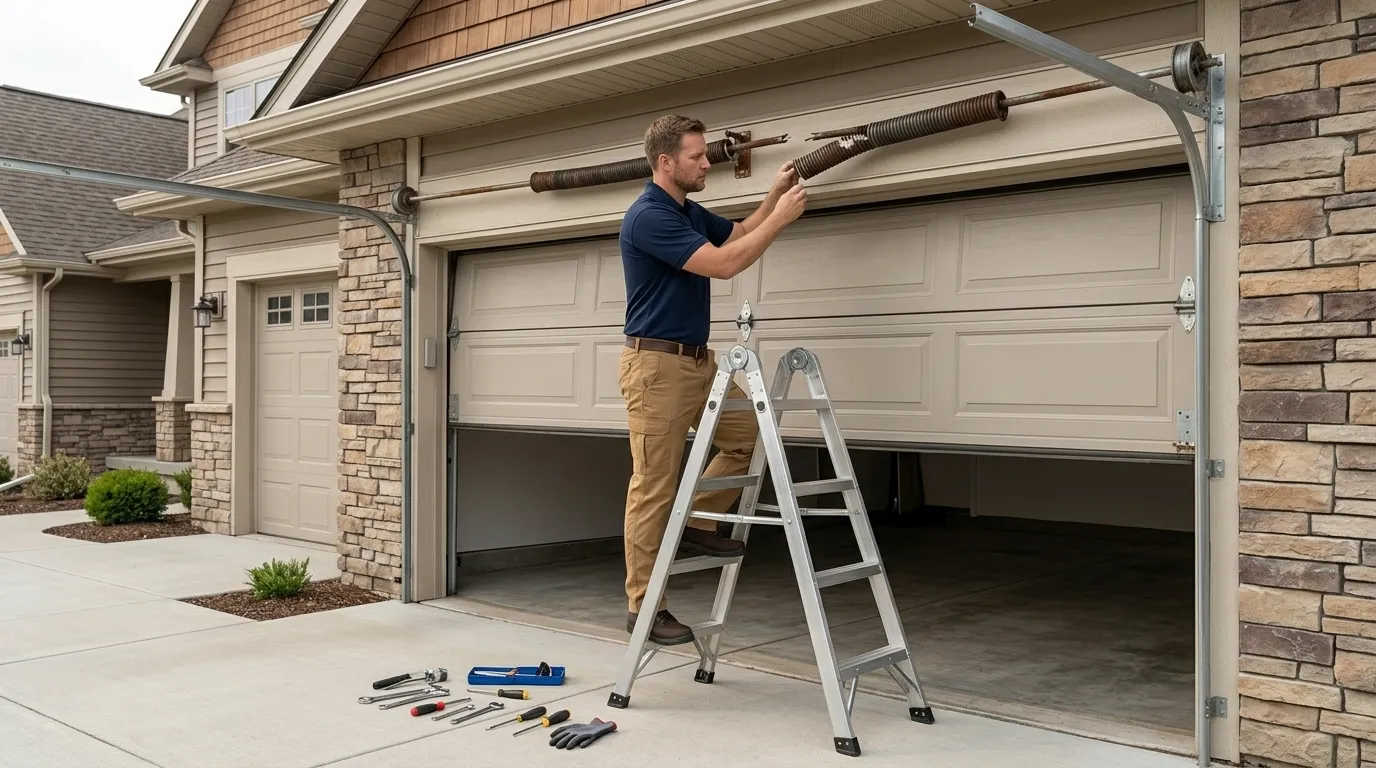
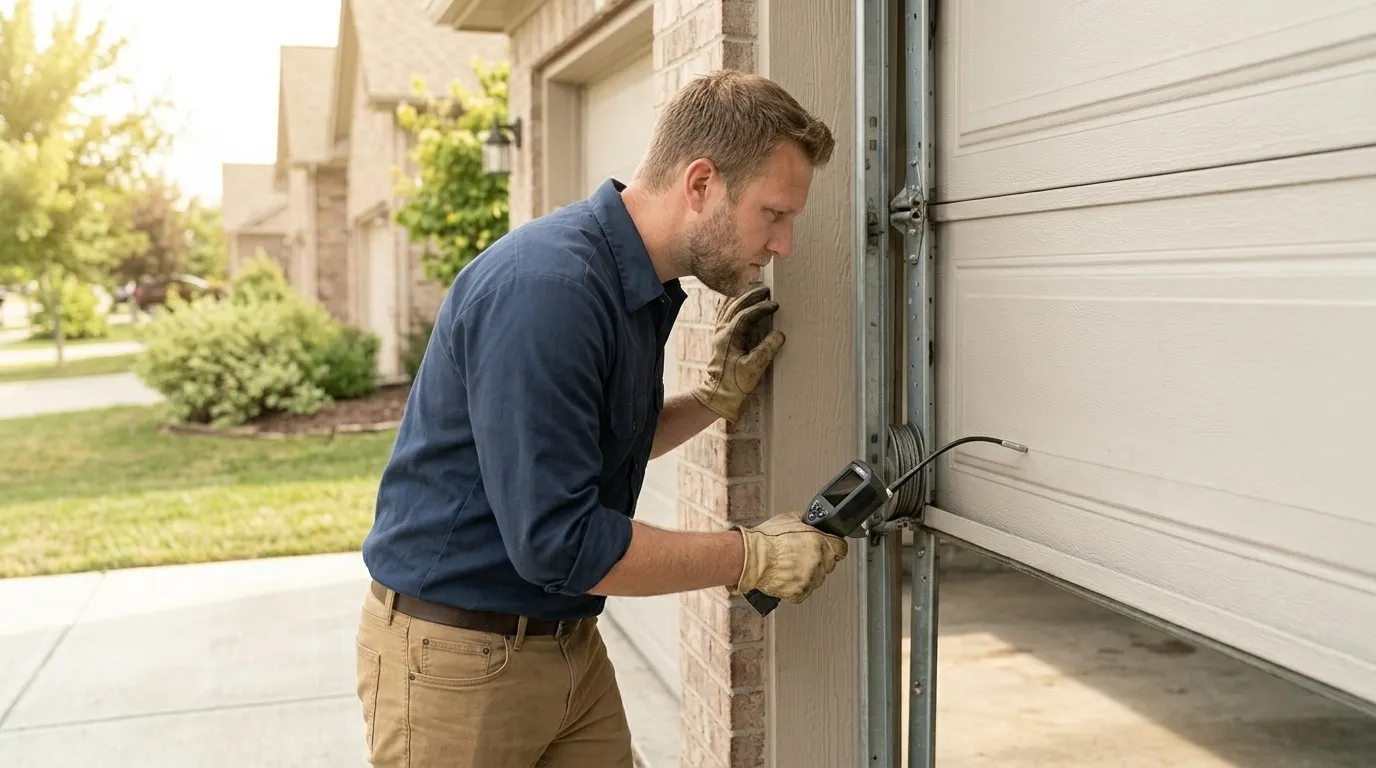
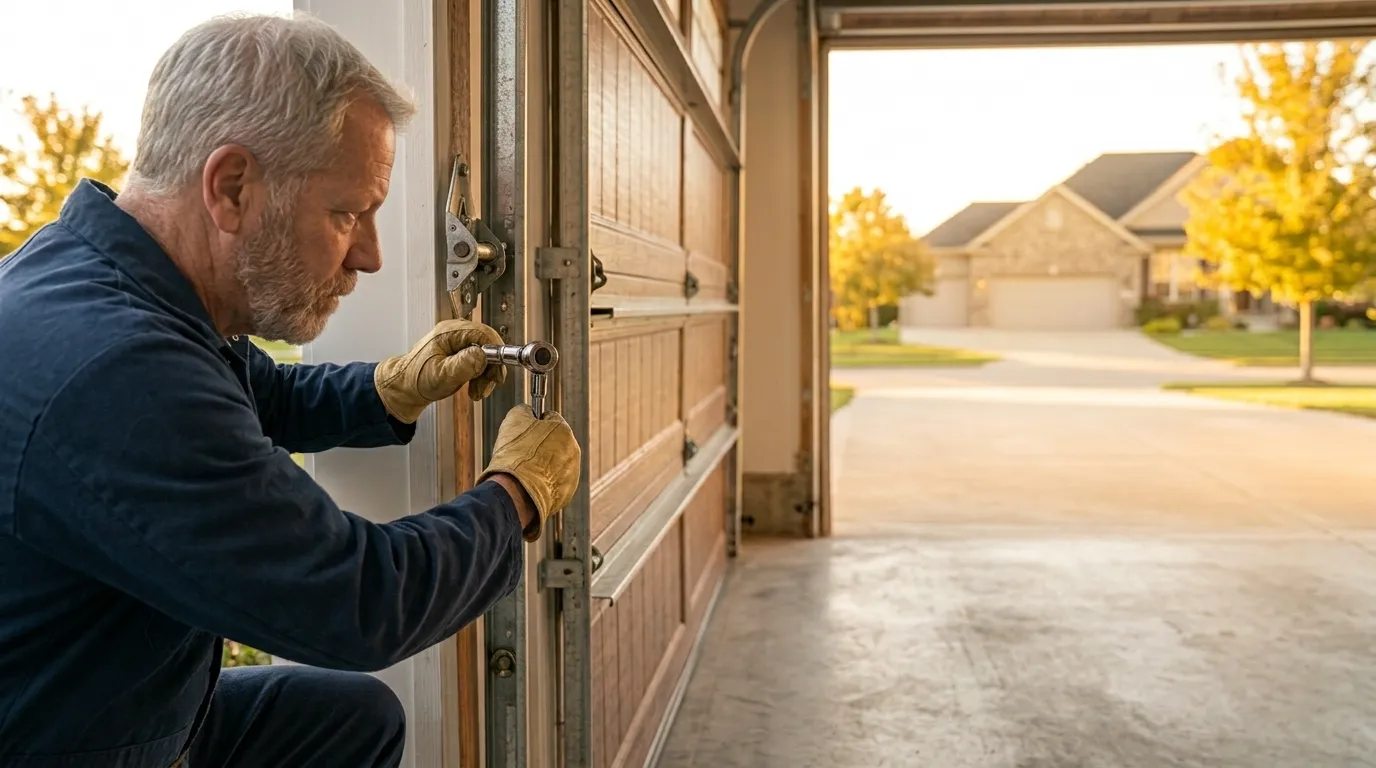
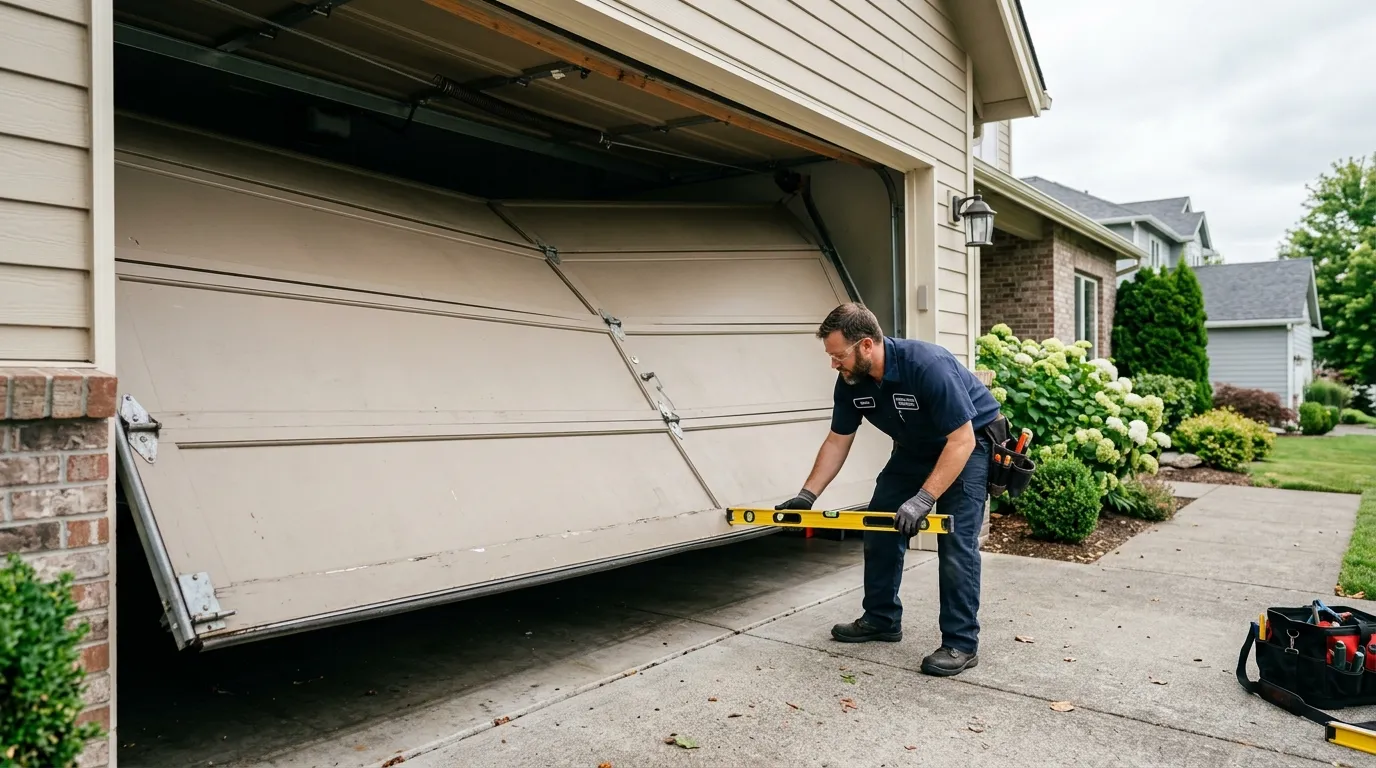
North Braddock's houses mostly went up around 1943, which puts this area ahead of the broader service region's median build year of 1955. That decade matters more than it sounds like it should. A house built in 1943 usually got a garage added or retrofitted later, often with a narrower single-car opening and a door hung on hardware that was never updated past its original spec. We see a lot of older extension springs mounted flush against the rafters instead of the torsion bars you'd expect on newer construction, and tracks that were shimmed by hand rather than shipped to spec. None of that is wrong, exactly, but it means a repair here often starts with figuring out what's actually installed before we can talk about what part goes back in. Panels on doors this old are also more likely to be a gauge of steel nobody stocks anymore, so a dent that would be a quick panel swap on a newer door sometimes turns into a full replacement conversation instead. We'll tell you straight when that's the case rather than trying to force a match.
The Calls We Get From Here
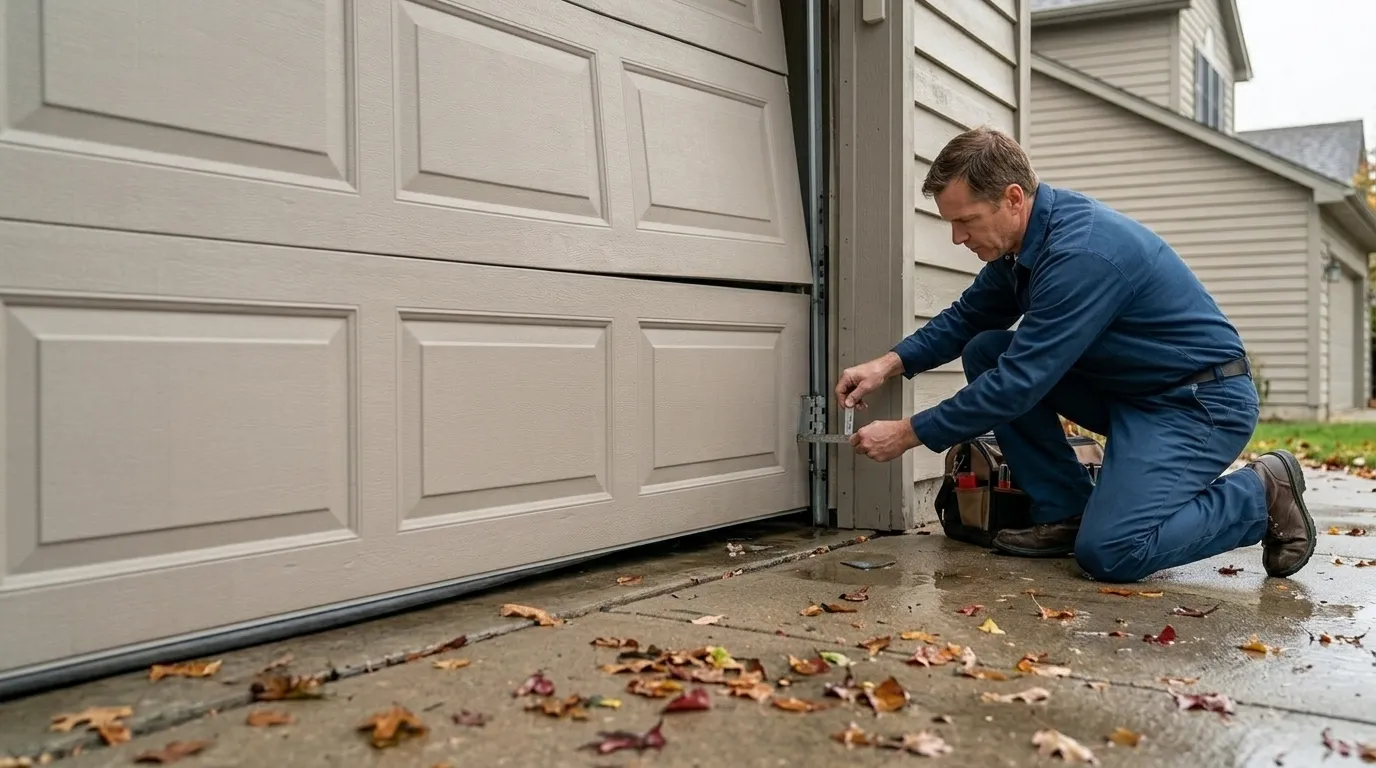
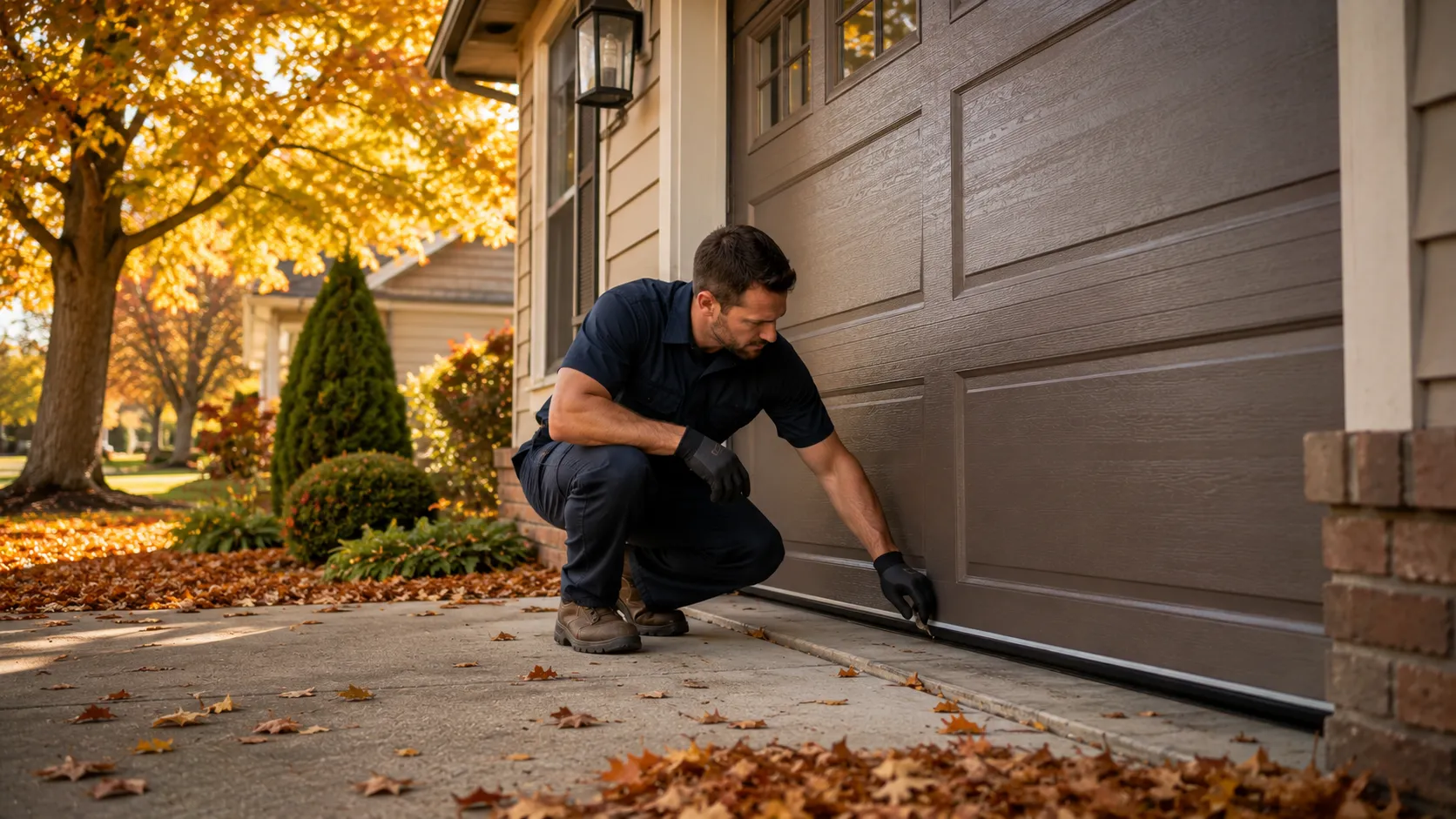
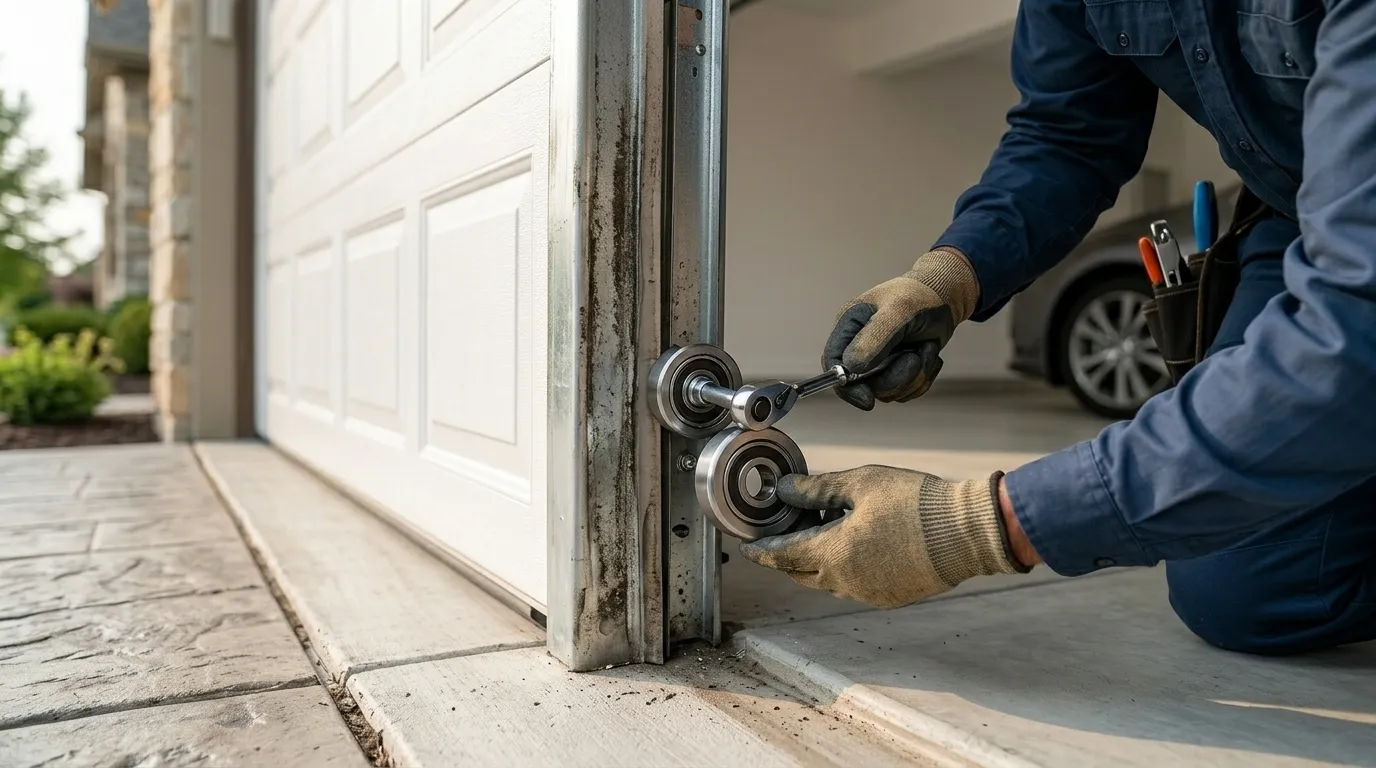
With around 2,258 households in this area and a median income of $36,563, a lot of the calls we take here are repair calls, not replacement calls. People want the door working again without a full teardown, and on hardware this old that's often possible. The most common jobs are broken springs on doors that have never had one replaced, worn rollers on original tracks, and openers that are past their expected life and starting to strain the door instead of lifting it clean. We also get calls where the fix isn't worth it: if the track is bent badly enough or the door itself has gone soft with rust at the bottom panel, patching it just delays a bigger bill. We'll say so up front. Given the local climate band, which runs cold and severe through the winter, sealing gaps around an old door matters as much as the mechanical repair, since a warped bottom seal on a house this age lets a lot of cold air through.
Getting Here
We come out of Pittsburgh, about 7 miles from North Braddock, and we don't keep a depot or crew stationed in the area, so we're not going to promise a same-day window we can't back up. What we can tell you is the drive is a known one for us - North Braddock sits among a cluster of close-in communities including Braddock, East Pittsburgh, and Turtle Creek that we cover on a regular basis, so a truck making its way through this part of the region isn't a special trip. We schedule the route, not the town.
This Area's Housing
Across the wider service area, housing runs from 1938 up through 2014 with a median build year of 1955, and most of the 108 named communities we cover skew pre-1960. North Braddock sits on the older end of that range at roughly 1943. That's an important distinction for anyone comparing notes with a neighbor in a newer part of the region: what's a normal repair on a house built in the 1970s can be a genuinely different job on a house from the 1940s, because the opening sizes, the header framing, and the spring systems were built to different assumptions. If you're planning a full door replacement rather than a repair, it's worth knowing your rough opening before we quote, since older framing doesn't always match the sizes that come standard today.
How it works
From “it’s stuck” to “it’s fixed”
01
Tell us what’s wrong
Describe the symptom - won’t open, loud bang, opener runs but the door won’t move.
02
On-site diagnosis
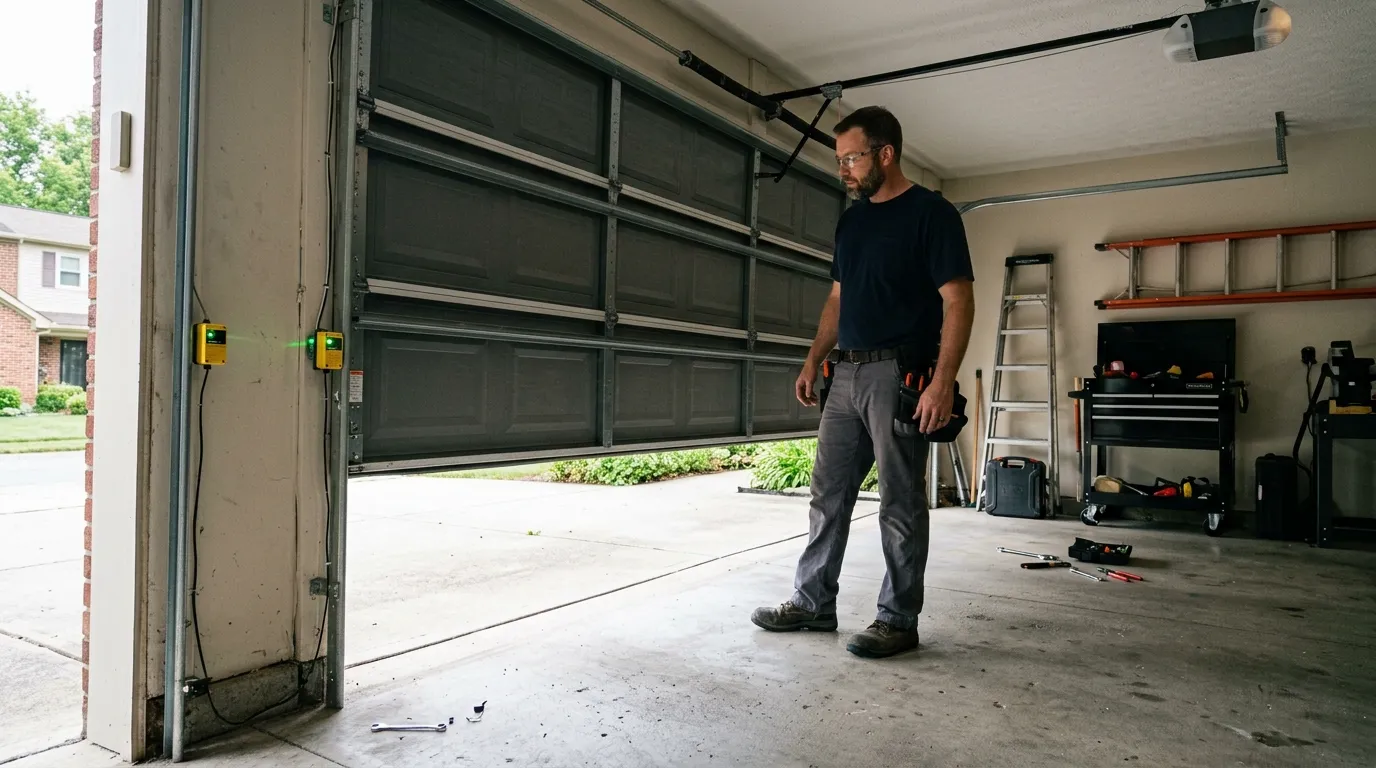
A technician tests the door under power and by hand and finds what actually failed.
03
Clear, up-front plan
You get the fix that’s needed and what drives the cost - before any work starts.
04
Repaired & tested
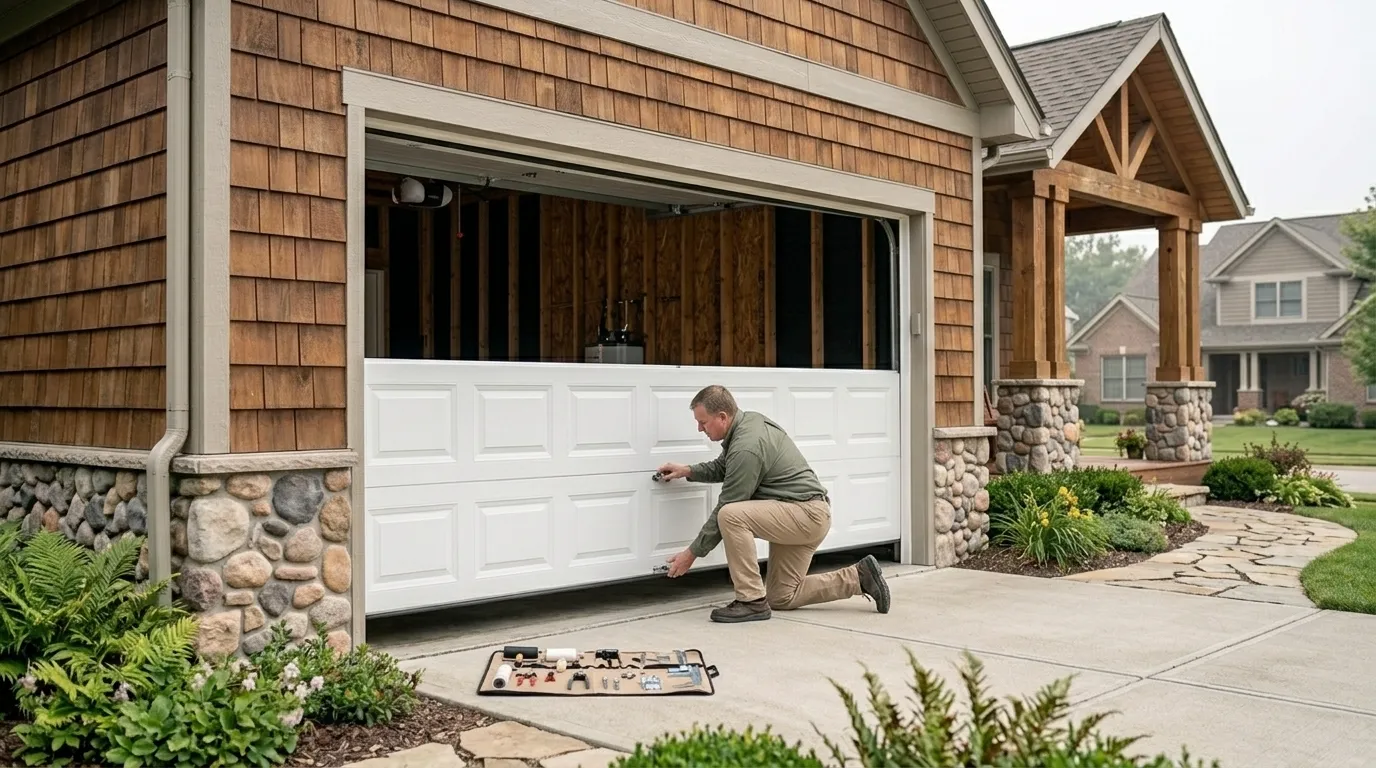
The repair is done, the door is set true and tested, and the work area left clean.
Serving Pittsburgh, PA - tell us what your door’s doing and we’ll take it from there.
No. We run out of Pittsburgh, about 7 miles away, and cover North Braddock along with the surrounding communities on the same routes. We don't claim a local depot or a guaranteed response window we can't stand behind.
Why did my spring break with almost no warning?
On a house built around the 1940s like most of this area, original torsion or extension springs are well past their rated cycle life if they haven't been replaced. They wear gradually and then let go all at once, which is why it feels sudden even though the wear built up over years.
Is it worth repairing an old steel door instead of replacing it?
Depends on the condition. If the panels are solid and it's a spring, roller, or track issue, repair usually makes sense. If the bottom panel has rusted through or the door has racked out of square, replacement is usually the better use of your money, and we'll tell you which situation you're in.
Does winter weather cause more of these calls?
Cold, severe winters put more strain on springs and seals generally, and older doors with worn weatherstripping lose more heat through the gaps. It's not unique to any one season here, but the cold makes existing wear show up faster.
Ready to get your garage door sorted?
Tell us what it’s doing and where you are in Pittsburgh - we’ll take it from there.