Garage door repair and install for Oakmont homes built mostly in the early 1960s. We travel from Pittsburgh, nine miles out, for spring, opener, and panel work.
Oakmont's housing stock centers on a median build year of 1963, which puts it about eight years newer than the median of 1955 across the wider service area. That gap matters more than it sounds. A garage built in 1963 is more likely to have come with a factory-installed steel section door on torsion spring hardware than the older wood-panel doors and side-mounted extension springs you find on houses from the 1940s closer into the city. So the calls out here skew toward torsion spring failure, worn rollers, and opener units that have been swapped once already since the house was built, not the original hand-crank hardware we still see on older stock elsewhere in the area.
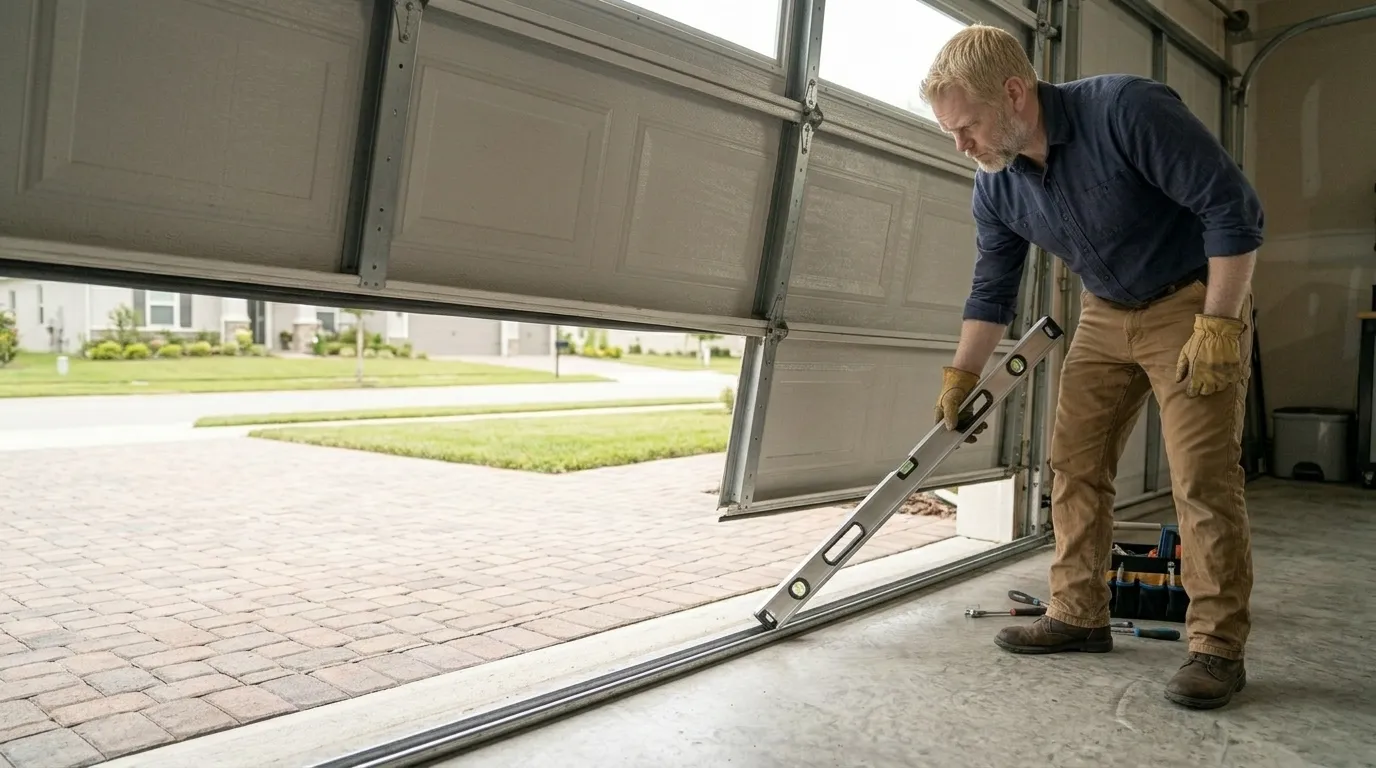
The cold winters here are a factor either way. This whole region sits in a severe cold climate band, and steel doors from any era can bind on the track when the temperature swings hard overnight - the metal contracts, the roller housing tightens, and a door that closed fine at 6pm sticks at 6am. On a 1960s door that's usually a lubrication or roller problem. On an older door it's more often the track itself pulling out of square. We fix both, but the fix isn't the same job.
The Calls We Get From Here
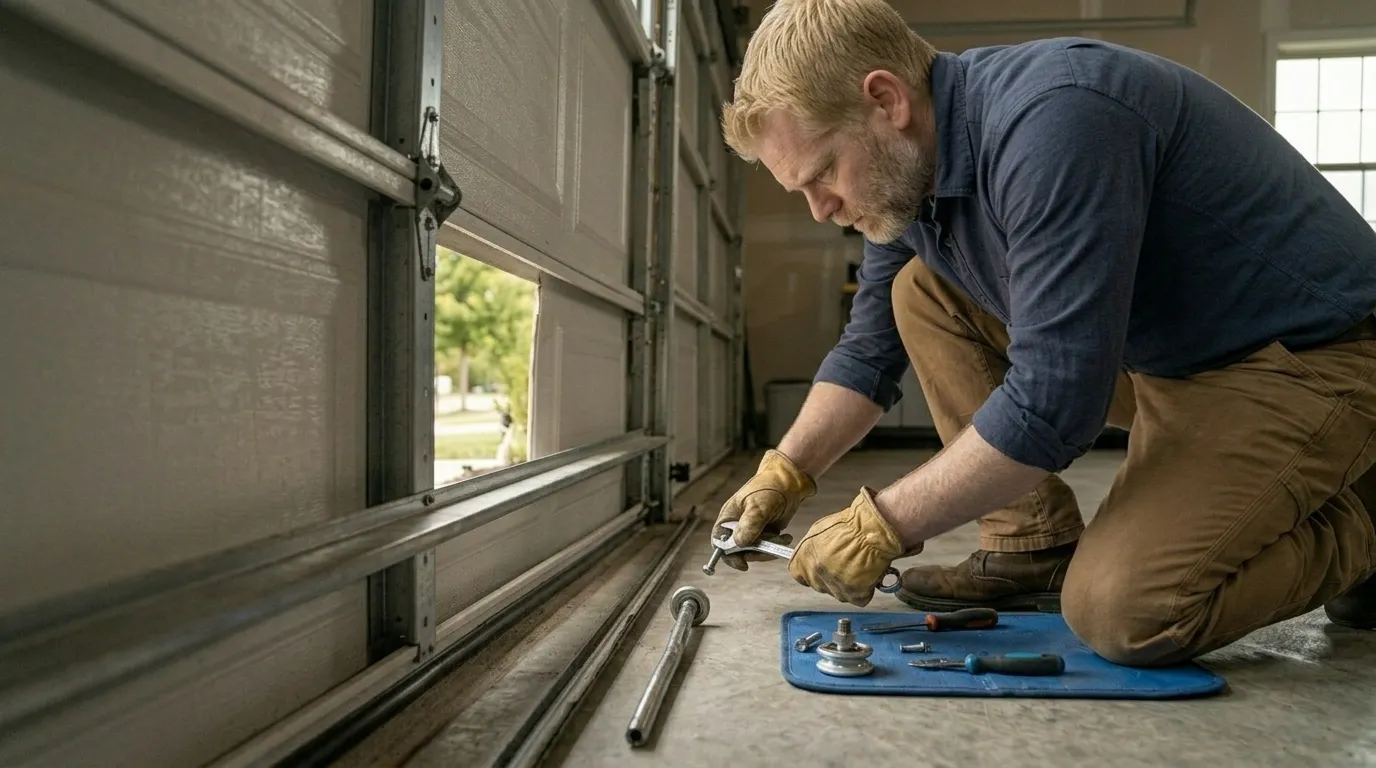
With 3,303 households in Oakmont, the calls we get tend to cluster around the age of the housing stock rather than any one street or subdivision. Broken torsion springs lead the list - most of these homes have had the original spring replaced at least once by now, and the second failure tends to come faster than the first if the door was left running on a mismatched spring. After that it's opener boards that have outlived their original motor, and worn rollers on doors that have never been serviced.
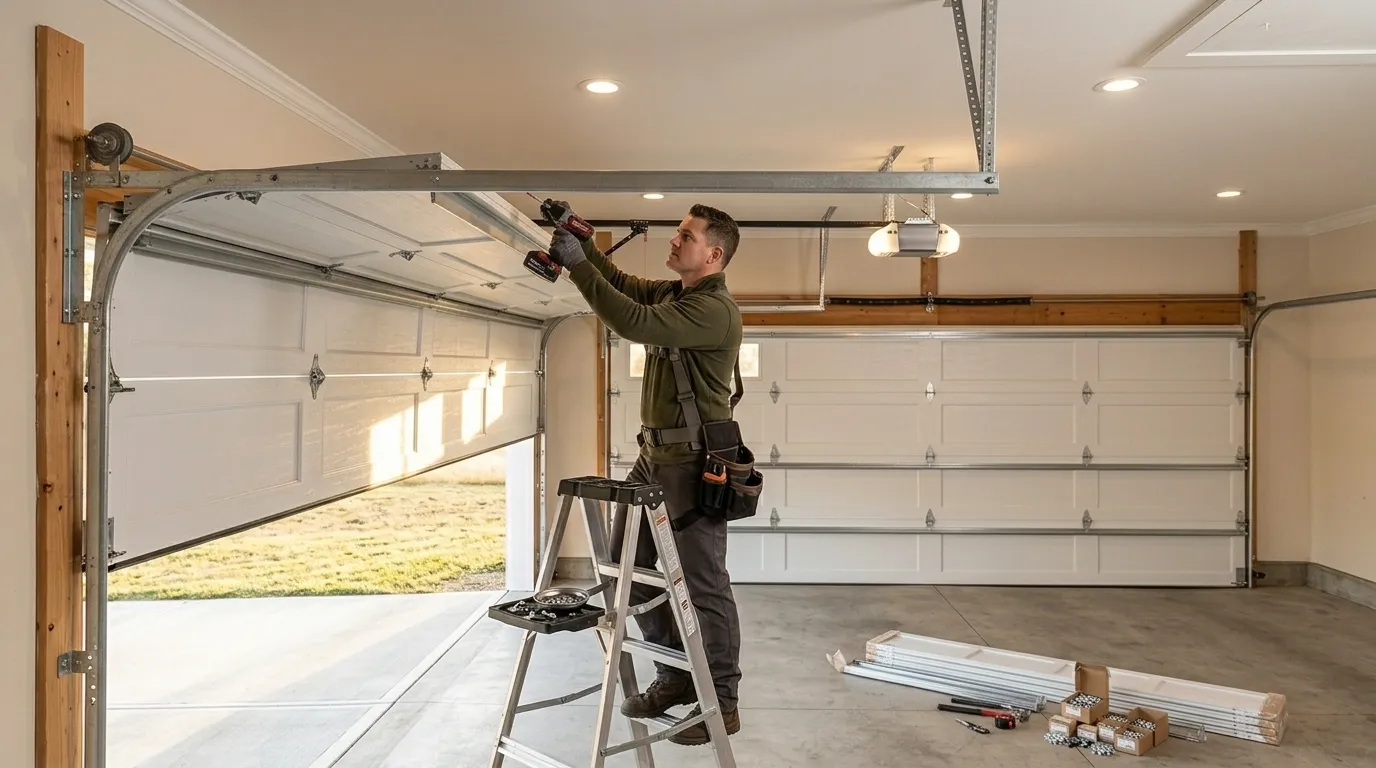
Median household income here runs $89,055, well above the $72,020 median for the wider service area, and that shows up in the kind of work people ask for - more full opener replacements instead of patch repairs, more requests for insulated steel doors when the old one finally needs to go. We'll tell you straight when a repair isn't worth it: if the door is original to a 1960s build and the track is rusted through, a new door usually costs less over time than another round of patch work. We don't sell doors we wouldn't put on our own garage.
Getting Here
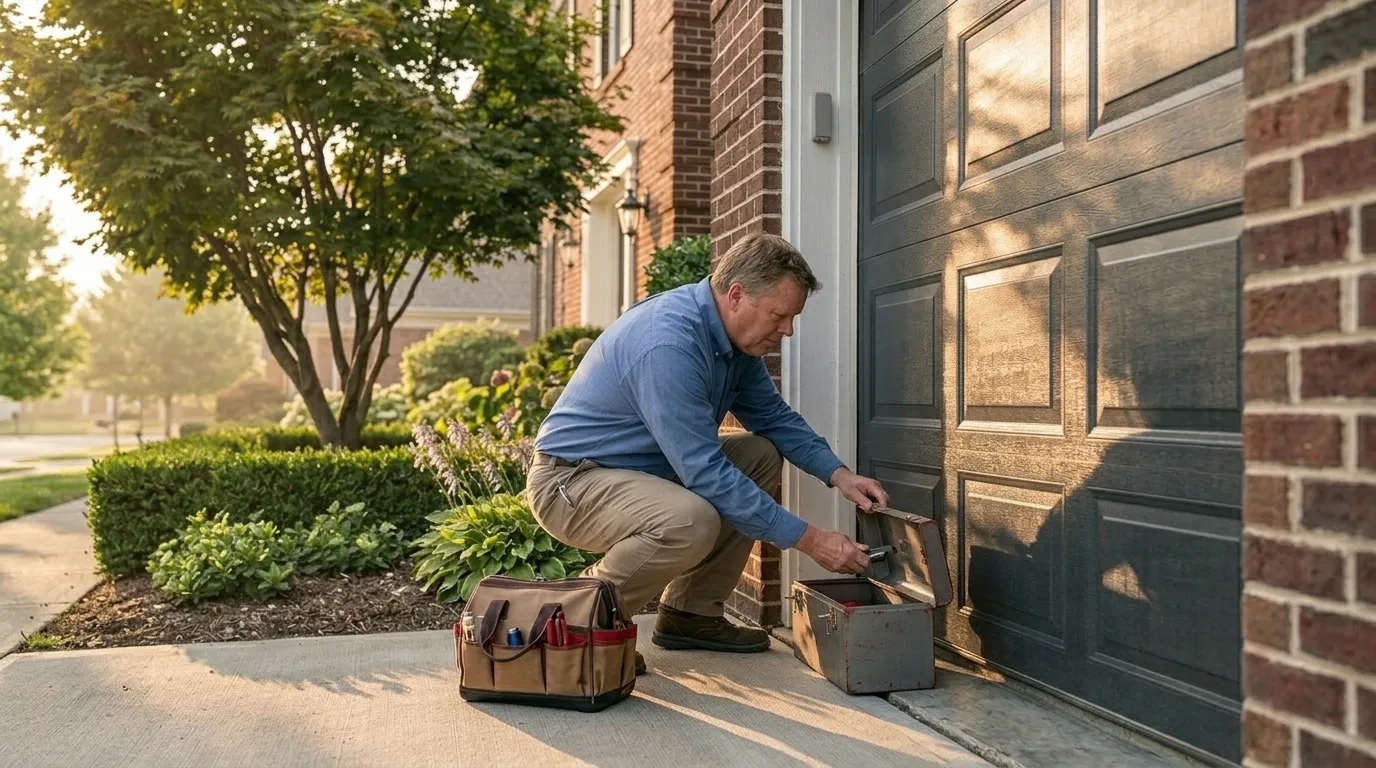
Oakmont sits about nine miles from our base in Pittsburgh. The drive out takes us past Fox Chapel, roughly eight miles from downtown in one direction, and Verona, about the same distance, both of which sit along the general route depending on which crew is heading your way that day. We don't keep a depot in Oakmont - every truck comes from Pittsburgh, so the trip is part of the job whether it's a same-day spring call or a scheduled opener install.
Because we're not staged locally, we ask that you have a rough description of the problem ready when you call - stuck door, broken spring, opener not responding, whatever it is - so we can bring the right parts on the first trip instead of a second one.
This Area's Housing
The 1963 median build year in Oakmont sits toward the newer end of a service area where the broader stock runs from 1938 to 2014 with a median of 1955. That difference of roughly eight years doesn't sound like much until you're standing in front of the hardware. Homes from this era were more likely to ship with a single wide door and a center torsion spring setup rather than the double doors with two separate springs you see on some later builds, and that single-spring setup is exactly the kind of job where using the wrong replacement spring shortens its life fast.
Across the wider area, 155,574 of the roughly 279,154 households are owner-occupied houses, which tells you this region is built mostly around single-family stock rather than rentals or multi-unit buildings - and Oakmont's numbers fit that pattern. We don't have a breakdown of how many of Oakmont's 3,303 households are owner-occupied specifically, so we won't guess at a number we don't have.
How it works
From “it’s stuck” to “it’s fixed”
01
Tell us what’s wrong
Describe the symptom - won’t open, loud bang, opener runs but the door won’t move.
02
On-site diagnosis
A technician tests the door under power and by hand and finds what actually failed.
03
Clear, up-front plan
You get the fix that’s needed and what drives the cost - before any work starts.
04
Repaired & tested
The repair is done, the door is set true and tested, and the work area left clean.
Serving Pittsburgh, PA - tell us what your door’s doing and we’ll take it from there.
No. We run out of Pittsburgh and drive out to Oakmont, about nine miles, for every job. There's no local depot here, so on same-day calls we ask for a clear description of the problem up front to make sure the truck arrives with the right parts.
Is my 1960s garage door worth repairing or should I replace it?
Depends on what's failing. A broken torsion spring or worn roller on a door from this era is usually a straightforward repair. If the track is rusted through or the door itself has been patched more than once, replacement often costs less over the life of the door than another repair.
Why does my door stick in cold weather?
This area sits in a severe cold climate band, and steel doors can bind on the track when temperatures drop overnight. On newer stock it's often a lubrication or roller issue; on older doors the track itself may have pulled out of alignment.
Ready to get your garage door sorted?
Tell us what it’s doing and where you are in Pittsburgh - we’ll take it from there.