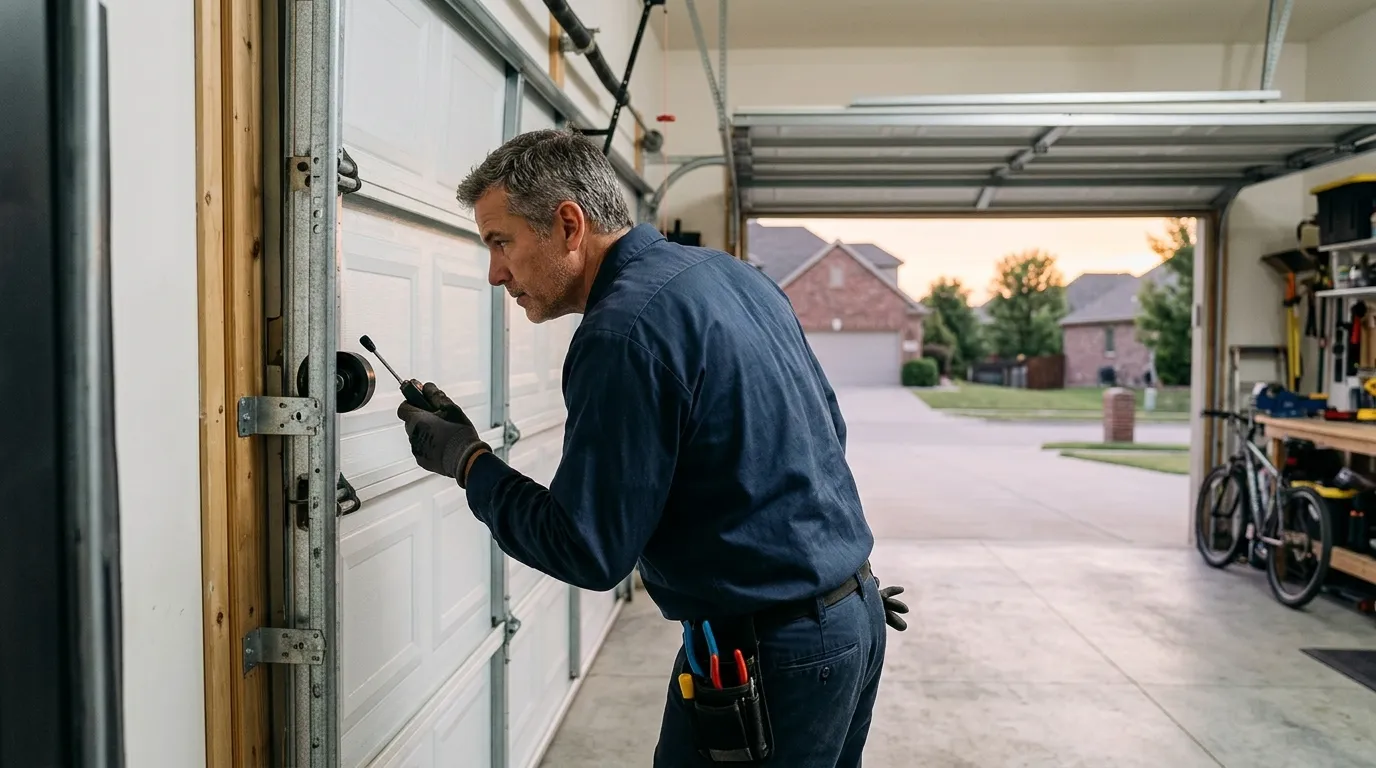
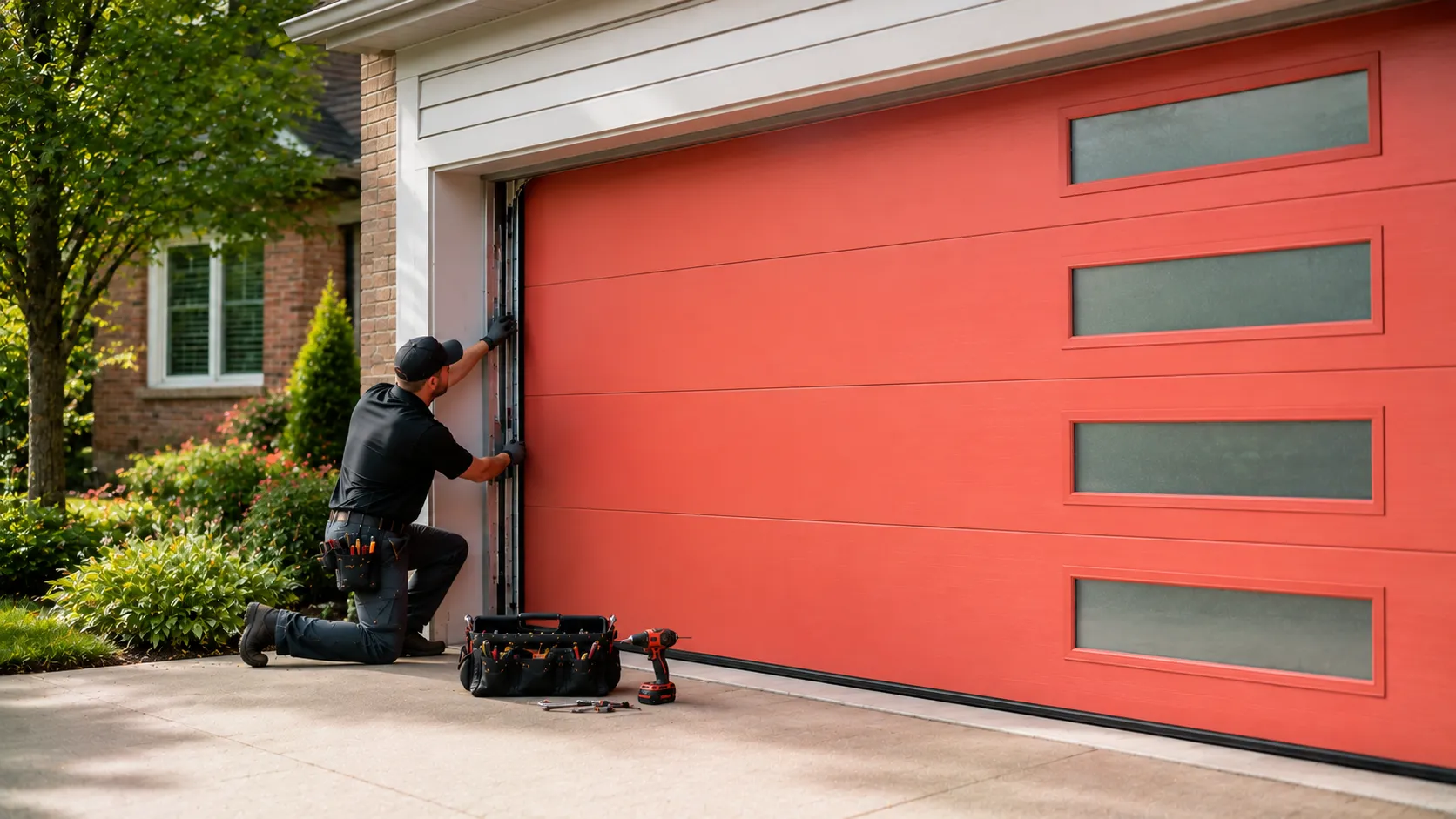
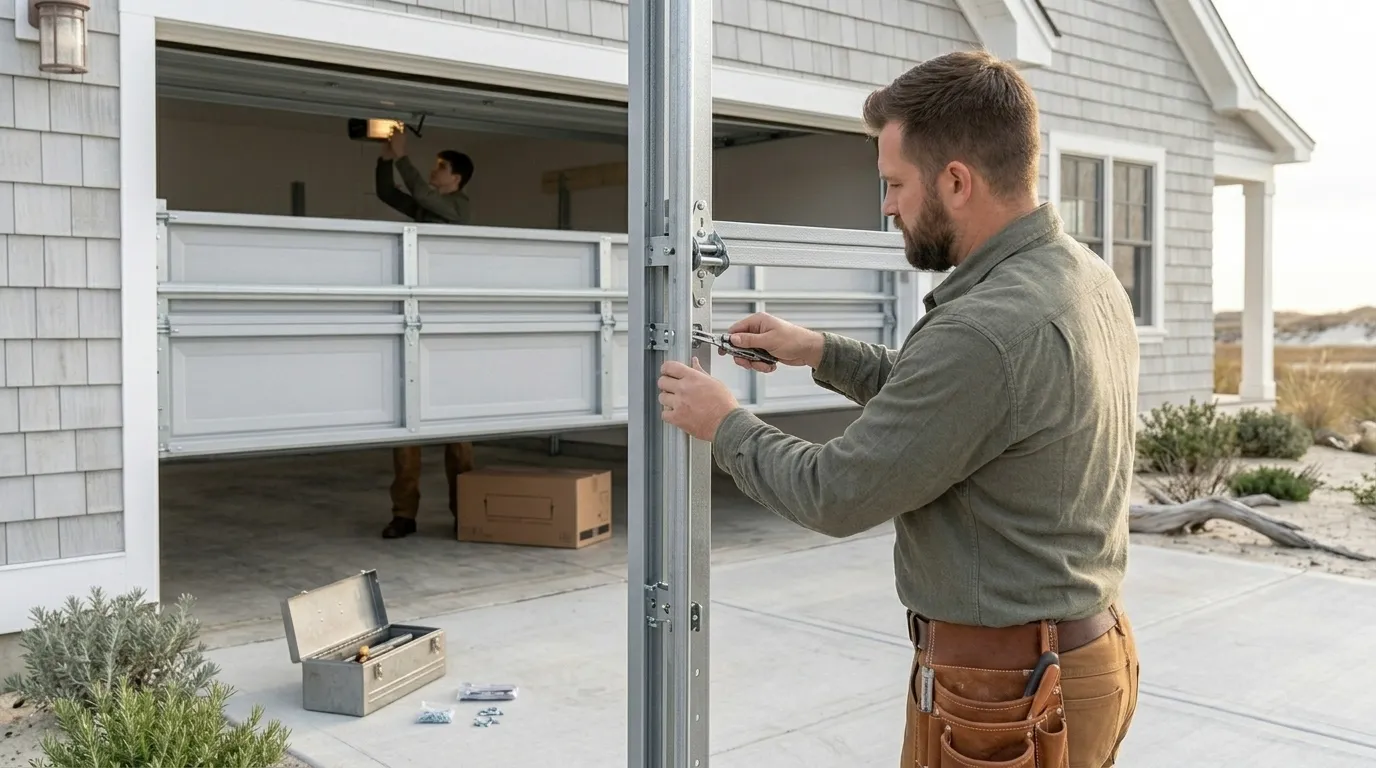
Springdale homes date mostly from the 1950s, meaning old torsion hardware and shrinking track clearances. We travel from Pittsburgh, 12 miles out, for repairs and installs.
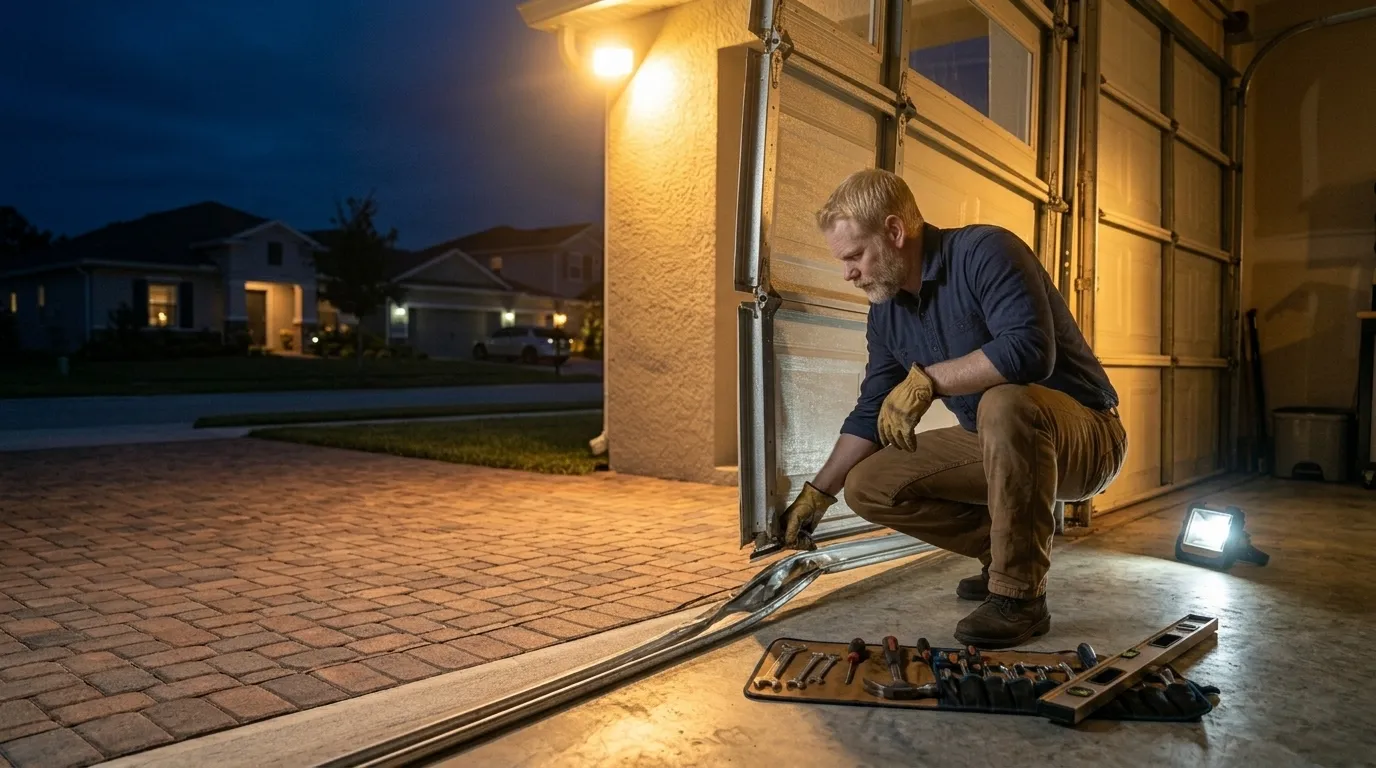
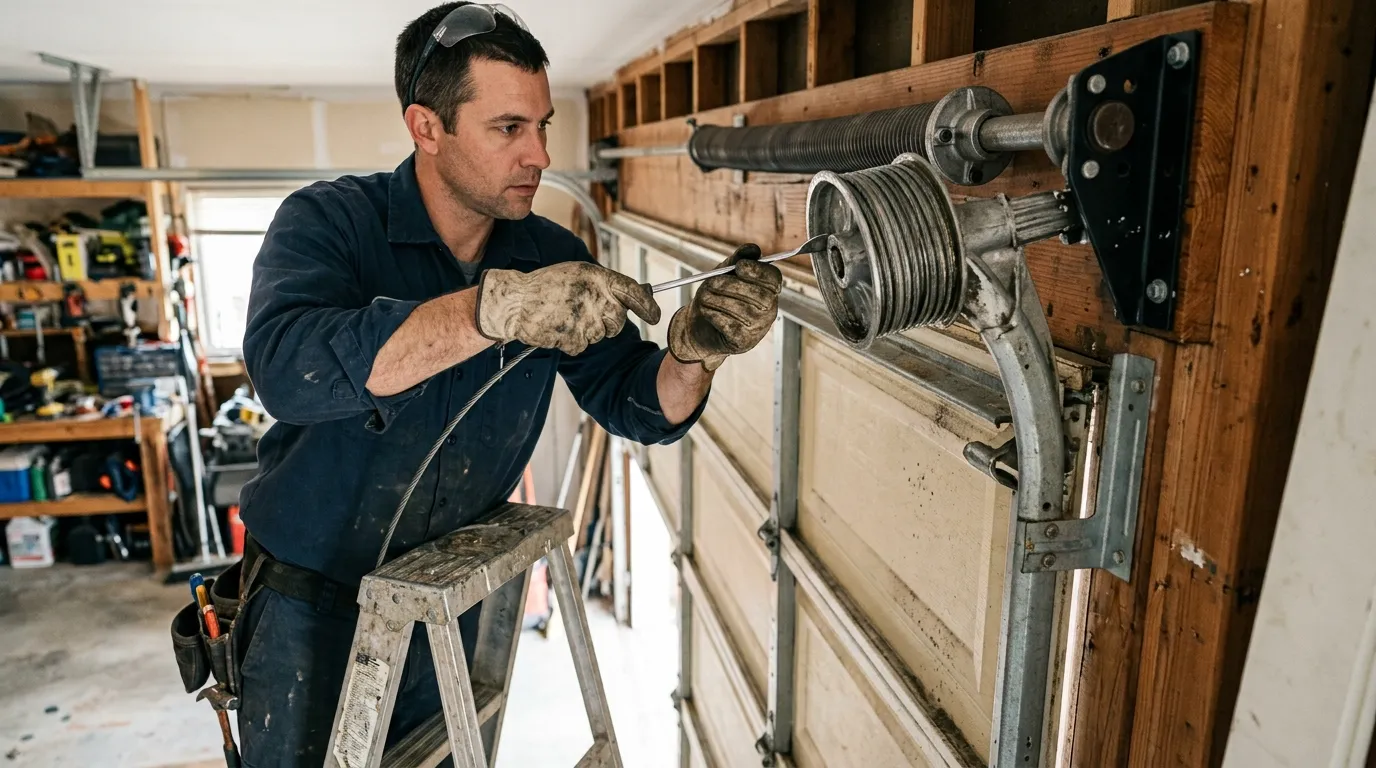
Springdale's houses have a median build year of 1953, right in line with the older end of the wider service area's 1938 to 2014 range. That matters more than most homeowners think. A door hung in 1953 was almost never replaced with anything wider than the original bay, and the torsion hardware from that era was built for steel doors half the weight of what's sold today. We see a specific pattern out here: original single-panel or early sectional doors retrofitted decades later with lighter aftermarket panels, sitting on brackets that were never rated for the change. The result is a spring that looks fine but is undersized for the door it's lifting, or a track that's been bent back into shape one too many times because nobody swapped the whole rail.
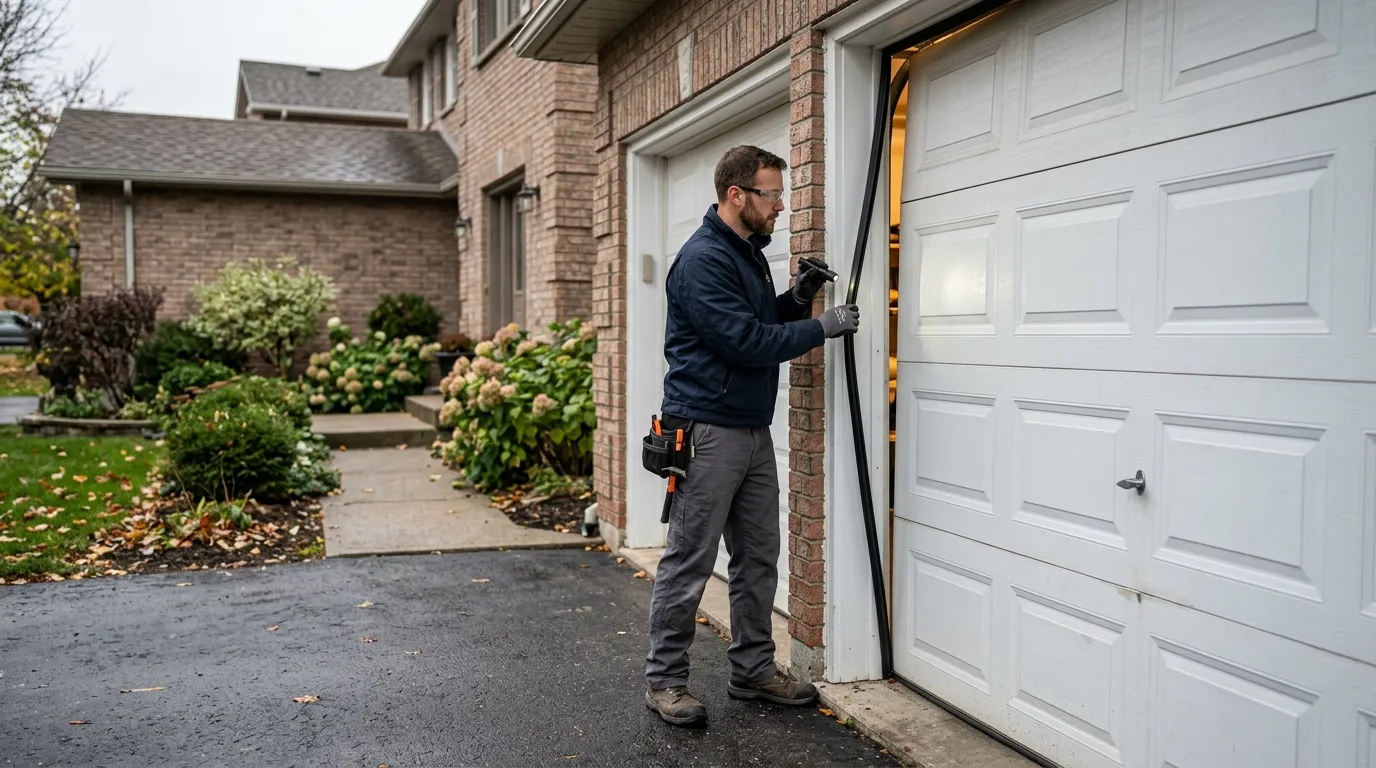
The region sits in a cold, severe climate band, and on houses this age the weatherstripping channel is often the original wood jamb, not a purpose-built vinyl retainer. That means seasonal swelling and gaps that a modern door wouldn't have. We don't assume every Springdale door needs a full tear-out - plenty of these openers and tracks have been properly updated over the years - but when we get a call here, we check the hardware date before we check anything else.
The Calls We Get From Here
Springdale has about 1,632 households, a smaller base than the denser inner-ring boroughs we also cover, and the median household income here runs $57,963 - noticeably below the $72,020 median across the full service area. That gap shows up in the kind of calls we get: more repair requests to keep an older opener or spring system running another few years, fewer full-replacement jobs booked on the spot. We're honest about it when a repair isn't worth it - if a torsion spring has already been replaced twice on the same worn drum, we'll say so instead of doing a third patch job.
Most calls out here are for spring failure on doors that predate 1960 stock hardware, plus opener chain drives that have simply worn out after decades of use. We don't stock every obsolete bracket size on the truck, so a same-day fix on a genuinely discontinued part isn't always possible - sometimes it means a short wait on a compatible replacement rather than an exact match.
Getting Here
We run out of Pittsburgh, about 12 miles from Springdale, so we're not sitting in a depot around the corner. That's worth saying plainly: this isn't a same-neighborhood shop, it's a crew that drives out for the job. We plan the trip into the visit rather than pretending it doesn't exist, which is also why we're upfront that we can't promise a walk-up response - we schedule the drive and the work together.
This Area's Housing
The housing stock across the wider service area spans 1938 to 2014 with a median of 1955, and Springdale sits close to that median at 1953 - solidly in the pre-1960 majority that covers 108 named areas in this region. That means original garage openings sized for cars and hardware from the Eisenhower era, not today's larger sectional doors. Owner-occupied houses make up a large share of the region's 279,154 households, and in an older, lower-turnover area like this, doors tend to stay in place longer between full replacements rather than getting swapped out with every ownership change.
What that means for a service call: measurements matter more here than in newer subdivisions. A door ordered to a modern standard width sometimes doesn't clear an opening framed to 1950s dimensions without adjustment. We measure twice before we quote a replacement, because guessing on an opening this old costs more to fix than it saves in time.
How it works
From “it’s stuck” to “it’s fixed”
01
Tell us what’s wrong
Describe the symptom - won’t open, loud bang, opener runs but the door won’t move.
02
On-site diagnosis
A technician tests the door under power and by hand and finds what actually failed.
03
Clear, up-front plan
You get the fix that’s needed and what drives the cost - before any work starts.
04
Repaired & tested
The repair is done, the door is set true and tested, and the work area left clean.
Serving Pittsburgh, PA - tell us what your door’s doing and we’ll take it from there.
No. We're based in Pittsburgh and drive out to Springdale, about 12 miles away, for every job. We don't have a local depot here, so we build the drive time into scheduling rather than promising an instant response.
Why does my spring keep failing on an older door?
On houses built around 1953, like most of Springdale, the torsion hardware was often sized for the original steel door weight. If the door's been swapped for a heavier panel since, the spring is likely undersized and will keep wearing out faster than it should.
Can you match parts on a really old door?
Sometimes, not always. Hardware from pre-1960 stock isn't always still made, so an exact match on a bracket or drum can mean a short wait for a compatible part rather than a same-day fix.
Is it worth replacing an old door instead of repairing it?
Depends on the door. If a spring or drum has already been patched more than once on worn-out track, replacement usually costs less over time than another repair. We'll tell you honestly which side of that line your door is on.
Ready to get your garage door sorted?
Tell us what it’s doing and where you are in Pittsburgh - we’ll take it from there.