Garage Door Service for Valencia's Newer Housing Stock
Valencia homes mostly went up around 1999, not the 1950s stock common closer to Pittsburgh. We travel from Pittsburgh for spring, opener, and track repair built for that newer hardware.
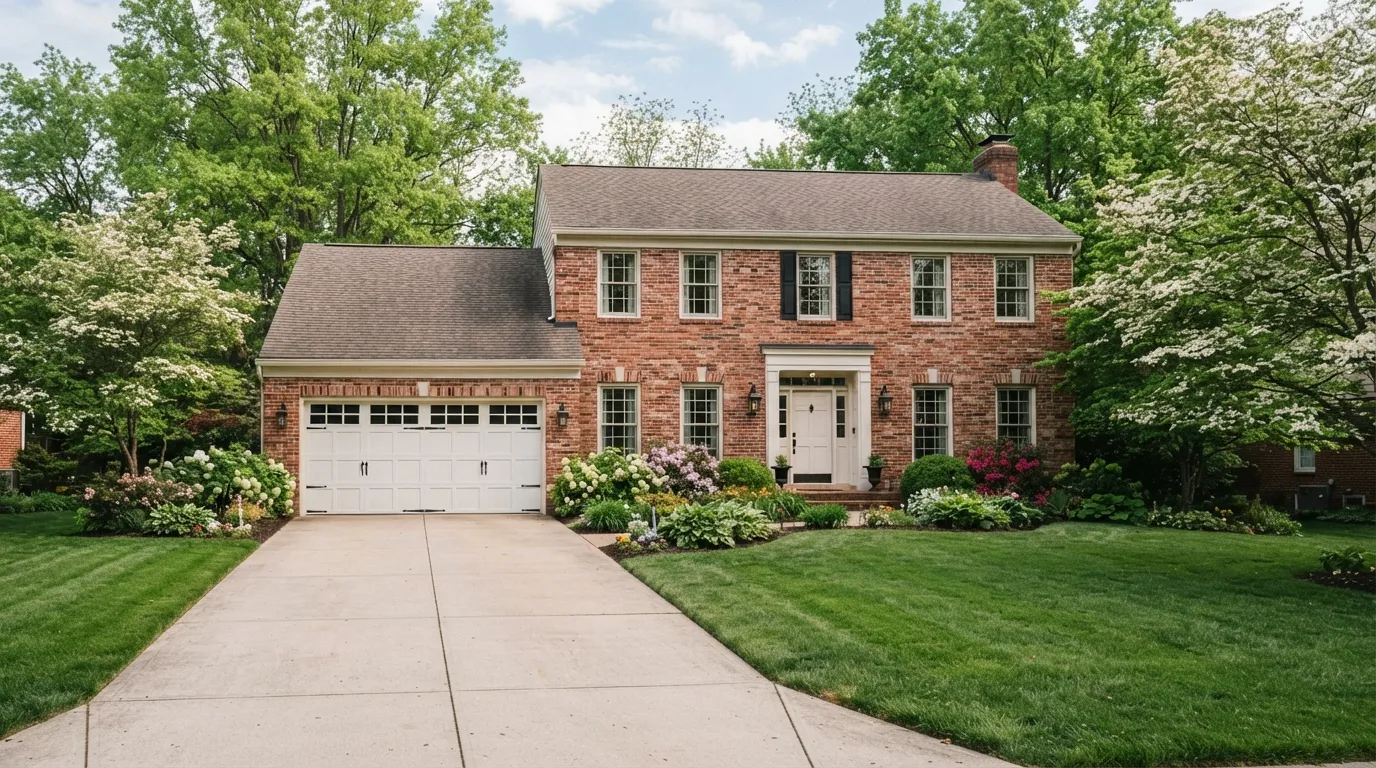
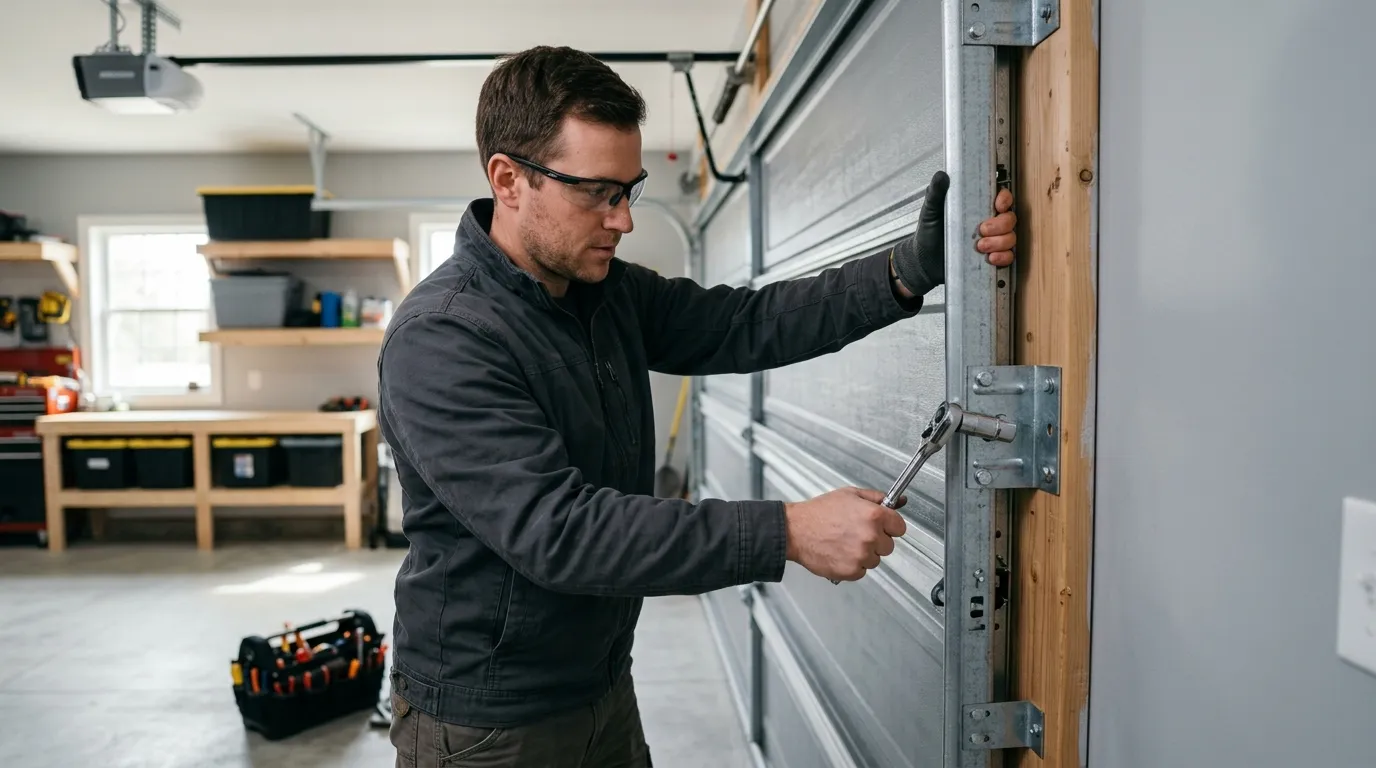
Valencia's median build year sits around 1999, which puts it well past the pre-1960 housing that makes up most of the wider Pittsburgh service area. That gap matters more than it sounds. A house built in 1999 came with a factory steel sectional door, a chain or belt-drive opener with photo-eye sensors (federally required after 1993), and torsion springs sized for that door's actual weight rather than a decades-old retrofit. You don't see the odd side-mounted extension setups or the one-piece wood doors that show up on 1950s stock closer to town.
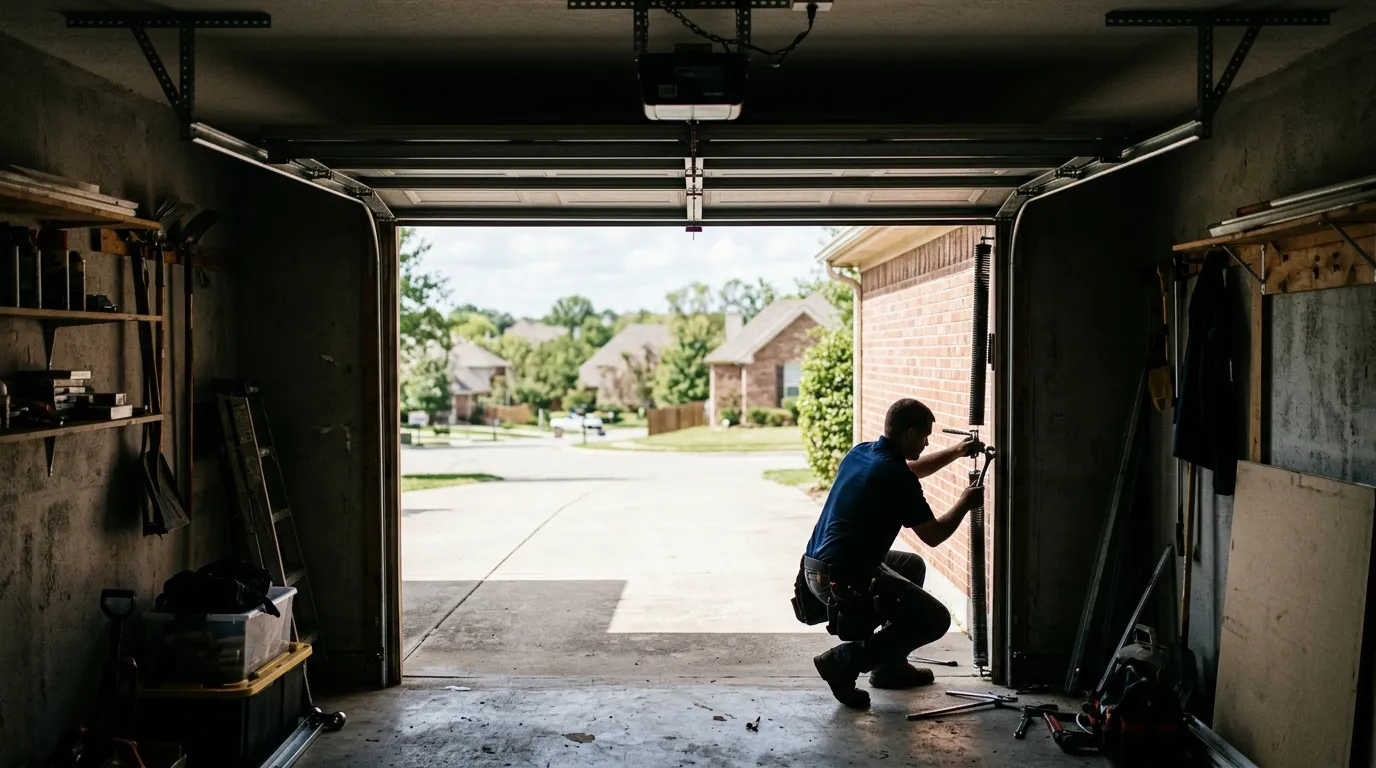
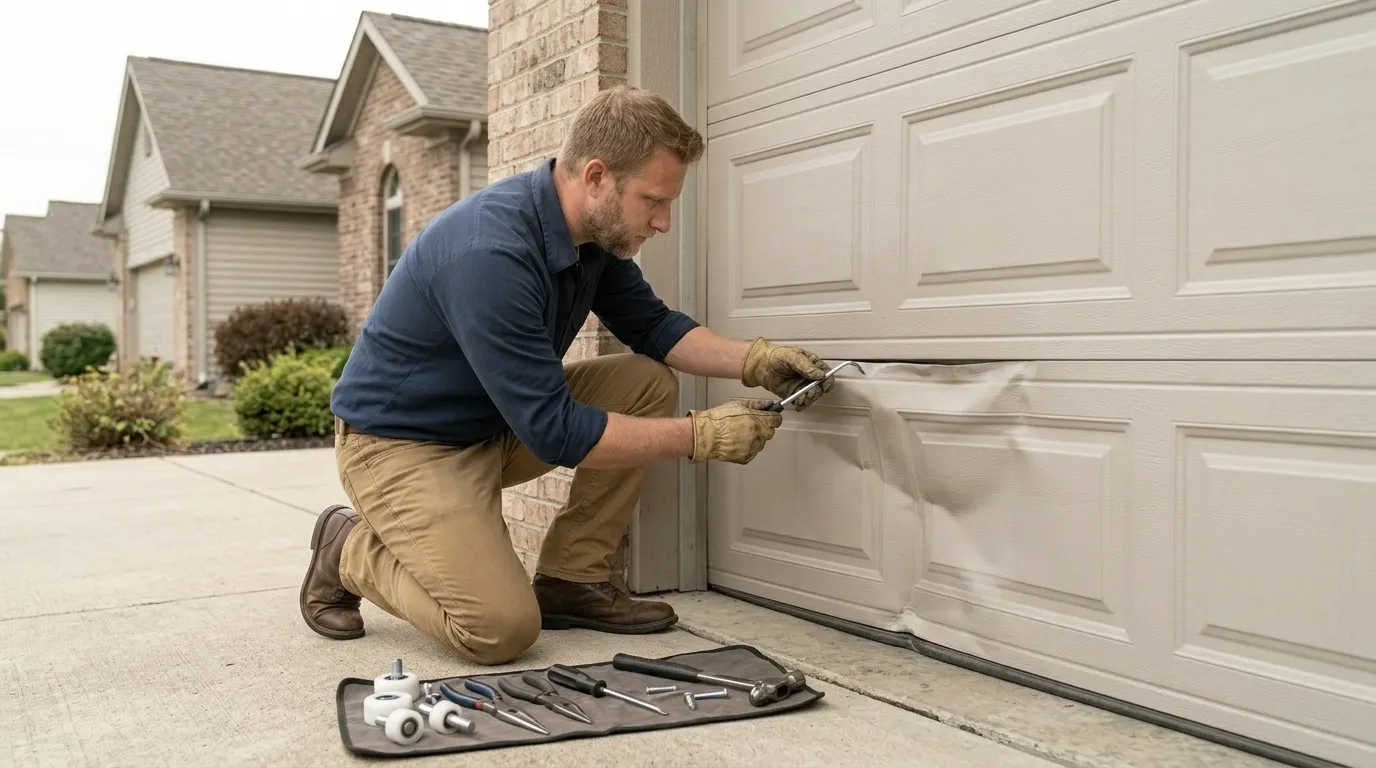
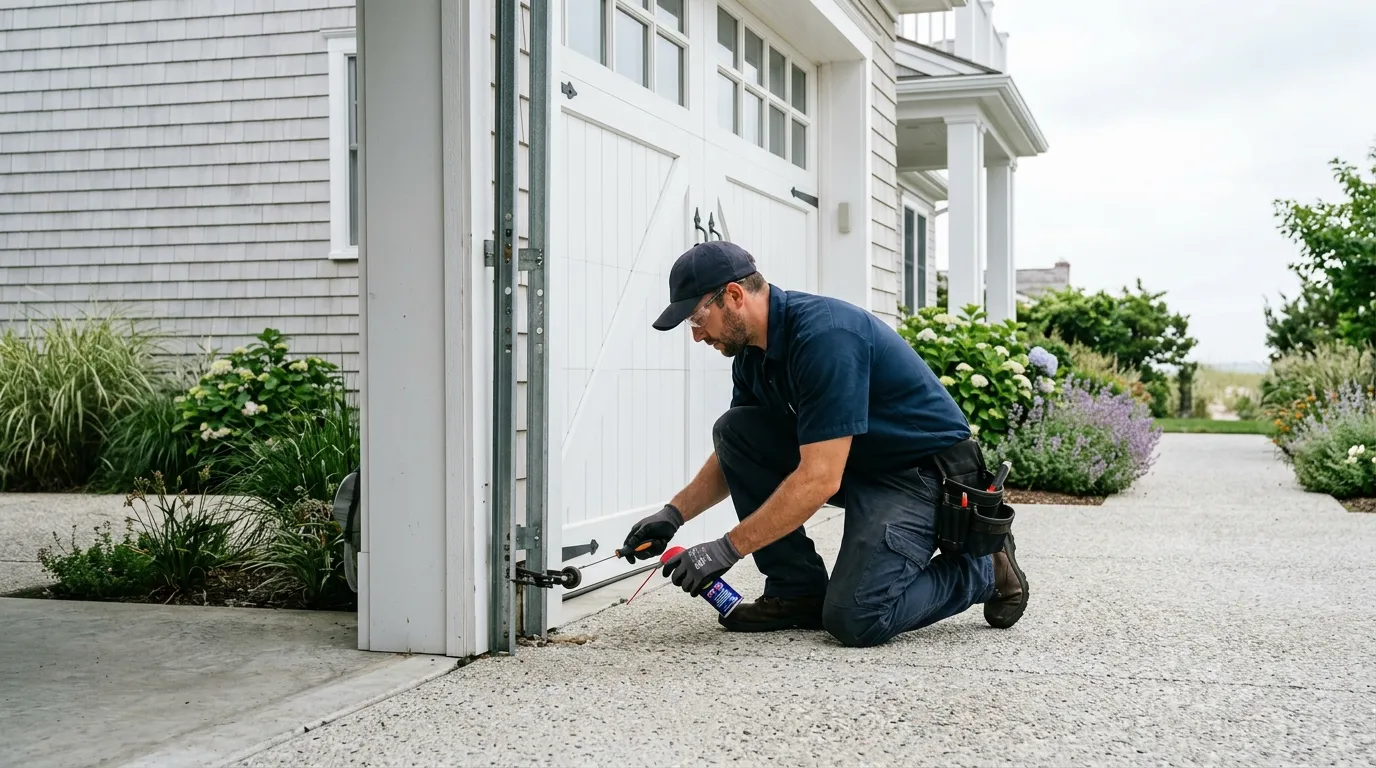
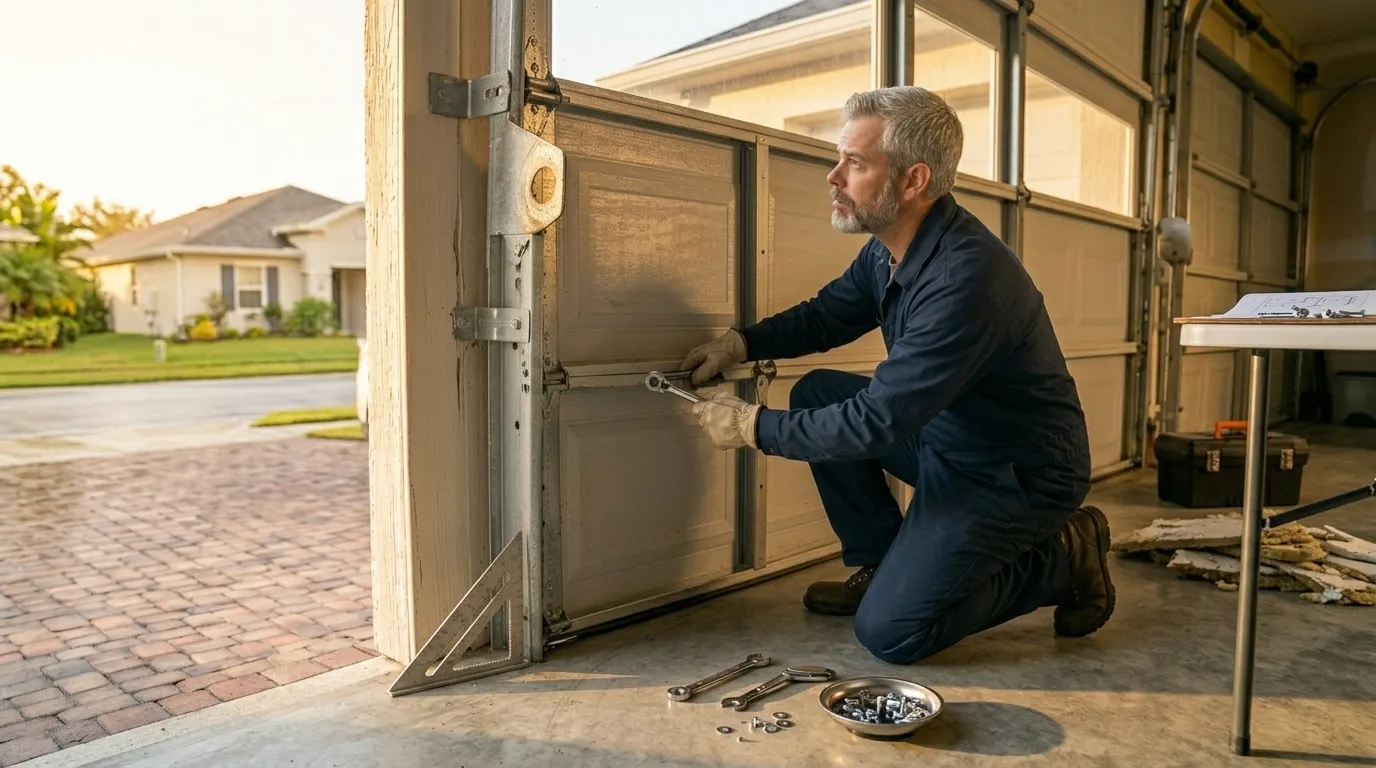
What you do see, 25-plus years on, is fatigue. A torsion spring rated for 10,000 cycles is good for roughly 7 to 9 years of average use, which means most original springs in a Valencia garage have already been replaced once, maybe twice. Nylon rollers from that era are usually cracked or flat-sided by now. Openers from the late '90s and early 2000s are also reaching the point where circuit boards fail before the motor does - a different failure mode than the worn-out gear kits we see on older openers elsewhere.
The honest limitation here: if your opener is original to a 1999 build, parts for that specific model are often discontinued, and replacement ends up cheaper than chasing a board.
The Calls We Get From Here
Given the age of the housing, most calls from Valencia are spring replacement on a door that's 15 to 25 years old, opener circuit board failures rather than motor burnout, and worn rollers or hinges that have finally started binding in the track. We also get calls on broken cables and off-track doors, usually after a spring has already let go and nobody caught it.
Winter changes the mix. The service area sits in a cold, severe climate band, and cold makes steel contract and lubricant thicken, so a spring that's already near the end of its cycle count is more likely to snap on a January morning than a July afternoon. If your door has gotten noticeably harder to lift by hand or the opener strains before it moves the door at all, that's usually the spring telling you it's close to done, not the opener needing replaced.
We don't do same-day emergency dispatch to Valencia specifically - we're routing out from Pittsburgh, not sitting in the area - so if you need a door secured after hours, plan for that when you call.
Getting Here
Valencia sits about 16 miles from our Pittsburgh base, which puts it on the outer edge of where we run jobs. We don't keep a truck stationed locally or promise a fixed arrival window the way we might for a neighborhood a few minutes from Pittsburgh itself - every trip out here is a scheduled drive, not a drop-in.
That distance is worth knowing before you call: it's not a reason we can't help, but it does mean lining up a time that works rather than expecting someone within the hour. Homeowners closer in, in places like Bellevue or Castle Shannon, can sometimes get quicker turnarounds simply because of where they sit on the map. Valencia jobs get the same work and the same parts - just a longer drive attached to them.
This Area's Housing
With roughly 262 households in Valencia and a median income around $76,094, this is smaller and a bit more affluent than the service area average of $72,020 across 279,154 households. Housing here also skews newer - built around 1999 versus a median of 1955 for the broader footprint, where most of the 108 named communities we cover are still sitting on pre-1960 construction.
That combination tends to mean fewer of the oddball repairs we see on older housing stock - no re-purposed hardware, no doors sized for openings that don't match modern panels - and more straightforward wear-and-tear work: springs at the end of their rated cycle count, openers aging out of production, rollers and cables that have simply put in their years. It's a more predictable set of jobs than what we see on 1950s-era doors closer to Pittsburgh, even if the drive to get here is longer.
How it works
From “it’s stuck” to “it’s fixed”
01
Tell us what’s wrong
Describe the symptom - won’t open, loud bang, opener runs but the door won’t move.
02
On-site diagnosis
A technician tests the door under power and by hand and finds what actually failed.
03
Clear, up-front plan
You get the fix that’s needed and what drives the cost - before any work starts.
04
Repaired & tested
The repair is done, the door is set true and tested, and the work area left clean.
Serving Pittsburgh, PA - tell us what your door’s doing and we’ll take it from there.
Why does my opener from the late 90s keep failing even though the motor runs fine?
On houses built around Valencia's median year of 1999, the opener is usually original or close to it. After 25 years, circuit boards and logic units tend to fail before the motor itself wears out - that's a different problem than a worn gear kit, and it usually means replacing the opener rather than repairing the board.
How often should a torsion spring be replaced on a newer door?
A standard torsion spring is rated around 10,000 cycles, which works out to roughly 7 to 9 years of typical use. On a house built around 1999, that means most doors are on their second spring by now, sometimes their third, especially with regular use.
Do you have a truck based near Valencia?
No. We run jobs out to Valencia from our Pittsburgh base, about 16 miles away. There's no local depot and no guaranteed rapid-response window here - we schedule the drive rather than dispatching on short notice.
Does cold weather affect a newer garage door differently than an older one?
The service area sits in a cold, severe climate band, and cold affects any door regardless of age - steel contracts, lubricant thickens, and springs near the end of their cycle life are more likely to fail in winter. Newer doors aren't immune, they just tend to have fewer other issues stacked on top of it.
Ready to get your garage door sorted?
Tell us what it’s doing and where you are in Pittsburgh - we’ll take it from there.