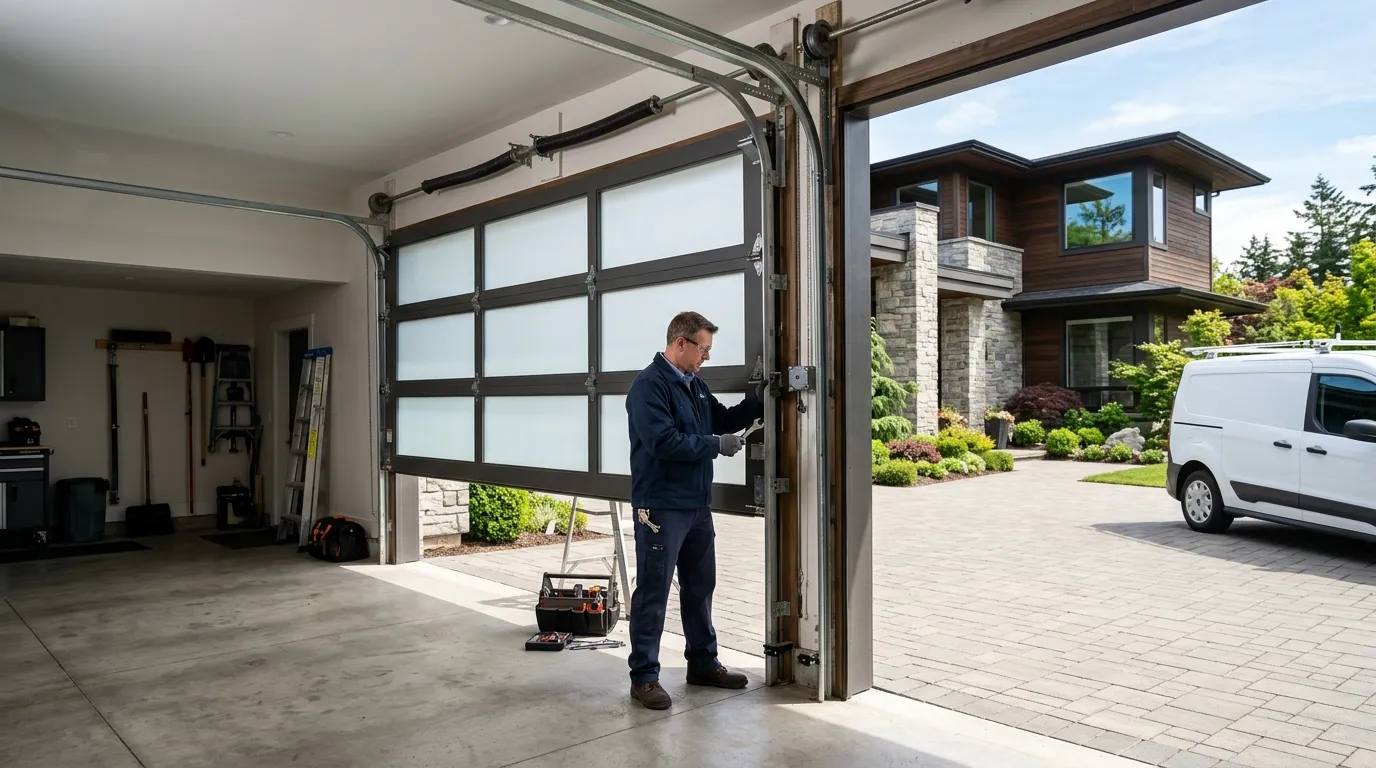
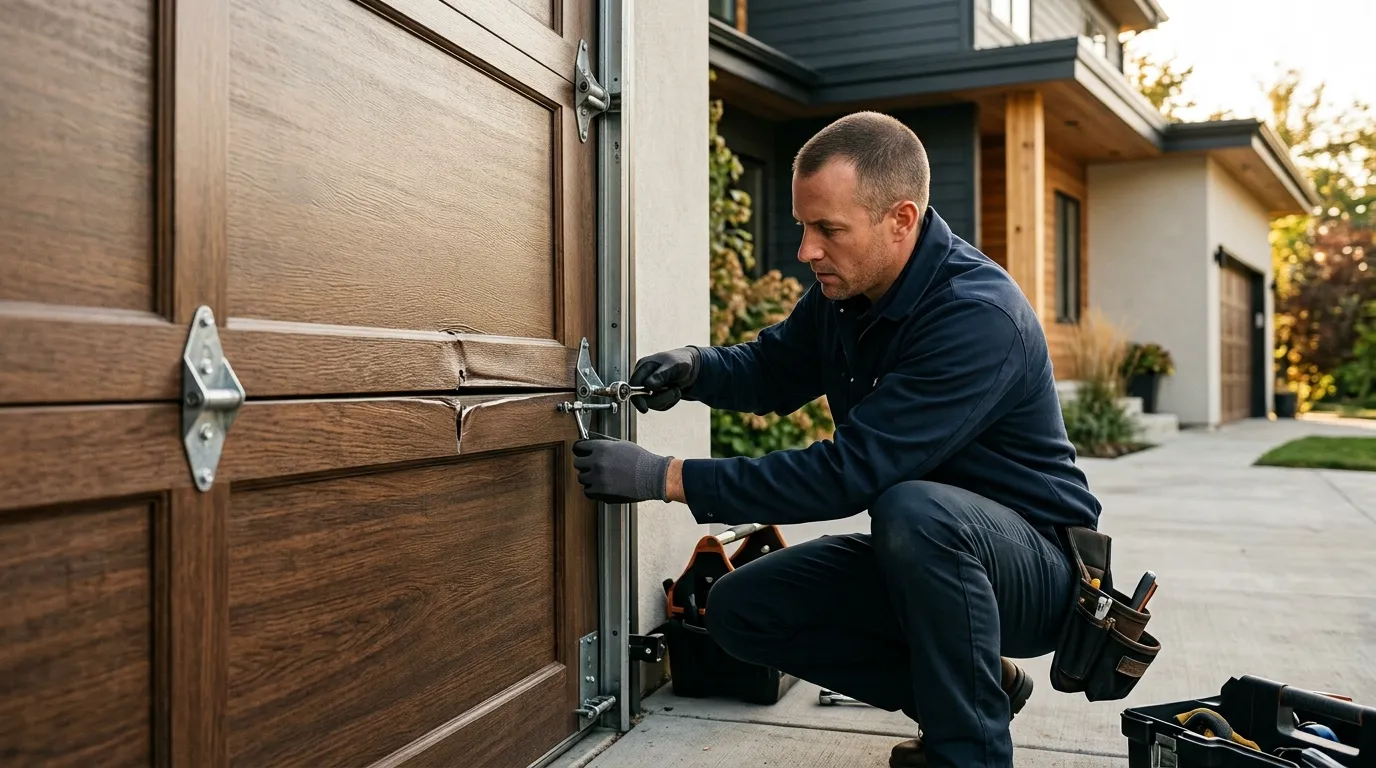
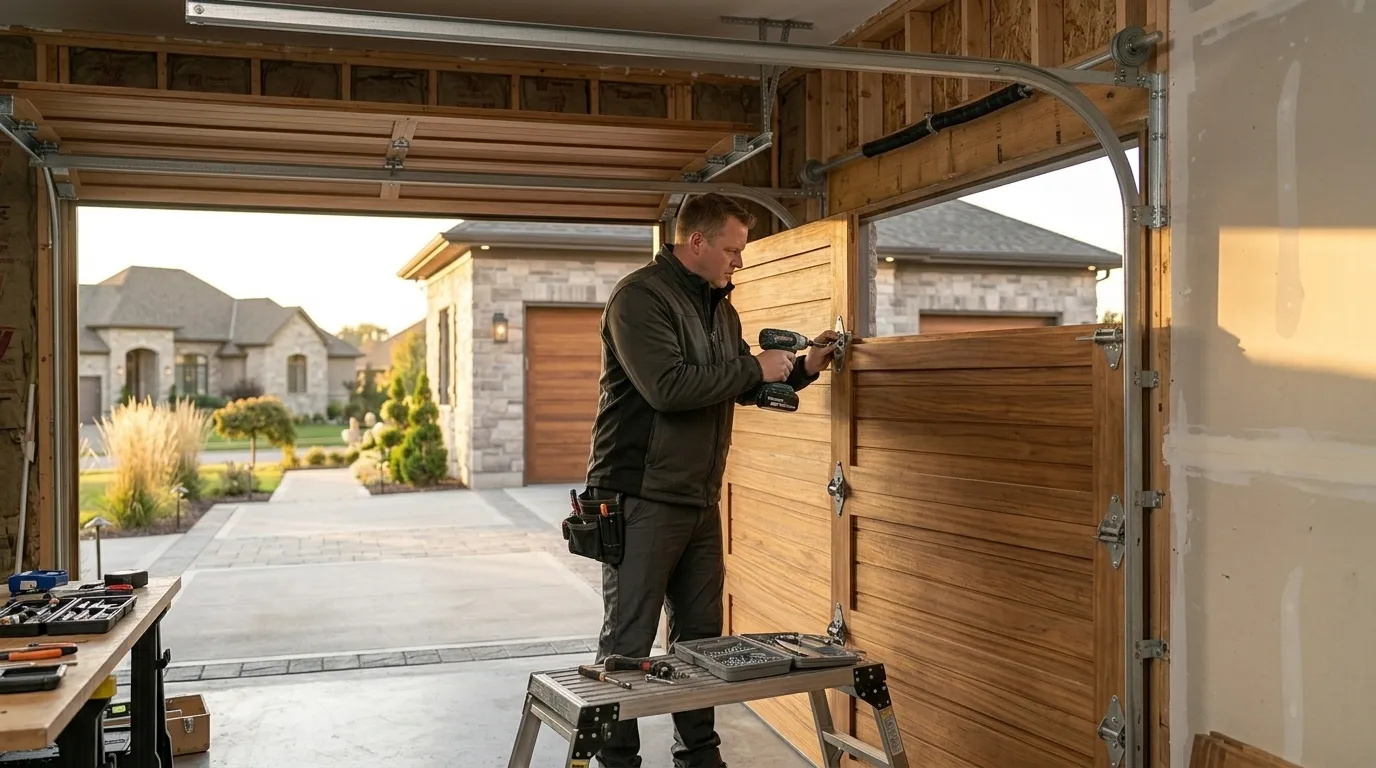
Serving Whitehall's 1958-era housing stock 6 miles south of Pittsburgh, we fix the torsion springs, rollers, and openers that fail first in homes this age.
Whitehall's housing stock centers on 1958, a few years newer than the wider Pittsburgh service area's 1955 median but still squarely in the same era of construction. That matters because a door installed on a house built in 1958 has usually been replaced once already, sometimes twice, and what we find on these calls is a mix of eras stacked on top of each other: a 1990s steel door hung on the original torsion hardware from the build, or a newer opener bolted to a track that's been reshaped by decades of settling. The original garages from this period were sized for cars a foot narrower than what you're parking now, so a lot of the doors we open in Whitehall are non-standard widths that don't match what a big box store carries off the shelf. We also see a fair number of extension-spring setups that were never upgraded to torsion, which is fine until a cable frays and the door comes down crooked on one side. None of this is exotic work, but it means measuring twice before ordering a part, because assuming a Whitehall door matches a catalog spec is how you end up making a second trip.
The Calls We Get From Here
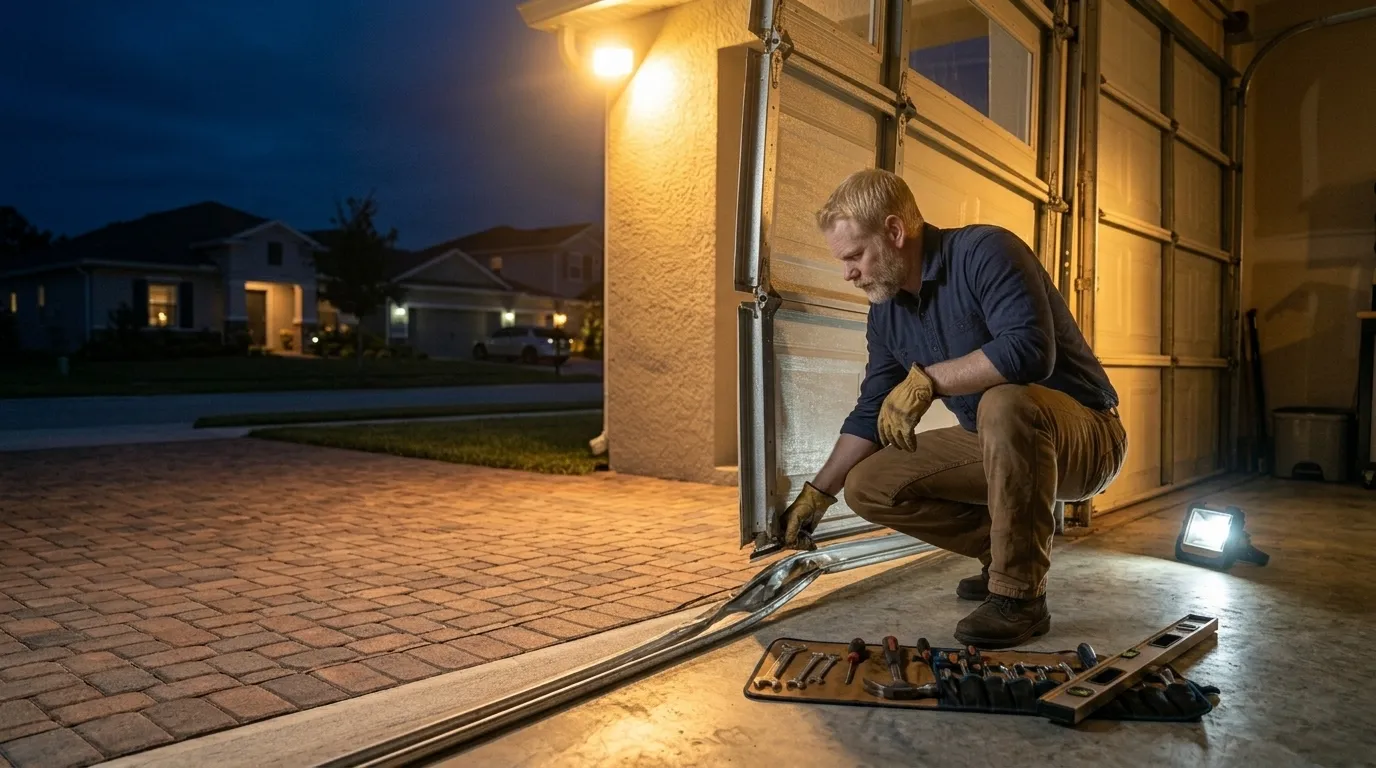
Most of what comes in from Whitehall falls into a short list: a torsion spring that let go on a cold morning, an opener that runs the motor but won't lift the door, or rollers that have worn enough to bind in the track and throw the whole panel off square. Given the area's cold, severe winter conditions, steel hardware that's fifty-plus years old contracts and expands enough over time that brackets loosen and lag bolts back out of old wood jambs - we tighten more of these than you'd expect on a service call that started as "the door won't close." We don't stock every obscure panel size, and if your door is an odd width from a mid-century build, sourcing a matching replacement panel can take longer than the repair itself - that's the one honest limit here, and we'll tell you upfront if it's a special-order situation instead of guessing at a timeline.
Getting Here
Whitehall sits about 6 miles from our base in Pittsburgh, a straightforward run down through the corridor that also puts us close to Castle Shannon, Bethel Park, and Baldwin on the same trip. We don't keep a separate depot in Whitehall - the truck comes from Pittsburgh for every call - so scheduling is built around routing, not a local storefront. That's worth knowing if you're comparing us to an outfit that claims a same-day guarantee; we'd rather tell you the truck is coming from across town than promise a window we can't hold to.
This Area's Housing
With roughly 6,730 households in Whitehall and a median income near $85,000, this is a market where people tend to fix a door rather than replace the whole system at the first sign of trouble, and often that's the right call. A insulated steel door from the last fifteen years usually just needs new rollers or a spring change to run another decade. But on a door that's original to a 1958-era build, or close to it, we'll be straight with you about when the housing under the door - the jambs, the header, the framing around the opening - has shifted enough that a new door won't seat right without some carpentry first. That's not a call we make to sell a bigger job; it's the difference between a repair that lasts and one that fails again in eight months.
How it works
From “it’s stuck” to “it’s fixed”
01
Tell us what’s wrong
Describe the symptom - won’t open, loud bang, opener runs but the door won’t move.
02
On-site diagnosis
A technician tests the door under power and by hand and finds what actually failed.
03
Clear, up-front plan
You get the fix that’s needed and what drives the cost - before any work starts.
04
Repaired & tested
The repair is done, the door is set true and tested, and the work area left clean.
Serving Pittsburgh, PA - tell us what your door’s doing and we’ll take it from there.
If your home dates to around the 1958 median for this area, it's possible but unlikely - most original doors from that period have been replaced at least once. What often survives is the track and spring hardware, which is why a newer door sometimes still has old, mismatched mounting brackets underneath.
Do you have a location in Whitehall?
No. We run from Pittsburgh, about 6 miles out, and Whitehall is one of the areas our truck covers on that route. There's no local depot here, so we schedule around driving distance rather than a storefront presence.
Why did my spring break in cold weather?
Steel contracts in cold, severe winters like the ones this region gets, and older torsion springs that have already cycled tens of thousands of times are the ones most likely to snap when that contraction adds stress. It's more common on original or early-replacement hardware than on a spring installed in the last few years.
Can you match the panel size on an older door?
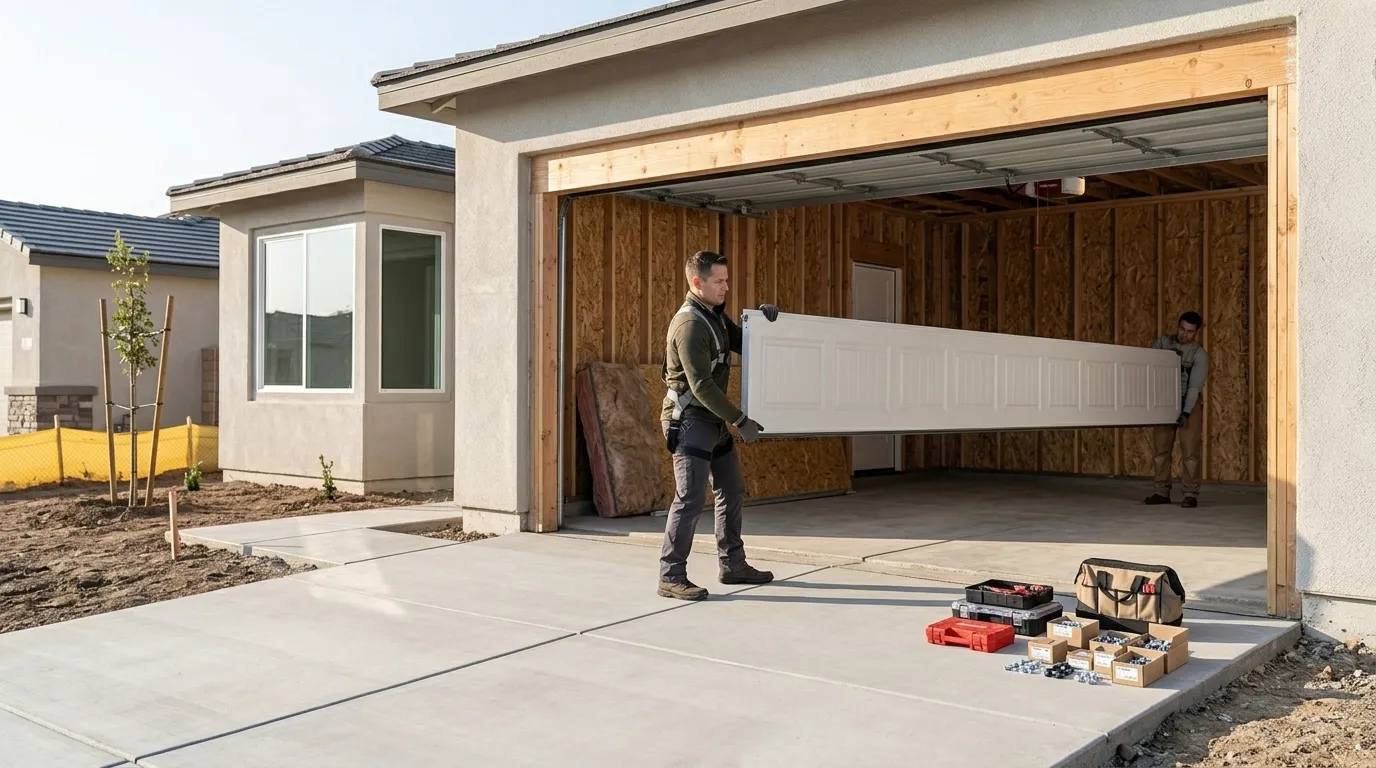
Sometimes, and sometimes not without a special order. Homes built in the 1950s and 1960s often have garage openings sized differently than what's stocked today, so a torn or dented panel on an older door can take longer to source than the repair labor itself.
Ready to get your garage door sorted?
Tell us what it’s doing and where you are in Pittsburgh - we’ll take it from there.